
On Wednesday, President Donald Trump signed an executive order that would push for a greater supply of glyphosate-based herbicides, leaving scientists and environmentalists deeply concerned.
The president said in the order, titled Promoting the National Defense by Ensuring an Adequate Supply of Elemental Phosphorus and Glyphosate-Based Herbicides, that the chemicals play “a critical role” in American farming and a lack of access to them would “critically jeopardize agricultural productivity” and the country’s food systems.
However, the International Agency for Research on Cancer (IARC) labeled glyphosate as “probably carcinogenic to humans” in 2015, and other studies have indicated its harm to human health.
“This is not a chemical with zero risk,” Melissa Perry, a professor of public health at George Mason University, told Newsweek. “The weight of independent scientific evidence supports caution, not complacency.”
Despite its studied health impacts, glyphosate remains popular because it is “broad-spectrum, effective, and supports large-scale agriculture,” Perry said. “Its effectiveness and relatively low acute toxicity compared to some older herbicides have contributed to the perception that it’s benign.”
When approached for comment, the Department of Health and Human Services pointed Newsweek to a statement from Health Secretary Robert F. Kennedy Jr.: “Donald Trump’s Executive Order puts America first where it matters most—our defense readiness and our food supply. We must safeguard America’s national security first, because all of our priorities depend on it. When hostile actors control critical inputs, they weaken our security. By expanding domestic production, we close that gap and protect American families.”
Why It Matters
Scientists have expressed concerns that increased use of glyphosate-based herbicides could increase health risks, including cancer, among humans and other species and damage biodiversity.
Trump’s move also contradicts the fundamental policies of Kennedy’s Make America Healthy Again campaign, as tackling pesticide and herbicide usage that harmed public health was one of his main objectives. The health secretary’s apparent support for the order has sparked a backlash among MAHA proponents, who have expressed feeling betrayed.
What To Know
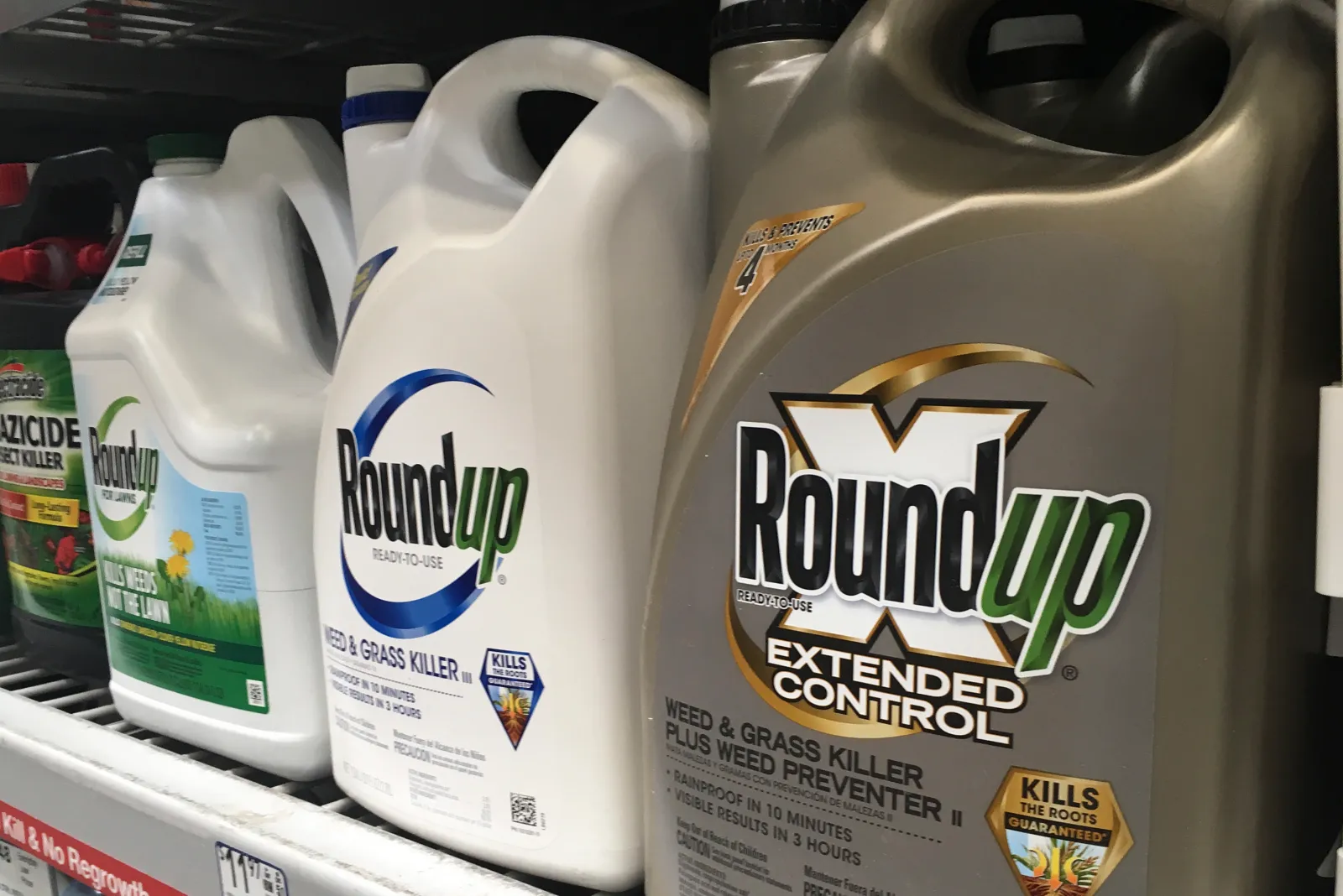
Glyphosate, the chemical in Bayer-Monsanto’s Roundup, is the most commonly used herbicide in the U.S. The chemical’s use has also increased almost 15-fold globally, according to studies, since the introduction of the company’s Roundup Ready crops—genetically engineered glyphosate-tolerant crops that were first used in 1996.
Since the introduction of the glyphosate-based herbicide, Bayer—which acquired Monsanto in 2018—has been hit with thousands of lawsuits alleging the company failed to warn people that its popular weedkiller could cause cancer. The agrochemical maker proposed a $7.25 billion settlement on Tuesday to settle the lawsuits.
About 200,000 Roundup-related claims have been made against Bayer, which includes more than 125,000 plaintiffs who have sued since 2015, according to the settlement documents.
The IARC concluded that glyphosate was “probably carcinogenic to humans,” that there was also “‘strong’ evidence for genotoxicity, both for ‘pure’ glyphosate and for glyphosate formulations.” Genotoxicity is a property in certain substances that can damage the genetic material in a cell, which can lead to cell mutations and diseases such as cancer.
To make its evaluation, the IARC reviewed about 1,000 studies “by independent experts, free from vested interests.”
Other studies and reviews have concluded that glyphosate exposure is associated with a higher risk of non-Hodgkin lymphoma, a cancer of the lymph system. Those exposed to glyphosate-based herbicide saw their risk of the cancer increase by 41 percent, a 2020 study found.
Based on the research, Perry said, “it is inaccurate to describe glyphosate as unequivocally safe.” She added that it was “concerning” that glyphosate use had expanded dramatically in the country, “even as evidence of potential health risks has grown.”
She said the population’s increased exposure to the chemical “deserves careful scrutiny.” Beyond cancer concerns, the harmful chemical is now “ubiquitous in soil, water, and food systems,” she added.
“That level of environmental persistence raises legitimate ecological and long-term human health questions,” Perry continued.
The environment can also suffer from the chemical, experts have warned. Glyphosate can “harm biodiversity” by “killing plants that are not weeds (non-target plants), and it’s harmful to fish and other endangered species,” Stephanie Eick, a professor of environmental health at Emory University, told Newsweek.
It also has “a long half-life in soil, meaning that it does not easily break down and can remain in the soil for up to several months and potentially harm soil,” she added.
What People Are Saying
Stephanie Eick, a professor of environmental health at Emory University, told Newsweek: “From my perspective, I think that glyphosate is harmful to human health. There are also studies in animals that show that glyphosate can lead to kidney and liver damage, even at relatively low doses. I think this update is concerning because glyphosate is already very widely used in agricultural settings, which ultimately is a major way for which humans are exposed (for example by eating foods that contain glyphosate). Ultimately, it’s possible that this ban will lead to an increase in the amount of glyphosate that’s used, which in turn could lead to higher levels of glyphosate exposure for humans, leading to increased health risks.”
She added: “While I am very concerned about this executive order, there are actions that we can take on an individual basis to limit our intake of glyphosate. Examples of this include choosing organic products when possible (organic products are free of synthetic chemicals, including glyphosate). If that’s not possible, also remember to wash fruits and vegetables thoroughly before eating them, this will help to remove potential pesticide residue.”
George Kimbrell, the legal director at the Center for Food Safety, said in a statement: “This Trump Executive Order follows a long pattern from the administration: sound and fury, ultimately signifying nothing. Executive orders do not have the force and effect of law without new authority from Congress and here cannot magically give Monsanto immunity for the harms of its toxic glyphosate products. In addition to being legally meritless, the EO is factually unmoored from reality. The Trump Administration has demonstrated no threat to the continued availability of glyphosate, and in any case there are literally hundreds of other herbicides available to farmers and others. This EO is a transparent attempt to influence the Supreme Court to grant glyphosate-maker Monsanto/Bayer and other pesticide behemoths immunity from liability for the harms caused by their products. It also represents the Trump administration betraying MAHA yet again and a feeble attempt to divert attention from the disastrous effects of Trump tariffs on the farming community.”
What Happens Next
Despite the chemical’s history of litigation and harm, Trump said in the executive order, “United States-based production of glyphosate-based herbicides is central to American economic and national security.” He has instructed the secretary of agriculture to ensure a “continued and adequate supply of elemental phosphorus and glyphosate-based herbicides.”
In a polarized era, the center is dismissed as bland. At Newsweek, ours is different: The Courageous Center—it’s not “both sides,” it’s sharp, challenging and alive with ideas. We follow facts, not factions. If that sounds like the kind of journalism you want to see thrive, we need you.
When you become a Newsweek Member, you support a mission to keep the center strong and vibrant. Members enjoy: Ad-free browsing, exclusive content and editor conversations. Help keep the center courageous. Join today.

