
5 View gallery
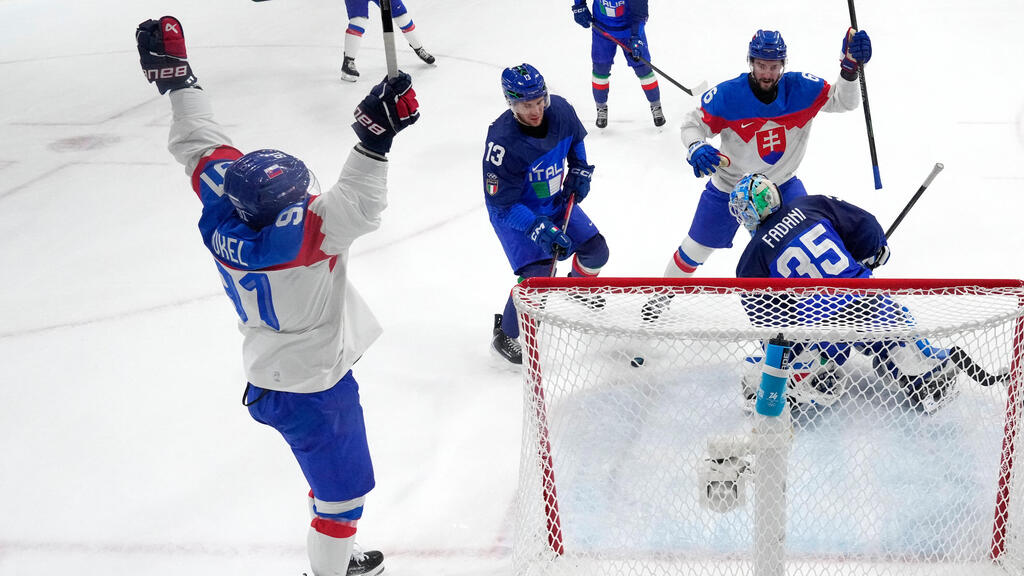
Reason for delaying a strike? Slovakia’s ice hockey team celebrates at the Olympics in Italy
(Photo: Darko Bandic – Pool/Getty Images)
If so, it would not be the first time the Olympics have helped preserve relative calm and regional stability. Avoiding wars during the Olympic Games dates back to ancient Greece, where the period was known as the “month of peace,” marked by a commitment to maintain security and military quiet. Throughout history, the Olympics have at times prevented or delayed conflicts.
The Paris 2024 Olympics took place amid a protracted campaign against Hamas in the Gaza Strip, which at the time was still holding 115 hostages. Alongside continued fighting in Rafah, Khan Younis and other areas, Israel was effectively engaged in a multi-front conflict — facing Iran, which had already launched a direct attack; Hezbollah, which carried out near-daily rocket fire into Israel; the Houthis in Yemen, who attacked vessels they described as “linked to Israel” in the Red Sea and launched projectiles toward Israeli territory, including a drone strike in Tel Aviv; and pro-Iranian militias in Iraq that claimed responsibility for drone launches toward Haifa and other areas.
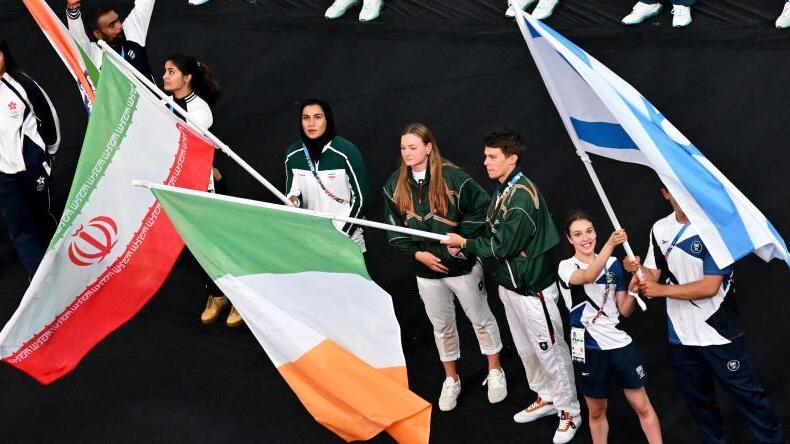
Despite expectations during the Paris Games of significant escalation by Iran, Hezbollah and the Houthis following an Israeli strike in Hodeida, such escalation did not materialize. While the reasons remain unclear, French President Emmanuel Macron, whose country hosted the Games, held talks with leaders on both sides. At the closing ceremony at Stade de France, the flag bearers of Iran and Israel were seen standing in close proximity.
Macron spoke with Iranian President Masoud Pezeshkian, urging him to do everything possible to prevent regional escalation and to halt what he described as a cycle of revenge, according to the Elysee Palace. He also spoke with Israeli Prime Minister Benjamin Netanyahu, calling on him to avoid further escalation under the same logic and stressing that the message applied to all parties in the region.
French authorities expressed satisfaction that the Games were not overshadowed by global escalations, including Israel’s war and the conflict between Russia and Ukraine, even as Ukrainian forces launched a significant counteroffensive inside Russian territory toward the end of the Olympics.
Russia’s invasion of Ukraine began on Feb. 24, 2022, four days after the Beijing Winter Olympics concluded. Signs of a potential invasion had emerged during the Games. On Feb. 11, then-US National Security Adviser Jake Sullivan warned that Russia could attack within days. The timing proved slightly off, but the invasion followed shortly thereafter.
5 View gallery
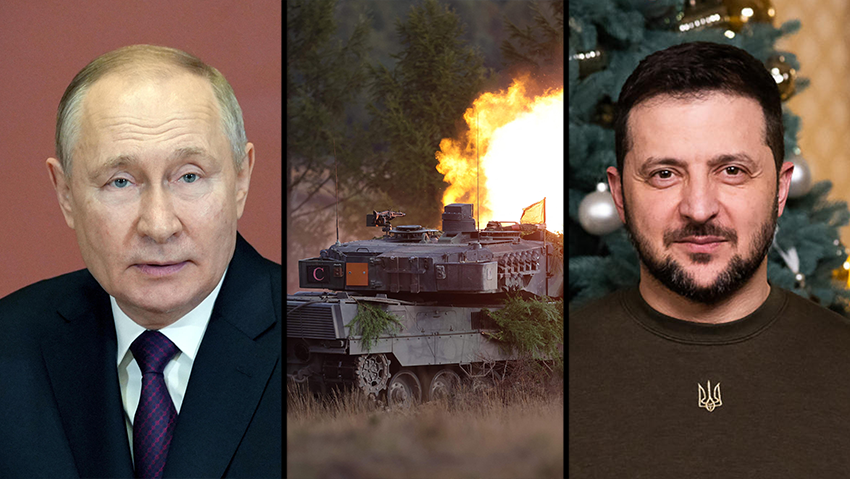
Putin’s invasion of Ukraine: Four days after the Beijing Winter Olympics ended
(Photo: AFP, Reuters/Sputnik/Alexei Danichev/Kremlin)
Although US officials had initially cited Feb. 16 as a possible date for an attack, intelligence sources speculated that Russian President Vladimir Putin’s relationship with Chinese President Xi Jinping might influence the timing. Some believed Russia might act during the Olympics due to high troop readiness and Putin’s reluctance to appear constrained by another leader.
On the day of the invasion, China’s Foreign Ministry said Russia had announced a “special military operation” in eastern Ukraine. By waiting until after the Olympics ended, Russia effectively preserved the Olympic truce during the Games.
However, Moscow did not wait for the conclusion of the Paralympics, held in Beijing from March 4 to 13. Ukrainian athletes from war-affected areas fled to compete, and the International Paralympic Committee expelled Russian and Belarusian athletes following boycott threats from other delegations.
In December 2021, amid reports of a possible invasion, the UN General Assembly unanimously adopted a resolution calling for an Olympic truce through the end of the Winter Olympics and Paralympics, aiming to build a peaceful and better world through sport. The truce was meant to last until March 13, 2022, but was effectively broken by Russia’s invasion.
One notable exception to the tradition occurred in 2008. On the eve of the Beijing Olympics, Georgia launched a military operation in South Ossetia. Putin, then Russia’s prime minister, condemned the move, saying it was regrettable that Georgia had initiated aggression just before the Games. Russia soon seized control of the fighting and advanced into Georgia, holding key cities for several days.
The United States, Britain and France demanded Russia withdraw and condemned its use of force. After five days of fighting, then-President Dmitry Medvedev announced a withdrawal, though tensions persisted.
Before Israel’s 2005 disengagement from Gaza, it conducted multiple operations in the Strip. In May 2004, Operation Rainbow took place in Rafah following deadly attacks on Israeli soldiers and civilians.
A month later, Palestinian Authority Chairman Yasser Arafat said he was committed to maintaining a ceasefire during the Athens 2004 Olympics, held Aug. 13-29. He expressed respect for the Games and the need to safeguard their security, voicing hope that the Olympic tradition would help foster peace and justice.
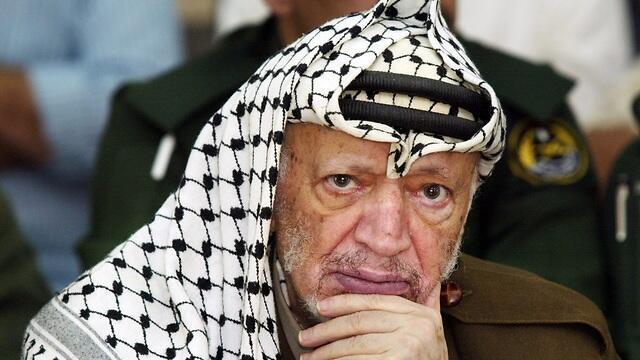
Israeli officials responded that his remarks indicated he had control over militant groups, a claim Arafat denied. Relative calm was maintained during the Games, but violence resumed in late September with Israel launching Operation Days of Penitence following deadly rocket fire.
After the Sept. 11, 2001 attacks, the United States launched a war in Afghanistan, demanding that the Taliban hand over Osama bin Laden and dismantle al-Qaida training camps.
5 View gallery
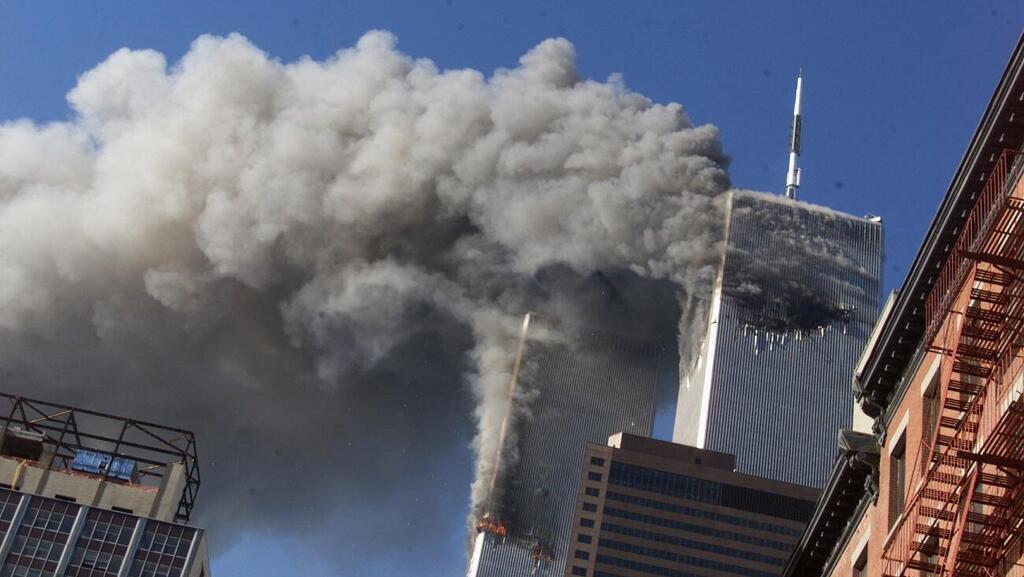
The Twin Towers attack led US President Bush to reject a request for a ceasefire during the Olympics
(Photo: AP)
Five months later, the 2002 Winter Olympics opened in Salt Lake City. Then-President George W. Bush declined a request from the International Olympic Committee to declare a ceasefire during the Games. IOC President Jacques Rogge said Bush nevertheless supported ensuring safe participation for all athletes.
Afghanistan was the only country barred from competing, but due to its prior suspension over Taliban restrictions on female athletes, not because of the war.
In 1980, the Moscow Olympics were overshadowed by the Soviet invasion of Afghanistan. US President Jimmy Carter led a boycott after demanding a Soviet withdrawal, resulting in about 60 countries staying away. Four years later, the Soviet Union boycotted the Los Angeles Games with 13 allied nations. Eighty countries participated in Moscow, compared to 140 in Los Angeles.
The Olympic Games in ancient Olympia were a pan-Hellenic athletic and religious festival that united the Greek city-states. Despite frequent wars, the Greeks observed a “month of peace” during the Games in August, maintaining military quiet.
Athletes traveling to Olympia were granted sacred immunity, and weapons were prohibited in the city. Three months before the Games, heralds crowned with olive wreaths traveled throughout Greece announcing the event and the accompanying month of peace.