
USC faculty members Yingying Fan, Matthew Pratt and Paul David Ronney have been named fellows of the American Association for the Advancement of Science, one of the highest distinctions in the scientific community.
Dating back to 1874, AAAS plays a key role in shaping public policy, advancing research and influencing national and global perspectives on critical issues. The group publishes six peer-reviewed journals, including Science. Fan, Pratt and Ronney are among 500 scientists, engineers and innovators named as fellows in the 2025 class late last month.
“This year’s AAAS Fellows have demonstrated research excellence, made notable contributions to advance science and delivered important services to their communities,” said Sudip S. Parikh, AAAS chief executive officer and executive publisher of the Science family of journals. “These fellows and their accomplishments validate the importance of investing in science and technology for the benefit of all.”
Yingying Fan
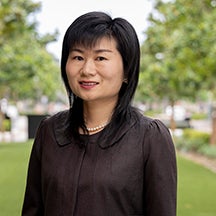
The USC Marshall School of Business associate dean and professor was recognized for her significant contributions to the field of statistics. Her research has explored statistical inference, variable selection, classification, networks and nonparametric methodologies, particularly in the field of financial econometrics and computational biology. She is also being distinguished for her conscientious professional service, especially in regard to her commitment to her students.
“I am truly honored to be named an AAAS Fellow,” Fan said. “This recognition reflects the support of my collaborators, students, colleagues and the broader research community. As data and AI continue to transform many fields, I look forward to advancing statistical methods that provide rigorous, interpretable and reliable foundations for informed decision-making in the AI era.”
Fan received her doctorate in operations research and financial engineering from Princeton University in 2007. She was a lecturer in the department of statistics at Harvard University and received the Royal Statistical Society Guy Medal in Bronze and the Institute of Mathematical Statistics Medallion Lecture in 2023. She was named a fellow of the American Statistical Association, the Institute of Mathematical Statistics and the Asia-Pacific Artificial Intelligence Association.
Fan’s research is wide-ranging and has been published extensively in journals including specializing in statistics, economics, computer science, information theory and biology.
Learn more about Fan on the USC Marshall website.
Matthew Pratt

Matthew Pratt — professor of chemistry at the USC Dornsife College of Letters, Arts and Sciences — began his university studies eyeing a career in medicine. But an undergraduate stint in an organic chemistry lab changed that plan, setting him on a course that has since earned him a place among Nobel laureates, astronauts, inventors and innovators.
Pratt arrived at the University of Arizona in 1995 to study math and biochemistry, with medical school as his long-term academic goal. That changed when the young undergraduate stepped into Professor Robin Polt’s organic chemistry lab.
“I was hooked by the logic of chemical transformations and the ability to make molecules with my own hands,” Pratt says. “That ability to forge molecules with precision, from drug-like compounds to full proteins, and using them to answer questions in biology is what gets me excited about what my lab is doing now.”
After earning his bachelor’s degree in biochemistry and mathematics and studying glycosylation reactions — the bonding of carbohydrate molecules to proteins — under Polt’s guidance, he moved on to the University of California, Berkeley, where he earned his doctorate in chemistry in 2004 with future Nobel laureate Carolyn Bertozzi. Pratt then completed an American Cancer Society Postdoctoral Fellowship at Rockefeller University in Professor Tom Muir’s lab before joining USC Dornsife’s Department of Chemistry in 2009.
Pratt studies the molecular and physiological effects of chemical alterations of proteins while mentoring a new generation of postdocs and doctoral students, perhaps some destined for prestigious scientific honors of their own.
“Helping students and postdocs mature as scientists, promoting them and getting to watch them go off and do amazing things is my favorite part of this job,” Pratt said.
Learn more about Pratt on the USC Dornsife website.
Paul David Ronney
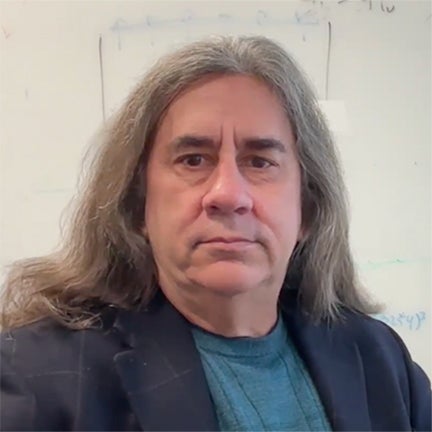
Paul David Ronney, a professor in the Department of Aerospace and Mechanical Engineering in the USC Viterbi School of Engineering, is widely recognized for his contributions to combustion science, including combustion and power generation in small-scale systems, as well as fundamental studies of edge flames, flame instabilities and combustion in confined geometries.
He has examined how gravity influences flame behavior, and one of his experiments — a study of premixed-gas flames — was conducted on three Space Shuttle missions. Additionally, he served as an alternate payload specialist astronaut for two Space Shuttle missions in 1997.
He is a fellow of the American Society of Mechanical Engineers and the Combustion Institute, an associate fellow of the American Institute of Aeronautics and Astronautics, and a senior member of the National Academy of Inventors. He holds multiple U.S. patents, reflecting both the scientific significance and practical impact of his work.
“I was surprised and delighted when I heard that I had been elected an AAAS Fellow,” Ronney commented. “Although I am an engineer rather than a scientist as such, much of the work I have done has involved uncovering new phenomena within the field of chemically reactive flows, which may be one of the reasons my nomination was viewed favorably. In addition, as an educator and as an administrator, I have sought to advance the pursuit of scientific knowledge by our students in [aerospace and mechanical engineering] and the Viterbi School of Engineering.”
Learn more about Ronney on the USC Viterbi website.