
The practice of expanding a successful film into a television series has become a staple of the modern entertainment industry. Considering sci-fi alone, Dune: Prophecy launched on HBO in 2024, pulling the Bene Gesserit’s origins 10,000 years before Denis Villeneuve’s films into a six-episode prestige production that earned a second season before its first had even concluded. In addition, Blade Runner 2099, starring Michelle Yeoh and set 50 years after Blade Runner 2049, is positioned for a 2026 premiere on Prime Video under Ridley Scott’s executive supervision. Before that, Fox brought the Terminator franchise to weekly television with Terminator: The Sarah Connor Chronicles in 2008, while HBO’s Westworld built an entirely new mythology from Michael Crichton’s 1973 film across four seasons. The appeal of the strategy is that a proven film delivers a pre-sold universe, an established visual language, and an audience already emotionally invested in its rules, reducing costs and increasing the odds of success.
Long before streaming platforms turned cinematic spinoffs into prestige programming, CBS was running the same experiment on broadcast television. The network housed series derived directly from sci-fi classics, betting that audiences who had bought tickets to those theatrical releases would return week after week to see the worlds they loved expanded into episodic format. The results ranged from admirably ambitious to catastrophically short-lived.
4) Beyond Westworld

Based on Michael Crichton’s 1973 film Westworld, Beyond Westworld premiered on CBS on March 5, 1980, and holds the distinction of being the shortest-lived entry on this list by a significant margin. The premise handed Security Chief John Moore (Jim McMullan) of the Delos Corporation the task of stopping the scientist Simon Quaid from deploying androids in a global takeover scheme, a concept that relocated the film’s contained amusement park thriller into a globe-trotting spy procedural. That creative shift destroyed the core appeal of the source material, which had derived its tension from the claustrophobic horror of malfunctioning machines in a controlled environment.
CBS canceled Beyond Westworld after just two airings, and only three of the five produced episodes ever reached American audiences. The remaining two didn’t surface domestically until a DVD release in 2014. Beyond Westworld earned two Emmy nominations for makeup and art direction, confirming that the production values were present. However, its fundamental miscalculation was abandoning the very setting that made Westworld worth adapting in the first place.
3) Logan’s Run
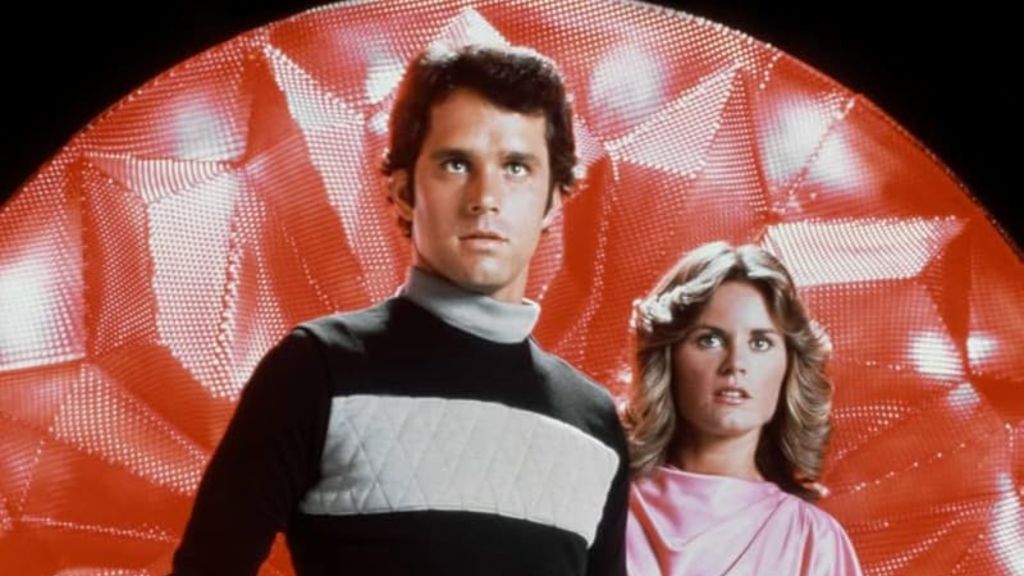
The 1977 CBS adaptation of Logan’s Run arrived one year after the Michael Anderson film that earned an Academy Award for its visual effects, and the contrast between the two productions was immediate. The series starred Gregory Harrison as Logan 5, a government enforcer who abandons a dystopian society where execution at age 30 is mandatory, with rebel Jessica 6 (Heather Menzies) and an android named Rem (Donald Moffat) joining him in a weekly search for the mythical Sanctuary.
William F. Nolan, co-author of the original novel, co-wrote the pilot, and D.C. Fontana, a veteran writer from the original Star Trek, served as story editor. This creative pedigree suggested ambition the budget could not support. The series settled into a repetitive fugitive-of-the-week structure borrowed almost directly from the concurrent Planet of the Apes show, and CBS’s habit of preempting episodes in favor of higher-rated programming accelerated the erosion of the audience that led to Logan’s Run‘s cancellation after 14 episodes.
2) Planet of the Apes

The 1974 CBS series Planet of the Apes arrived with more institutional support than any other project on this list. The network had already broadcast theatrical screenings of all five Apes films to massive viewership, and those ratings directly convinced CBS to greenlight a weekly series at approximately $250,000 per episode, a massive budget at the time. Roddy McDowall, who had portrayed the chimpanzee Cornelius across multiple films in the franchise, anchored the cast as Galen, a sympathetic chimp allied with two stranded astronauts, Alan Virdon (Ron Harper) and Pete Burke (James Naughton), as they evade the militaristic gorilla general Urko (Mark Lenard).
Sadly, the Planet of the Apes series suffered from the same structural limitation as Logan’s Run—a repetitive chase format that compressed character development—and CBS canceled it midseason after direct scheduling competition from NBC’s Sanford and Son destroyed its Friday night ratings. Still, McDowall’s performance and the show’s fidelity to the source material’s visual world give it a permanence the other entries here cannot match. CBS recognized this in 1980, when selected episodes were re-edited into five television movies.
1) Limitless

Limitless premiered on CBS on September 22, 2015, and stands as the most commercially successful entry on this list. The series positioned itself as a direct continuation of the 2011 film, set four years later, with Brian Finch playing Jake McDorman, a struggling musician who gains full cognitive access through the nootropic drug NZT-48 and is coerced by the FBI into solving complex cases. Bradley Cooper returned as Senator Edward Morra, the film’s original protagonist and the series’s quiet antagonist, providing an ongoing narrative tension that none of the earlier CBS spinoffs ever managed to construct.
The 22-episode run immediately separated Limitless from every other entry here, and the premiere drew over 9 million viewers. The show’s cancellation in May 2016 came despite strong DVR gains that placed it among CBS’s top scripted performers in delayed viewing, a casualty of the network’s reliance on overnight ratings rather than a reflection of audience indifference. Throughout its single season, Limitless used Brian’s NZT-enhanced perception as a consistent visual storytelling device, deploying split-screen sequences and rapid-fire information montages that gave the series a stylistic identity the earlier CBS spinoffs never had the budget or the technological vocabulary to construct. Its short lifespan, therefore, is quite tragic.
Which of these four CBS spinoffs do you consider the most underrated? Leave a comment below and join the conversation now in the ComicBook Forum!