
Fantasy demands conflict. It’s the driving force of a story, creating the momentum and the means to push the narrative forward. It can happen in a million different ways: betrayal, schemes, a heist, and, for this list, tragedy—of which there are a million different kinds to choose from. What breaks a heart the most? The loss of a parent? A friend? A lover? Being used or lied to? The trauma inherent to war? Or the knowledge that the greatest asset behind the story was never able to see it completed?
Each kind of tragedy fits the bill, hurting our feelings in new and unique ways as we continue watching films that we know will break our hearts. And each entry on this list has a way of digging its claws in and promising to destroy our mascara (or whatever you’re wearing in lieu of mascara). And each falls into a subgenre of fantasy that doesn’t always get the hype that it deserves—everything from gothic romance to modern fantasy to period dramas.
5) Crimson Peak
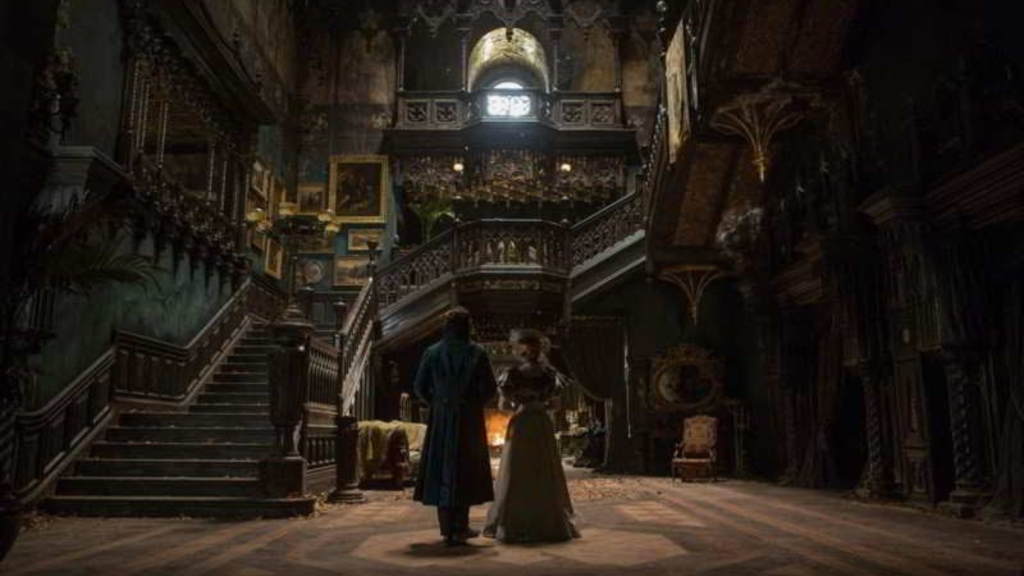
It’s easy to write Crimson Peak off as another attempt at gothic romance, and it is (which isn’t a bad thing)—but beneath the surface of the love story is a deep and innate tragedy, that thing that makes all gothic horror, fantasy, and romance work so well. The entire narrative comes wrapped in the rotting window dressings of a mansion better left to fall apart, becoming lost to time. The story centers on Edith (Mia Wasikowska), an aspiring writer who catches the attention of businessman Thomas Sharpe (Tom Hiddleston)—none the wiser to the scheme he and his sister, Lucille (Jessica Chaistain), have enacted to ensure that they don’t lose their home. Edith moves with him into his crumbling mansions, only to be faced with the ghosts of his past.
Crimson Peak, Guillermo del Toro’s love letter to The Haunted Mansion, is easily one of the most stunning movies ever made. It’s saturated and moody, with the color palette telling a story all its own. There’s romance, mystery, violence, and lives cut short entirely before their time. And what is the greatest tragedy of the story? Take your pick—there’s a myriad to choose from.
4) Big Fish
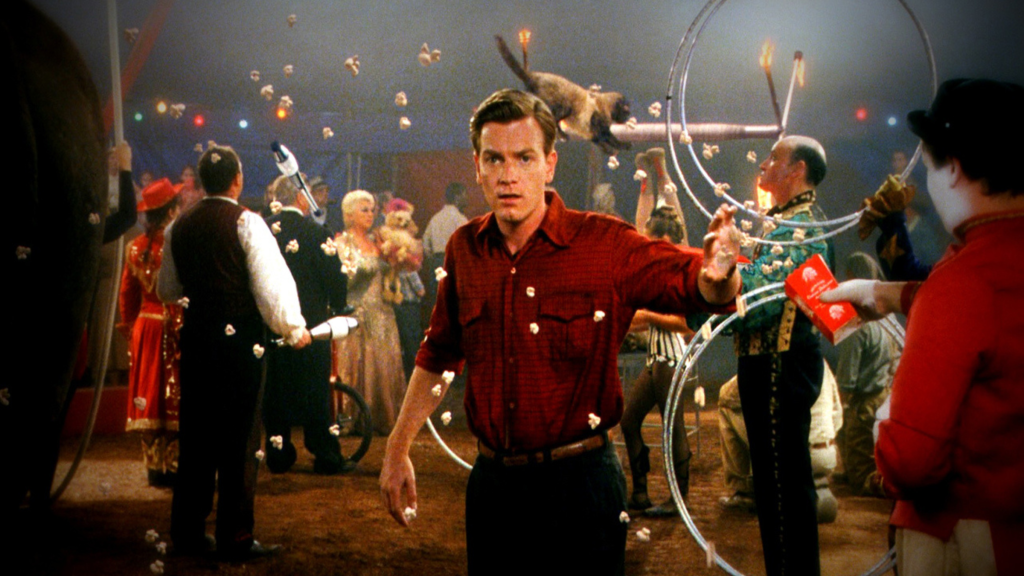
Big Fish tells the story of Will Bloom (Billy Crudup) as he tries to gain an understanding of the life of his father, Edward (Ewan McGregor, Albert Finney), who has always used stories to tell Will about his experiences. Having grown up resentful of the exaggerated tales, Will finds that he now has to distinguish between what’s real and what’s not as he reflects on their relationship.
Big Fish is easily Tim Burton’s most underrated movie, and the one where he seems to step the furthest out of his comfort zone. It’s devastating in its relatability, forcing us to face the notion that our parents are just people, the same as us, and the reality of how distant our relationships can become. It’s bittersweet, it’s personal, and there’s a sense of intimacy to it that can feel uncomfortable if you look too long into the potential mistakes that it’s reflecting back at you. But despite all of that, there’s a sense of whimsy to it, shining through in every vibrant scene.
3) Pan’s Labyrinth
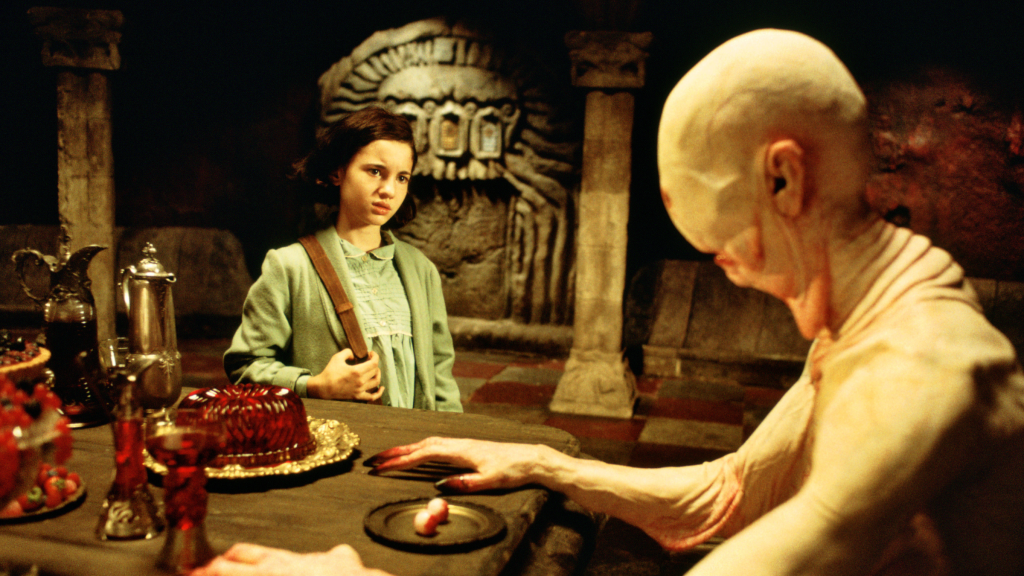
Set during the Spanish Civil War in 1944, Pan’s Labyrinth tells the story of Ofelia and her mother, who has fallen ill, as they arrive at the home of her mother’s new husband, a cruel, tyrannical army officer attempting to violently quell the uprising taking place in the country. While exploring a hedge maze on her stepfather’s property, Ofelia discovers a creature named Pan, who convinces her that she is actually a lost princess and that to claim immortality, she must complete three dangerous tasks.
It’s a blatant commentary on the horrors of war, and del Toro once again uses fantasy to push that horror to the forefront of the narrative. It touches on the darkest depths of trauma, made all the more awful through the eyes of a child. And the entire thing is dressed up in del Toro’s signature style—dark, colorful, and deeply saturated in a way that’s sure to keep your attention as it simultaneously breaks your heart, beautiful and brutal all at once.
2) The Imaginarium of Doctor Parnassus

It’s a fact that there hasn’t ever been a movie quite like The Imaginarium of Doctor Parnassus. It’s truly one of the more fantastical entries on this list, and part of the inherent tragedy of the film is that it was Heath Ledger’s last film—he passed away during filming, and Johnny Depp was then cast to continue the role, forcing the story to adapt into one where his character was essentially reincarnated through time.
The story centers on Dr. Parnassus (Christopher Plummer), the leader of a traveling show, as he grapples with the consequences of a choice he made thousands of years ago: trading the soul of his daughter, Valentina, to the devil. And now the devil has come for his prize. In an attempt to save her, Parnassus puts forth a challenge, saying that whoever collects five souls first will win the hand of Valentina. Tony (Heath Ledger), a man saved from hanging by Parnassus’ troupe, agrees to help collect them in hopes of marrying Valentina. It’s the sort of film that demands you face the director’s flights of fancy, and the main tragedy, apart from the notion of a father selling his daughter in hopes of attaining fame, is that Ledger was never able to see it finished—a fact that you’re reminded of time and again as his character reincarnates throughout the story.
1) Bridge to Terabithia
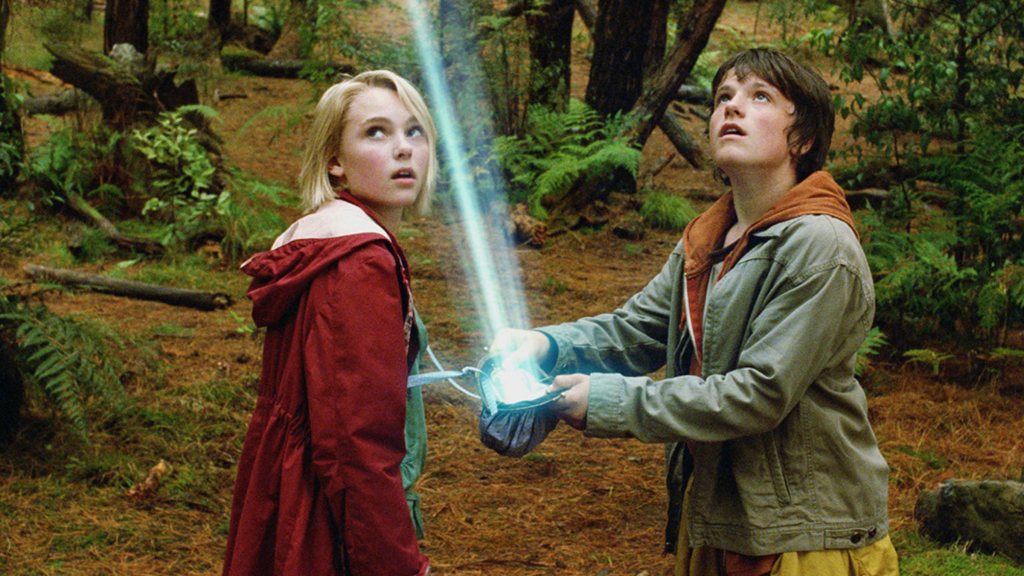
You had to know that this movie would be on the list. And if you didn’t, congratulations, you have yet to have your heart ripped out by Bridge to Terabithia. The film, one of Josh Hutcherson’s firsts, is based on the fantasy novel of the same name by Katherine Paterson, and centers on a young boy named Jesse (Josh Hutcherson) as he befriends a classmate, Leslie (AnnaSophia Robb). As the pair get to know one another, they begin to construct a fantasy world that serves as an escape from their respective troubles.
Bridge to Terabithia remains faithful to the novel it was based on, yet still stands on its own, propelled by killer performances from its young stars. And while it veers heavily into the story’s fantasy aspect, it never becomes unrelatable or distracting, allowing it to breathe as a masterful exploration of grief that’s not often geared toward kids. And trust us when we tell you that the midway point tragedy will leave you, as the title of this list says, absolutely devastated.
Which of these heartbreakers is your favorite? Let us know in the comments. And don’t forget to check out the ComicBook forum to keep the conversation going.