
Topic: Dynamic Wearables for Fashion Design
Date: April 4 – 5, 2026
Time: 14:00 – 18:00 GMT
Format: Online on Zoom
Duration: 2 Sessions (8 Hours)
Registration Deadline: April 3rd, 2026
Total Seats: 50 seats
Difficulty: Beginner – Intermediate
Language: English
Certificate: Yes
General Registration: 100 EUR
Join free: with Full Access membership
Fee For Digital Members: 85 EUR (15% discount available only for Digital Members)
Organized By: PAACADEMY
Tutor: RJ Weaver
Recordings: Recordings will be available for all participants afterward indefinitely.
Introduction to Dynamic Wearables for Fashion Design:
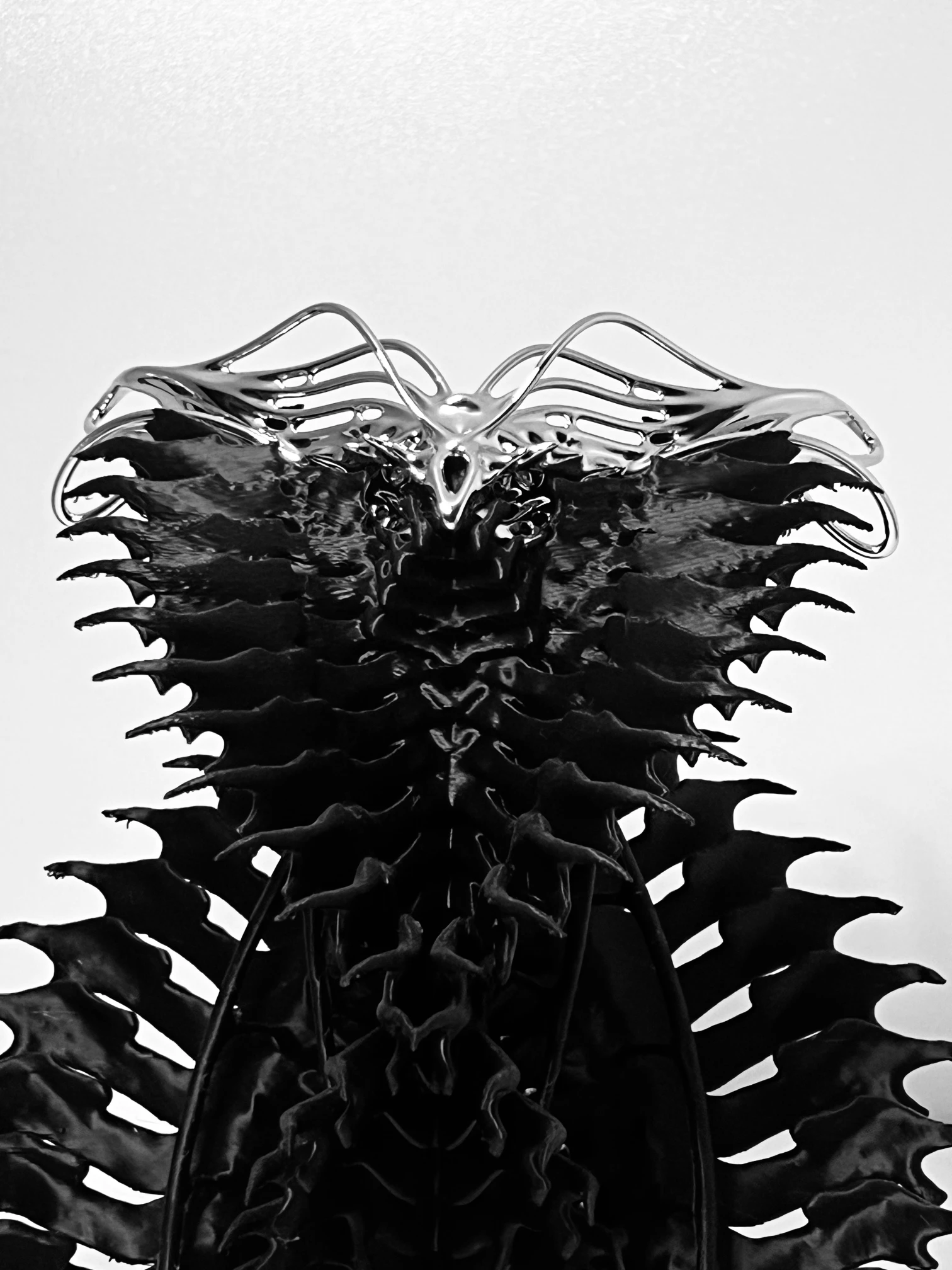
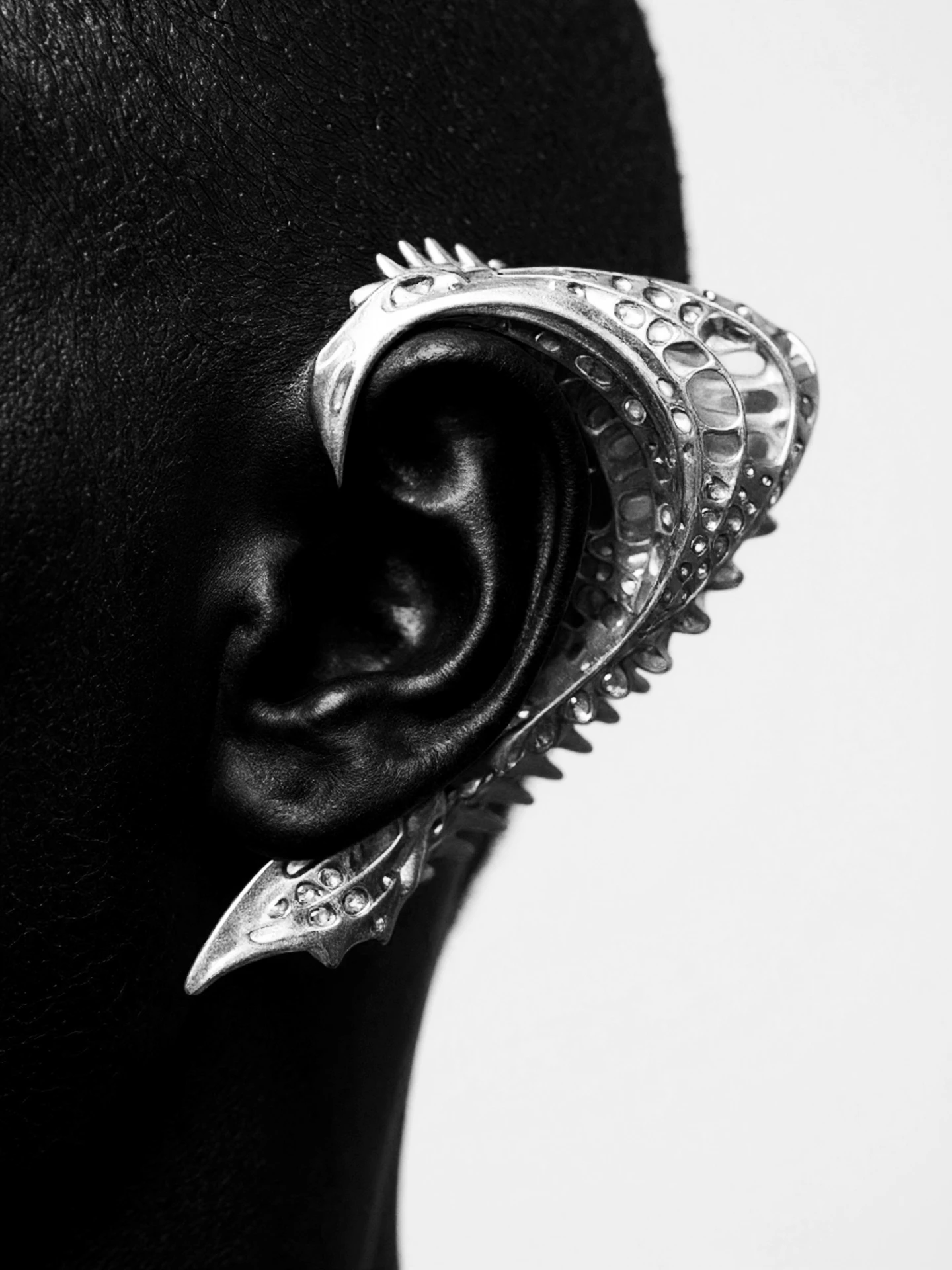
Throughout history, jewelry has been defined by the tools and techniques of the time, always shifting and evolving with technology, but no shift has been as impactful as the development of Industry and the introduction of computational design and 3D printing. Never before have we been able to achieve the level of intricate detail now possible, and we must take advantage of all that these processes offer.
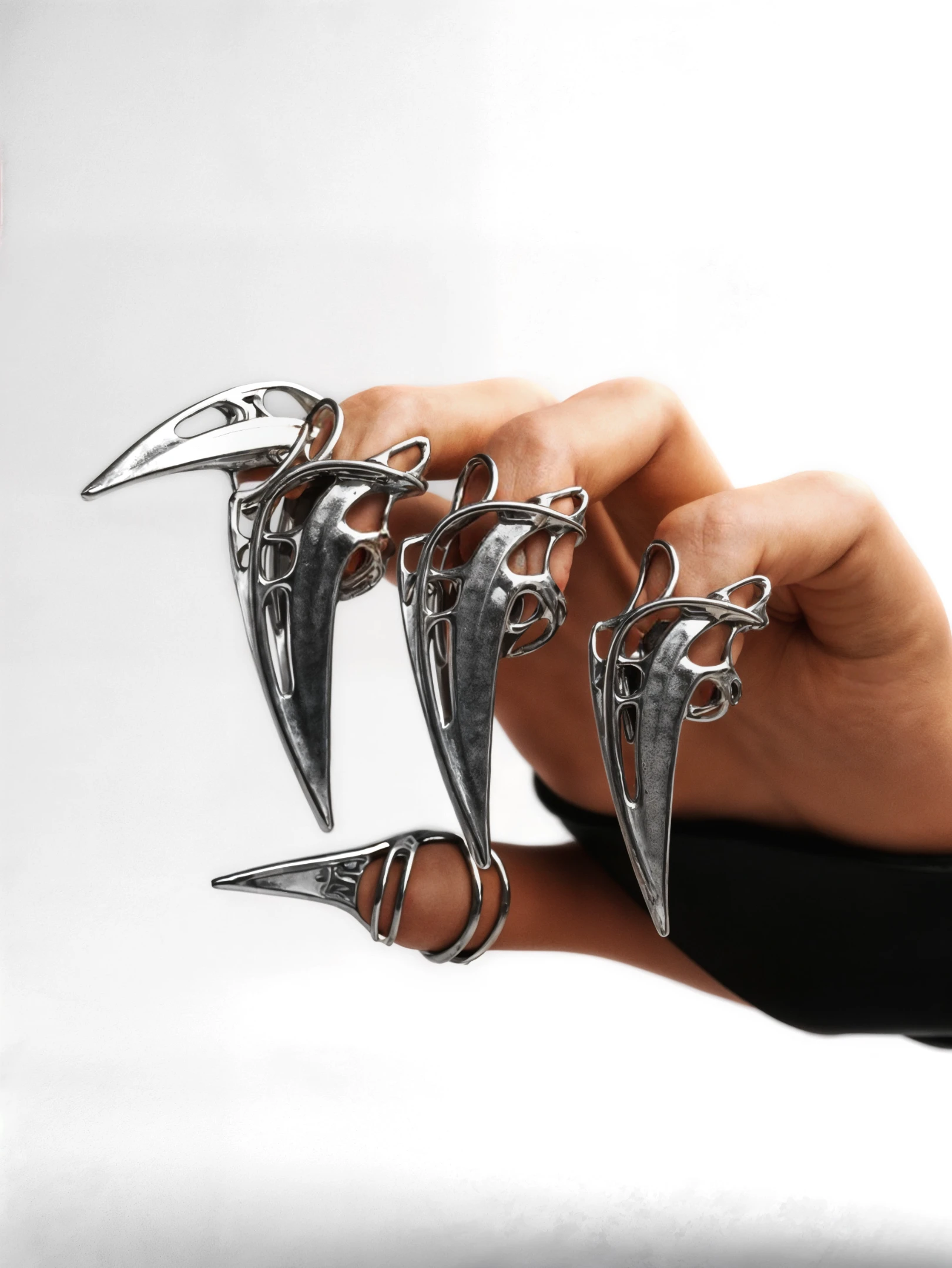
This workshop is perfect for designers interested in developing their skills in parametric design at the body scale. Using Grasshopper allows us to design jewelry built specifically for additive manufacturing and to create the most intricate geometries, internal structures, and interlocking forms that are impossible to produce through conventional techniques, opening the door to a new generation of tech-enhanced body adornment.
Using 3D scanning and computational design, participants will learn how to design jewelry as adaptable systems rather than one-off static objects. By working parametrically, designers can write scripts to quickly customize pieces for various bodies, iterate on large and small design details in real time, and streamline their workflow for mass-custom production, creating dynamic systems that adapt to the user.
This two-day workshop challenges the traditional manufacturing landscape and equips the designer with a cutting-edge toolkit of computational practices to create expressive, scalable, and future-facing work.
Methodology:
- Reimagine Manufacturing: 3D printing unlocks traditional design constraints. We will push our designs to the limit to take full advantage of the freedom additive manufacturing offers.
- Design For All, Not One: Parametric tools let us write dynamic scripts that update in real time, enabling a single design system to adapt to each person.
- Think Volumetrically: Forget working with solids and meshes. Voxels offer a highly malleable system for adding, subtracting, merging, thickening, and smoothing shapes, all in one simple and robust system.
- Scan, Don’t Measure: 3D scanning is so accessible now that anyone with a smartphone or camera can capture the geometry of the world. We can use this to capture both big and small, and we’ll use it to scan the body and size different pieces of jewelry.
This workshop is structured around a series of focused, hands-on computational workflows demonstrated step by step, followed by guided experimentation. Participants will be introduced to multiple parametric strategies for jewelry design in Grasshopper, each highlighting a different approach to form generation, patterning, and customization for body jewelry.
We will begin with 3D scanning using Polycam, introducing students to body-scale data capture and discussing best practices for resolution, cleanup, and accuracy. These scans will serve as a contextual foundation for design, allowing our jewelry to be informed by real anatomy rather than abstract dimensions.
After cleaning up these digital scans in Blender, we can establish digital jewelry workflows using Grasshopper, where the Peacock plugin will serve as our introduction to jewelry tools. Here, we can explore ring sizing, gemstone placement, and prong generation as a foundation for subsequent workflows.
Students will experiment with patterning workflows using Pufferfish to create gradient patterns of curves, as well as twisted box techniques for patterning simple tessellating meshes.
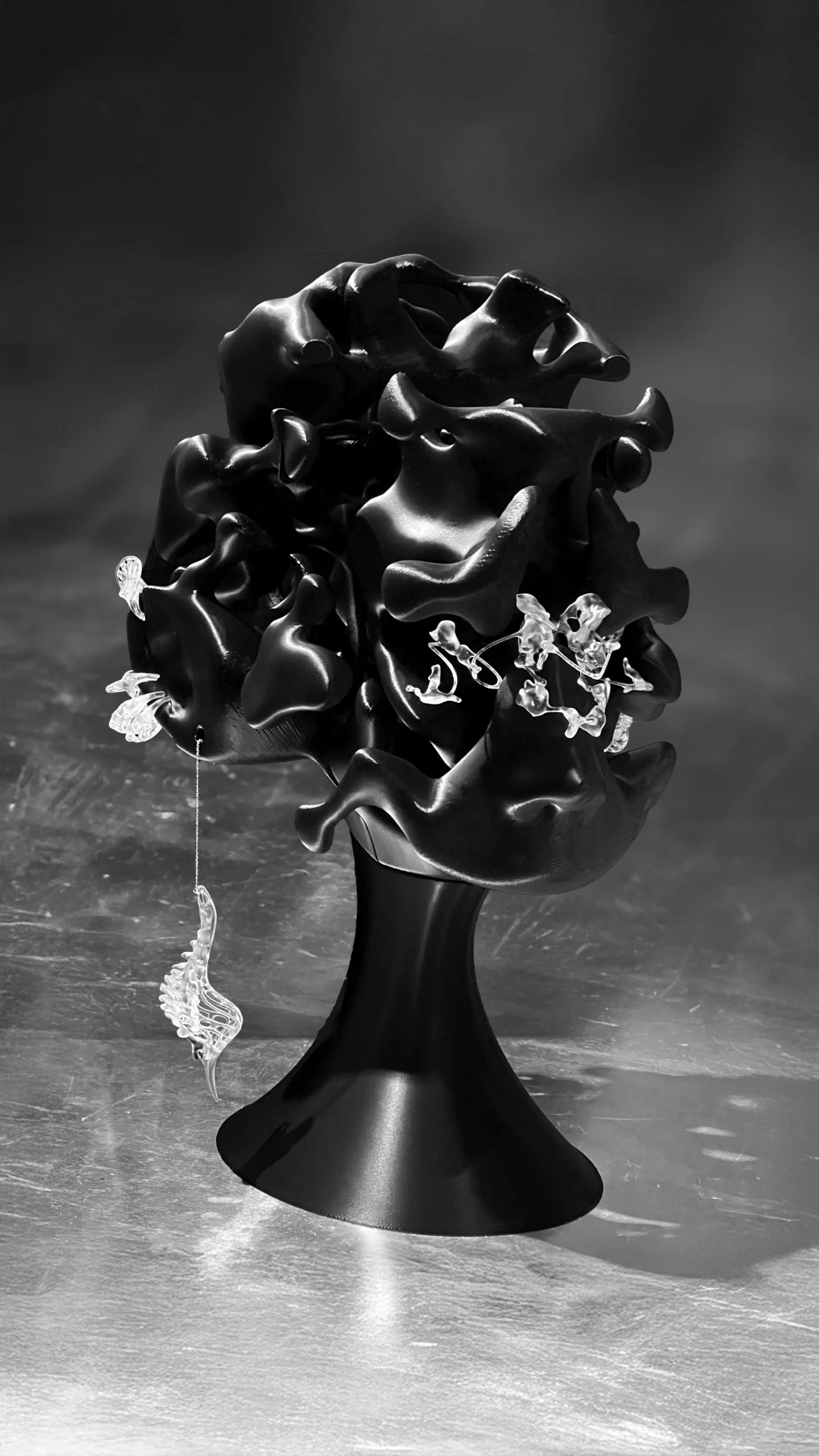
The workshop will then move into more advanced strategies, including recursive systems using Anemone that allow geometry to “grow” across the body, and volumetric design methods where structural “bones” are defined before generating a final skin using Dendro to produce complex, watertight 3D printable surface topology.
The course concludes with a practical overview of resin-slicing workflows in Lychee, focusing on preparing designs for castable resin printing and the lost-wax casting process used to produce precious-metal jewelry.
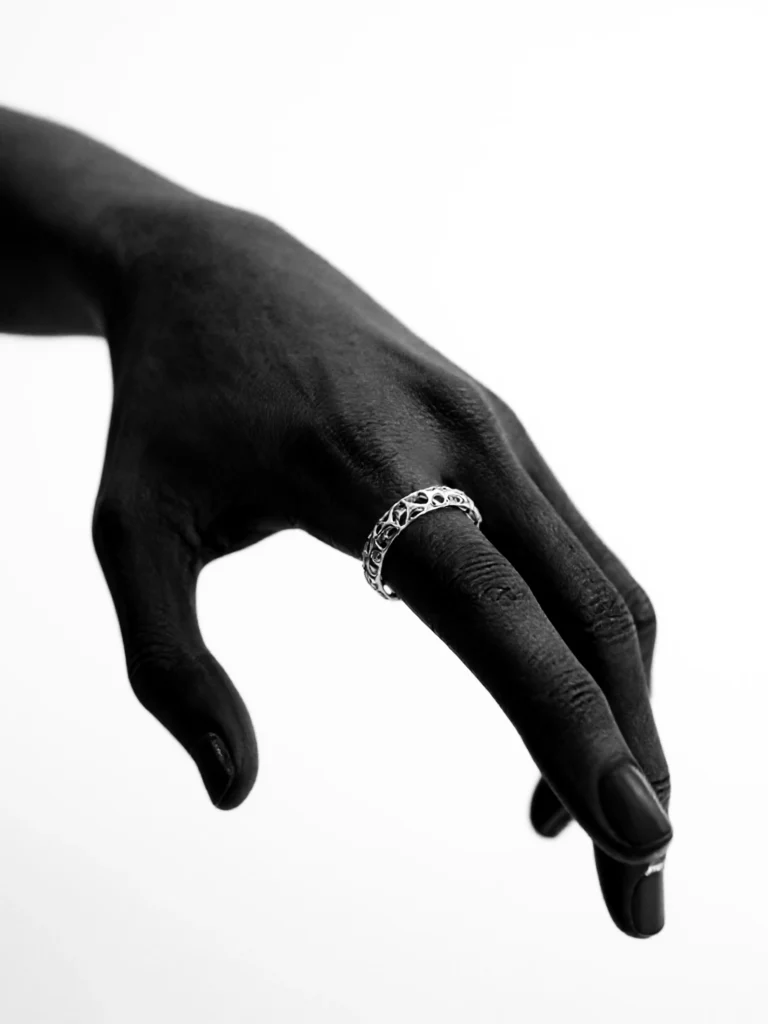
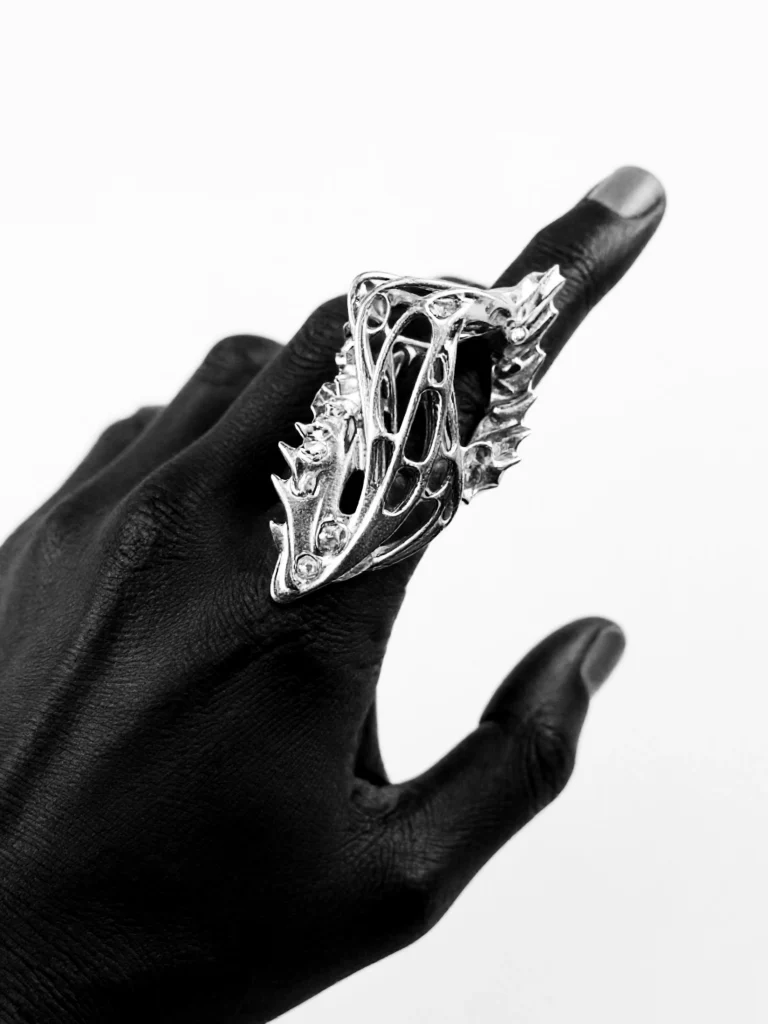
While demonstrations and discussions are shared collectively, each student will work individually on a final wearable project of their own, resulting in one complete, 3D-printable jewelry piece developed over the course of the weekend.
Key Learning Topics:
- Create parametric wearable designs that adapt dynamically to 3D body scans.
- Capture and clean body scans using a smartphone workflow with Blender.
- Use voxel-based methods to generate complex, 3D-print-ready geometries.
- Develop one complete, fabrication-ready wearable design.
- Build scalable design systems for customization and series-based production.
- Prepare designs for resin 3D printing and future physical fabrication.
Program:
Day 1
- Introductions, Thesis Lecture
- Follow Along Workshop [3D Scanning + Blender Sculpting]
- Follow Along Workshop [Grasshopper: Peacock Jewelry and Pufferfish Tween & Twisted Boxes]
- Follow Along Workshop Grasshopper: Anemone Recursive systems and Dendro Volumetric Modeling
- Student Task: Create design ideas for your own piece of custom jewelry
Day 2
- Design Review of student work from the previous day – Q&A Design Help
- Follow Along Workshop [Grasshopper: Combining all skills and adding my custom Sinew plugin to add extra organic details
- Resin 3D Printing Thesis Lecture and Lost Wax Casting Explanation
- Final Participant Presentations
Software:
Plugins:
- Dendro
- Pufferfish
- Peacock
- Anemone
- Mesh+
- Weaverbird
- NGon
- Sinew (custom file)
Workshop Notes:
- Software Installation is NOT a part of the workshop! Students must have all the software installed before starting the workshop.
- Polycam is not a requirement as 3D scan files will be provided, but students are recommended to explore the tool after the course.
- Access to a 3D printer is not required for the workshop. We recommend you experiment with 3D printing after the course to print your creations.
Instructor:
RJ Weaver

RJ Weaver is a computational designer with a passion for personalized mass-manufacturing and wearable body architecture, and strives to craft solutions that contribute to a more beautiful and equitable world. Originally from Virginia, U.S.A., and now based in London, he holds a degree in Industrial Design from Virginia Polytechnic University and a master’s degree in Computational and Advanced Design from DesignMorphine in Sofia, Bulgaria.
He has been working with computational design tools such as Grasshopper and Houdini for the past 10 years, and since 2022 has been publishing tutorials on his YouTube channel and lecturing at American universities. He is currently the 3D Design Director at the fashion design studio ORBWEAVER, where he oversees the brand’s jewelry direction. His work has been exhibited in London galleries and featured on the runways of BioTech Couture and Vêtement de Rue, exploring contemporary parametric and virtual reality design workflows through wearable sculpture.
Important Notes:
- The “Dynamic Wearables for Fashion Design” Studio workshop by PAACADEMY will start at 14:00 (GMT) on Saturday, April 4th, 2026.
- Total sessions: 2 Sessions (8 Hours).
- The teaching duration per session will be 8 hours.
- Students will have time for a break between teaching hours.
- Each session and the entire studio will be recorded, and videos will be available for participants just a day after the class for an unlimited time.
- PAACADEMY will provide a certificate of attendance.
- The studio has limited seats. Tickets are non-transferable & non-refundable. Please read carefully before you register.

Topic: Dynamic Wearables for Fashion Design
Date: April 4 – 5, 2026
Time: 14:00 – 18:00 GMT
Format: Online on Zoom
Duration: 2 Sessions (8 Hours)
Registration Deadline: April 3rd, 2026
Total Seats: 50 seats
Difficulty: Beginner – Intermediate
Language: English
Certificate: Yes
General Registration: 100 EUR
Join free: with Full Access membership
Fee for Digital Members: 85 EUR (15% discount available only for Digital Members)
Organized By: PAACADEMY
Tutor: RJ Weaver
Recordings: Recordings will be available for all participants afterward indefinitely.