
On January 28, Full Sail partnered with Orlando Health to host the inaugural Adaptive Gaming Showcase in the Full Sail University Orlando Health Fortress. The event brought together the healthcare, technology, and gaming communities to showcase the latest innovations in adaptive devices designed to make gaming accessible.
“We noticed that many of our patients were doing lots of research on their own to try and find adaptive technology for gaming after a major injury changed their life,” said Christine Davidson, senior director of ambulatory rehabilitation operations at the Orlando Health Advanced Rehabilitation Institute Outpatient Center, which oversees physical, occupational, and speech therapy services. “I was fortunate to connect with our partners at Full Sail, who took my idea to an entirely other level with this expo. We look at the person as a whole and want to make sure we can help people reintegrate back into whatever outlets they enjoy, and the gaming community has been so welcoming.”
This event really solidified that Full Sail is the place for creating technology and will help strengthen our place in developing adaptive tech, not only for gaming but also for everyday life.”
Christine visited the Full Sail campus over a year ago and connected with Jacob Kaplan, Director of Esports Business Strategy, to find out how Full Sail students, grads, and partners were supporting adaptive technology. The discussions ultimately led to this unique event with a variety of technology designed for those who have experienced strokes, brain injuries, spinal cord injuries, and other physical disabilities.
“It truly speaks to our partners all coming together for the greater good in order to create this wonderful experience,” Jacob said.
The event featured several booths with a variety of technology that attendees could actually get their hands on. Course director Robin Koman from the Game Design master’s program and students Lucas Fuica and Lui de Brito displayed Star Gazer, a puzzle game played using eye-tracking technology based on the TOBII Eye Tracker 5. The game was originally developed by Full Sail grads Vittesh Raghavan and Caitlin Anderson.
Simulation Engineering Program Director Rob Catto had a booth featuring student work from a Project and Portfolio course called Positive Cause. One example was a wristband that can help a person with a visual impairment sense how close they are getting to an object.
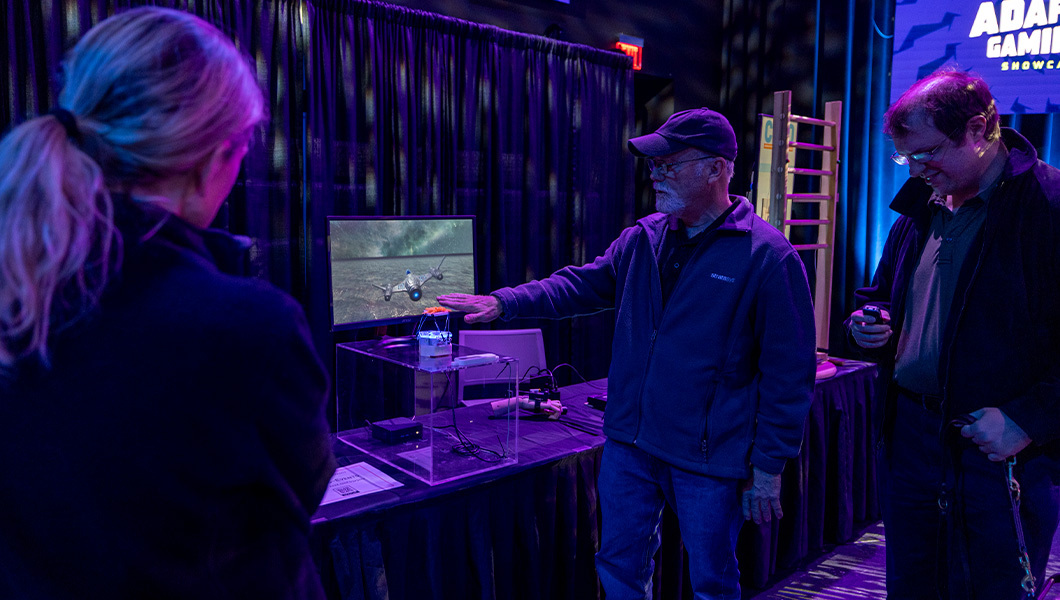
“We want our students to not only think about their jobs and what they’re doing, but also to think about their community and what they can do to help,” Rob explained. “We believe that giving them this experience of building something to help somebody is going to plant a seed in their mind.”
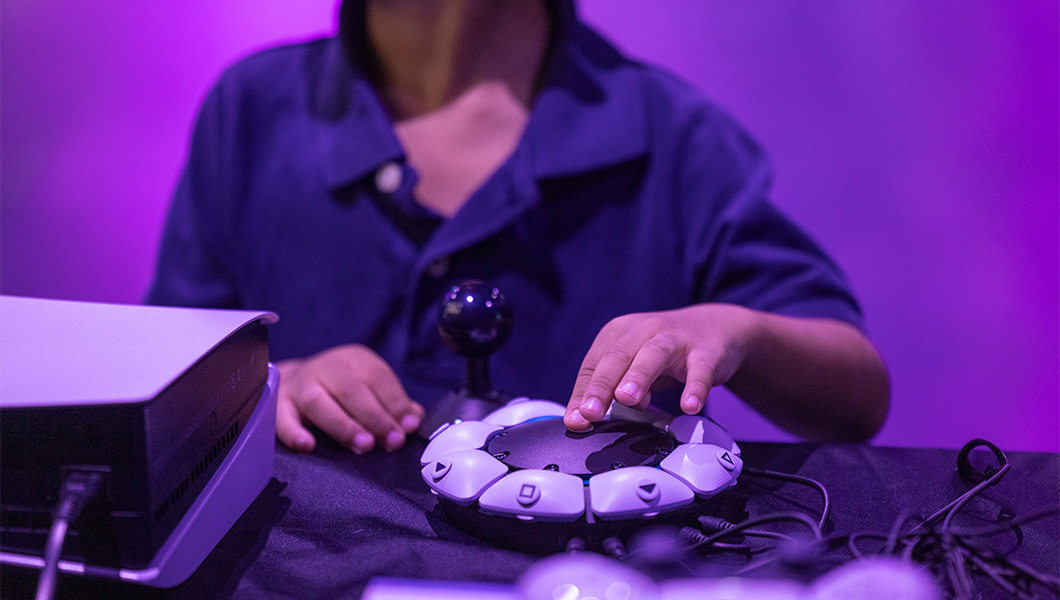
The Logitech G Adaptive Gaming Kit was also showcased. Released in 2019, the kit connects to the Microsoft Xbox adaptive controller and PlayStation 5 Access controller to make these devices more customizable. Additionally, a group from Limbitless Solutions, a nonprofit research lab made up of undergraduate students at the University of Central Florida, demonstrated some of the prosthetics and games they’ve developed for gamers with limb differences.
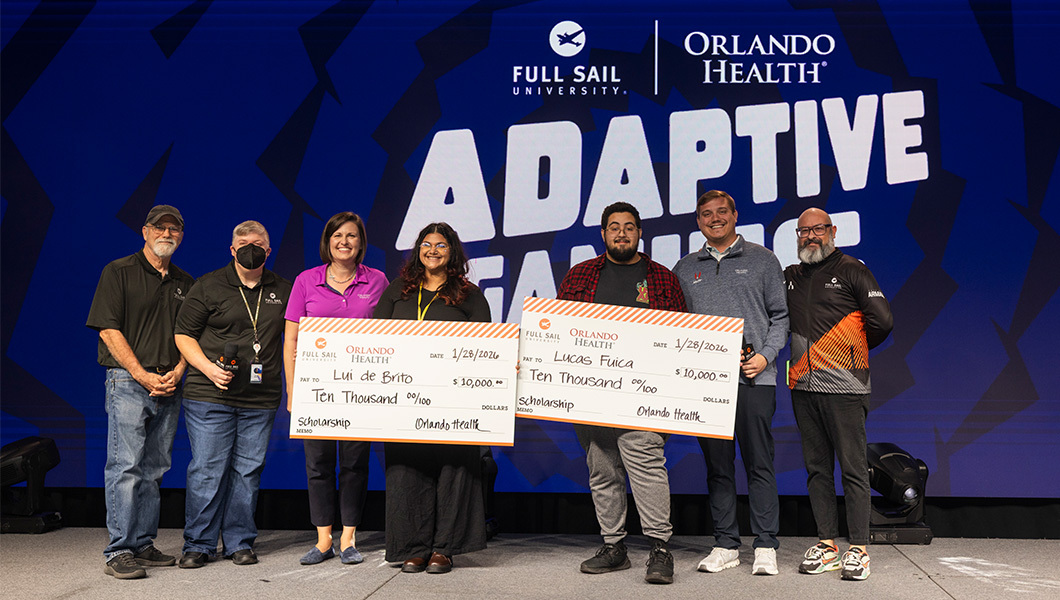
As part of the event, Orlando Health surprised Lucas and Lui, the Game Design students, with scholarships of $10,000 each. They have both been working on adaptive gaming technology in their coursework.
Jacob said he thought the event was a great way to highlight the innovative ideas Full Sail’s students and grads have come up with to build technology that makes a difference in the world.
“This event really solidified that Full Sail is the place for creating technology and will help strengthen our place in developing adaptive tech, not only for gaming but also for everyday life,” he said. “This was the first of its kind in the Central Florida community and the hope is to build on this in the future.”