
Calls to loosen financial disclosure rules for the University of Hawaiʻi Board of Regents try to fix a problem that doesn’t really exist — while risking a very real one.
The Board of Regents is not short on qualified leaders. It already includes experienced public servants with deep ties to Hawaiʻi and a clear commitment to ethical government. One member is former Gov. Neil Abercrombie, who brings decades of public leadership and a strong understanding of the university’s role in our state. The board also includes the executive director and legal counsel of the Maui County Board of Ethics, whose career centers on transparency and public trust. While these individuals may not love the disclosure requirements, they understand that openness is part of serving the public and have chosen to serve nonetheless.

Transparency is not red tape. It is one of the basic tools that helps people trust their government. Financial disclosure rules make sure that decisions about public institutions are made in the open and that possible conflicts of interest can be seen and addressed. For an institution as important as the University of Hawaiʻi, that kind of trust is essential.
Hawaiʻi’s disclosure system already protects personal privacy. Filers do not list their home addresses, and outside income is reported only in broad ranges, not exact dollar amounts. These limits are intentional. They provide the public with useful information about potential conflicts without disclosing unnecessary personal details. Claims that the rules are too intrusive overlook the privacy protections already built into the law.
Some higher-income individuals may still feel uneasy about sharing the number of properties they own or the sources of income they receive. That feeling is understandable. But it cannot outweigh the public’s right to accountability.
Weakening transparency simply to make board service more comfortable for a small group of potential appointees is not a sound tradeoff. Public service has always required some willingness to operate in the open.
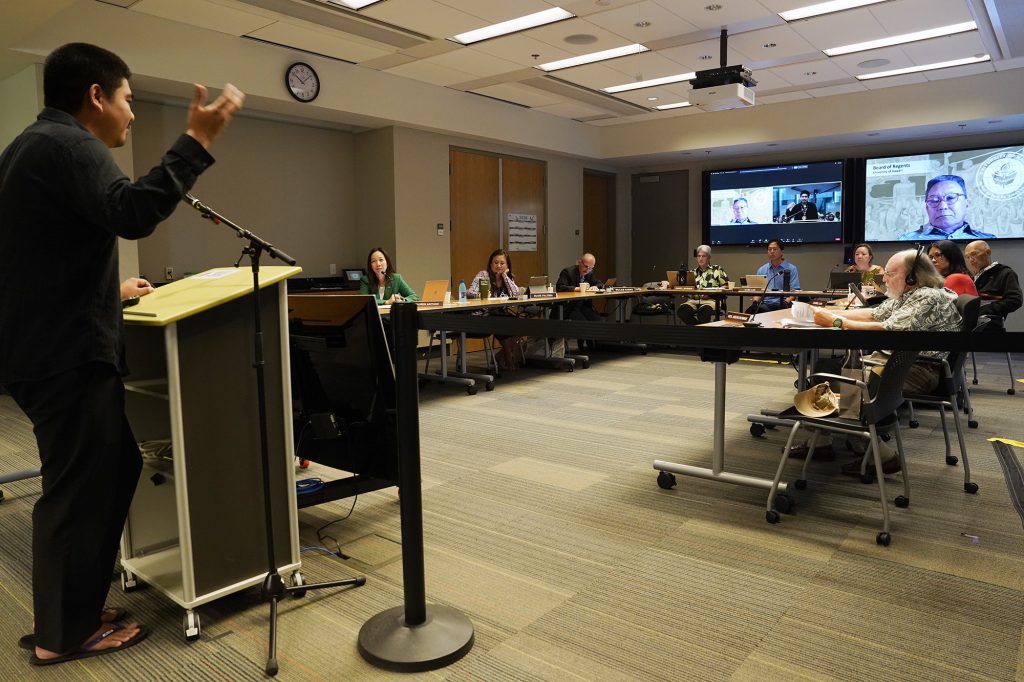
This is especially important because the UH Board of Regents is not an obscure body. It has long been connected to Hawaiʻi’s political life. Regents are appointed through a political process and make decisions that regularly intersect with the Legislature, the governor, labor unions, donors, contractors and research partners. They oversee billions of dollars in public funding, valuable land and facilities, major construction and purchasing decisions, labor negotiations and policies that affect students and families across the state.
That political reality is not a criticism — it reflects how central the university is to Hawaiʻi’s future. But when a board sits at the crossroads of public money and political influence, transparency becomes even more important. Reducing disclosure requirements in that setting sends the wrong signal. It also creates the risk of corruption and self-dealing.
The current board shows that Hawaiʻi can attract capable, ethical and politically experienced leaders without weakening transparency. Strong leadership and strong disclosure rules work together. Reducing those rules risks public confidence without offering clear benefits.
The University of Hawaiʻi deserves governance that is not only effective but also clearly accountable to the people it serves. Transparency does not stand in the way of good leadership — it is what makes that leadership credible.
