
Reframing Fashion Production Through Digital Spatial Systems
Four Typologies is a digital interactive project by Qihang Fan that examines decentralized upcycling fashion factories through a web-based platform. The project introduces Garden Fashion Factory models that reposition fashion production within distributed spatial systems, proposing alternatives to centralized industrial manufacturing.
Presented as an interactive website, the platform allows users to navigate architectural environments across multiple scales, from urban networks to small production spaces. Within these settings, a nonlinear upcycling workflow is embedded into the spatial experience. By linking architectural representation with fashion processes, the project frames digital space as a medium for understanding production systems and spatial organization.
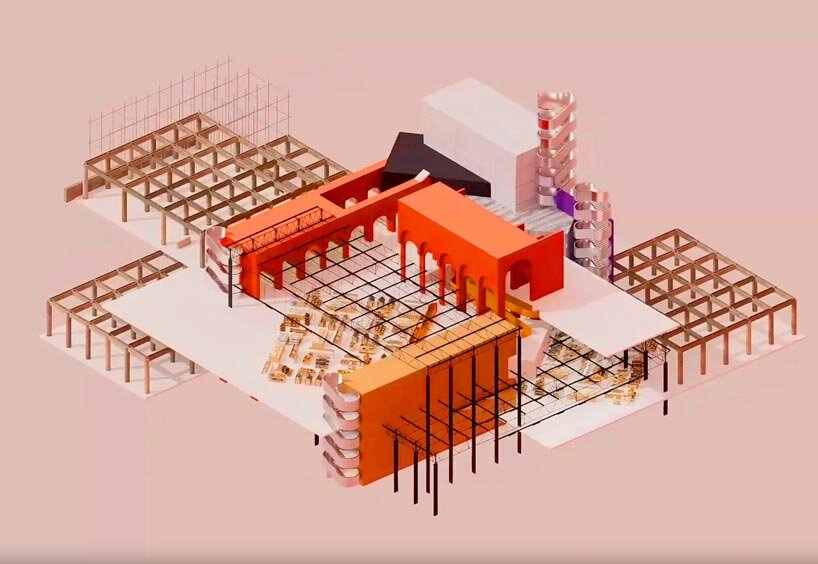
Market | all images by Qihang Fan
Architectures of Upcycling: Qihang Fan’s Digital Exploration
The research responds to the growing adoption of craft-based upcycling practices within contemporary fashion. While many fashion houses incorporate reuse-driven methods, conventional factory models remain structured around linear assembly lines. Four Typologies proposes the Garden Factory as a spatial typology aligned with iterative and small-batch production. Distributed production units integrate with surrounding contexts such as markets, cities, agricultural land, and natural landscapes, forming a decentralized network of making.
The project by designer Qihang Fan analyzes upcycling methodology through seven identified phases: deadstock dive, deconstruction, categorization, ideation, combination, reconstruction, and audition. Rather than following a fixed sequence, designers move repeatedly between stages to refine garments. This iterative structure contrasts with both linear assembly systems and closed-loop circular manufacturing models, emphasizing adaptive decision-making over standardized optimization.
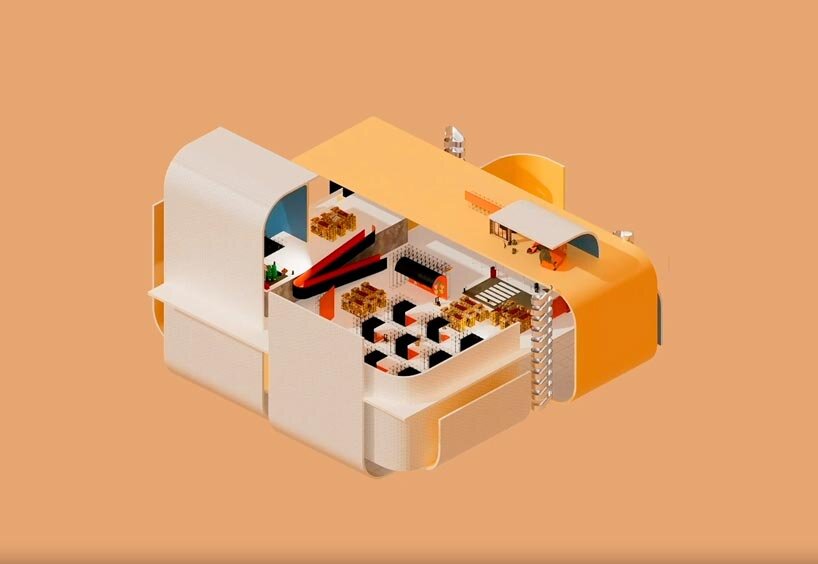
Exhibition
In response, the architectural framework operates at two scales. At the macro scale, factory programs adapt to local environmental and urban conditions. At the micro scale, human participation informs each stage of production, allowing activities to shift between specialized spaces instead of remaining confined to a single workflow corridor. This distributed model contrasts with centralized factories that prioritize efficiency through spatial simplification and process compression.
The project is communicated through an interactive web-based medium rather than static drawings or renderings. Accessible via browser, the 3D environment enables users to explore spatial relationships and production sequences directly. By integrating architectural navigation with fashion workflow simulation, Four Typologies presents decentralized production as both a spatial and digital system.
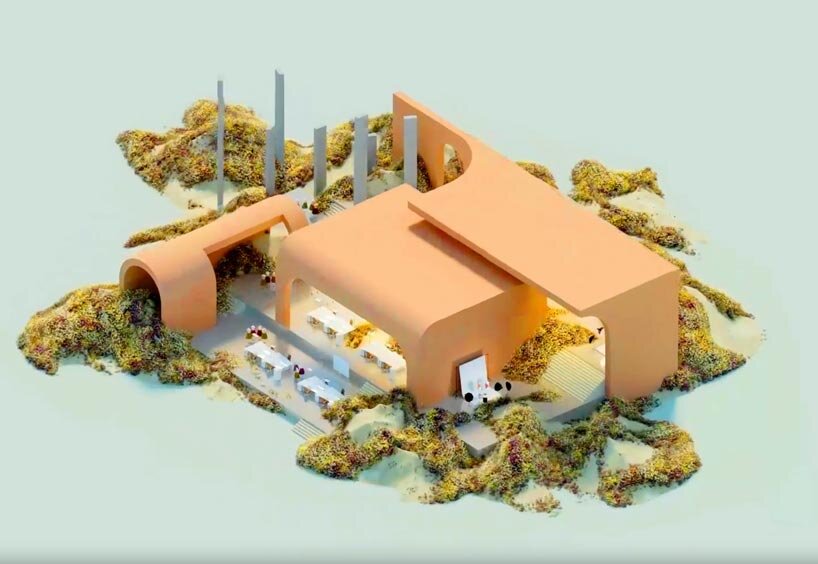
Studio
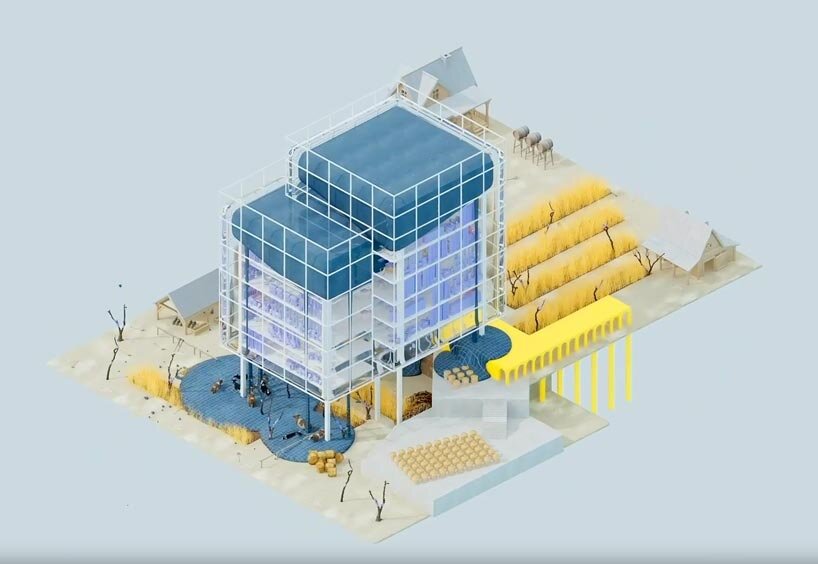
Tower