
Hi everyone, welcome back to SportsVerse, my twice-weekly newsletter that tells stories you can’t find anywhere else about the intersection of sports, fashion, business, and culture.
Brands across sectors, from beauty to fashion, are latching onto sports’ momentum in recent years. But it remains to be seen whether their strategies will pan out – and if they are credible, durable or truly meaningful to the leagues as well as consumers.
For the latest deep dive collaboration with my friends, The Consumer Collective, we decided to break down which sports are leading and emerging, what participation and viewership actually look like, and how brands should be thinking about both the sport and the consumer to reach their goals. Those goals may vary, but ultimately, sales are a function of loyalty.
We’re walking through participation, viewership and investment to understand where real business opportunities exist.
-
Participation signals opportunity for product demand, community building, experiences, and travel
-
Viewership unlocks potential for merch, collaborations across sectors and cultural storytelling
-
Investment shapes how a sport evolves — how it is built or rebuilt, how stories are told, and how leagues, channels and audiences are approached by brands.
Below, we set out the sports we see as key battlegrounds for brands across the fashion, sportswear and beauty industries. We assess each for its long-and short-term viability, taking into account marketing, brand activity and business opportunities.
Soccer has truly come into focus in North America ahead of what is set to be the most anticipated World Cup in the past two decades, not least because it’s the final time all-time greats and cultural icons like Lionel Messi, Cristiano Ronaldo and Neymar Jr will grace the international stage. The Super Bowl is often spoken about as the most valuable marketing arena in all of sport, which generates the most eyeballs. But the influence of the Super Bowl pales in comparison to the global, avid fandom and unrivaled viewership generated by the World Cup. With this summer’s World Cup Final taking place on U.S. soil, FIFA has taken extra efforts to make the event even more “brand-friendly.” For example, for the first time ever, the Final will have a halftime show. More broadly, soccer has become a key driver of fashion, sneaker and cultural trends thanks to big pushes by the likes of Nike and Adidas to accentuate their heritage in the sport and dominate the upcoming tournament.
Participation
Soccer is the one true global sport. FIFA’s “Big Count” found around 265 million active footballers worldwide, and around 270 million people involved in the game, including referees and officials — making it the world’s most played sport. This figure doesn’t account for the further millions playing football casually or at grassroots level without registration.
Viewership
In the U.S., while it ranks behind several other major sports like basketball, football and baseball, soccer is certainly one of the most popular and widely adopted sports at grassroots level. Overall popularity of U.S. soccer has been boosted by an influx of stars to the MLS (Major League Soccer), like Messi, Son Heung-min and Thomas Muller. The growth of U.S. women’s soccer has been led by breakout next gen stars like Trinity Rodman, who is increasingly becoming one of the key faces of Adidas’ soccer presence worldwide and recently became the highest-paid female footballer in the world.
In terms of the World Cup, no other sporting events drive parallel viewership. In 2022, the Final attracted 1.5 billion viewers worldwide. FIFA estimates that around 5 billion people tuned in across the whole tournament. There is a compelling argument to be made that this summer’s World Cup — the largest ever of its kind, spread across three host nations — will be the most watched sporting event in history. For brands, this is an opportunity they can’t afford not to capitalise on.
Investment
Soccer’s cultural rise in the U.S. has led to an influx of celebrities and other athletes viewing teams as a viable investment class. Nigerian music star Tems became a minority owner of Major League Soccer’s San Diego FC. Meanwhile, Angel Reese is an investor in DC Power Football Club. Luxury, sportswear and beauty brands have long been interested in the global platform soccer brings. This is only intensifying as the World Cup — in the vital North America market — approaches. Adidas and Nike are relaunching and revamping storied product franchises like the Predator and T90, respectively, in a bid to win the brand wars ahead of the tournament. Adidas, which as usual is an official World Cup sponsor, has the advantage in that sense, but it will be coming up against Nike on its home soil. Brands are also gravitating to the sport more and more because soccer players themselves are becoming increasingly influential in fashion, with the likes of Jules Kounde becoming accustomed to walking in fashion shows or starring in Jacquemus campaigns.
Business Opportunities
-
Fashion: Athlete and team collaborations as tunnel walk culture continues to permeate soccer.
-
Beauty: Working with exciting women’s football talent as the game continues to boom and birth new stars like Croix Bethune and Trinity Rodman.
-
Sportswear: Being the dominant brand at the World Cup will be the ultimate goal for Nike and Adidas. For Nike, it’s crucial it puts in a strong showing on its home turf. For Adidas, it’s a good chance to get one over its rivals as it continues its North America push.
— DYM
Men’s basketball has renewed cultural momentum, particularly as the 2026 NBA Finals approach in June, with energy showing up through watch parties at home, in bars and strong in-person attendance. Knicks fans have been especially visible locally as the team does well, though nationwide viewership remains high during marquee matchups. At the same time, women’s basketball has emerged as the real growth driver. Interest has meaningfully taken hold, with rising viewership and attendance, and the sport represents one of the largest remaining whitespace opportunities for brands seeking to engage new audiences and support athlete-driven storytelling.
Participation
Internationally, basketball participation continues to expand even as U.S. growth shows mixed signals. According to the International Basketball Association (FIBA), more than 610 million people play basketball regularly worldwide, making it one of the most widely played team sports, with China alone accounting for over 200 million players. The sport has strong engagement across Eastern Europe and other regions, supported by robust youth programs and club infrastructure. In the U.S., however, participation tells a more complex story: while overall engagement remains high, girls’ high school basketball participation in the U.S. has declined over the past decade, falling from 432,833 in 2011–12 to 395,708 in 2023–24, according to NFHS (National Federation of State High School Association) participation data, even as viewership and cultural relevance grow. At the same time, this decline is not uniform — states such as Texas and California have sustained or grown girls’ participation, highlighting a widening gap between markets with strong youth access and those without. This discrepancy underscores a broader tension between the sport’s cultural relevance and grassroots accessibility, pointing to opportunities for investment in infrastructure and programming both domestically and abroad.
Viewership
Viewership for basketball continues to grow across men’s and women’s leagues. The 2026 NBA All‑Star Game drew its largest audience in 15 years, averaging 8.8 million viewers and peaking at 9.8 million across broadcast and streaming platforms, up 87 percent from the prior year. At the same time, this NBA regular season is one of the most watched on ESPN networks, averaging 2.6 million viewers through 21 games — up 35 percent year‑over‑year and showing marked increases among youth and women viewers. The 2025 WNBA season set new viewership records on ESPN, with regular season games averaging 1.3 million viewers (up 6 percent year‑over‑year) and the WNBA Finals averaging 1.5 million across four games, among the most watched Finals series on record. These gains reflect broader engagement with players and team narratives, and viewership growth is showing up in both television and digital platforms.
Investment
Women’s basketball has become a focal point for new investment, particularly around league growth, athlete visibility, and media storytelling. Beyond the WNBA’s rising commercial profile, capital is flowing into adjacent competitive platforms: players are joining emerging leagues such as Unrivaled, Athletes Unlimited and Project B, expanding professional opportunities beyond the traditional season. Last offseason, Angel Reese was one of 36 players in the inaugural Unrivaled season, as the league drew national attention for its fast-paced 3:3 game formats and player-ownership structure.
Participation and viewership at the grassroots and collegiate levels are also fueling commercial interest. Women’s college basketball games have posted strong TV audiences — a December 2024 UConn vs. USC matchup drew 2.23 million viewers, making it the most‑watched women’s college game on any network that season, and the 2025 NCAA Championship game drew 8.6 million viewers, ranking among the top in history for the sport. Stars like Azzi Fudd and JuJu Watkins, who rank among the college players with the highest NIL valuations and major brand deals, are helping sustain consumer interest and sponsorship momentum. These trends — from NIL growth and broadcast demand to new leagues — underscore expanding investment opportunities across professional, collegiate and media ecosystems in women’s basketball.
Business opportunities
Basketball continues to lead in redefining athlete storytelling, positioning players as cultural figures and relatable role models. While this has long existed in the NBA, the WNBA is entering its most commercially relevant phase.
-
Fashion: Building athlete-led storytelling, including tunnel moments as cultural runways, like Prada and Coach
-
Beauty: Creating product ecosystems that support athletes before, during, and after games
-
Sportswear: Investing in performance-driven product focused on women, experiences, awareness and long-term alignment
— Jessica
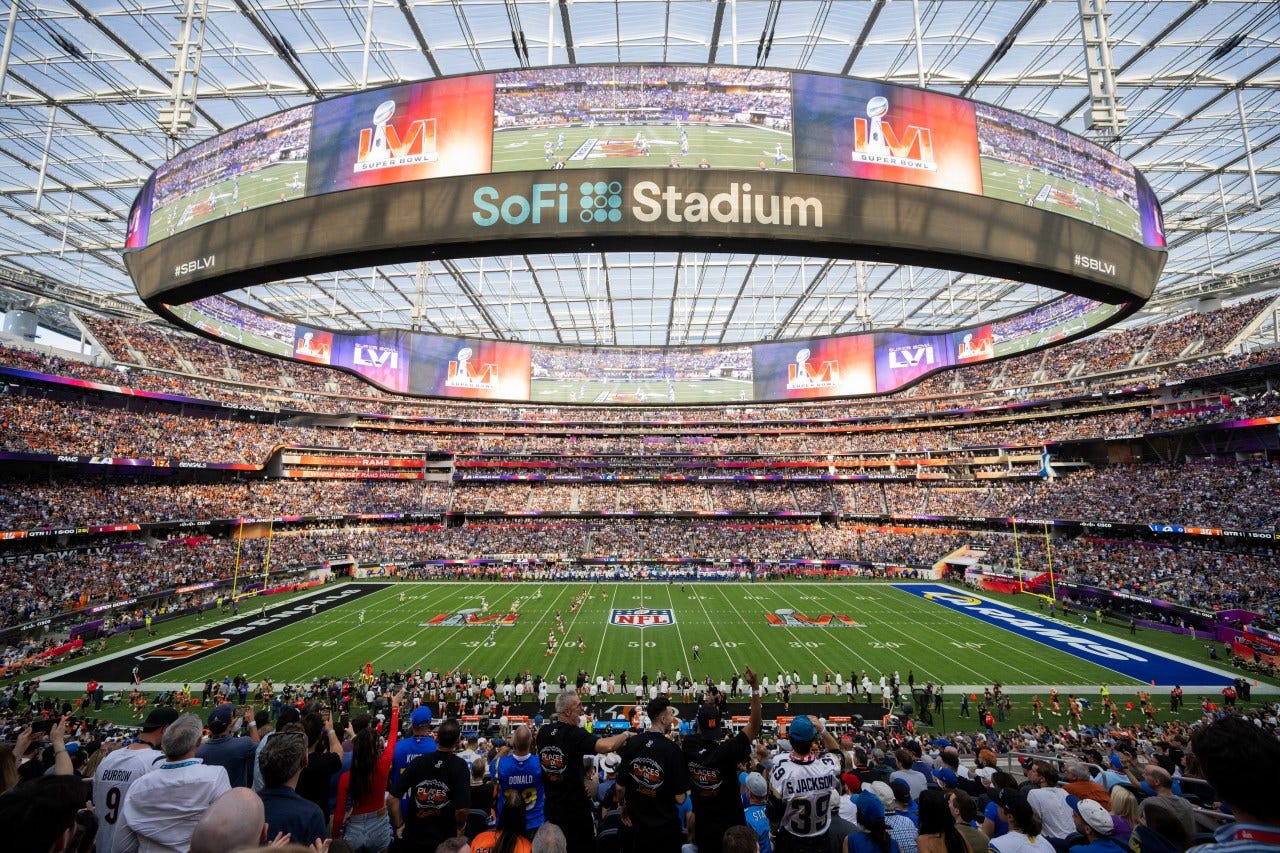
The NFL is modernizing its reach, expanding to global audiences and new cultural touchpoints. As part of its International Series, the league will play at least three regular‑season games in Rio de Janeiro over the next five years beginning this year, deepening engagement in Brazil, and will host a game in Paris at the Stade de France as part of its broader global rollout. Games have also been confirmed in Germany, Spain and the U.K. Kyle Smith was named the NFL’s first‑ever fashion editor in 2024, bringing fashion into the league’s cultural strategy by curating player style content and partnerships and helping elevate athletes as lifestyle figures. This emphasis mirrors broader trends, with brands increasingly using NFL players as cultural and fashion icons in ways similar to the NBA and WNBA. Collaborations with designers like Thom Browne and others highlight the sport’s growing intersection with fashion and culture.
Participation
Flag football participation is rising sharply, with growth especially strong among girls and youth. According to the National Sporting Goods Association, overall flag football participation in the U.S. reached 6.2 million in 2023, with female participation climbing to 1.6 million — up 55 percent year‑over‑year. At the high school level, the National Federation of State High School Associations reported 68,847 girls playing flag football in 2024–25, a 60 percent increase from the previous year and the sport is sanctioned by an expanding number of states. Participation gains are reinforced by youth engagement, with roughly 500,000 girls ages 6–17 playing flag football — a 63 percent increase since 2019 — with additional growth at the collegiate level, where flag football has been added to the NCAA Emerging Sports for Women program and is expected to expand to around 60 varsity teams in 2026. These trends underscore rising interest and formal infrastructure growth that could shape future fandom and competitive pathways.
Viewership
Viewership for the NFL remains strong and continues to grow across multiple platforms. In the 2025 season, the league averaged an impressive 18.7 million viewers per game, the second-highest regular-season average since 1988, up 10 percent from the previous year. Super Bowl LX also drew massive attention, averaging 124.9 million viewers across broadcast and streaming platforms and peaking at 137.8 million at one point, making it the second-most-watched broadcast in U.S. history. These audience gains have been accompanied by visible growth in merchandise consumption, fueled in part by the Taylor Swift effect, which helped broaden the league’s fanbase and boost sales, and by rising player-adjacent celebrity influence, including the Kelce brothers’ popular “New Heights” podcast and “Not Gonna Lie with Kylie Kelce.”
Investment
Investment in football is beginning to materialize around emerging formats like flag football, though it remains early relative to participation and cultural momentum. In late 2025, NFL clubs voted to invest up to $32 million through their collective vehicle, 32 Equity, to support the development and launch of a professional flag football league for both men and women, creating a clear pathway from youth to the professional level ahead of the sport’s Olympic debut in Los Angeles 2028. This initiative has attracted interest from major partners and potential operating groups, including ventures backed by high-profile athletes and owners seeking to shape the sport’s commercial infrastructure. Outside the U.S., Global Sports Capital Partners committed over $100 million to expand and professionalize the Liga de Fútbol Americano in Mexico, signaling broader investor interest in American football ecosystems and talent pipelines across North America.
Business opportunities
While some have criticized Lululemon for entering the NFL ecosystem, this move aligns with broader consumer behavior. Lululemon has been growing its men’s category, while women’s growth in the U.S. has been more muted (likely driven by product gaps rather than strategy). As more women engage with the NFL, the league becomes a lifestyle touchpoint, not just a game-day one. This represents a meaningful customer acquisition opportunity — provided the product delivers. The opportunity here requires creativity, particularly through experience-led collaborations and lifestyle-relevant product thinking.
Fashion: Beyond fashion brands working with players to create more stylized imagery and storytelling, there is an opportunity for brands to develop elevated VIP experiences tied to in-person attendance.
Beauty: The beauty opportunity extends beyond male athletes and their connection to the male beauty and wellness consumer, and into the growing female in-person audience. Experiences could include pop-ups that focus on practicality — products often forgotten in a handbag, such as feminine hygiene items, lip gloss and other essentials.
Sportswear: With the growth in girls’ and youth flag football, brands have an opportunity to mirror the approach taken in soccer, creating kits designed specifically with female cuts and fit in mind.
— Jessica
Boxing is seeing renewed interest while undergoing structural disruption. Unlike most major sports, boxing and MMA lack a single governing body, resulting in fragmented consumption across paid networks, free platforms and digital-first distribution. Streaming has become a key accelerant. Netflix’s entry has brought marquee fights to a global audience, including Jake Paul vs. Mike Tyson, Taylor vs. Serrano 3, and Canelo vs. Crawford.
Jake Paul vs. Mike Tyson drew an estimated 108 million viewers globally, underscoring streaming’s ability to scale the sport. Taylor vs. Serrano 3 reached roughly 6 million viewers, while generating a $2.63 million gate at Madison Square Garden — the highest for a women’s boxing card. Canelo vs. Crawford attracted 41 million viewers and generated over $47 million, the largest gate in Allegiant Stadium’s history and the third-largest in boxing.
Netflix appears committed to expanding its boxing slate, with upcoming events including Tyson Fury vs. Arslanbek Makhmudov and Supernova Strikers Genesis, a Mexico-based boxing spectacle blending influencers and celebrity participants. Influencer-led boxing continues to broaden the audience, with figures such as Jake Paul and Mexican streamer Alana Flores introducing the sport to younger, more diverse consumers and reshaping how boxing is marketed and consumed.
Participation
Boxing participation has increased and is expected to continue growing, particularly among women. Roughly 8.9 million people in the United States participated in boxing-related activity in 2024, spanning both amateur competition and fitness-based formats, according to Statista. U.S. boxing data shows continued momentum at the grassroots level, with total membership reaching approximately 60,000 athletes in 2023, with women representing one of the fastest-growing segments of the sport, more than doubling their participation since 2012. Boxing feels like a natural extension of the strength-training movement that has remained central to women’s fitness, and as viewing formats evolve, younger women are entering the sport earlier and with greater visibility.
Viewership
Viewership is expanding on a global scale. Saudi Arabia has been actively working to host and position itself as a destination for major boxing events, most recently backing Canelo Álvarez vs. William Scull — a super middleweight unification bout held in Riyadh in May that marked Canelo’s first fight outside North America and underscored the kingdom’s investment in combat sports. Creator‑driven formats are reshaping boxing’s reach: Spain‑based streamer Ibai Llanos’s La Velada del Año — a high‑profile boxing and entertainment showcase featuring internet personalities and competitive matchups — reached a peak of more than 9.3 million concurrent viewers on Twitch in July, making it one of the most‑watched livestreamed events on the platform and highlighting how influencer‑led boxing is engaging younger, more diverse audiences.
Investment
There is substantial room for investment as boxing participation continues to grow. Fragmentation across promoters, leagues and distribution platforms has created openings not only in women’s boxing, emerging leagues and innovative competitive formats, but also for boxing brands to modernize and for sportswear companies to tap into the sport through apparel, accessories like gloves and wraps, and footwear. Additionally, beauty, recovery and wellness brands can leverage growing athlete and consumer engagement, while alternative media models offer scalable distribution to reach new audiences.
Business opportunities
Canelo Álvarez has become a blueprint for boxing’s commercial upside. He ranked as the second-highest-paid athlete globally in 2025 according to Sportico, earning approximately $137 million, behind only soccer player Cristiano Ronaldo. Álvarez’s role as a global ambassador for Amiri underscores boxing’s resonance with luxury and street-luxury fashion, while his consumer ventures, Yaoca, which makes performance supplements, and VMC, a tequila-based beverage, signal the sport’s cultural expansion opportunities.
Fashion: There is room for fashion brands not only to partner with athletes, but to create custom looks for boxing matches and fight-week appearances. These moments offer a direct line to aspirational and luxury-oriented Hispanic consumers, where style, visibility and cultural signaling carry significant weight.
Beauty: As with other sports, there is opportunity across body care and recovery-focused wellness products for both men and women, including injury prevention and post-training recovery. As more women enter the sport, additional whitespace is emerging for skincare and waterproof makeup designed to perform before, during and after training, as well as wellness products that support impact, fatigue and muscle repair.
Sportswear: The opportunity in sportswear is significant across women’s apparel and footwear, while core equipment — including boxing gloves and hand wraps — is ripe for a modern revamp for both men and women, with improvements in fit, materials, and design. There is also room for tech-enabled gear and data-driven training tools that track performance, recovery, and progress. Beyond product, brands can extend into training environments and studios, using physical spaces as experiential touchpoints that introduce new athletes to the sport in a more accessible, design-forward way.
— Jessica
There’s no doubt that racket sports are having a moment. In tennis, there’s a crop of young and exciting players coming through on both the men’s and the women’s tours, while new entrant brands like On and Lululemon are disrupting the sport with interesting athlete signings, buzzy activations around major tournaments and compelling apparel and sneaker designs, while beauty and jewellery brands are flooding in to partner with athletes and major tournaments. There are exciting fashion-adjacent print publications increasingly dedicated to racket sports, like Racquet, Bagel, and Padel Magazine. Meanwhile, major sportswear brands from On to Nike — as well as luxury players like Rolex — are taking padel and pickleball increasingly seriously, looking to sign up elite sporting talent from both, benefiting from early mover advantage.
Participation
Major growth here comes from still-emerging sports like padel and pickleball, which stakeholders are betting are still at the beginning of their growth journeys.
-
Padel: While the sport has long been popular in pockets of Europe, it’s experiencing a global participation boom led by the U.S. In 2019, there were just 19 courts across the US. That number jumped to more than 650 courts in 31 states by early 2025, with the most courts situated in Florida. Companies like Playtomic are fuelling the growth of padel in terms of adoption by casual players, enticed by the sport’s more social elements compared to tennis, along with the fact that there are lower technical barriers to getting to a competitive playing level (e.g. no overhead serving, ability to play ball off the glass). In 2025, the International Padel Federation recorded over 35 million players worldwide, a 16.1 percent increase in clubs, a 15.2 percent rise in courts, and a 42 percent growth in members registered with national federations.
-
Pickleball: Pickleball has even fewer barriers to entry than padel, given the ease in setting up courts, lighter balls and paddles.
Viewership
Grand Slams like the US Open and Australian Open are becoming breakout cultural showcases within their own right, increasingly reaching audiences far beyond core tennis fans. Crucially, it’s not just TV viewership that is trending upwards, but IRL viewership at tentpole moments, too. This January’s Australian Open, for example, broke all historic attendance records, with 1.37 million fans watching the Grand Slam in person. Digital viewership is also fuelling tennis’ renaissance: TV viewership for last year’s US Open men’s final was up 82 percent from the previous year, while viewership of the women’s final was up 50 percent year-on-year.
While padel and pickleball undoubtedly are increasingly popular from an adoption point of view, what commercial proponents of those sports often omit is that they are extremely boring to watch on TV, or sometimes even live in the arenas. While gameplay can be compelling and exhilarating in short bursts, the lack of identifiable athlete stars and storylines renders it a limited fan experience at best.
Investment
Racket sports most likely have the most varied investment opportunities from a brand and athlete point of view. Nike recently launched into pickleball with the signing of 19-year-old world No.1 Anna Leigh Waters, while both On and Rolex were quick to sign world No.1 padel player Arturo Coello at the beginning of the year, indicating that both sports have commercial and cultural importance regardless of their lack of global TV viewership. The widespread adoption of both sports at amateur levels is becoming impossible to ignore for brand marketers. Meanwhile, other athletes are looking to get into padel. U.S. tennis star Frances Tiafoe invested in the New York-based Pro Padel League franchise last year, while several other prominent figures from the world of professional sports have backed various ventures across padel and pickleball. In tennis, the scope for investment is slightly narrower, given the maturity of the industry, but the whitespaces lie in the beauty and jewellery categories. Brands like Mejuri, Gorjana and Mecca Beauty have made great strides in engaging the communities of new fans flooding into the sport.
Business Opportunities
-
Fashion: Fashion and jewellery brands are still finding a lot of white space across tennis, padel and pickleball, given the sheer numbers of compelling athletes to work with, many of whom are relatively untapped from a brand-deal perspective.
-
Beauty: Following early movers like Mecca Beauty at the Australian Open, there is major scope for beauty brands to activate at tentpole tennis moments like Grand Slams, both for pop-up retail moments to take advantage of unprecedented attendance, but also to integrate product into moments like athlete glam rooms.
-
Sportswear: The sportswear space in racket sports is ripe for disruption. Nike’s creative engine is firing in tennis again, while new brands like On continue to push the boundaries of tennis culture from a design and marketing POV. Athletes themselves are finding room to create their own brands, or share their own designs in collaboration with their sportswear brand partners, like Naomi Osaka.
— DYM
Key Takeaways
-
Brands are flooding into sports more than ever before. The question is, what separates the strategies that set brands up for long-term success in the sports industry vs. collaborations designed for short-term hype, which are here today and gone tomorrow?
-
Soccer is arguably the most saturated sport of all when it comes to partnership activity involving fashion and beauty brands. The space is set to get even more congested as we approach the World Cup this summer, which looks set to be the most watched sporting event of all time.
-
Racket sports are a close second, but there is significant white space in emerging offshoots like padel and pickleball.
-
The NFL has seen an uptick in interest from the fashion industry of late after setting a strategy to align itself closer with the industry, hiring insiders like its fashion editor, Kyle Smith, and attracting deals from the likes of Abercrombie and Lululemon.
-
For brands, understanding the unique requirements of athletes or sports teams as partners (compared to influencers or celebrities), is essential to unlocking the most from collaborations.
Further reading: Established sports which have long sat on the fringes, like hockey and volleyball, are increasingly getting attention from mainstream fans and fashion and beauty brands. Stay tuned to The Consumer Collective for an upcoming deep-dive into the former, and to SportsVerse for a look at a disruptor brand taking advantage of unprecedented interest in the latter.
That’s all for today, friends. Thanks for coming along for the ride.
See you soon,
DYM