
Operations
Driven by the culinary legacy of a “supertaster” chef and a rigorous, 23-level merit-based labor system, Regents Pizza transformed from a twice-failed local shop into a $7.7 million powerhouse by mastering both New York and Chicago styles alongside an elite, Cicerone-led craft beer program.
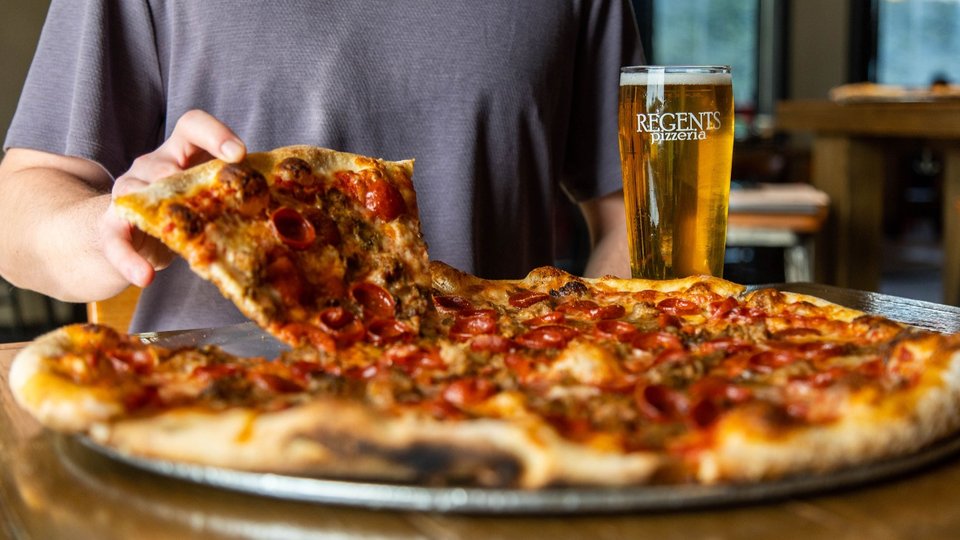
Photo: Regent’s Pizza
February 19, 2026 by Mandy Wolf Detwiler — Editor, Networld Media Group
In 2005, Chef Stephen Carson walked into a failing 1,100-square-foot pizzeria in tucked away on the bottom floor of a medical complex in La Jolla’s UTC district in California and saw something others had missed. The shop, Regents Pizza, had already failed twice and was hemorrhaging money on less than $450,000 in annual sales. But Carson, a “supertaster” with a refined palate for complex flavors, partnered with turnaround expert Bill Vivian to transform the struggling spot into a culinary destination.
Twenty years later, Regents Pizza has evolved into a Southern California powerhouse, generating $7.7 million in annual revenue from a single location by mastering the rare “diplomatic” feat of serving both authentic New York and Chicago deep-dish pizzas alongside an elite craft beer program.
Carson and Vivian had known each other for 15 to 20 years when they partnered, both having experience in the pizza industry already. Carson was diagnosed with melanoma in 2008 and passed away three years later. Vivian purchased a majority interest in the concept and took over. They eventually moved their small pizzeria into the endcap of their strip center, which afforded them 4,100 square feet. While their old restaurant had just 30 seats, the new location boasts 130.
Today, the brand distinguishes itself from the competition with Carson’s handcrafted menu of New York and Chicago-style pizzas and a craft beer program any pizzeria would envy.
On tap
To complement their mastery of both styles of pies, Regents Pizza has established a beer program that rivals the sophistication of elite wine cellars. In a city often regarded as the “craft capital” of the US, the restaurant distinguishes itself through a rigorous, expert-led approach to service.
San Diego has been a hub for the development of craft beer tasting rooms and microbreweries. Vivian said there are no closely guarded secrets, as “people in the craft beer world love to see each other succeed,” Vivian said, adding that the area has about 150 craft breweries today.
One of his current partners, Cary Reuter, helped build the craft beer side of Regents Pizza’s business. The bartenders are all Cicerones — the beer equivalent of a sommelier.
“The reason for that is we knew we couldn’t fake our way through describing any craft beer with a San Diego beer drinker because people in this town who drink beer know beer,” Vivian said. “And we wanted to be a place where there was always something new and that you could come and learn something and teach your friends. Our Cicerone beertenders know that we have no commodity beers, never will. But we love to introduce commodity beer drinkers — Budweiser, Blue Moon, those sorts of folks — to something a little better. Same style, a little better.”
Customers are encouraged to try small samples of beer. They can taste as many as they want, but the job of a Cicerone is to get the customer to choose within a three-taste maximum to be efficient and to keep costs in control.
Beer accounts for $1 million in sales yearly. Regents Pizza sells 2,700 half-liters a week.
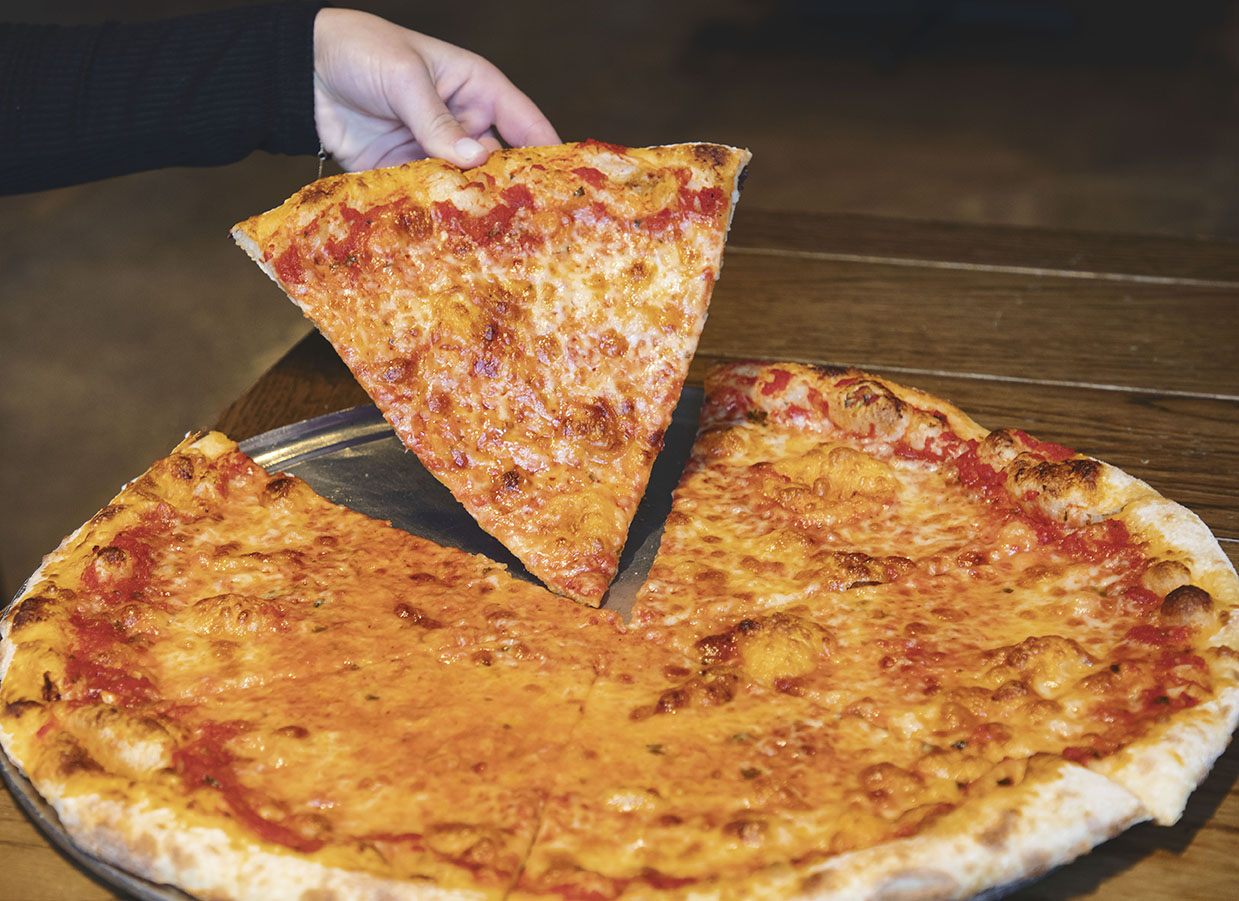 |
Photo: Regents Pizza |
On the menu
Pizza accounts for about 60 to 65% of sales. The brand sells 1,300 Chicago pies and 6,500 Chicago-style slices per month. It sells 6,800 New York pies and 14,000 slices per month.
On-premise dining is about 53% of sales, while off-premise sales accounts for 47% of sales. Catering makes up $1.2 million annually.
“Our quality standard is to be the best in everything we do, not only in the ingredients we buy, but in the recipes,” Vivian said. “All the recipes are a very high flavor profile, which is consistent with Stephen’s legacy. And everything we introduce has to meet our standards … across all menu categories.”
The menu starts with great ingredients, and they make as much as possible in house, which is paired with employee training, consistency of recipes, solid execution and supervision, Vivian added.
Aside from whole pizzas and slices, there’s an appetizer menu, calzones, 13 varieties of Buffalo and Nashville hot chicken wings, salads, homemade pastas, hot sandwiches and desserts.
Climbing the ranks: the 23-job levels system
The restaurant’s $7.7-million success is built upon a highly structured, systems-oriented approach to labor that emphasizes merit over simple tenure. Drawing on Vivian’s background in turnaround management and corporate restaurant chains, Regents Pizza utilizes a “23-job levels” system to professionalize every role in the house.
- Merit-based advancement: Raises are not granted simply for time served; instead, employees must demonstrate specific, objective competencies to move up the 23-level ladder. The brand employs about 75 people, many of them UC San Diego students.
- Skill certification: Each level requires certification by a trainer. For example, a kitchen worker might move from dishwashing to dough making, then progress through stretching, topping, and eventually managing the ovens or the “hot line.”
- Objective transparency: Every job level has a corresponding checklist of skills. This ensures that when an employee asks for a raise, the path to achieving it is clear, documented and entirely within their control.
- High retention: This professionalized culture has resulted in a remarkably stable workforce, with 10% of the 75-person staff having been with the restaurant for a decade or more.
“Tips run about $4.50 an hour and we’re north of $18 in San Diego for minimum wage,” Vivian explained. “So, that’s a pretty high salary just for a non-skilled job. But if you want to make more you have to have more skills and you have to demonstrate it. We have all those levels as you move up — each one has a different skill set. So maybe the next thing that somebody can learn is dough making and dough rolling. There’s dough stretching, there’s pizza stretching, there’s pizza topping, there’s pizza stretching, working the ovens and so on.
“As you move up in your skill set, you make more money and you’re certified in each of those by a trainer. And so as soon as you get that, you get a raise — no questions asked. We want people to make more money, right, because we have a better product. Then we have various levels of supervision in the various jobs.”
In the front of the house, employees may start as bussers or runners and then move up to cashiers.
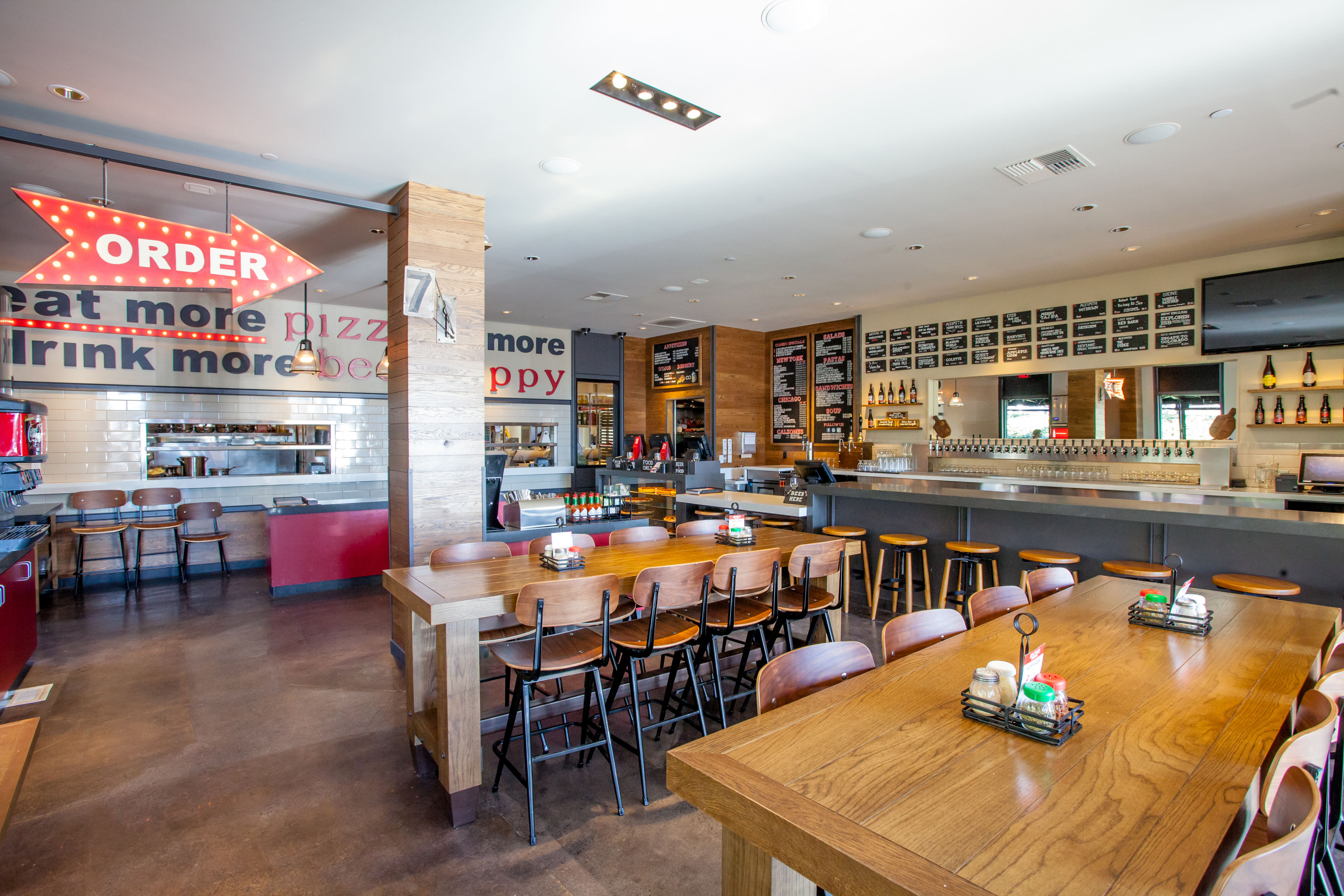 |
Photo: Regents Pizza |
Finding success
Vivian said the brand’s food and service are the secrets to its success. While that’s a claim made by many pizzerias in the industry, it’s not lip service for Regents Pizza. Vivian doesn’t think the single unit is maxed out and said $9 million or $10 million in sales is not out of the realm of possibility.
They’ve remodeled the kitchen three times — the last time in Dec. 2024 — and have involved industrial engineers along the way, increasing kitchen throughput and efficiency.
Vivian said he doesn’t think Regents Pizza will franchise in the future because brands must compromise and police their franchisees to ensure consistency and that the concept’s standards are being upheld.
“When we grow, we’ll grow organically and it’ll be for the benefit of the people who have worked their way up from the bottom in our restaurant,” Vivian said.
About Mandy Wolf Detwiler

Mandy Wolf Detwiler is the managing editor at Networld Media Group and the site editor for PizzaMarketplace.com and QSRweb.com. She has more than 20 years’ experience covering food, people and places.
An award-winning print journalist, Mandy brings more than 20 years’ experience to Networld Media Group. She has spent nearly two decades covering the pizza industry, from independent pizzerias to multi-unit chains and every size business in between. Mandy has been featured on the Food Network and has won numerous awards for her coverage of the restaurant industry. She has an insatiable appetite for learning, and can tell you where to find the best slices in the country after spending 15 years traveling and eating pizza for a living.