
Sci-fi is one of the greatest genres in entertainment. With fascinating and engaging stories that explore vast and unique worlds, sci-fi allows for us to imagine the future, other galaxies, and even different realities in exciting ways that keep us hooked. They’re stories that can inspire, terrify, and even prompt us to take a step back and really think about the human condition as well as our place in the overall experience called life. It’s why sci-fi makes for some truly great movies, movies that appeal to just about every kind of audience, but sci-fi stories are great off the screen as well.
When it comes to sci-fi, there are some incredible books as well. While the number of great sci-fi novels is pretty much endless, for fans of sci-fi movies, there are some novels that are absolute essentials. These are books that have been adapted for the screen numerous times over the years and could always stand for a visit to the source material while others are books that maybe haven’t had the big screen treatment yet but are cinematic in scope and will keep you as engaged as anything on the silver screen. Ready your library card or head to your nearest bookstore because we’ve got your to-be-read pile all figured out with these 10 books.
10) Binti by Nnedi Okorafor
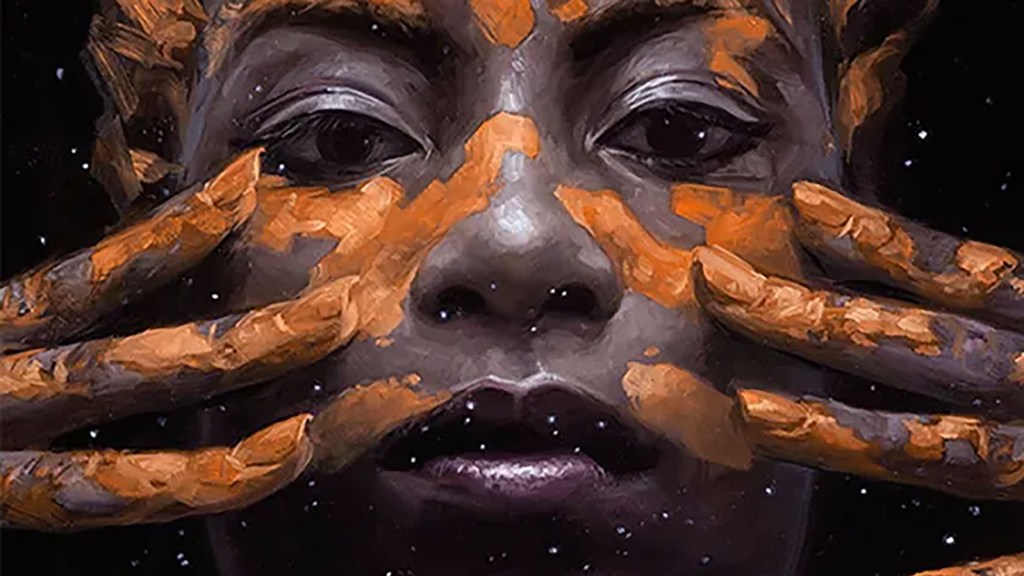
Technically, Nnedi Okorafor’s Binti is going to be adapted into a television series, but it hasn’t happened just yet — and it hasn’t gotten the movie treatment either — but that doesn’t mean that this is a book that movie fans should skip. One of the best science fiction books released in the past 15 years, Binti is the first novella in Okorafor’s Binti series. It follows a young Himba woman who leaves earth to attend a prestigious space university, but along the way there encounters a conflict when the ship is hijacked, setting her on a very different path.
While all three books in the Binti trilogy are fantastic, the first book in particular has a rich, cinematic feel to it that is perfect for the sci-fi movie fan who maybe doesn’t read that many books. It’s also a quick read — the novella is just 96 pages long — that pack in space travel, adventure, and themes of identity. It’s also a book that if you want to stop with the first one, you can, but going for the other two in the trilogy makes things even better.
9) Do Androids Dream of Electric Sheep? by Philip K. Dick

It always surprises me the number of sci-fi movie fans who love Blade Runner but who have never actually read the book it’s based on, though it’s much more accurate to say that the 1968 novel Do Androids Dream of Electric Sheep? is more of an inspiration for Blade Runner than the film is a true adaptation of the novel. Still, the two works share several key aspects and a great number of elements and themes and both are absolute masterpieces of dystopian, cyberpunk sci-fi, so much so that if you haven’t read the novel you need to and if you somehow haven’t seen Blade Runner (and its sequel, Blade Runner 2049) you need to fix that as well.
The premise is simple: set in San Francisco where the world has been severely damaged by a nuclear war, bounty hunter Richard Deckard is tasked with retiring (aka killing) six escaped Nexus-6 model androids. Meanwhile, a man of low IQ, John Isidore, aids the lifelike fugitive androids. The entire story is an exploration of what it means to be human, particularly in a world more and more driven by artificiality. It’s eerily timely and while the movie is a bit more action-oriented, the novel has the feel of a hard-boiled detective story. It’s a must read.
8) Nineteen Eighty-Four by George Orwell
Nineteen Eighty-Four (sometimes published as 1984) is a novel that has been adapted for television, radio. theater, opera, and film countless times — including the 1984 film adaptation that was Richard Burton’s final performance and featured the band Eurythmics on the soundtrack. It’s also required reading for many high school kids, but it still lands on this list because it’s a book that has been so influential not only to sci-fi literature but to movies as well that every sci-fi movie fan simply needs to read it.
A brutal dystopia story that deals with themes of totalitarianism, mass surveillance, and repression, you can see the influence of 1984 on films such as Brazil, V for Vendetta, Equilibrium, Snowpiercer and more. Pretty much if you are a fan of any sci-fi dystopia, you need to read Nineteen Eighty-Four.
7) Old Man’s War by John Scalzi
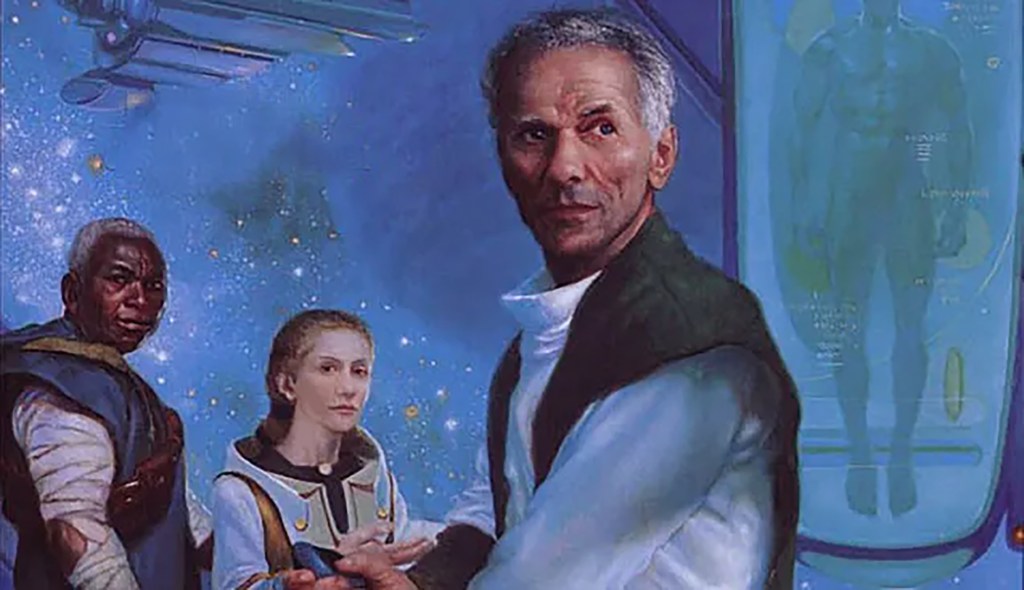
In theory, we will eventually get a film adaptation of Old Man’s War — Netflix acquired the series and developing it as a movie as late as 2024 — but until then, it’s a novel (and an overall series) that needs to be on every sci-fi movie fan’s to-be-read pile. The book follows John Perry, a retiree who on his 75th birthday joins the army to basically go to space and protect Earth. He just happens to get a new, cloned (and modified) body in order to do so.
The book is hilarious, but it’s also full of action and some pretty intense moments. It’s wildly cinematic in that regard and if you have any enjoyment of movies like Mickey 17, Old Man’s War is a perfect read. The entire series is great but start off with Old Man’s War — you will not regret it.
6) We Are Legion (We Are Bob) by Dennis E. Taylor
One of the great sort of subgenres in sci-fi is the space opera and We Are Legion (We Are Bob) is a perfect space opera book if you want that sort of feeling but don’t necessarily want to try to read Dune (not saying that Dune isn’t also on this list but it’s also not light reading.) The premise of We Are Legion is pretty straightforward: Bob’s life is going perfectly but then he’s killed right as everything is going his way and his mind is uploaded into a space probe where he’s forced to essentially become a von Neumann probe finding new worlds for humanity or be shut off for good. So, he does what any engineer would do: replicates his AI self.
The book has been compared to Project Hail Mary (just funnier) by many and it takes on questions of existence as well as the ethics of colonization, the use of AI, and more. There’s also a lot of serious science in the book which makes it an all-around solid balance and a great read for movie fans.
5) Frankenstein by Mary Shelley
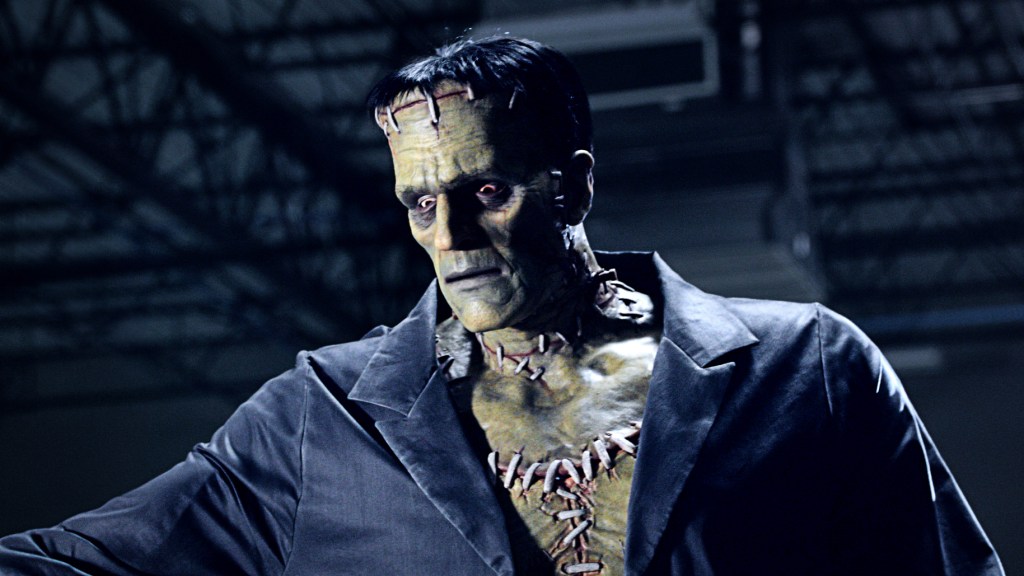
While we may consider the story of Frankenstein to be a horror story now, the 1818 Gothic novel is widely considered to be the first true science fiction novel as its story is based on scientific experimentation, specifically Victor Frankenstein working in his lab to create life out of death. The book has been highly influential, in terms of not just literature but pop culture as well as movies as well.
What makes Frankenstein a must-read for sci-fi movie fans, outside of its vast influence on the genre, is that it is also a great example of how well sci-fi can cross into other genres and subgenres, managing to be a lot of things at one time and depending on what lens you choose to look at any given story through. It’s a reminder that sci-fi stories are as much human stories as they are about the science and the speculation they create.
4) Station Eleven by Emily St. John Mandel
Station Eleven is kind of an interesting case. It’s technically been adapted for the small screen in the form of an HBO Max limited series, but the adaptation is markedly different from the book that almost tells a completely different story that still, somehow, is faithful to the source material. If that sounds a little confusing, I promise you that it’s really not and you should do yourself a favor and both read the book and watch the series.
Station Eleven is a book that needs to be on the reading list for every sci-fi movie fan because of its realistic worldbuilding and how it creates a post-apocalyptic world that doesn’t feel entirely like a hellscape. Instead, Station Eleven leans into the idea of hope, which is a little unusual in sci-fi. The story also has a beautifully cinematic feel with there being a great deal of detail in the small aspects of life after the collapse of civilization. Perhaps even better is that, while Station Eleven is very much its own book, it’s also a part of the larger “Mandelverse” made up of the author’s other books which themselves cross genres.
3) Dune by Frank Herbert
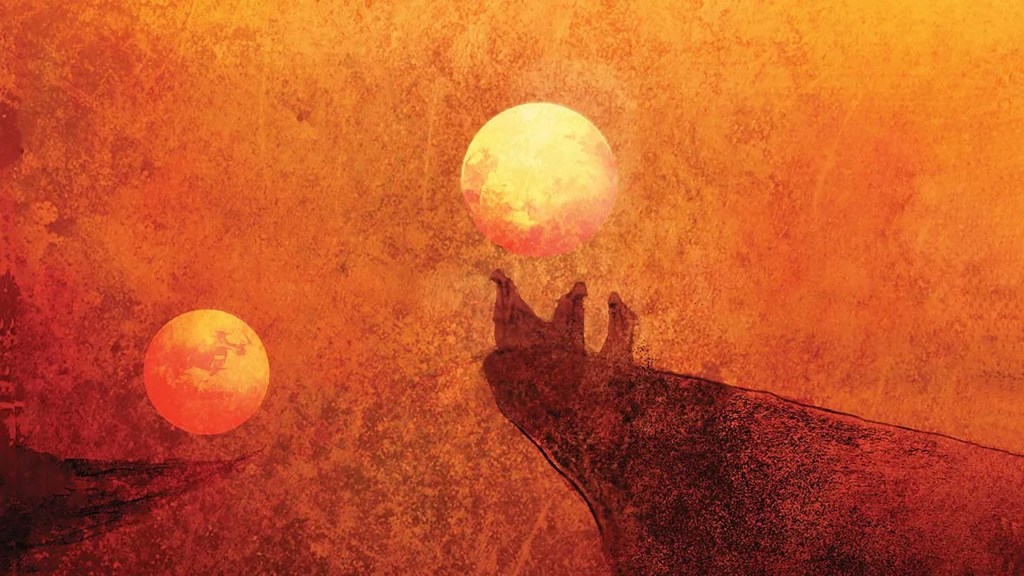
Yes, Dune made the list. Dune is a wildly influential novel. It’s deeply complex, creating a world of detailed religion, politics, science, culture, philosophy, and economics that work together to tell a story on the largest possible scale you can imagine. For many, Dune is a cornerstone of sci-fi literature and while adapting it to film has long been considered complicated — Denis Villeneuve’s films being particularly successful — Dune’s impact goes so far beyond the movie screen that it’s a novel that just about every fan of popular culture should read.
2) Neuromancer by William Gibson
Within the sci-fi movie genre is the wildly popular subgenre of cyberpunk. Films like The Matrix, The Fifth Element and more all fall into that category with high tech, low life themes that see the line blur between human and machine, frequently backed by a neon-lit aesthetic that is, often, a dystopia. They’re great films — and they all have Neuromancer to thank for it. Gibson’s 1984 novel is, in many ways, the blueprint for the entire genre. Set in a near-future dystopia, the story follows a computer hacker hired for a high-stakes heist that pits him against a powerful AI.
With themes that explore the relationship between humans and technology, consumerism, and what really constitutes a person (specifically, does AI count as sentience), Neuromancer asks some big questions and takes some even bigger swings. Its influence cannot be understated and it’s a book that every sci-fi fan — especially those who like the cyberpunk subgenre — should read.
1) Foundation by Isaac Asimov
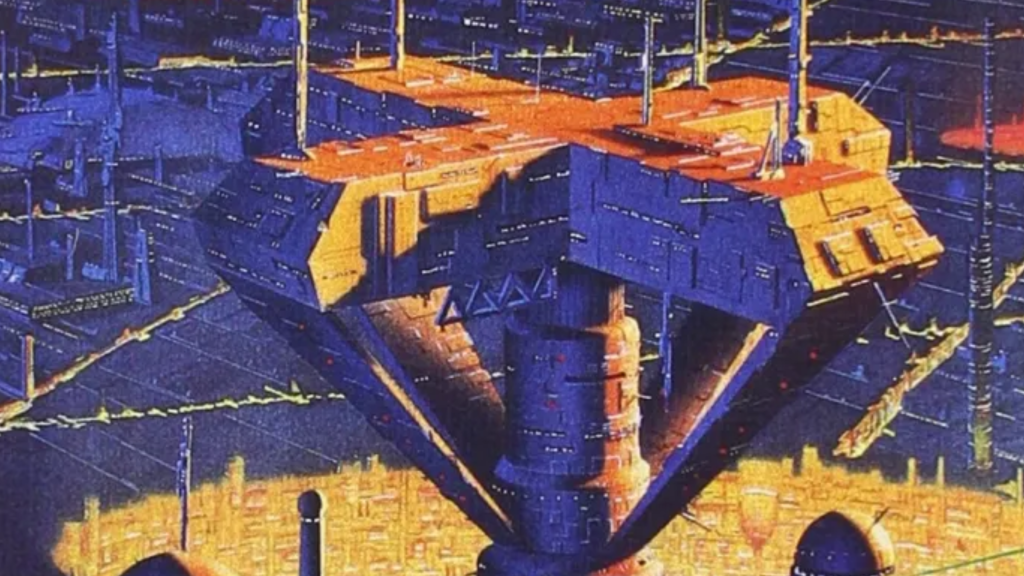
This is going to be a little bit of a cheat. While technically I’m only putting 1951’s Foundation on this list, the reality is you should probably read the entire Foundation series — or at least just The Foundation Trilogy (Foundation, Foundation and Empire, and Second Foundation). The reason? Foundation is, well, foundational. It is in many ways the blueprint for modern sci-fi, setting the stage for sci-fi tales that deal with galactic empires. It’s sort of the set up for the modern space opera, complete with a political focus rather than merely an action-based one.
Of all the sci-fi books on this list, Foundation may have had the widest impact. Without Foundation, one could argue that there would be no Dune and there would be no Star Wars and there wouldn’t be a lot of space-based sci-fi movies and stories today. The story is also incredibly large in scope, covering thousands of years making it incredibly cinematic in its storytelling. It’s a book that does require a lot of thought so it’s a slow read, but it is incredibly worth it.
What do you think? Leave a comment below and join the conversation now in the ComicBook Forum!