
Welcome back to the Abstract! This week, we have a very special edition of the newsletter packed with everything I saw and heard at the American Association for the Advancement of Science (AAAS) meeting, held in Phoenix from February 12 to 14.
Founded in 1848, AAAS is the world’s largest general scientific society, with over 120,000 members. It operates with the mission of advancing “science, engineering, and innovation throughout the world for the benefit of all people,” according to its website. It’s also the publisher of Science, a leading collection of journals that have graced this newsletter many times.
The overarching theme this year was the damage inflicted on the U.S. science sector by the Trump administration and how to best respond to it. Since Trump returned to office, his team has terminated or frozen 7,800 research grants, laid off 25,000 scientists and personnel from research agencies, and proposed budget cuts of 35 percent to federal science funding, amounting to $32 billion, according to Nature.
It’s an epic own goal for American science leadership that is also reverberating through the global scientific community. But experts at the meeting highlighted the bright spots in the darkness, as the world learns to respond to the new normal.
Excuse the quality of my pictures; I’m untalented as a photographer at the best of times and I also refuse to part with my six-year-old iPhone SE. Without further ado, here are the highlights from the meeting.
The state of state science
State-Level Science Policy: A Conversation with Expert Practitioners
With the U.S. federal science sector in crisis, scientists working at the state, regional, and local levels have a unique opportunity and obligation to fill in the gaps. During one Friday session, two politicians on opposite sides of the aisle shared their thoughts on how to build public trust in science at the local level.
Andrew Zwicker, a Democrat state senator who represents about 250,000 people in New Jersey’s 16th Legislative District, said action on local levels is often smoother because the “hyper-partisanship that you read about or maybe have personally experienced in Washington [D.C.] rarely happens in the states.” Zwicker, a physicist at the Princeton Plasma Physics Laboratory, also expressed hope because his younger constituents are interested in scientific policy, particularly on climate change “because they see it as an existential threat to their own future.”
Roger Hanshaw, a Republican who serves as the speaker of the West Virginia House of Delegates, said he represents “the opposite end of that bell curve” as his district (WV-62) contains 17,500 people and does not have “a stoplight, a Walmart, or a McDonald’s.” Hanshaw, who has a background in environmental law, advised citizens to remain consistently engaged with their representatives at all times, not just when the issues they care about are a flashpoint in the news.
How screwed are we?
America @250: Redesigning the Scientific Enterprise
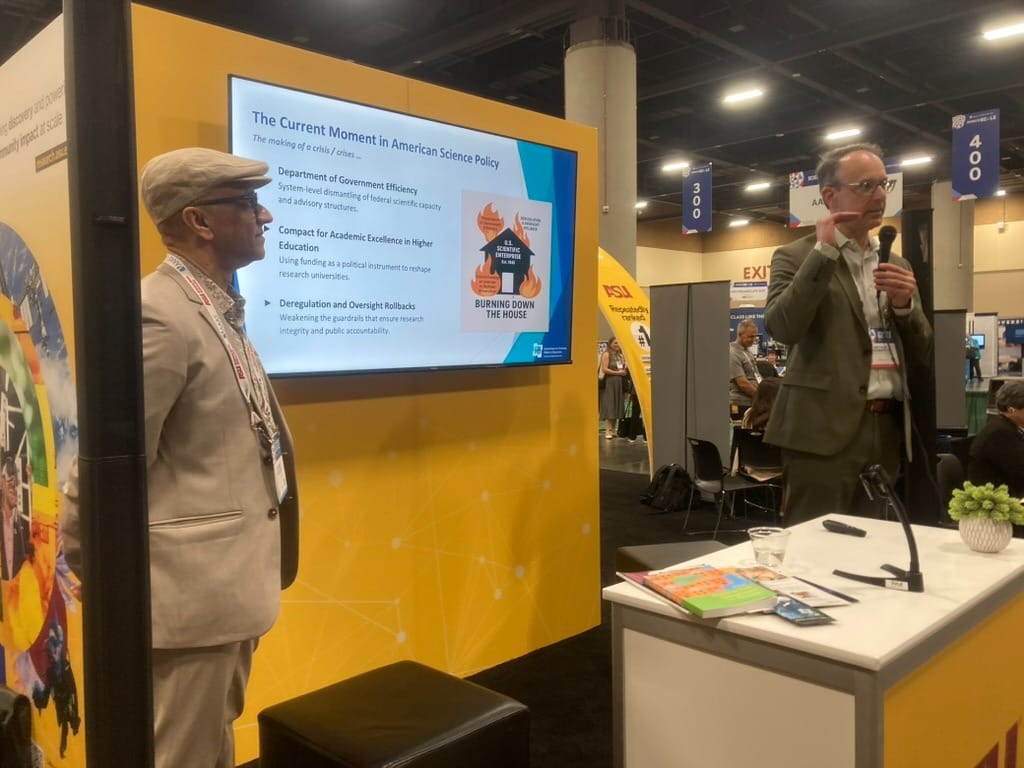
I tuned into a talk by Arthur Daemmrich and Mahmud Farooque, the director and associate director, respectively, of the Arizona State University Consortium for Science, Policy and Outcomes (CSPO). They outlined how the United States came to be such a global powerhouse in science, and how that leadership role has been upended by Trump’s threats against academic universities, the massive cuts implemented by DOGE, and the loss of personnel and expertise across the U.S. science sector.
“This is a very concerted attack on these institutions,” Daemmrich said. “This is really a turning point and we’re in a historical transition at present.”
To help come up with solutions, CSPO has launched a new project to engage the public on the future of American science policy, including through a series of one-day public forums this summer that will take place in Arizona, West Virginia, and Massachusetts. After the talk, I asked the pair if they would tailor those forums to address science issues that are specific to the diverse interests of those very different states.
“What we want to do is create national-level baseline data,” Farooque replied. “We do this on one Saturday. In the past, we have done a national and local question that is different. We will take that into the design, but we will see what is possible. That will be another value proposition for the different states to get interested in answering the questions that are relevant to them.”
Daemmrich added that “a lot of our forums begin with a kind of open framing session where people are identifying hopes and concerns for their community before they are getting into the substance of how the U.S. science funding system works, what science has done for your community, or questions about how would you think about allocating science. They have this opportunity to articulate what they see in their community and we collect all that data as well.”
Fighting misinformation in a hostile environment
Rigor and Transparency: Editors-in-Chief on the Role of Scientific Journals
At this session, the editors-in-chief of three major scientific journals discussed their responses to an administration that is hostile to many scientific fields, as well as the challenges of combating the dissemination of bad scientific information on social media or podcasts.
During the Q&A, I asked Holden Thorpe, editor-in-chief of Science, how, and if, scientists and science communicators can compete with celebrity personalities like Joe Rogan, who often air misinformation on their platforms.
“Well, for sure, you don’t want me doing it,” Thorpe replied. “I’m way too blunt.”
“I believe that the answer probably isn’t going to come from science communication the way we think about it,” he said. “I think that the people who can move the meter are the primary care physicians, the emergency room docs, the nurse practitioners, the pharmacists, the social workers, the teachers, and the people who folks have a personal relationship with.”
“That’s a lot of burden to put on those folks because they’re not the most powerful people in the ecosystem,” he continued. But he said that these on-the-ground practitioners who have direct personal relationships with the public “have a much better chance” to persuade people “than one of us would have going on Joe Rogan.”
Helping corals beat the heat
Rebuilding Coral Resilience Through Cellular Biochemistry and Nanotechnology
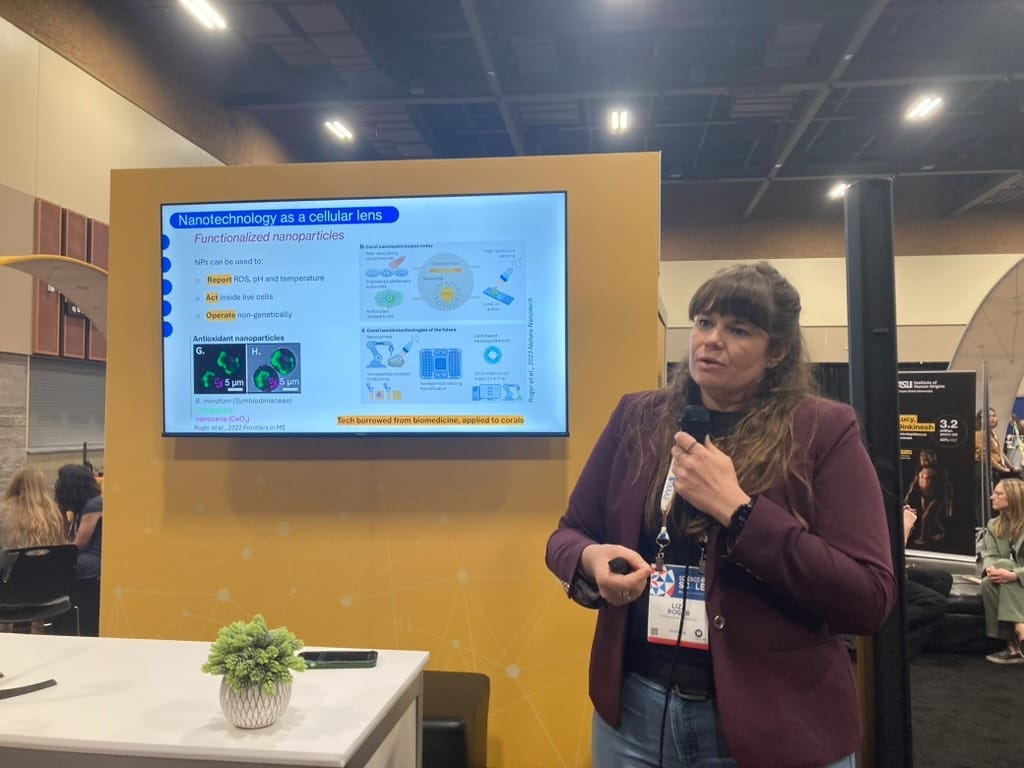
Not everything at the meeting revolved around the president. Corals are the foundation of the most biodiverse regions in the oceans, but marine heatwaves—which are intensifying due to human-driven climate change—are already killing off many of these vital reefs worldwide.
I stopped by the Arizona State University (ASU) expo booth to hear a short talk by Liza M. Roger, an assistant professor of molecular sciences at ASU who is developing nanomedicines that could help boost the resilience of reefs. After her talk, I asked her how often these therapies would need to be applied to ensure coral survival.
“It would need to be a combination—like a cocktail of nanomedicine together—and then finding what time you would have to dose the system so that it responds the way that you want it to respond,” she replied. “Most likely, it would be a cyclical thing because the heatwaves are seasonal.”
“It’s a case where you have got to know your environment and when the waters are starting to warm, then you could eventually treat the corals, and wait for the heatwave to pass,” she said. “Then maybe, next summer you have to do it again.”
The fireside chats of prehistory
Cat Hobaiter: Storytelling Apes
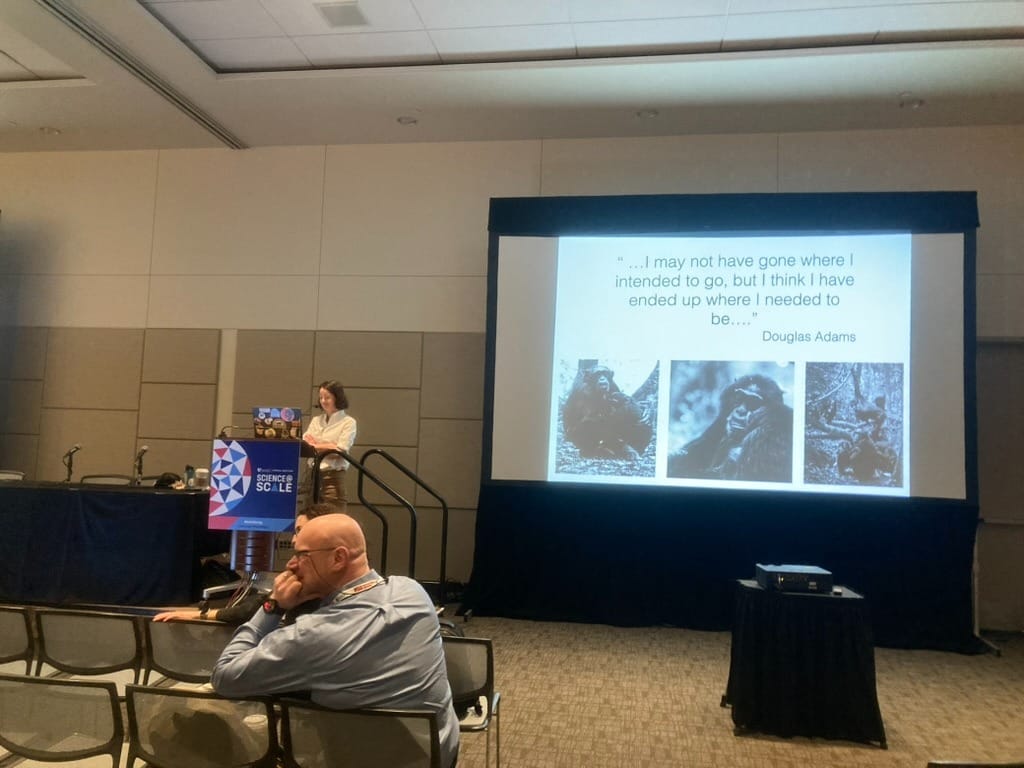
What separates human language from gestural communication between our closest relatives, the great apes? Catherine Hobaiter, a primatologist at the University of St. Andrews, speculated on the role of fireside storytelling as a driver of our human capacity for complex language and abstract thinking.
She noted that once our early human relatives had mastered controlled fires, they were able to extend their hours late into the dark evenings, perhaps reflecting on the events of the day and anticipating the outcomes of tomorrow. These stories and conversations would necessitate the development of more symbolic concepts and complicated communication.
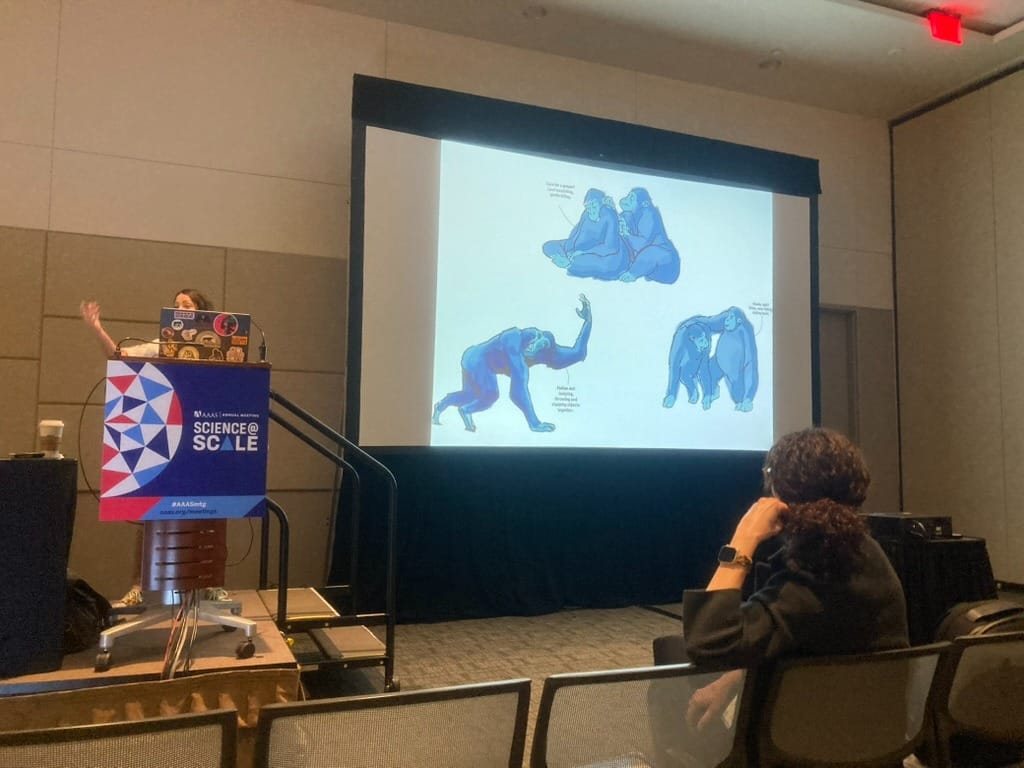
Hobaiter also shared some amazing videos of ape communication in the wild, including chimpanzees that beat distinct drum patterns on tree trunks with their hands, creating vibrations of which can be heard for more than a mile. During the Q&A, I asked Hobaiter about her team’s process for obtaining these observations of wild apes in various parts of Africa.
“We have really well-established field camps,” she said. “My camp in northern Uganda has houses with beds, and a hot shower—if you like fire under the shower bucket. There are other camps where we go hiking. You drive three days until the road runs out, you hike two more days, and you’re in tents for the next few months.”
“Camera traps are amazing these days,” she added. “We’re starting to use various different computer science AI models to help us handle tens of thousands of camera trap videos. But we’re also really committed to manual coding because one of the things we’ve learned is that you can’t train a model to look for the thing that you don’t know is there. So it’s lots of different ways that are coming together.”
Do look up—with these fancy asteroid missions
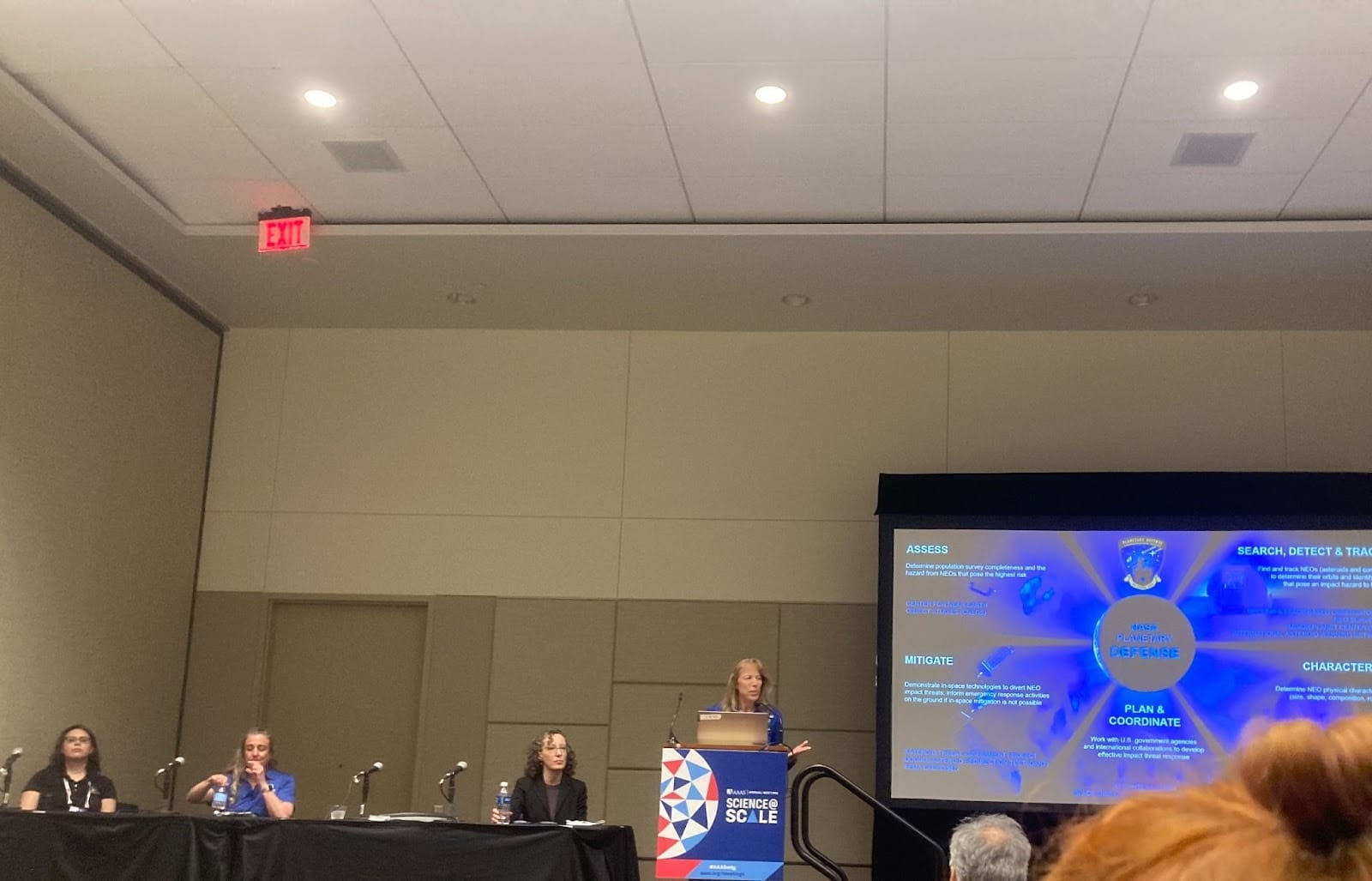
As if we don’t have enough to worry about here on Earth, there’s always the outside risk that some random rock from space might wallop us into oblivion. At this session, three scientists outlined how experts are working to mitigate the threat of death-by-asteroid while also assuring attendees it is not something that keeps them up at night.
Kelly Fast, the acting planetary defense officer for NASA’s Planetary Defense Coordination Office, provided an overview of her office’s goal to identify as many potentially hazardous asteroids as possible. In particular, she spotlighted the upcoming mission NEO Surveyor, due for launch no later than 2028, which is designed to spot asteroids over 140 meters (460 feet) in diameter.
Nancy Chabot, the chief scientist of the Space Exploration Sector at Johns Hopkins University Applied Physics Laboratory, walked the audience through the results of NASA’s Double Asteroid Redirection Test (DART), a spacecraft that slammed into the asteroid Dimorphos in 2022, shifting its trajectory.
Last, Daniella DellaGiustina, principal investigator for NASA’s OSIRIS-APEX Mission, outlined her team’s plan to send a spacecraft to rendezvous with the asteroid Apophis after it makes a very close approach with Earth in spring 2029.
During the Q&A, I asked the panelists about the popularity of asteroid impacts in science fiction, especially action movies, and whether those depictions are a hindrance or a help in their research and public engagement.
“I think it’s a help,” said Chabot. “The fact that this is something that people relate to, that people are interested in, does make it easier to have that conversation.”
“So it really can be this great gateway and if it comes about from Armageddon, Deep Impact, Don’t Look Up, or whatever your favorite one happens to be—I’ve seen them all multiple times,” she added. “ I think it’s something to lean into, personally.”
“I have obviously watched these films and see a lot of flaws in some of the basic premises,” said DellaGiustina, “but it’s great to use whatever tools we have in our toolbox to engage the public.”
Last, Fast weighed in, saying: “It can be challenging sometimes, engaging on science. I think in a way, we have it easy. We can have fun with it. When we can come out and speak, we can at least redirect to: here’s how it really works, and here’s what we really know.”
Conversations at the Expo
In addition to attending talks and sessions, I also wandered around the expo interviewing people at the booths. Here are my favorite three conversations.
That’s one small step for a dog…
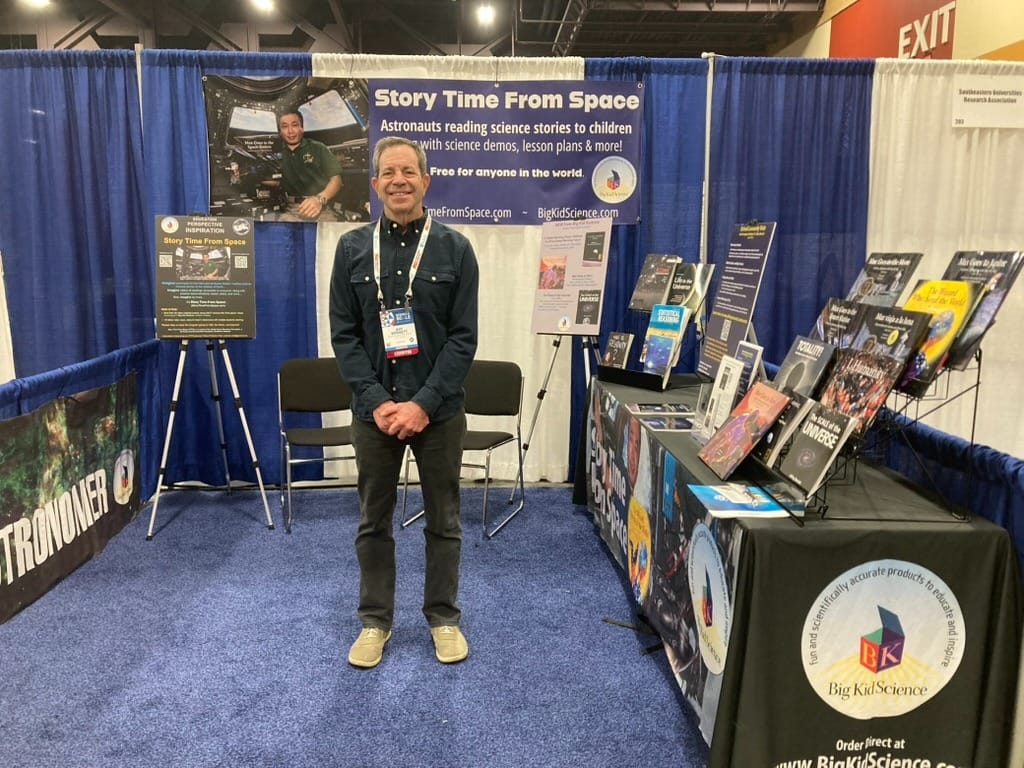
Jeffrey Bennett, a Colorado-based astrophysicist and former NASA scientist, is the author of a children’s series about his Rottweiler dog, Max, who travels all around the solar system. His series was the first to be selected by NASA to go to space with astronauts onboard the International Space Station for a literacy program called Story Time From Space. Since 2011, many ISS crew members have filmed themselves reading about Max’s space adventures to encourage kids to get interested in reading, science, and space exploration.
“Hopefully, we start reading books from the Moon,” Bennett told me. ”Kids really get excited about watching these videos. We’ve had millions of views, most of them probably in classrooms with lots of kids watching all around the world, because it’s all free.”
“I think the more that this can be done, the more it gives kids a chance to get engaged with astronauts and with space and with real science.”
A visit to the arXiv…
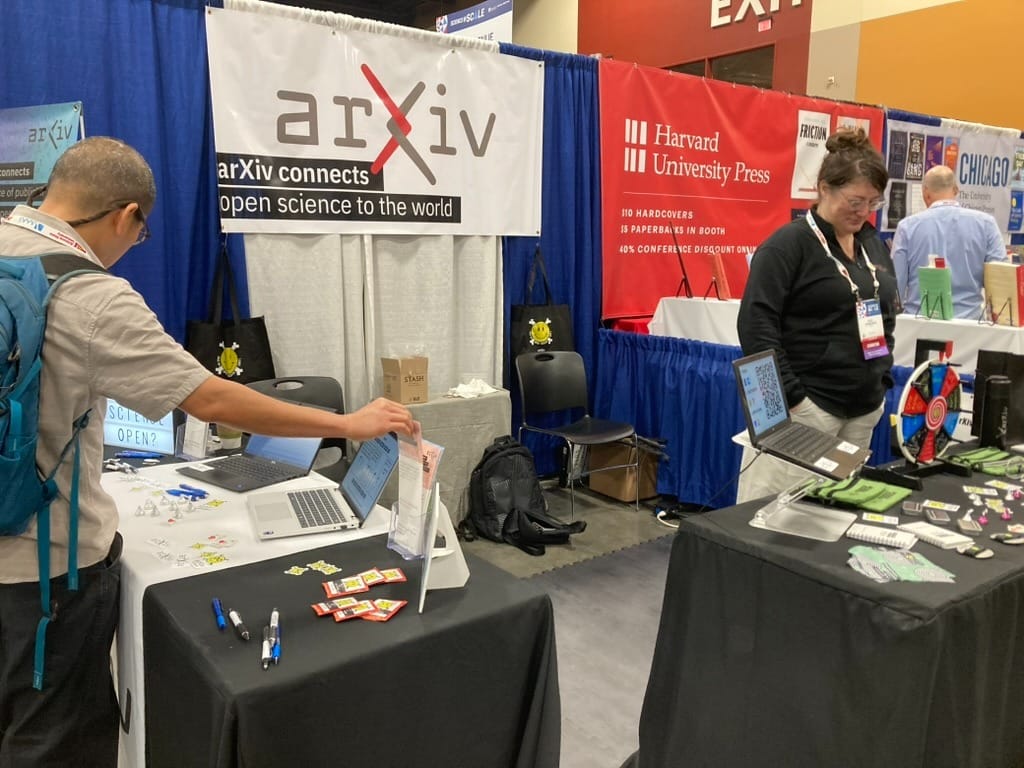
ArXiv, a preprint server owned by Cornell University, is in many ways the connective tissue of the global science community. Given how often I have personally relied on this server as a reporter, I was delighted to see its booth at the expo. I spoke with Steinn Sigurdsson, arXiv’s scientific director, about its mission.
“It delivers a thousand new papers every day and we have an archive of three million papers covering the last, actually, more than 35 years because some people backdated their papers to before arXiv started,” he added.
Sigurdsson said arXiv’s primary purpose “is to get the research circulating early because things happen fast.” The server has been essential in rapidly disseminating news about everything from astronomical discoveries to emerging Covid research early on in the pandemic. Long live arXiv!
Interactive Interactions
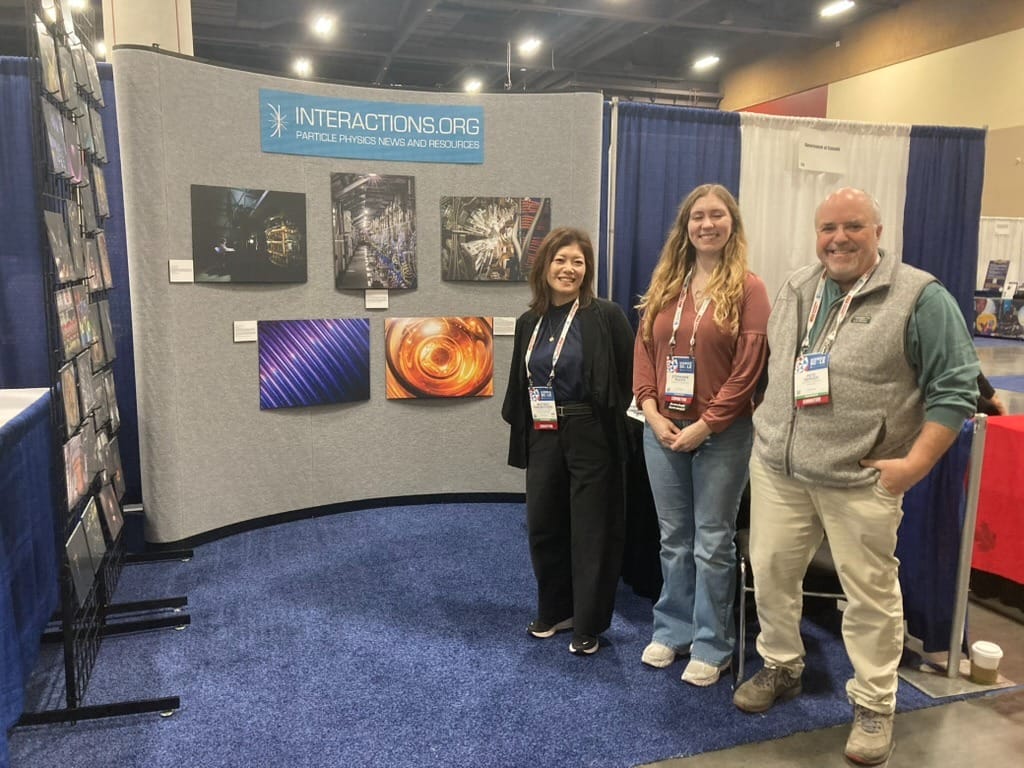
The eye-catching Interactions.org booth was decorated with artistic photographs from the Global Physics Photowalk, a recent photo contest that showcased particle physics facilities around the world. Pete Genzer, the co-chair of the Interactions Collaboration, told me that the organization’s mission is to encourage “peaceful promotion of particle physics globally” and “to try to make particle physics, which should be very complicated, more accessible to the public.”
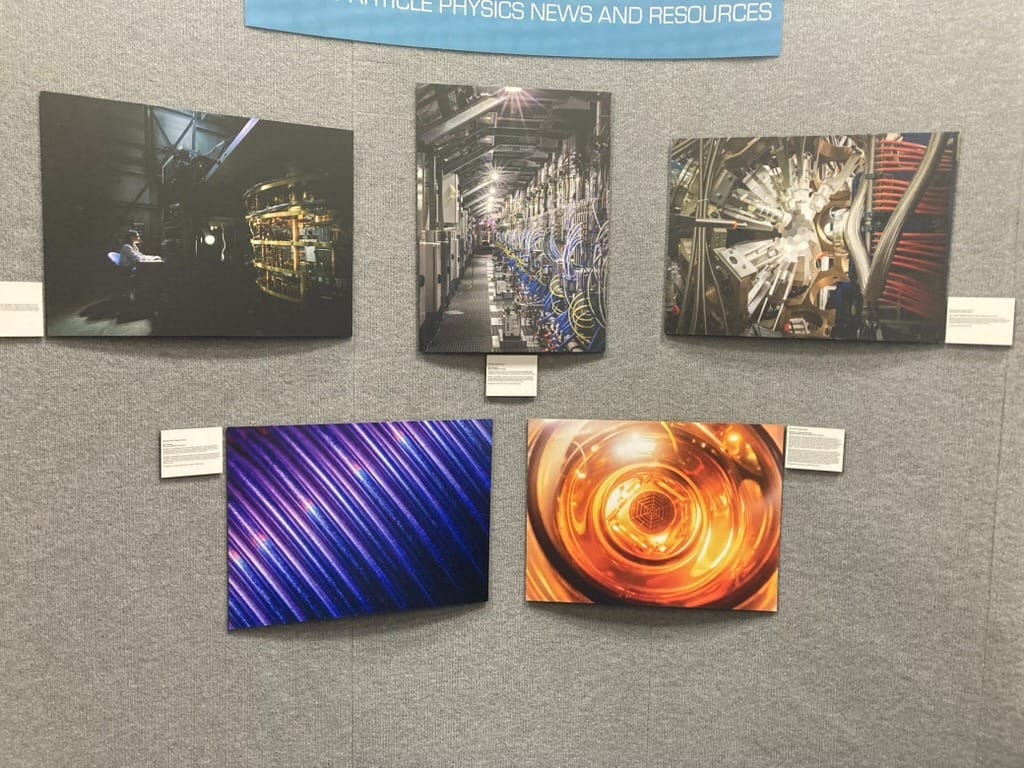
“We also do a dark matter day every October,” said Genzer, who also serves as manager of the media and communications office at Brookhaven National Laboratory. “We tie it to Halloween because, you know, dark matter is kind of spooky, and it’s a good time. We’ve been doing that for several years now, and there’s a series of events and lectures at these labs all around the world on dark matter, what we’re doing to try to figure out what it is, and what place it plays in our universe.”
Vera Rubin is groovin’
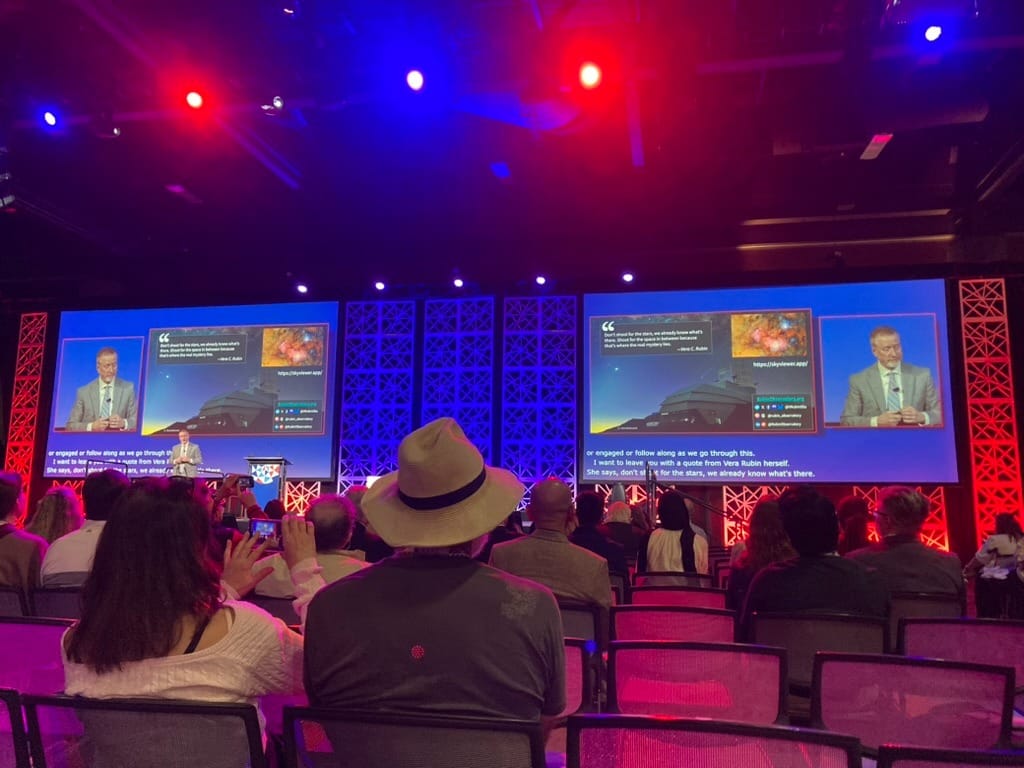
The conference capped off with a plenary speech from Robert Blum, the director of the Vera C. Rubin Observatory, a major new telescope that began operating last year. Blum walked the audience through the genesis of the telescope as a literal napkin doodle in the 1990s, to its meticulous construction on a hilltop in the Atacama Desert of Chile, to the exciting moment when it captured its first light in 2025.
He ended his talk with a quote from the telescope’s namesake, Vera C. Rubin (1928-2016), who was the first astronomer to describe dark matter as well as a passionate advocate for the participation of women and other under-represented groups in astronomy. I think it also serves as a fitting end for this newsletter that hopefully provides some inspiration in a time when science is under threat.
“Don’t shoot for the stars, we already know what’s there,” Rubin said. “Shoot for the space in between because that’s where the real mystery lies.”
Thanks for reading! See you next week.