
“Attention is the beginning of devotion.”
With this, Pulitzer prize winning poet Mary Oliver concludes her essay “Upstream” where she muses on her passion, perhaps obsession, with the natural world.
Between February 13 and 16, hundreds of thousands of people across the globe were doing just that: paying attention.
Over the course of the Family Day long weekend, the Great Backyard Bird Count encouraged people the world over to stop–for a minimum of 15 minutes–and simply observe the birds around them and share their sightings using either the Merlin Bird ID app or eBird.
The count is one of the largest, most significant citizen science projects in the world, helping ornithologists and conservationists understand long-term trends in bird populations and movements. In 2025, more than 800,000 people participated in the count, identifying 8,078 unique species, with birds counted in nearly every country.
“By participating in the Great Backyard Bird Count, we can appreciate the beauty and serenity that birds bring us every day. In return, the bird observations we submit can be used to inform conservation efforts that secure a brighter future for birds and people alike,” Ben Haywood, Audubon’s director of community science, declared in a press release.
To capture this significant moment in annual conservation, The Pointer sent two of its photographers to document the people helping in this massive citizen science effort, and the birds they were so attentively seeking in the woods and natural landscapes around the Greater Toronto Area.
Photographer Alexis Wright joined a group for a bird count event hosted at the Riverwood Conservancy in Mississauga, while Editor-in-Chief Joel Wittnebel hiked the shoreline of Lake Ontario in search of avian life brave enough to withstand the frigid Canadian winters.
“(The count) invites people to slow down and truly get to know the birds that share their lives,” Jody Allair, director of communications for Birds Canada, said. “The simple act of observing, learning, and sharing can spark joy, connect us with a growing community around the world, and inspire a lifelong commitment to protecting the places birds depend on.”
As Mary Oliver wrote, attention first, then devotion.
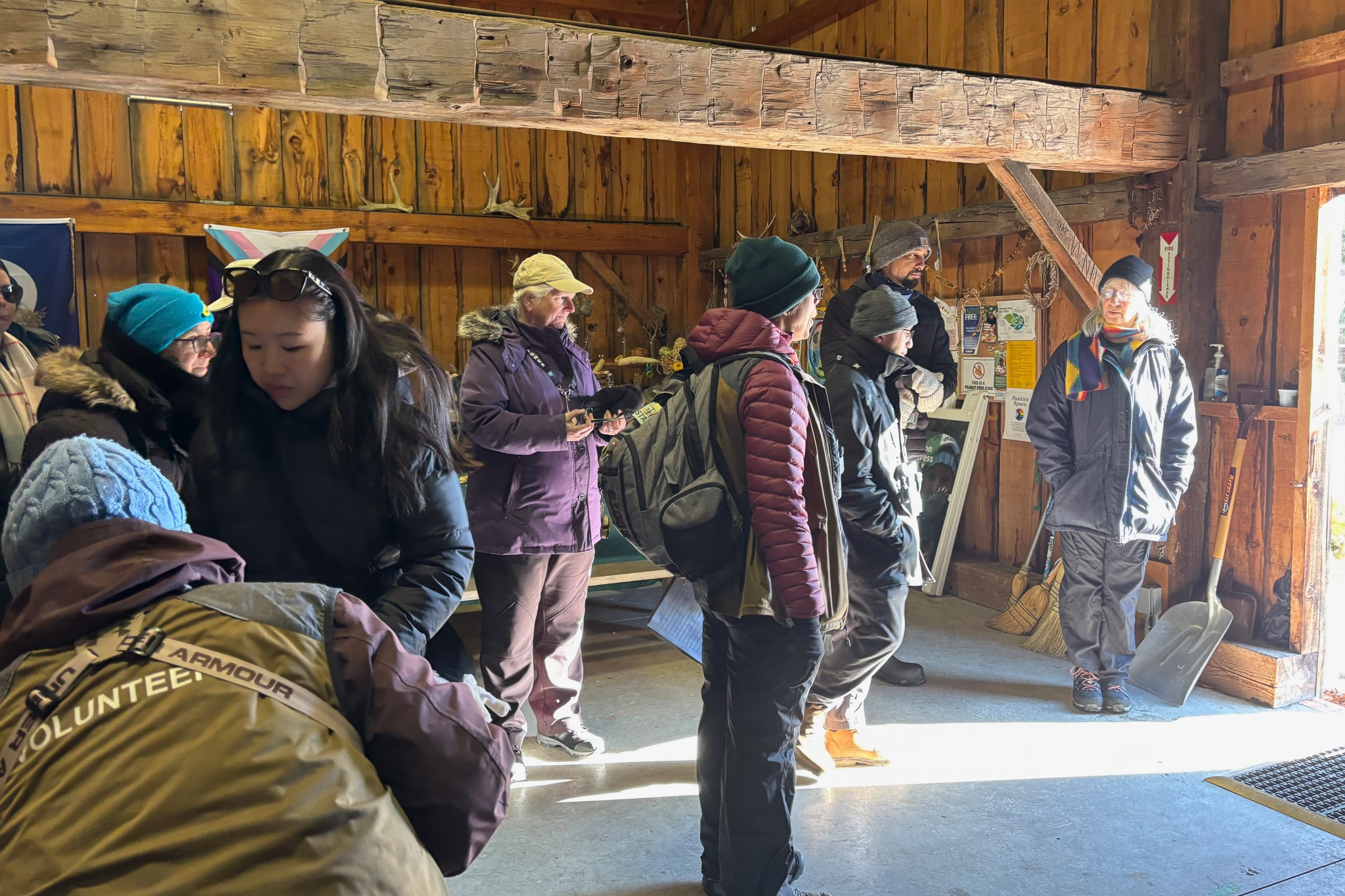
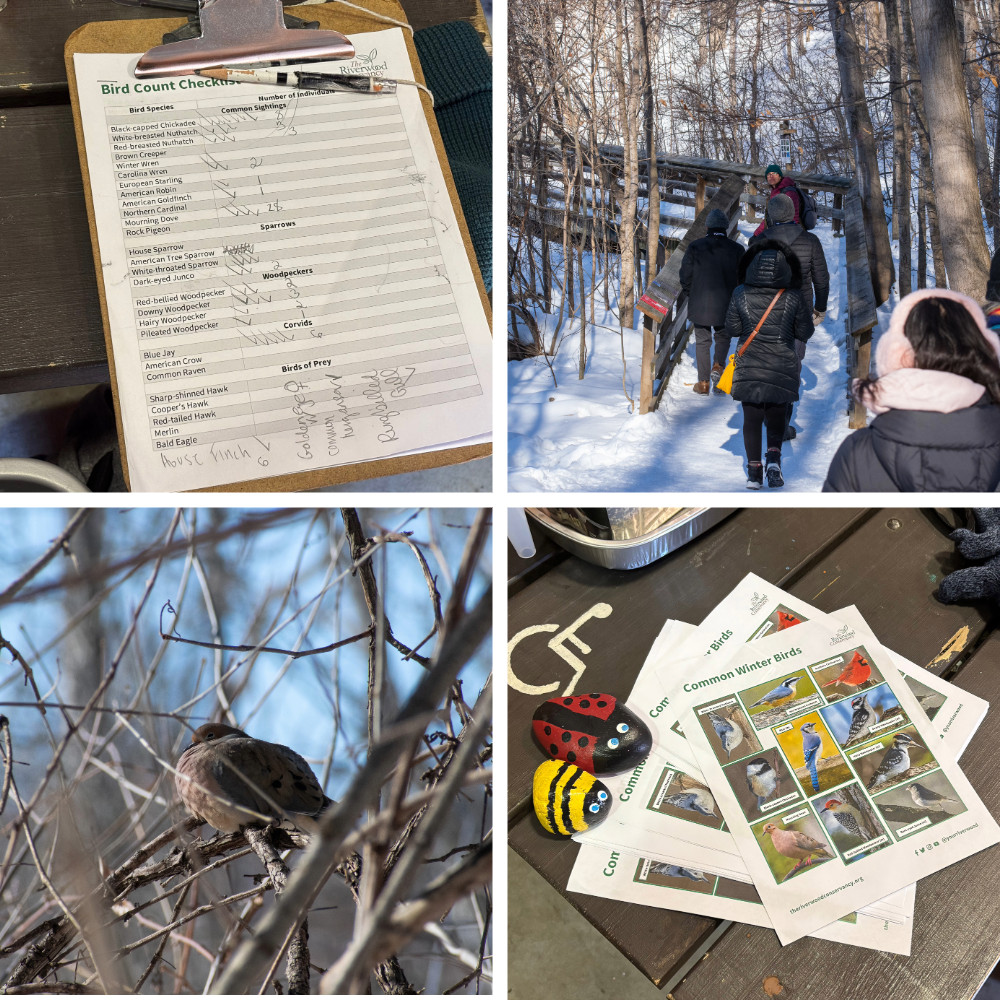
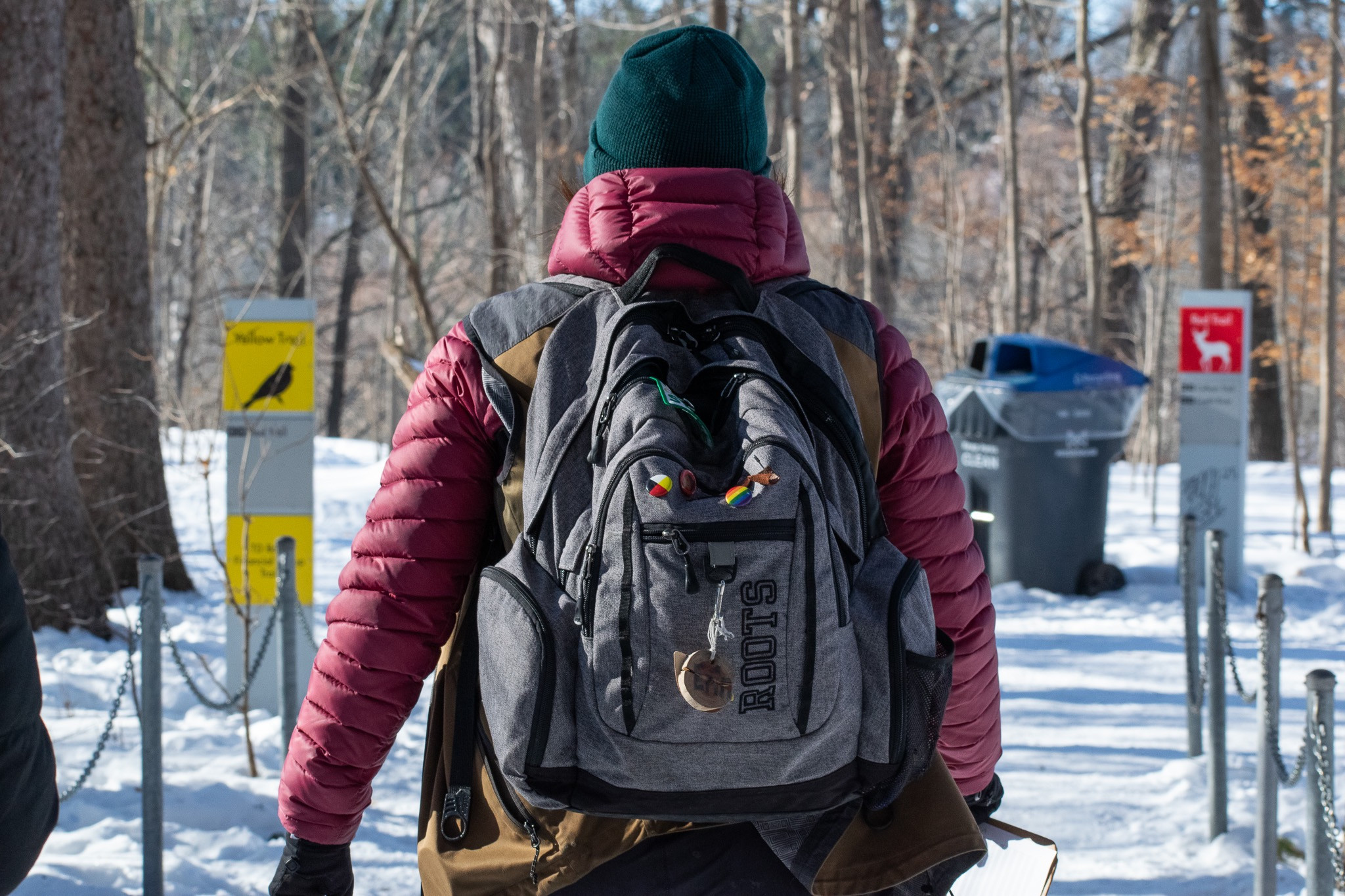
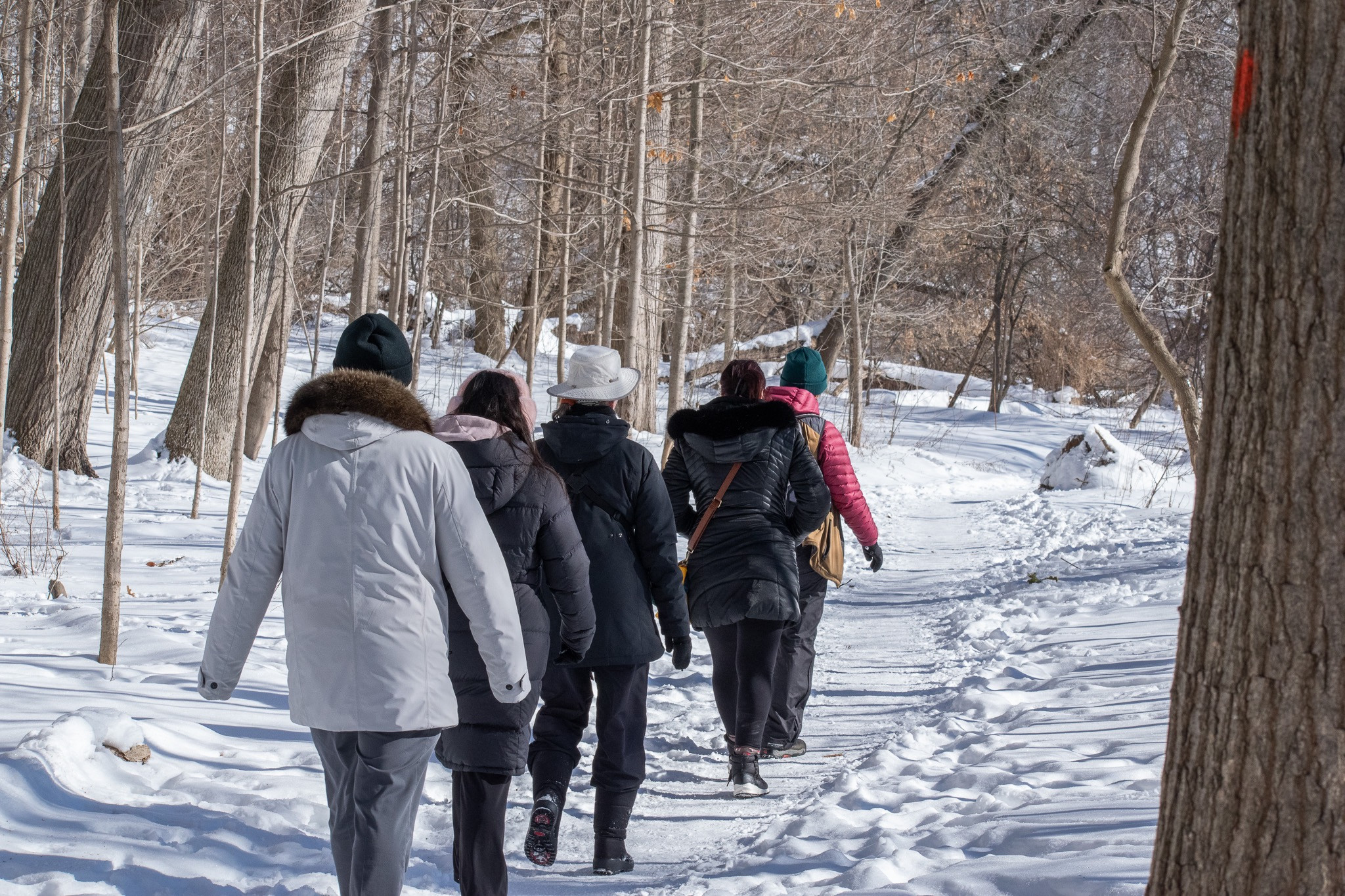
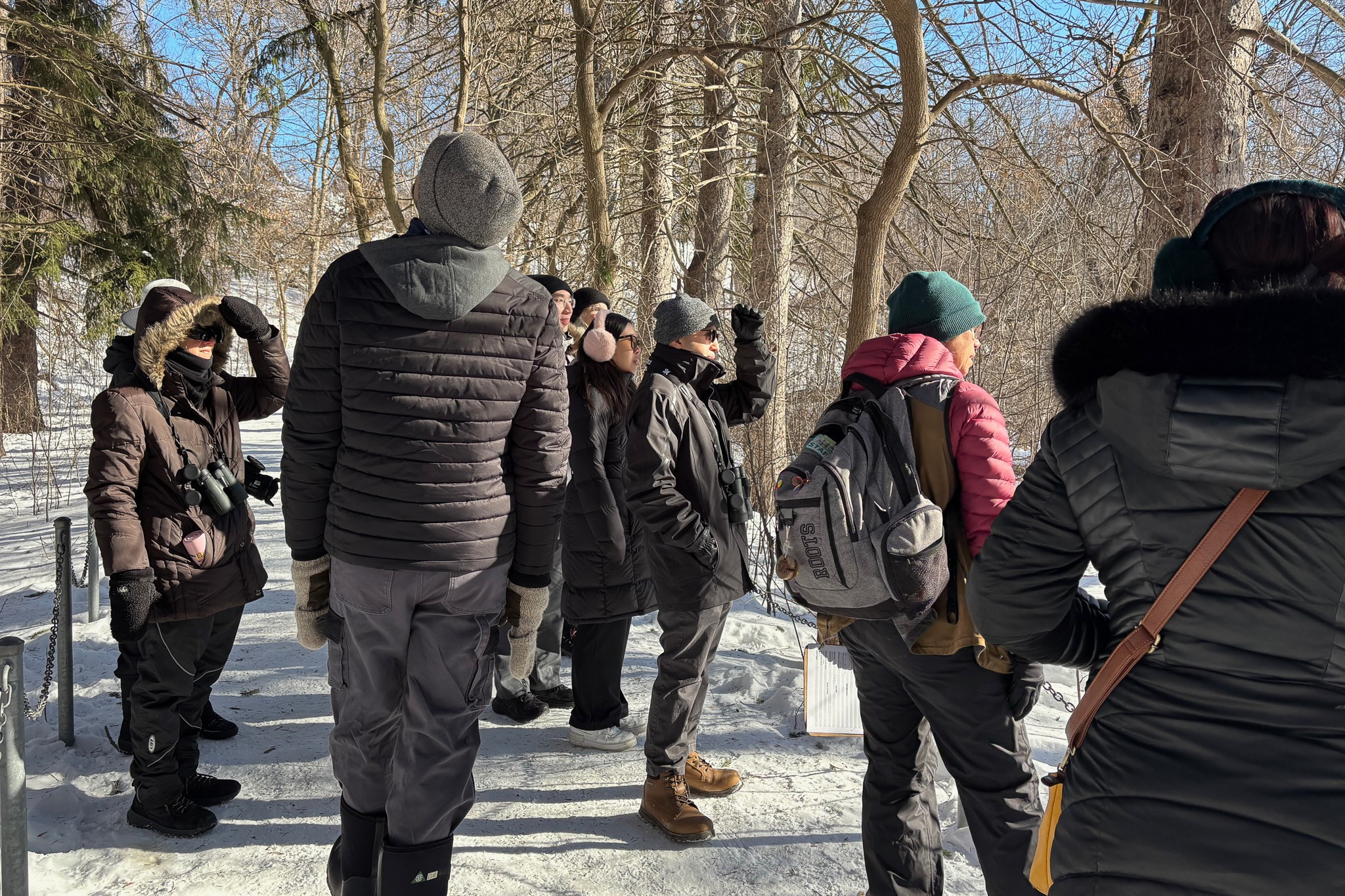
A group gathered at the Riverwood Conservancy in Mississauga on February 13 to participate in the Great Backyard Bird Count. Riverwood spans 150 acres of woodland, meadows and ravines along the Credit River in Mississauga. It’s home to approximately 200 different species of birds, including the mourning dove pictured above.
(Alexis Wright/The Pointer)
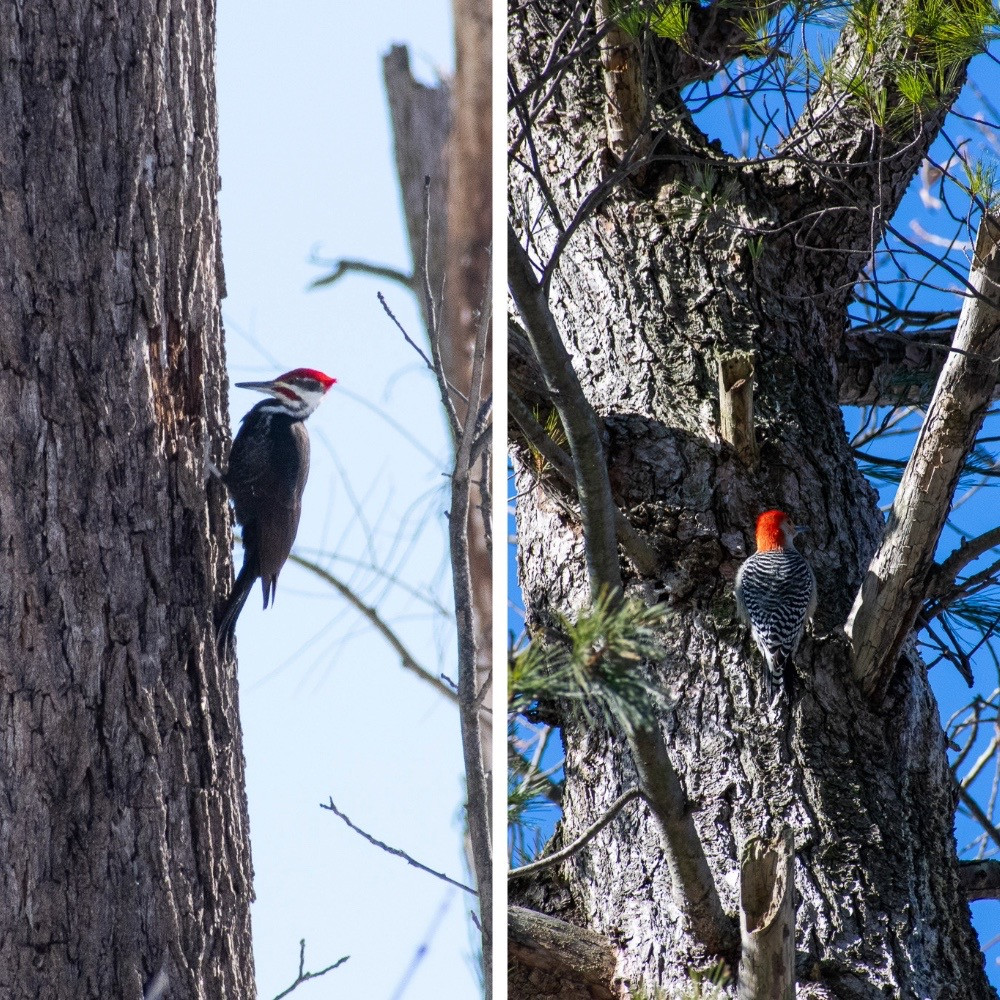
The pileated woodpecker (left) is the largest species of woodpecker in North America. The red-bellied woodpecker (right) is one of many species whose range is expanding northward as temperatures warm due to climate change.
(Alexis Wright/The Pointer)
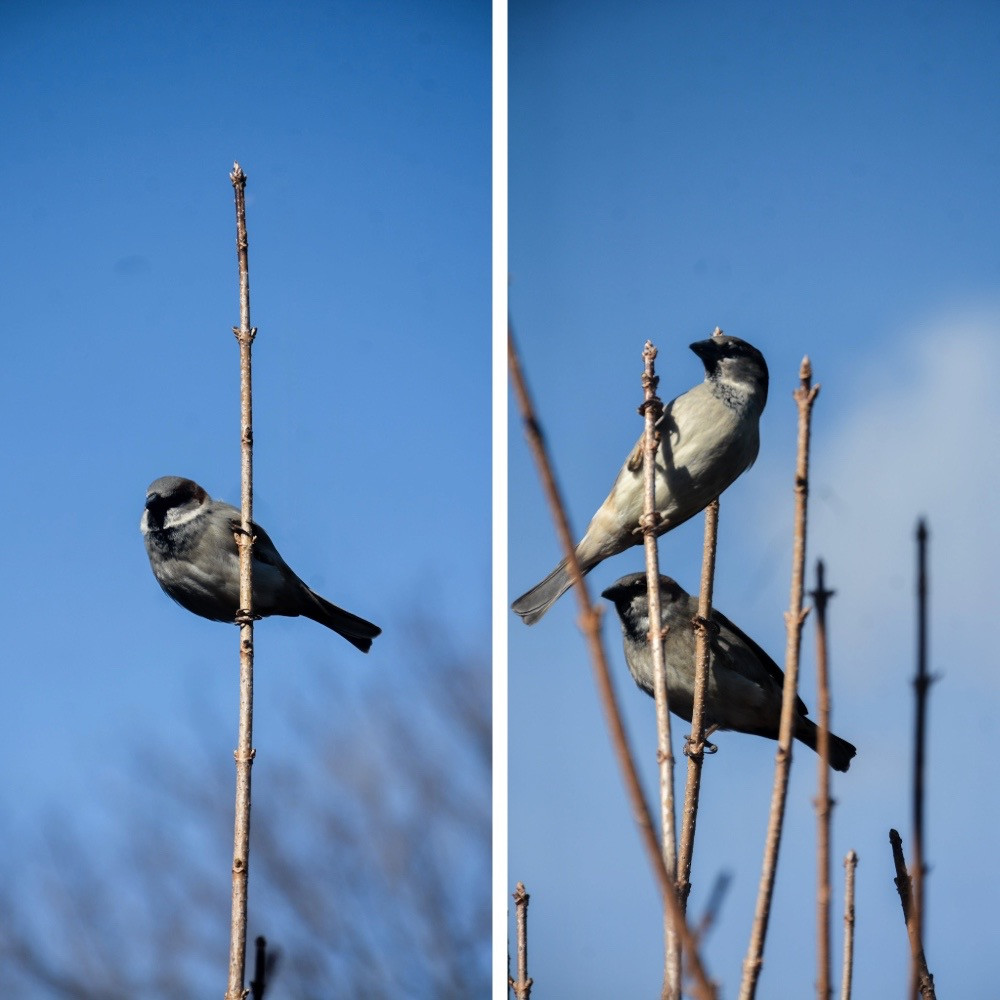
One of the most common sights in backyards across the GTA is the house sparrow. A non-native species introduced to North America in 1851, this bird has adapted to living in close proximity to humans, often preferring to nest in manmade structures instead of natural spots.
(Joel Wittnebel/The Pointer)
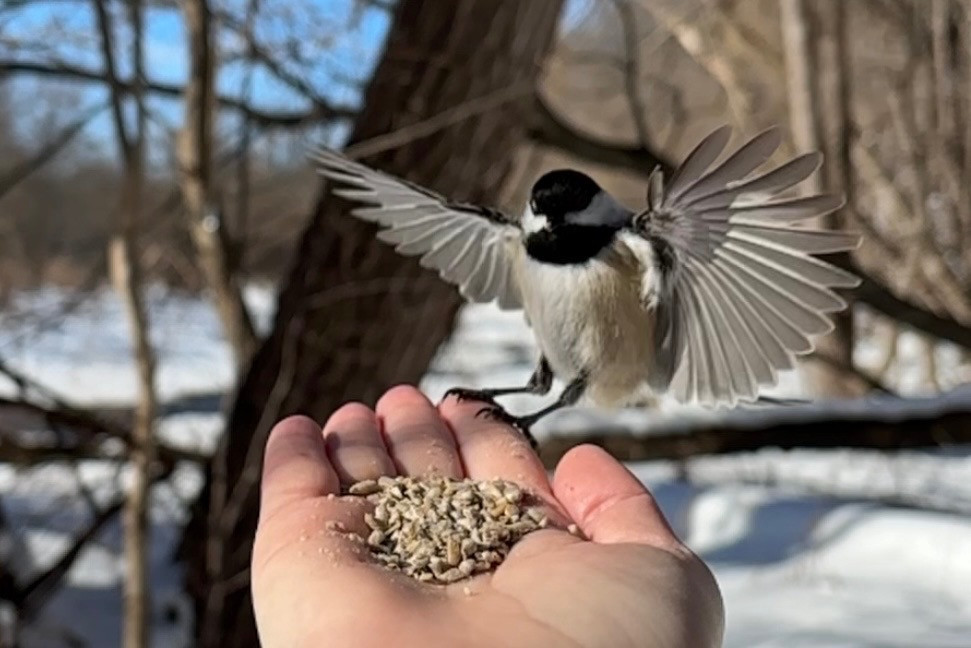
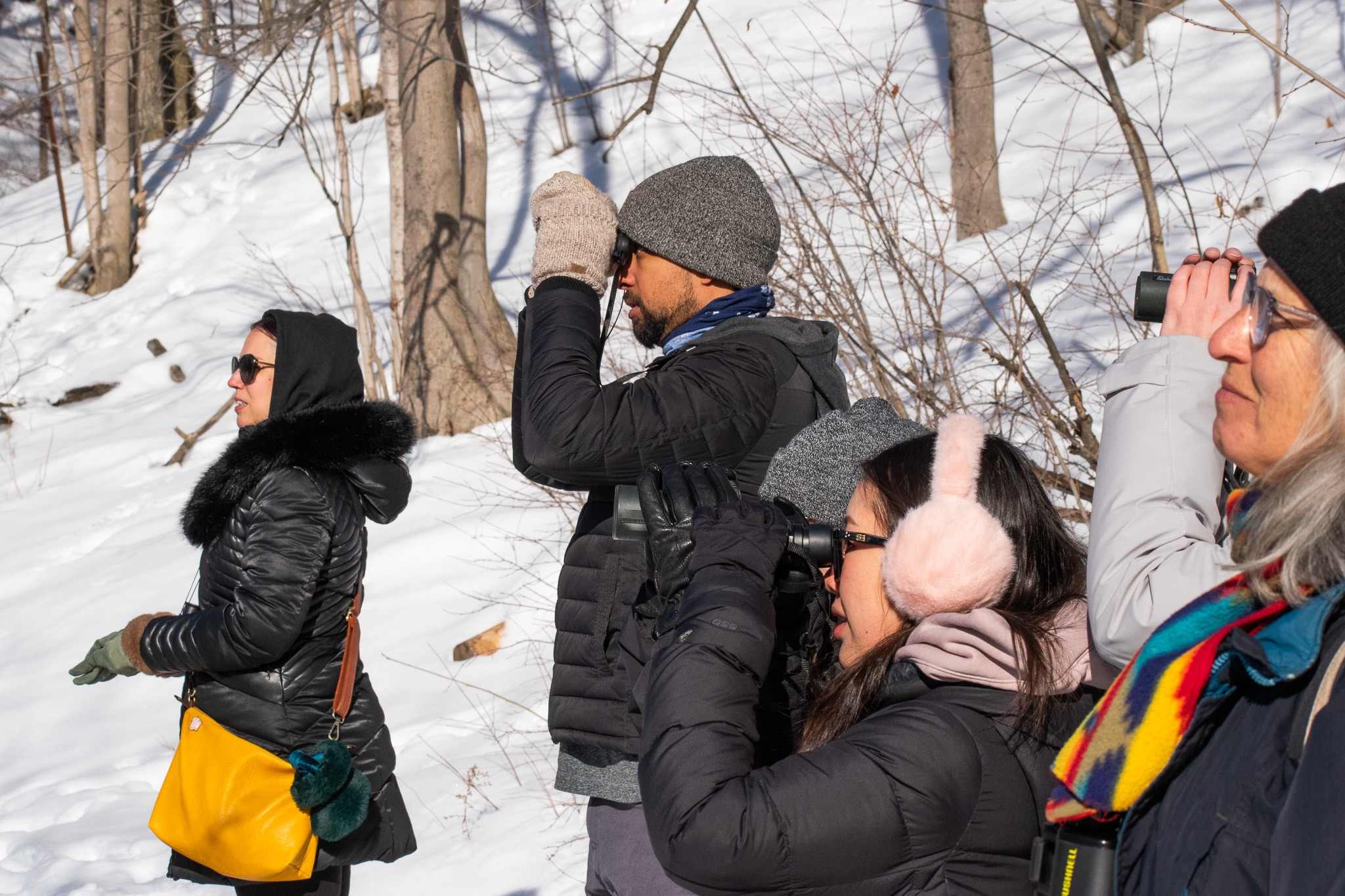
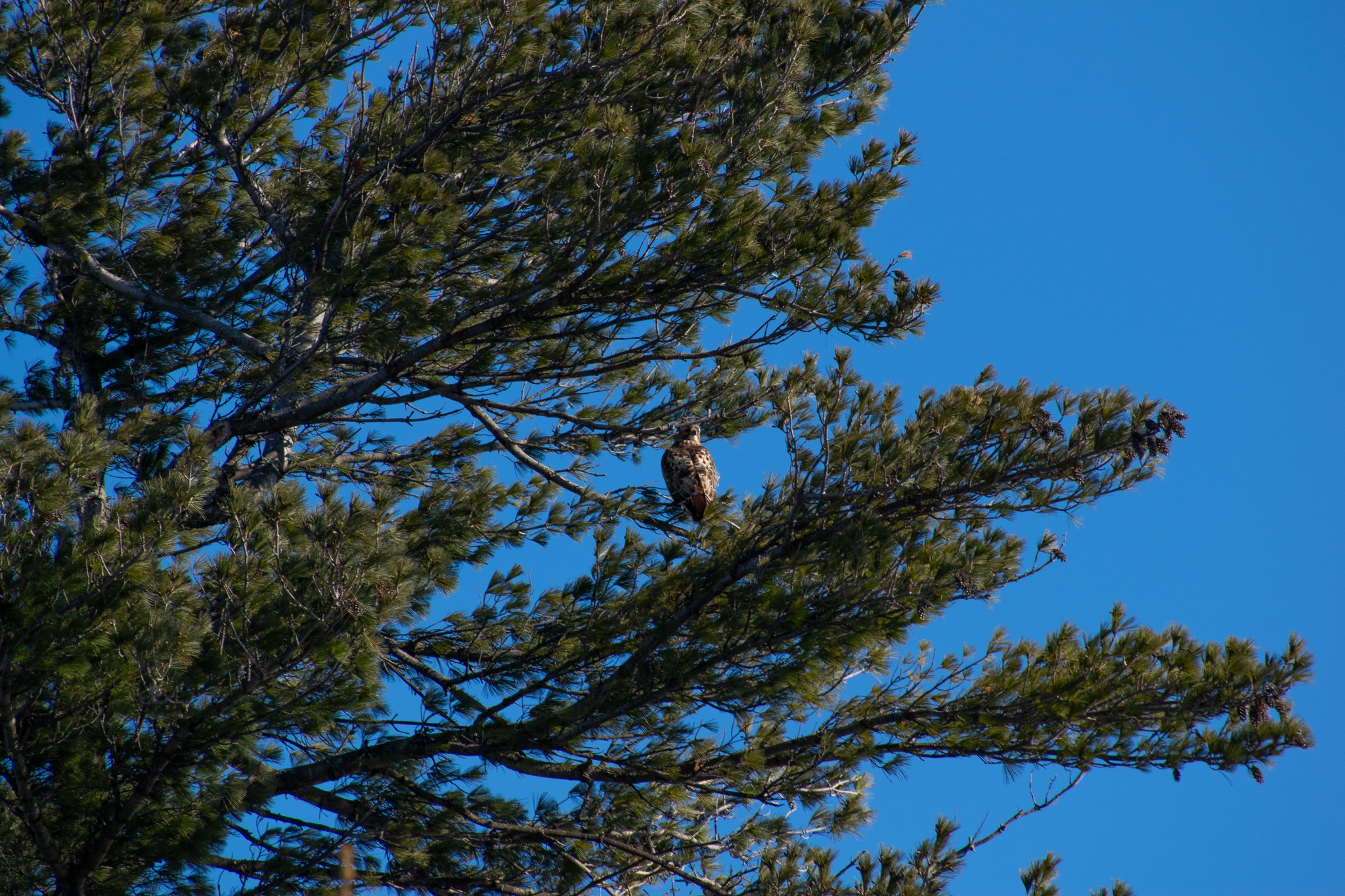
Those who took part in the Riverwood hike were treated to numerous different species encounters, including the black-capped chickadee (top) and the red-tailed hawk.
(Alexis Wright/The Pointer)
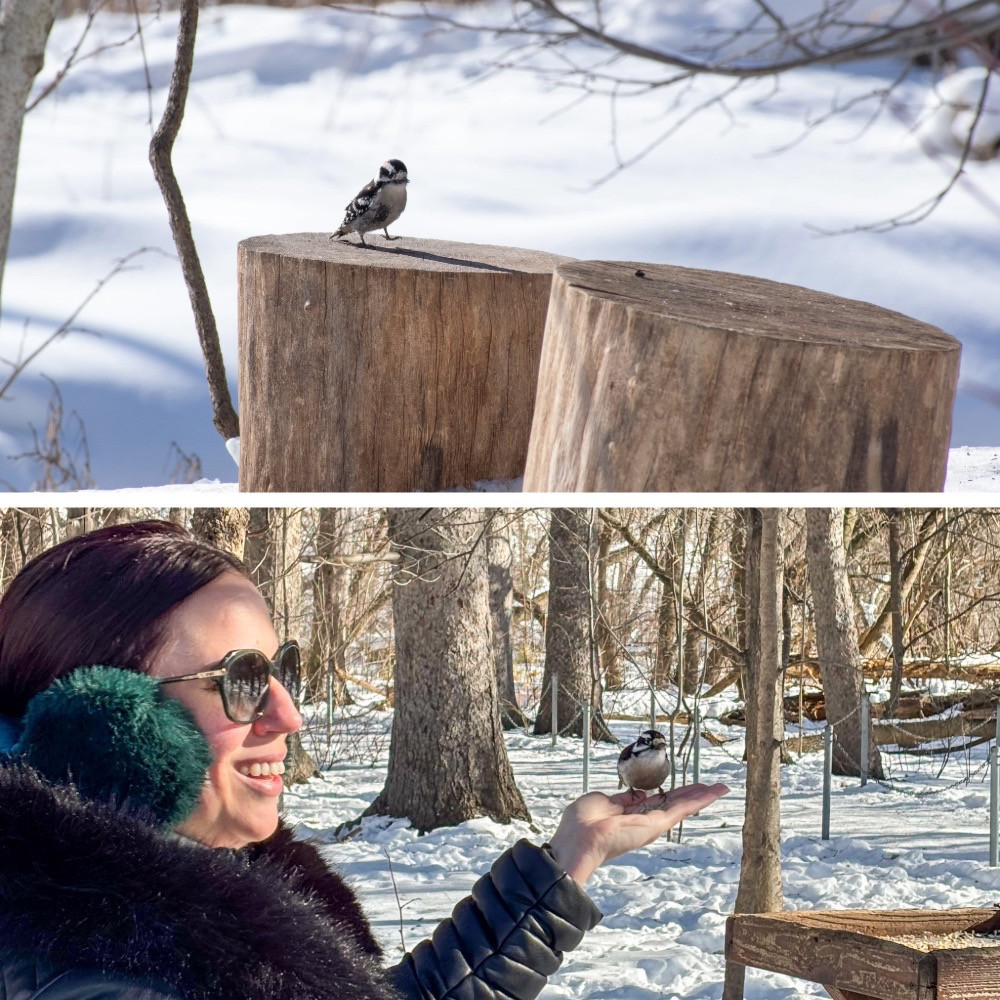
The downy woodpecker is the most common woodpecker in North America, often accompanying sparrows and finches at backyard feeders. In fact, during the cold winter months, downy woodpeckers often join mixed-species flocks with other birds to protect themselves from predators and make foraging for food easier.
(Alexis Wright/The Pointer)
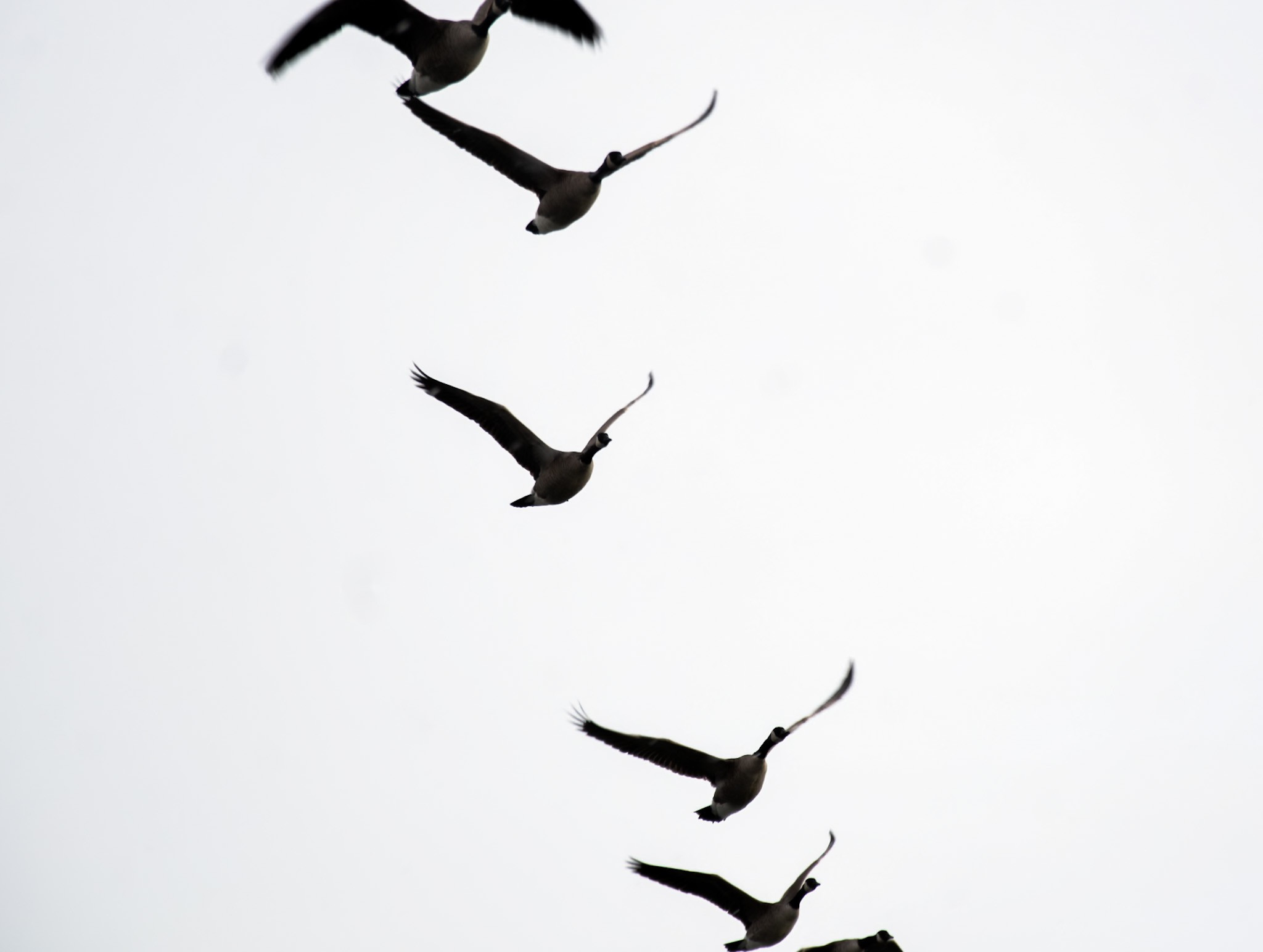
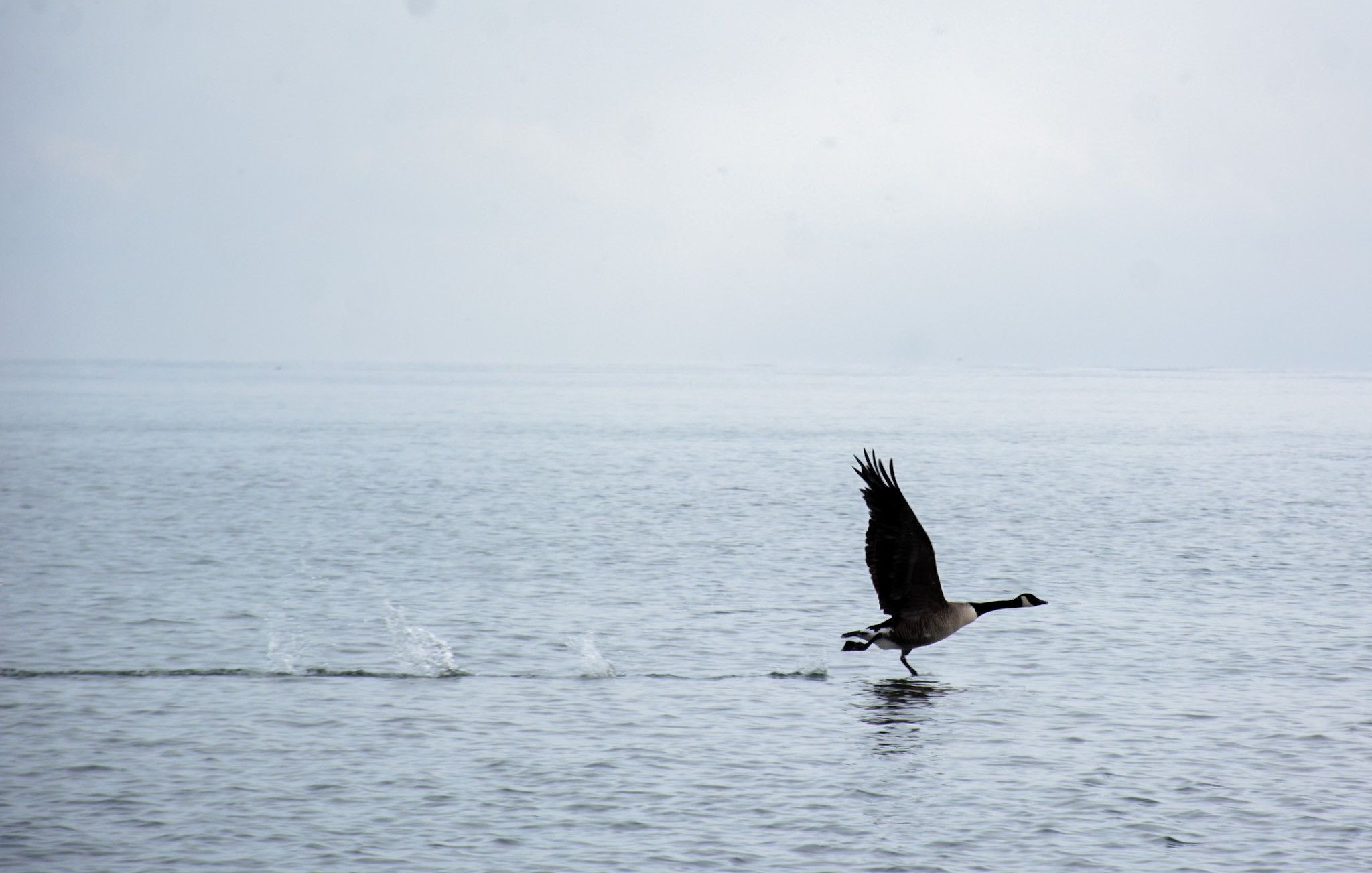
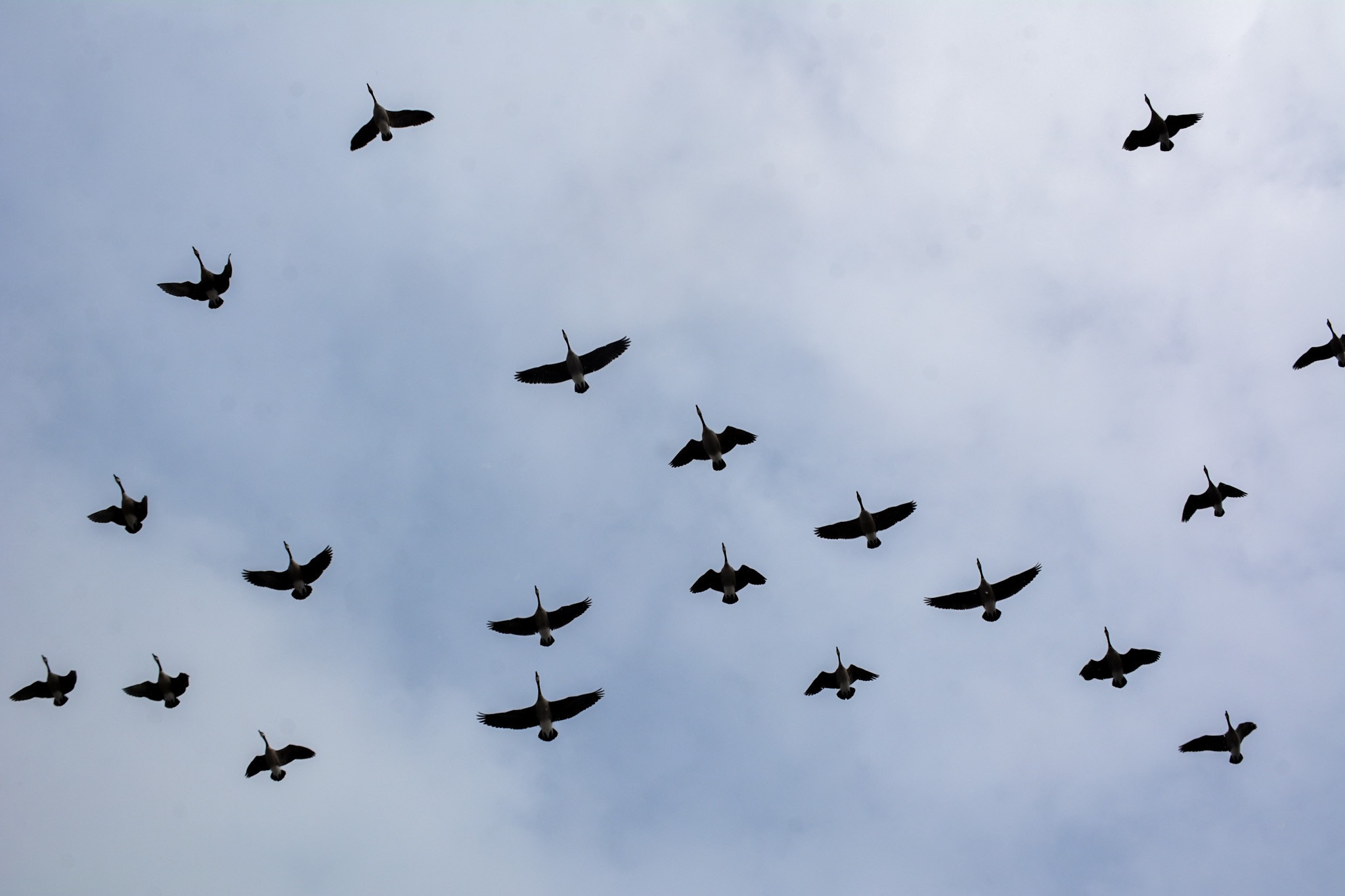
While it is assumed all Canada geese fly south for the winter, this is a common misconception. A growing number of this species are known as “resident” populations and stay in the same area year-round. This is particularly true for those who have access to open water and food.
(Joel Wittnebel/The Pointer)
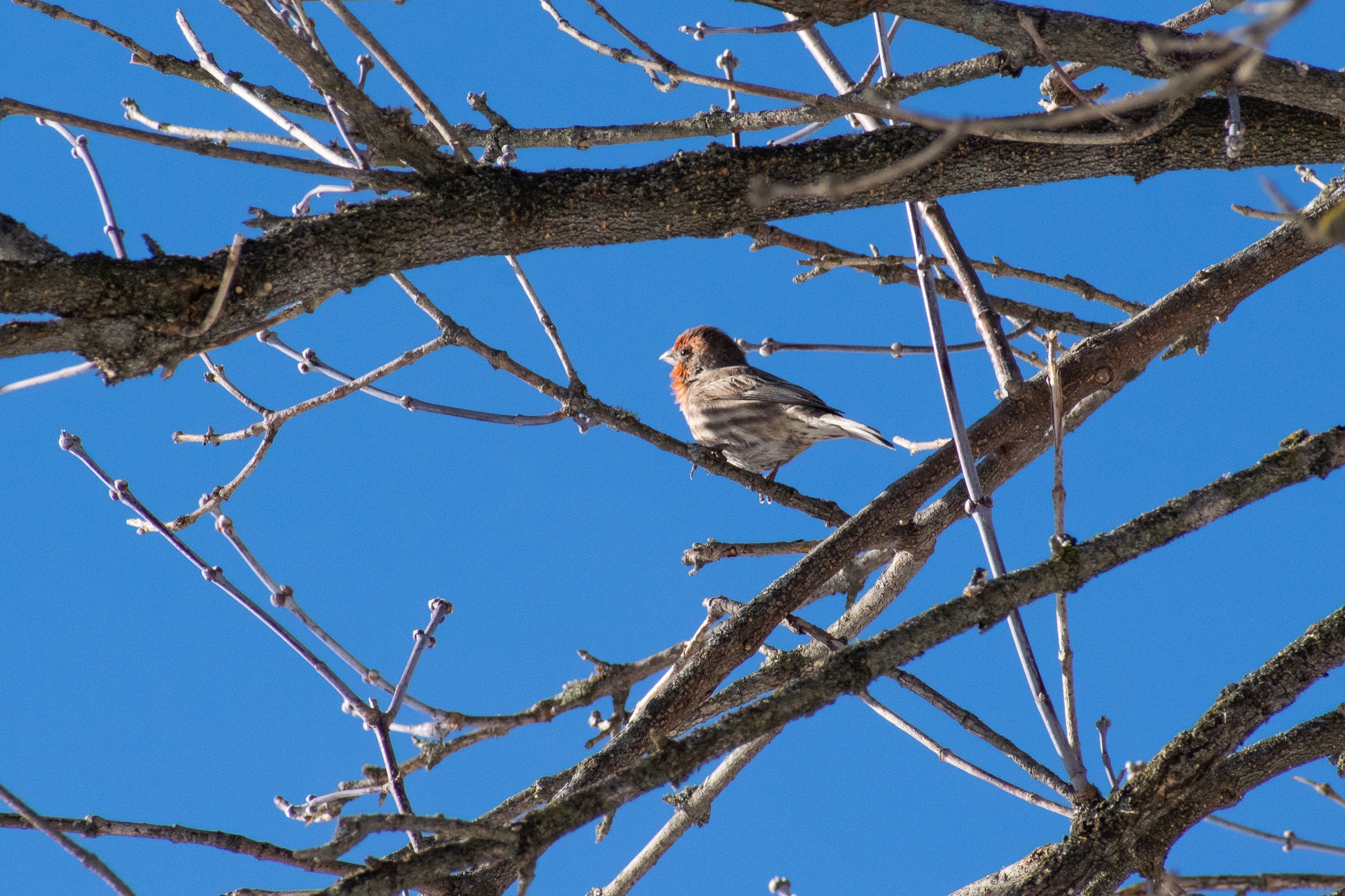
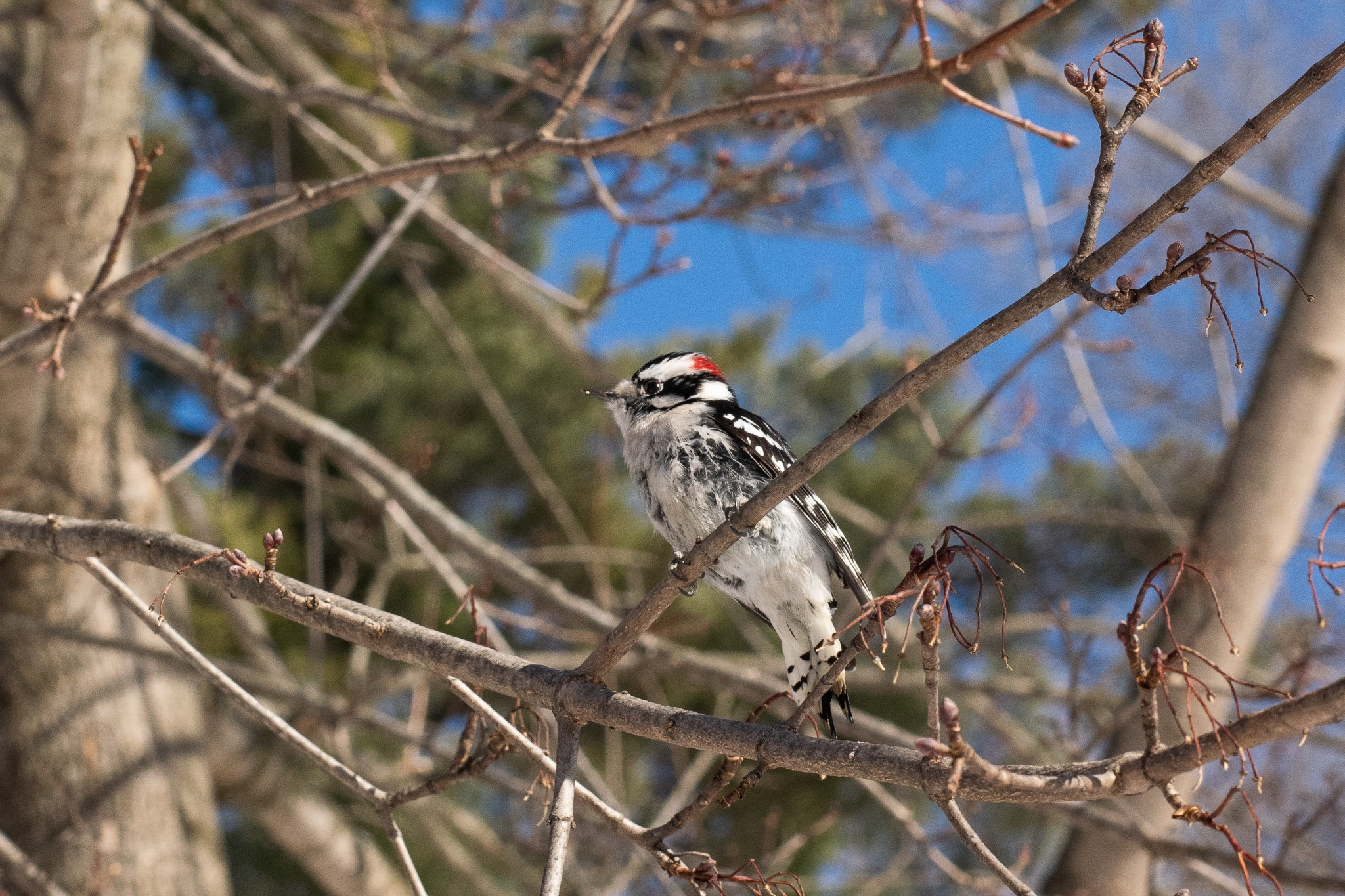
A 2019 study estimated that North America has lost 3 billion birds since 1970, a 29 percent decline, signalling an “ongoing avifaunal crisis”. One of the main drivers of this loss is habitat loss due to urban expansion and pollution. Efforts like the Great Backyard Bird Count help scientists not only understand these disturbing trends but arm them with the data to inform conservation work to potentially reverse them. Species seen above are the house finch (top) and a downy woodpecker.
(Alexis Wright/The Pointer)
Email: [email protected]
Email: [email protected]
At a time when vital public information is needed by everyone, The Pointer has taken down our paywall on all stories to ensure every resident of Brampton, Mississauga and Niagara has access to the facts. For those who are able, we encourage you to consider a subscription. This will help us report on important public interest issues the community needs to know about now more than ever. You can register for a 30-day free trial HERE. Thereafter, The Pointer will charge $10 a month and you can cancel any time right on the website. Thank you