
Men are no longer satisfied with the multifunctional products that satisfy three care problems with one item — they want effective, credible solutions tailored to their needs. What used to be a market with muted packaging is entering an era of gender-neutral, science-focused personal care.
Personal Care Insights speaks with Sequential, Moi Aussi, Cosmogen, Pure Trade, and TNT Group about the significant rise in men’s interest in personal care as gender stereotypes fade, and how industry members should change their tactics to cater to this evolving demographic.
“The men’s segment of the market has often focused on a one-size-fits-all solution, with products marketed to cover many bases through a single formulation (think three-in-one hair care). As knowledge within the space increases, they are mirroring the trend we see across the wider industry: that a product’s gender-specific marketing is not as important as its efficacy,” says Marya Ahmed, head of marketing at Sequential.
“There was a time not too long back, when men’s personal care was viewed as purely functional. However, as strict gender stereotypes have softened, the men’s personal care market has grown and shown significant promise for brands. We are no longer dealing with a demographic that purchases a product purely because it is catered to their gender, but one that is interested in whether the product will be efficacious, regardless of who it is marketed toward.”
Ahmed attributes a large part of this shift to Gen Z and younger generations breaking down gender stereotypes associated with personal care and femininity.
Evolving landscape
Regardless of gender, science-based solutions lead in the personal care industry. Sequential details that the go-to narratives based on the “ideal man” are no longer the center of marketing strategies. Alternatively, the focus is on the real-world impact and significance of a formulation in a daily routine.
“Instead of focusing on aesthetics and marketing to reinforce outdated gender norms, the industry has seen a bright light in producing products backed by clinical and statistically relevant data,” says Ahmed.
The scalp care segment of the men’s personal care space has always been large, due to concerns with hair loss. Even with the market’s long-standing interest, Pinterest’s 2025 Men’s Trend Report shows triple-digit growth in searches for hair growth (150%) and beard styling (205%).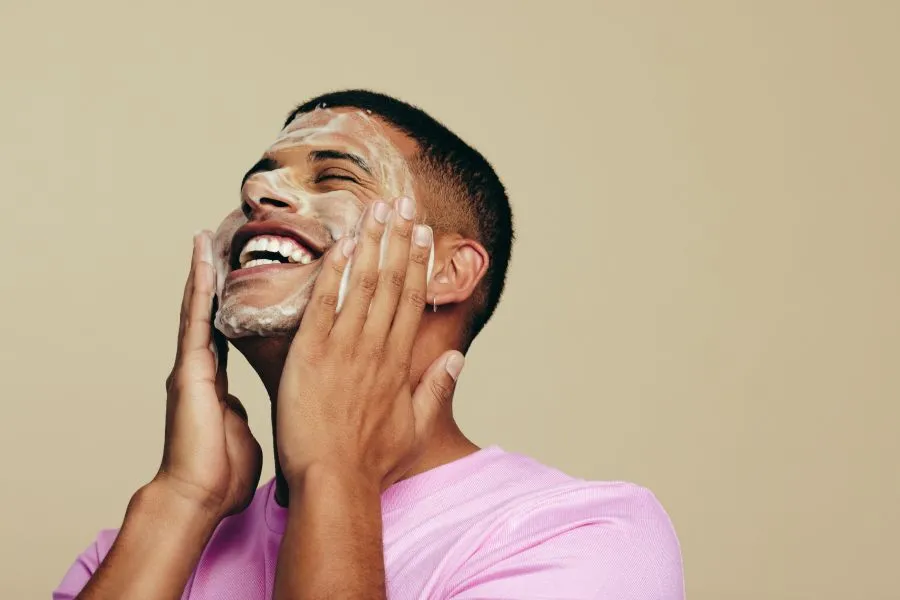 Men’s grooming is evolving toward personalized care.
Ahmed witnesses the same level of interest building in skin care. She explains that men are creating routines that focus on hydration and cleansing, as well as barrier strengthening and targeted serums for skin concerns.
“We anticipate continued growth in microbiome-friendly and barrier-focused skin care, particularly formulations designed to support recovery after shaving, environmental exposure, and daily stress,” she says.
“Soothing barrier-repair creams, post-shave treatments, and products that help rebalance the skin microbiome are becoming increasingly important as consumers prioritize long-term resilience and preventative care. Advanced scalp and hair density solutions focused on inflammation management, follicular health, and sebum balance are also gaining strong momentum.”
Even if the market is steering away from the body wash, shampoo, and conditioner all in one, that does not mean a complete erasure of multifunctional products — they are just changing form and becoming more targeted. Ahmed says that high-performance minimalism is shaping innovation.
“Multi-functional products, including CC-cream style hybrids that combine hydration, tone-evening, and protection in a single step, reflect demand for streamlined yet results-driven routines.”
“We also see growing interest in neurocosmetic approaches, with ingredients targeting stress-related skin responses and positioned around recovery and overall skin well-being.”
Innova Market Insights data indicates that men globally pay attention to their skin and personal care needs. Meanwhile, there is also growth in male-targeted body care and conditioners.
Fadi Mroueh, founder of Moi Aussi, says that the growing recognition of the importance of the men’s care market is also leading to an increased awareness of hand care for men.
“Hand care is a simple, confident, and meaningful gesture for men, transforming what was once perceived as secondary or taboo into an act of well-being and self-recognition,” adds Mroueh.
Social media’s influence
A strong source of the normalization of men using beauty products is social media. Ahmed says that male influencers across social platforms use formulations geared toward scientific credibility and backed by real clinical studies.
“The normalization of male self-care has significantly expanded the category. Personal care is increasingly viewed as part of overall health and well-being rather than vanity. As men become more proactive, they are seeking products that deliver clinically proven benefits and support daily wellness routines,” says Ahmed. 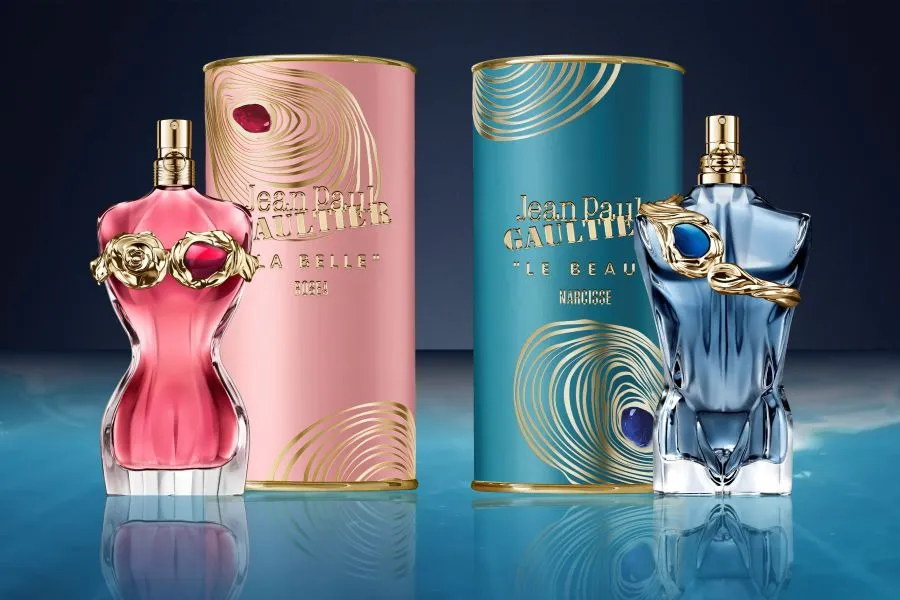 Gender-neutral products are reshaping men’s personal care.
According to Moi Aussi’s Mroueh, one in two men declares using cosmetic products, and three in 10 say they would be willing to get a manicure. He says this reflects a cultural shift toward more openly embraced self-care and interest in previously female-dominated categories.
Men’s fragrances
Innova Market Insights reports that product launches in the men’s segment have increased over the years. The market researcher specifically notes innovations appearing in the fragrance sector.
“Historically, it was enough to brand a product in male-centric colors and include fragrances appealing to the gender. However, we are seeing that this is no longer as effective as it has been,” explains Ahmed.
TNT Group tells us that Jean Paul Gaultier was among the first fragrance houses to break conventions with sculptural, statement bottles that redefined masculine codes.
“With the latest La Belle & Le Beau extensions, including Le Beau Narcisse, TNT Group industrialises this bold heritage through gold-metallized polypropylene and tinted PCTG (polycyclohexylene dimethylene terephthalate glycol-modified) jewellery accessories, confirming that men respond to strong creative identities when precision, robustness, and large-scale quality are uncompromising.”
Pure Trade adds that as men increasingly embrace self-care, they expect fragrance to extend into a coherent, lifestyle-driven experience.
The luxury packaging company exemplifies this shift with its corporate collections for Azzaro and Cerruti 1881. They created functional, design-led toiletry bags with gum-effect materials, refined finishes, and branded details, providing men with useful, well-crafted objects that “echo the fragrance universe.”
“For Vivo by Cerruti 1881, the painted zamak padlock directly references the bottle’s distinctive locking mechanism, reinforcing the narrative connection between product and gift. The result is not decorative excess, but controlled sophistication: masculine lines, tactile materials, and meaningful design cues that elevate the purchase into a complete brand experience,” details a Pure Trade spokesperson.
Men’s packaging
Men’s care is moving toward high-performance, sensorial, and responsible solutions that combine efficacy with sustainable packaging. Packaging is a strategic lever in men’s care. Maud Lelièvre, marketing and communication director at Cosmogen, says it must express performance, sustainability, and sensoriality simultaneously.
“Men increasingly seek targeted products with visible results, ergonomic applicators, and elevated aesthetics. They also expect transparency and sustainability, favoring refillable formats and monomaterial PCR packaging without compromising premium appeal,” Lelièvre explains.  Science-backed solutions lead the new wave of men’s self-care.
She continues that refillable packaging with reusable applicators, such as Cosmogen’s patented Tense tube with metal tip, will become standard, combining sensorial benefits with reduced environmental impact. Lelièvre adds that monomaterial PCR sticks for anhydrous and hybrid formulas will also gain ground as brands build coherent, responsible lines.
“[Men embracing personal care] has legitimized more sophisticated routines, including eye contour and lip care. It drives demand for expert textures and applicators that deliver immediate visible benefits while maintaining a discreet, masculine design.”
Future-forward
Sequential says from a clinical testing perspective, the future of men’s care lies in substantiation.
“As formulations become more advanced, robust human clinical testing insights will be essential to differentiate products and support credible claims in an increasingly competitive market,” asserts Ahmed.
The founder of Moi Aussi says the French cosmetics market sees men’s cosmetics representing 15 to 20% of total revenue, with expected annual growth of 6 to 9% between 2024 and 2030. “Consumer signals confirm acceleration, including a 420% increase in searches for ‘nail polish for men’ since 2023.”
Mroueh says that market data reflects a redefinition of men’s relationship to care and well-being.