
Henry Scott wanted to know what the dirtiest thing in his house was. After a little experimentation, he shared the answer with his classmates: his sister’s foot.
Henry, a fourth-grader at Pioneer Elementary, did a scientific experiment as part of the school’s science fair by growing bacteria in petri dishes from swabs taken from a toothbrush, toilet seat, pillowcase, raw chicken, Playstation controller, cell phone and, of course, some feet.
Henry’s foot was also part of the experiment, and it was the second-dirtiest thing in the house. The toilet seat was the least dirty.
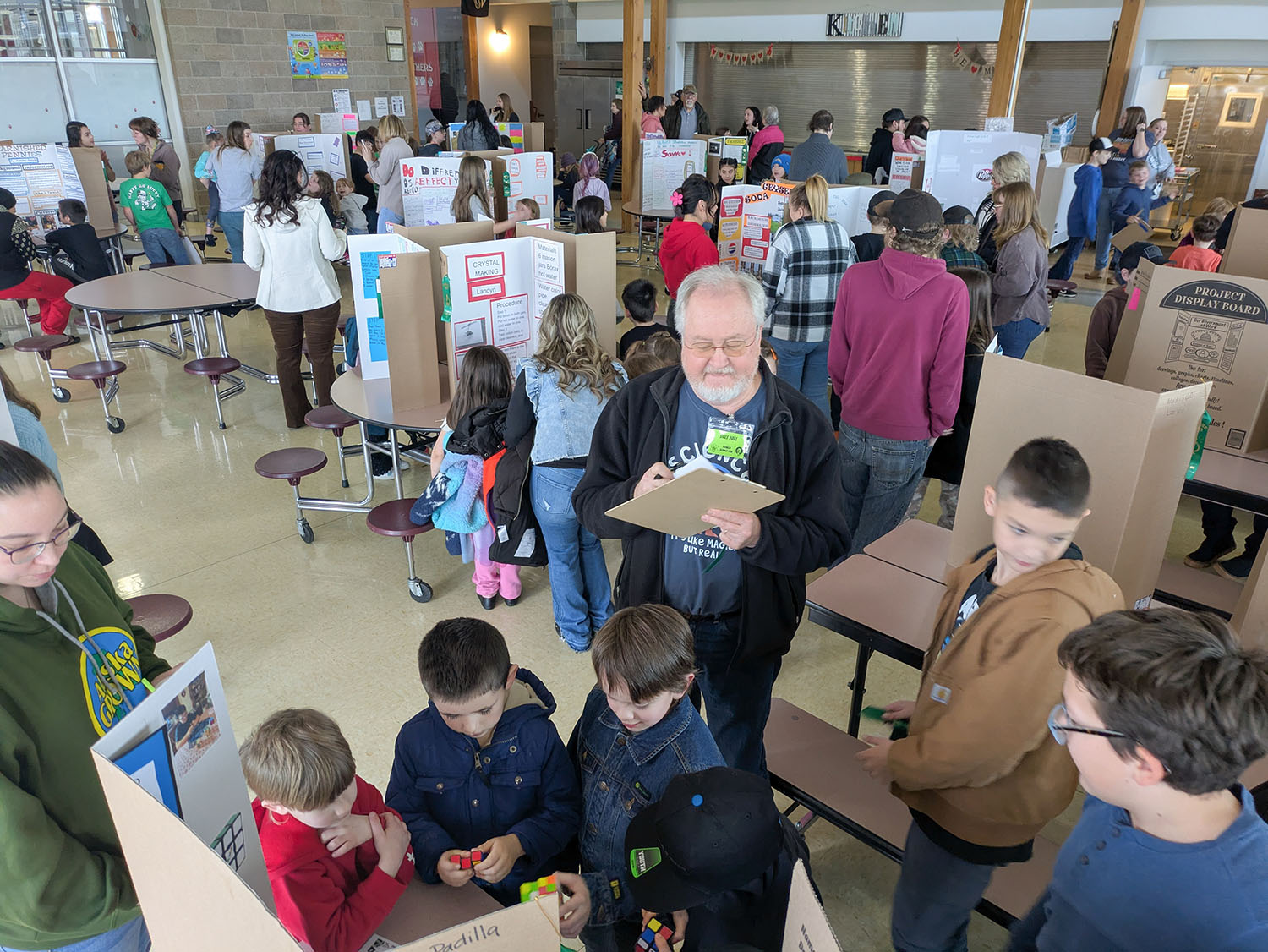
Fourth and fifth grade students at Pioneer exhibited their science fair projects on Friday, Feb. 20, allowing parents and students to view their project and, sometimes, even play with them.
One of the more popular projects was Torsten Padilla’s (fifth grade) research to determine which Rubik’s Cube can be solved the fastest. His exhibit was often flocked by several students who seemed to enjoy trying out the varying sizes of 2×2, 3×3, 3x3x1 and 4×4.
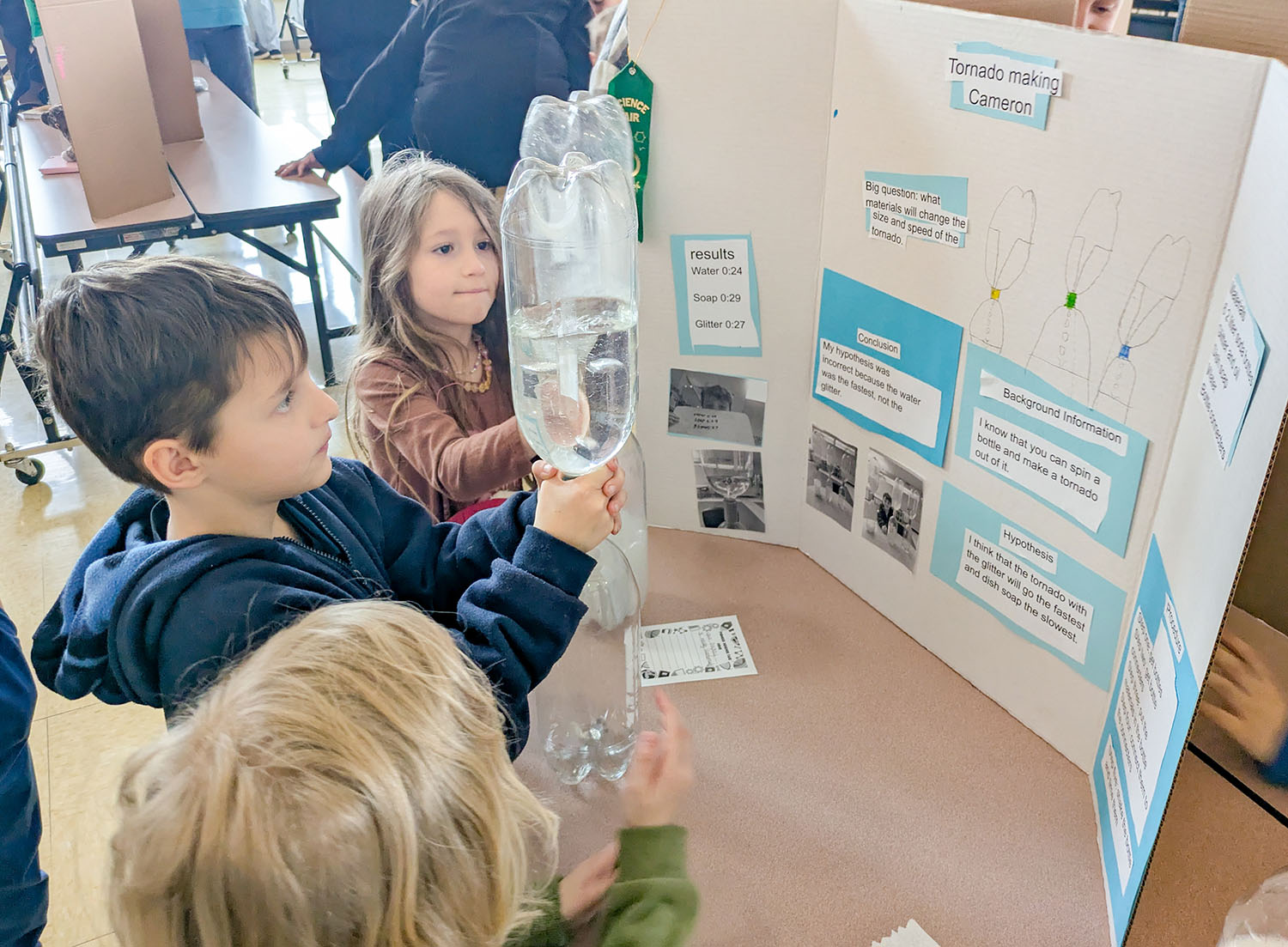
Cameron Sisemore’s (fourth grade) interactive tornado project allowed visitors to shake liquid-filled bottles to create tornadoes. He hypothesized that water with glitter in it would spin the fastest and the one with dish soap would spin slowest, but he learned that the water-only bottle spun fastest.
Special guests were invited to judge each exhibit.
“Some of them are going for a low bar, some of them are going for a pretty high bar, really,” said Dale Hall, judge.
He was particularly impressed with Jonas Rojeski’s (fifth grade) project on water filtration and Aurora Logan’s (fifth grade) experiment with how the density of liquid affects object floatation.
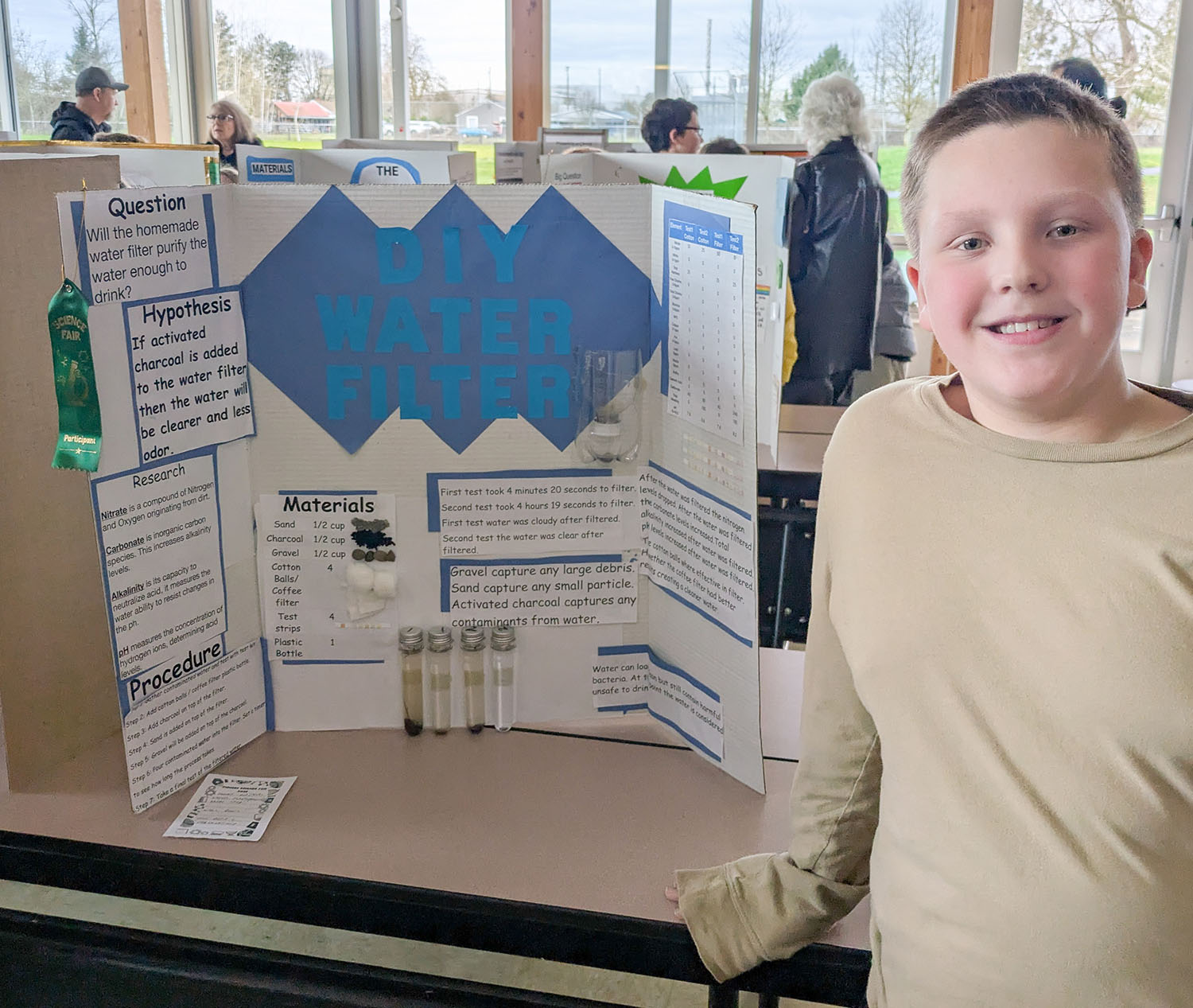
Jonas explored the question of whether a homemade filter would purify water well enough to drink. He used sand, charcoal, gravel and water quality test strips to learn how well cotton balls versus coffee filters filtered out contaminants.
“After the cotton balls were tested out, it became cloudy and not drinkable; you could see little chunks floating in it,” Jonas said. “But with the coffee filter you can’t.”
Still, despite a very clean looking water result from the coffee filter, Jonas concluded that water can look clean but still contain harmful bacteria.
Jordan Adams’ (fourth grade) experiment on osmosis involved the disintegration of egg shells before soaking them in different liquids such as vinegar, soda, Gatorade and milk. He learned that reverse osmosis is possible, and that water absorbed the most.
Then there was Xander Gonda who learned about tarnish on copper pennies, Jocelyn Bill who learned that baking soda makes a better activator for slime, Aniayah Betts who determined that Downey paper towels hold more water than others she tried, Josephine Birch who grew mushrooms on different substrates, and Justin McCraven who observed the protective nature of camouflage.
Other students tested how many times they could fold a piece of paper, learned whether water freezes with sugar or salt in it, investigated gelatin from horse hoofs, made electricity from lemons, and experimented with the ever-popular Mentos-in-soda project.