

Carolyn Bessette backstage in 1994.
Photo: Patrick McMullan via Getty Images
What if instead of waiting in your sweatpants for another forgettable Zoom meeting to start, your workday started something like this: with a fresh pack of cigarettes and the latest issue of Vogue in hand, as elevator doors open to a pristine office where the walls are bright white, the desks are shiny black, each with its own white orchid, and a small army of beautiful people rush around you. The soundtrack is “Loaded,” by Primal Scream, the year is 1992, the economy is booming, there are no cell phones, and you work at the sexiest brand in America with the most influential fashion designer of the decade — Calvin Klein.
That’s how it goes for Carolyn Bessette on Love Story, Ryan Murphy’s newest ripped-from-the-headlines series about the romance between the Calvin Klein shopgirl turned PR executive and John F. Kennedy Jr. before they tragically died in a plane crash in 1999. While the show focuses on their relationship, families, and the pressures of fame and paparazzi, the best scenes take place at Calvin Klein’s 39th Street headquarters, where Klein, played by Alessandro Nivola, oversaw an expanding empire of runway shows, fragrances, and jeans that defined ’90s American style.
In Love Story, a visit from JFK Jr. sends the office into a tizzy. “JFK Jr. was just here,” one employee announces in the first episode, after Klein enters the office to find his staff whispering to each other in excitement. “What, no one tells me?” he responds in faux outrage with a sly smile before giving his employee’s tiny Tupperware lunch of steamed vegetables a withering look. She sheepishly tucks it away. In another scene, Bessette tells her assistant she can use only black paper clips: “He’s fired people for a lot less.”
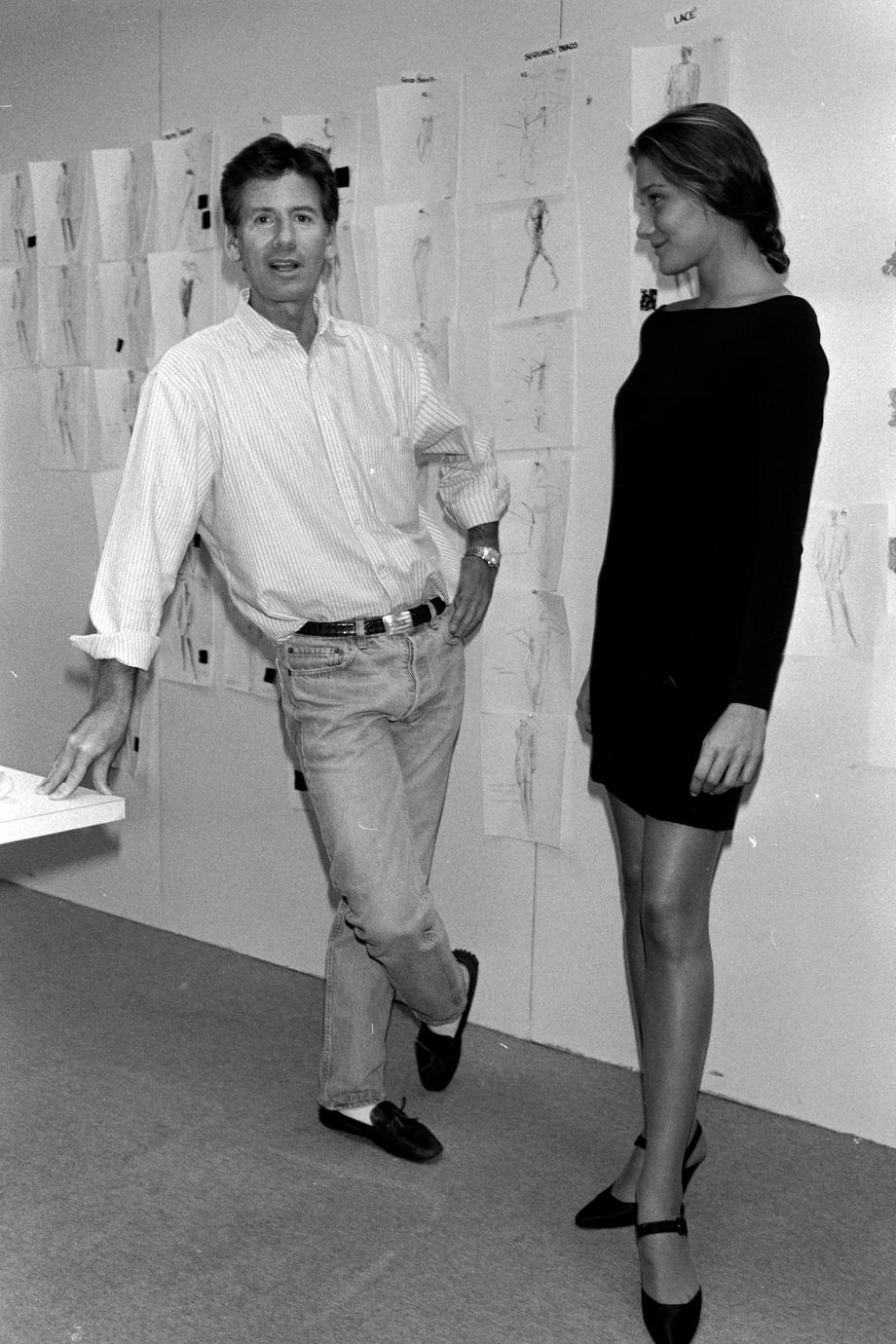
Calvin Klein and Carla Bruni in 1990.
Photo: George Chinsee/WWD/Penske Media via Getty Images
It’s these Devil Wears Prada–esque details that make the office scenes in Love Story feel true to life regardless of how the real Calvin Klein felt about food in the office. In fashion, the most successful companies are usually full of idiosyncratic quirks. In those days, the Calvin Klein office wasn’t just a workplace — it was a testament to a designer’s aesthetic vision. The staff at Ralph Lauren wore suede jackets and a dash of blush, and the offices were covered in mahogany wood and plaid couches. At Calvin, executives wore black suits and skipped under-eye concealer, and the stark white walls were said to be touched up with paint on the daily. Staples were verboten, paper clips were either black or white, and desks had to be kept nearly empty. Klein famously had his personal chef color match his coffee to a creamy Pantone shade. Today, that kind of control would probably merit a complaint to HR. Back then, it was an unspoken part of the gig. “The production design of the office was real, and it was a part of the magic,” says Terence McFarland, who worked in PR in the early 1990s.
“It was like pinch-myself fun,” says Mary Beth Kelley, who started as an assistant in 1995 and stayed for close to a decade, mostly working under Barbara Warner, the top merchant overseeing the licensing businesses. “It was also incredibly stressful. There were late nights, and there were deadlines, but there was a lot of excitement around it.” Love Story has brought back Kelley’s memories of her time at the company and living in New York in her 20s. “There were no cell phones; there was no Instagram; you couldn’t curate yourself publicly. And I think that’s why it’s really resonating now, because it was like the last era of mystery.”
The show’s version of Calvin Klein portrays him as an exacting yet prophetic boss, who recognizes Bessette’s talent with people and her sophisticated style during a fitting with Annette Bening. The real story isn’t all that different. Klein was a celebrity whose personal life (addiction, divorce, and a highly publicized kidnapping of his daughter) was national news. But his former employees say that in the office, he listened and didn’t want to be feared by his staff. Over the course of the 1990s, he employed some of the most gifted people in fashion, including stylists Tonne Goodman, Grace Coddington, and Joe McKenna; designers Narciso Rodriguez, Zack Carr, and Isaac Mizrahi; and art directors Sam Shahid and Fabien Baron. The runway shows featured Kate Moss and Linda Evangelista, their hair by Guido Palau and makeup by Dick Page. Celebrities like Farrah Fawcett and Sarah Jessica Parker were frequently spotted in the hallways, not just when the runway shows were held there twice a year.
“It was the coolest place in the world to be,” says Paul Wilmot, head of PR at Calvin in the late ’80s and early ’90s. “We had no problem recruiting.”

Calvin Klein models, including Gisele Bündchen (second from the left) and Noot Seear (far right), backstage in 1998.
Photo: Kyle Ericksen/Penske Media via Getty Images
In Love Story and in real life, Bessette was promoted quickly because she was so good at working with people. After a Calvin Klein executive spotted her at one of the brand’s stores in Boston, where she was a sales associate, she was invited to interview with Wilmot for a job in New York. Bessette was put in charge of VIP clients — movie stars, socialites, friends of the designer — who would come in and shop at a discount. “She had this wonderful, diplomatic, warm way,” Wilmot says, describing her as maternal. As the years went on, she became “Calvin’s darling in PR,” remembers Kelley. Bessette ran PR for the high-end collections, advised on campaigns, and even, as the story goes, pushed for the brand to cast Moss in its now iconic 1992 underwear ads with Marky Mark.
Many of Bessette’s closest friends from Calvin are reluctant to speak about her still today, given the rabid public interest in her life before and after her death. But online, there are new tributes and memories being shared in the wake of the show. To the rest of the staff, Kelley says, Bessette was down to earth, even after she started dating Kennedy. “She really was so kind and approachable,” she says. “She made you feel like you didn’t have to be intimidated talking to her.” Her warm blonde hair, as Love Story pays tribute to with Sarah Pidgeon’s delightful hair acting, was her signature. “It really was like this wild mass of curls,” says Kelley. “She would do this flick of the hair that felt like a protection cloak, like there was no one else in the world,” McFarland remembers.
Everyone in the office wore Calvin Klein and, if you had the taste and confidence like Bessette, labels that filled the design team’s mood boards. McFarland remembers her running around in Ann Demeulemeester slip dresses and Adidas sneakers. “The entire paradigm of what was considered high fashion and the embrace of street culture — that mix was landing at Calvin amid this really rarefied aesthetic of, you know, 17 color names for white on the sales chart,” says McFarland. “That quality was palpable and cultivated in the offices … Everybody was firing on all cylinders.”