
The horror genre has grown into one of the most popular and profitable lanes of TV and film, and has spawned dozens of sub-genres. One of the most popular sub-genres of horror is (and always has been) “survival horror,” wherein a protagonist (or protagonists) finds themselves in the nightmare scenario of being stranded in a harsh terrain and/or remote location and having to survive long enough to escape to safety.
Survival horror strikes a deep chord with so many viewers because who hasn’t imagined the possibility of being lost or stranded in a hellish place? However, survival horror films often tend to get hamstrung by their own premises, as the principal characters are often left to hold the screen all alone for most of a film. To get around those possible lulls in action, survival horror films have begun to rely on a gimmick that often comes off as cheap – but the sub-genre needs to stop leaning on that crutch, sooner rather than later.
Survival Horror’s Imagination/Hallucination Twist Is An Aging Gimmick
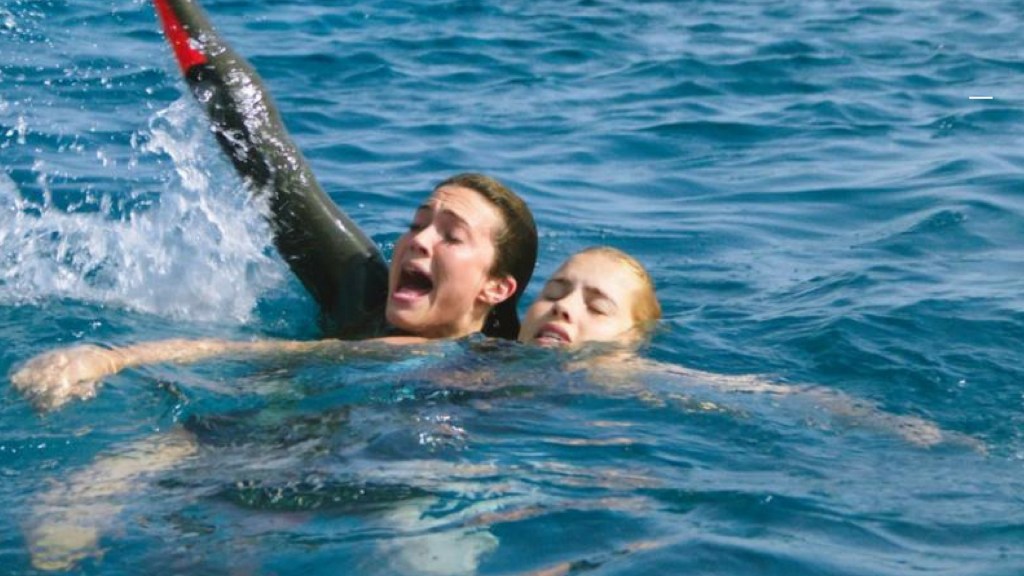
There is a gimmick unique to survival horror films: at some point in the harrowing fight for survival, a protagonist has some kind of incident or trauma that fractures their sense of reality. Viewers are taken on some kind of climactic ride where it seems like events play out one way – only for the film to pull the rug out on the audience by revealing that a portion of the events they just witnessed weren’t real, but are instead imaginary hallucinations of someone slipping into hysteria, madness, or death.
The most famous recent case was filmmaker Johannes Roberts’ 2017 survival horror film, 47 Meters Down. The film follows two girls, Kate (Claire Holt) and Lisa (Mandy Moore), who get trapped while shark diving in an underwater cage. The climactic twist in the film (SPOILERS) is that Kate is killed by a shark, leaving Lisa pinned under the cage. Since Lisa is suffering from too much nitrogen inhalation, she hallucinates herself and Kate making a grand escape from a school of great white sharks. The film then reveals the ruse and ends with Lisa actually being rescued by the Coast Guard.
The twist helped solidify 47 Meters Down as a cult-classic, but also made that fake-out twist a popular staple of the sub-genre, even though it wasn’t the first film to use it. There have been variations on the gimmick, such as a character fatally mistaking or misinterpreting what was going on in an surivval situation. Take, for example, Frank Darabont’s 2007 adaptation of Stephen King’s novella, The Mist. That film (about a grocery store full of small-town folk hiding from a dense fog that contains Lovecraftian monsters) has an infamous ending, which sees the final survivors being stranded in the fog, thinking doom is approaching them, and choosing to end their own lives via mercy killing before the monsters tear them apart. Instead, it’s revealed that they are being rescued (by the army) and the last surviving protagonist has his sanity shattered by the horror that they lost hope just before salvation arrives.
The 2017 sci-fi survival-horror film Life took an even cheaper approach to that kind of fake-out in its climax, making viewers believe that a surviving astronaut protagonist sacrifices himself to get his colleague back to Earth and stop a deadly alien from reaching the planet; instead, the film uses a fake-out of location and time to disguise the fact that the plan has failed, and the escape pod that lands on Earth has brought the doom of the unkillable alien to our planet.

The fake-out gimmick in survival horror has extended into the 2020s, via films like Scott Mann’s Fall (2022). That movie follows two girls named Becky (Grace Garoline Currey) and Shiloh (Virginia Gardner) who get stranded atop a 2,000-foot old radio tower, during a cathartic climb to heal a tragic loss. (SPOILERS) The climactic act of the film sees Shiloh make a brazen attempt to climb down to a nearby backpack containing water and supplies, only to botch the effort and fall to her death. Becky then “imagines” that she saves her friend, and the two continue working toward saving themselves, until the only solution left becomes using Shiloh’s corpse as a resource, forcing Becky to finally acknowledge the reality that her friend is dead, and she’s all alone. Fall was a clear demonstration of how gimmicky the fakeout has gotten in survival horror: it basically gave Mann cheap means of stretching the film’s climax, instead of investing in one character and actress to bring it home.
The latest to adopt the gimmick is Sam Raimi’s psychological survival-horror thriller Send Help. The film explores a story wherein Rachel McAdams is an exploited executive who gets trapped on an island with her mean boss, Dylan O’Brien. (SPOILERS) The third act of Raimi’s film leaves the boundaries of reality behind as McAdams’ character, Linda Liddle, goes fully off the deep end. There’s a fakeout sequence where the viewer is left to wonder if Linda has savagely murdered a couple of would-be rescuers, only for Rami to go through several rounds of jump-scare hallucination sequences where Linda sees dead characters coming back as nightmare creatures or ghosts, before we get the reveal that she indeed did the unthinkable.
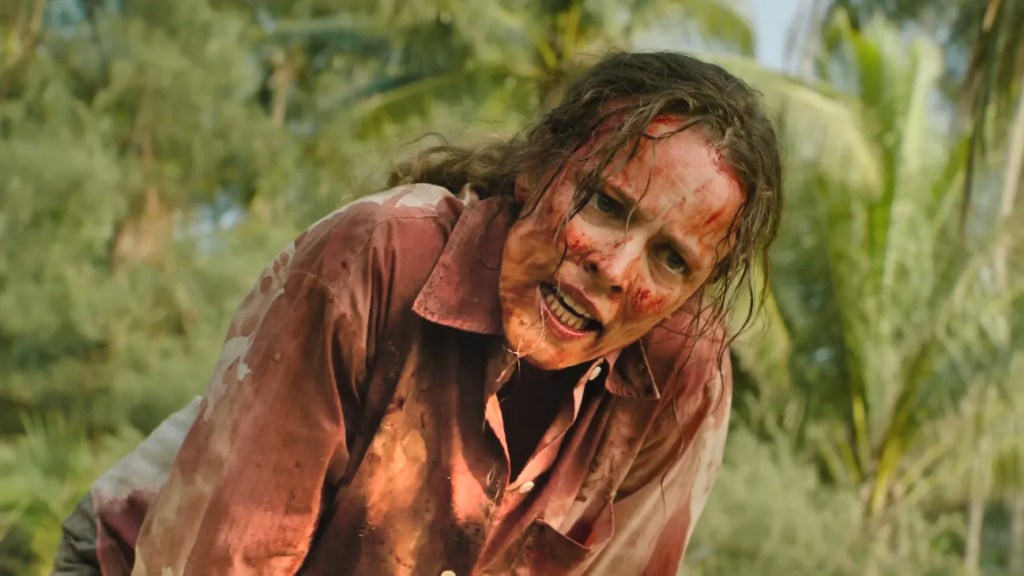
Send Help sticks out because that fakeout fantasy/hallucination element of survival horror didn’t initially seem like it was baked into the kind of vibe the film was creating (a psychological thriller cribbed in gender and power dynamics, set in a survival-horror locale). And yet, the gimmick gets rolled out again, delivering even fewer returns than ever before. And it’s not even needed: for every one of these films that uses a hallucination fakeout, there are two more (The Shallows, The Long Walk, I Am Legend, The Reef) that tell their stories without having to rely on fantasy to sustain interest and excitement. The sole exception is Mike Flanagan’s adaptation of Stephen King’s Gerald’s Game, which leans into the psychological aspect of survival horror better than just about any horror film of the last few decades. Gerald’s Game turns the gimmick on its head, to make the line between what’s real and what’s a hallucination the entire point of the survivor’s story. And no film in recent memory has done it better.
In the end, survival-horror should be a sub-genre that is wholly focused on exactly what its name implies: surviving. If you’re telling that kind of story, then have enough good, real ideas to make the battle for survival worth watching.
You can see Send Help in theaters; Gerald’s Game and Fall can be streamed on Netflix. Life can be streamed on Sling TV. 47 Meters Down can be streamed on Prime Video and Tubi. Discuss your favorite survival horror movies with us over on the ComicBook Forum!