Finding Solace in the Superfluous
Review of Jil Sander Fall 2026 Fashion Show
By Angela Baidoo
Jil Sander continues its recalibration under the tenure of creative director Simone Bellotti. In only his sophomore outing, the designer confidently confronted the dual weight of adhering to house codes and the expectation of evolution. Yet in choosing not to abandon these codes he instead gently unsettled them with an experimentation with the superfluous.
Preceded by a film with a hypnotic monologue from Kim Gordon reading poetry by Chiara Barzini, the collection framed the idea of ‘home’ (or a house – fashion house, family house) as both a sanctuary and a place that can create tension – a fitting metaphor for a designer reshaping one of fashion’s most revered brands.
THE COLLECTION
THE VIBE
Superflouus Gestures, Flow and Form, Moreness
Preceding today’s show an abstract film played with a monologue spoken on repeat by Kim Gordon over hypnotic images. A poem titled the House Above The Sea by Chiara Barzini features the line said by the parents of an unamed family “A new home. And look, it’s already furnished! I can just picture us here.” It read as if a window into the mind of creative director Simone Bellotti.
In this Bellotti’s sophomore collection, as with those of his peers, the weight of expectation was as heavy as for the first. Do you remain steadfast in your vision to update house codes, return to the archives and fall back on the familiar, or present a new direction that will defy the critics? For fall 2026 it was the former for the not-so-new creative director of Jil Sander.
Home, or the concept of a House was on his mind this season. The House, as in a ‘Fashion House’ but also where we call home and find comfort. As the protagonists in the poem say, “The house loved us.” So it is with an emotional outlook that the designer approached his second outing, considering his new home (as in every familial home) as a place of tension to explore ideas that contradict, create confidence, but also a feeling of nervous energy, or even anxiety, for how they may be perceived.
Understanding that within every home furniture comes as par for the course (his father was himself an upholsterer, so the young Bellotti would have been surrounded by the craft during his youth), as a way to make your mark and create a refuge, so does a fashion house’s codes. But, as with furniture these can be moved around, or even ‘upturned’ as the notes said.
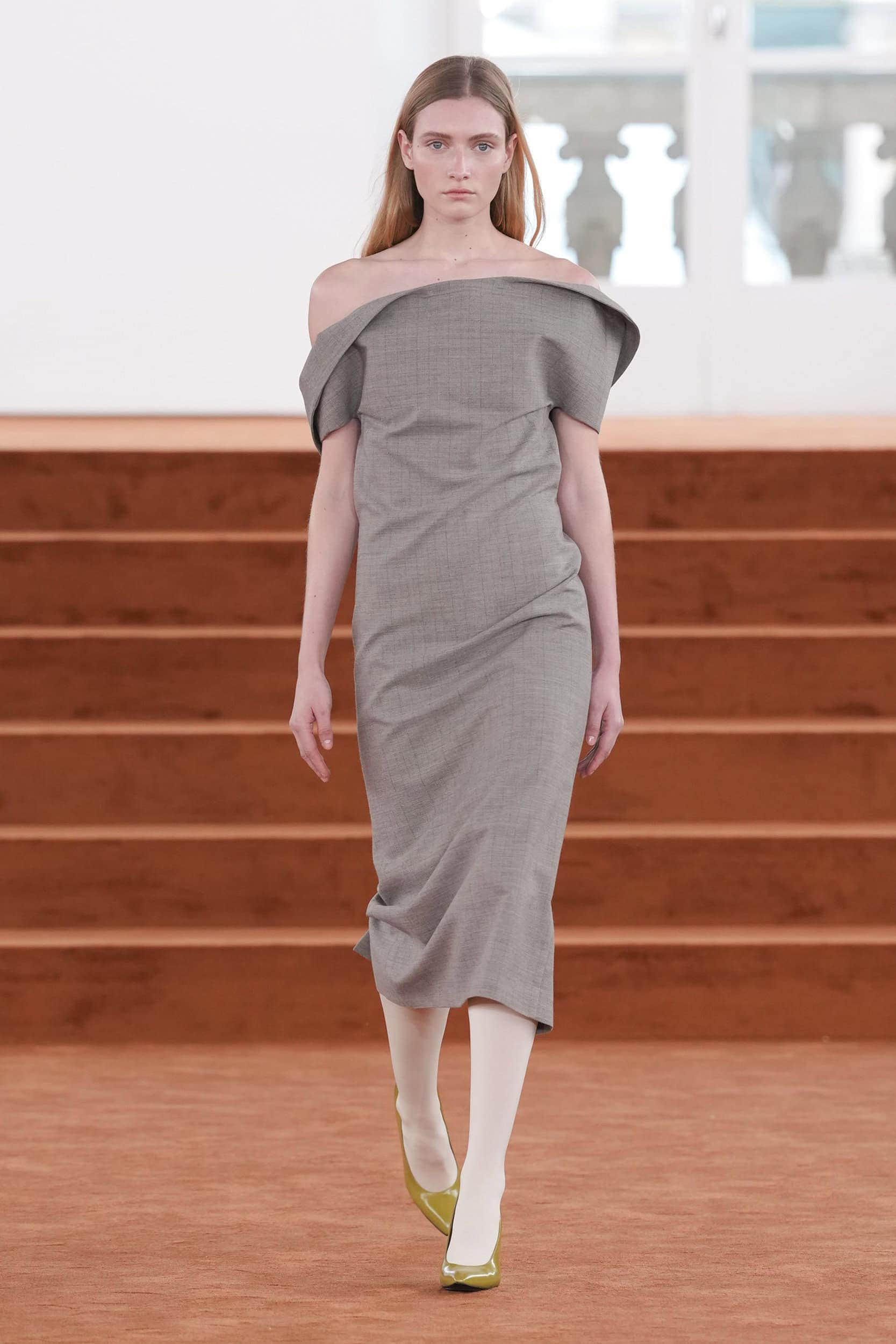
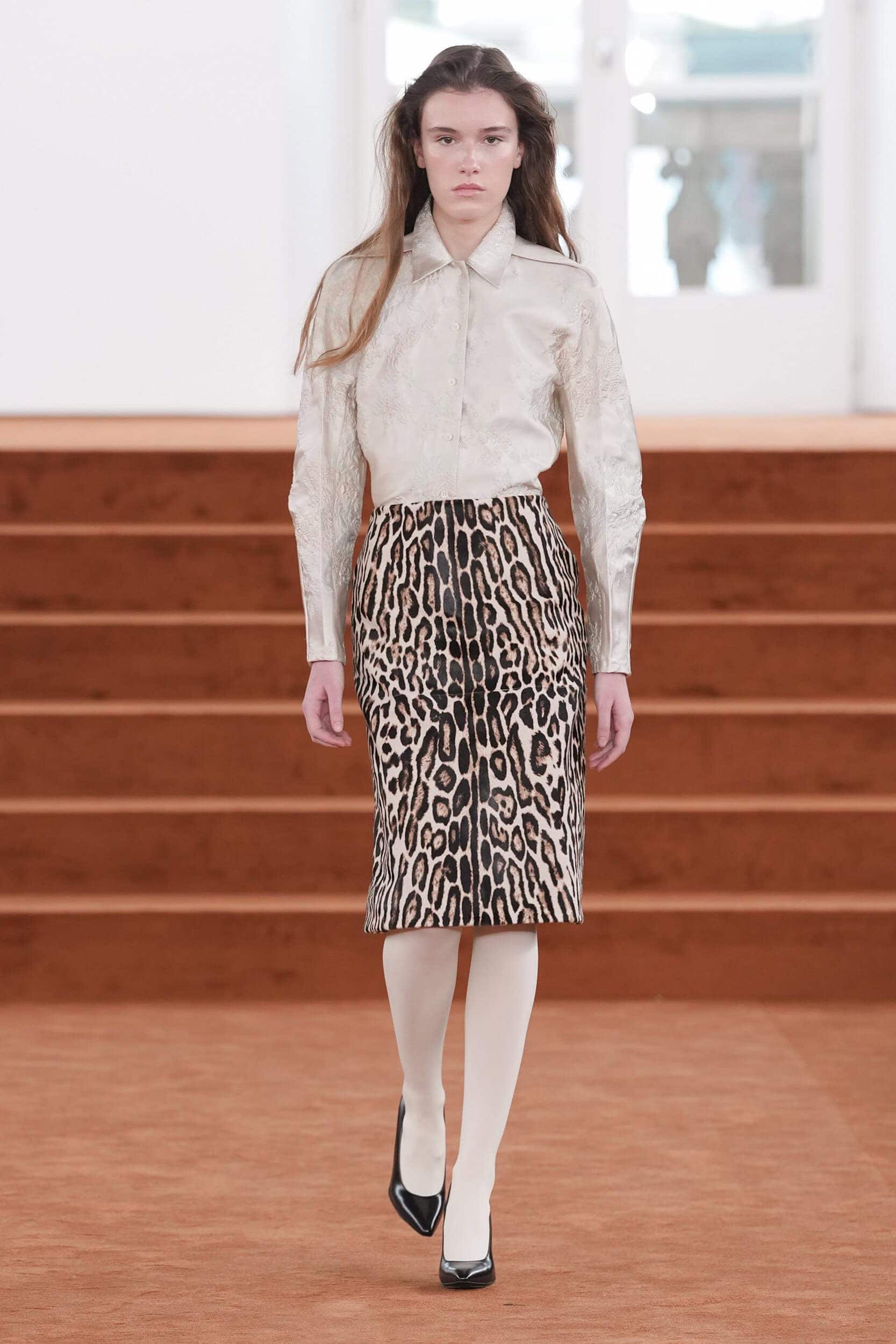
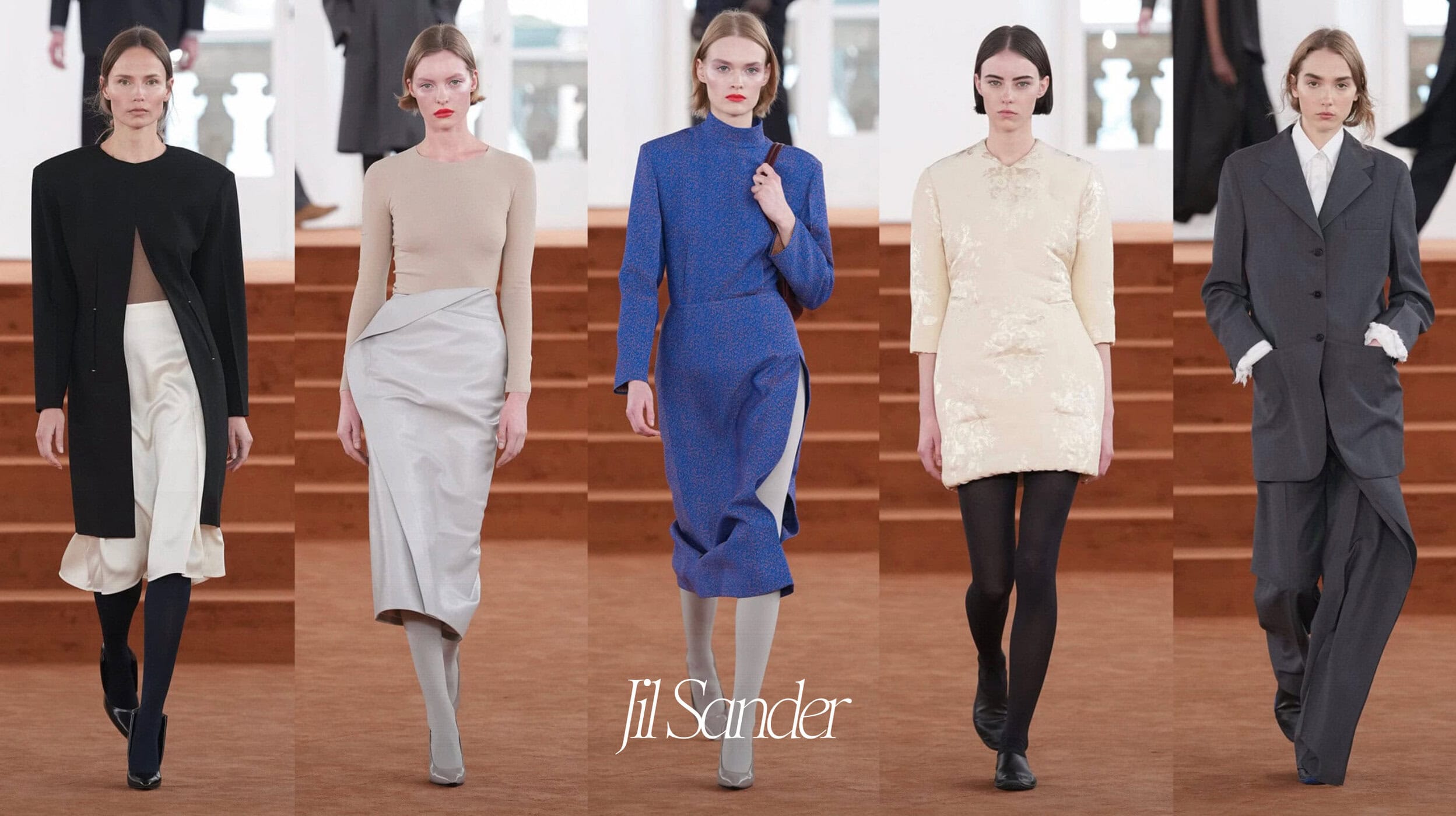
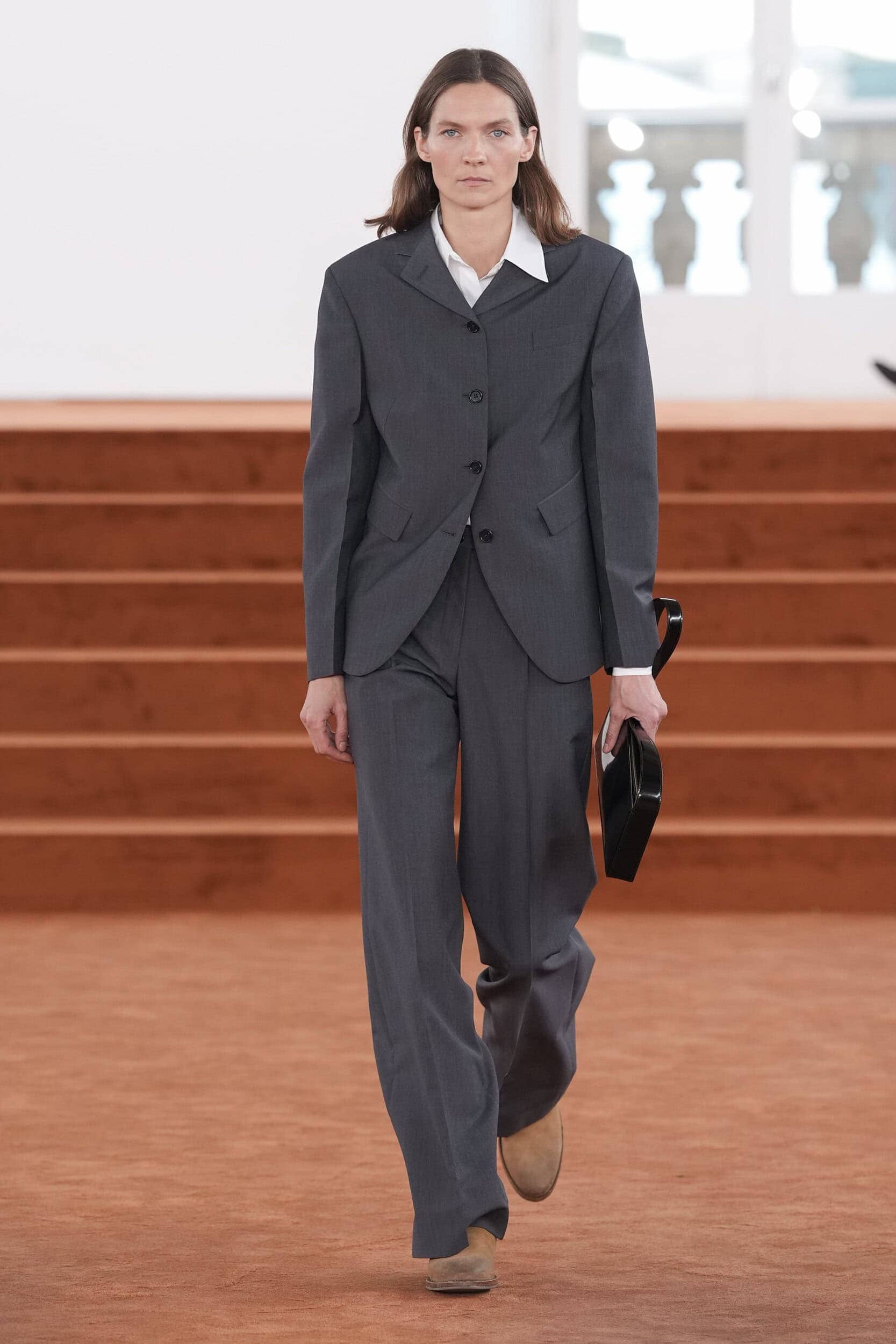
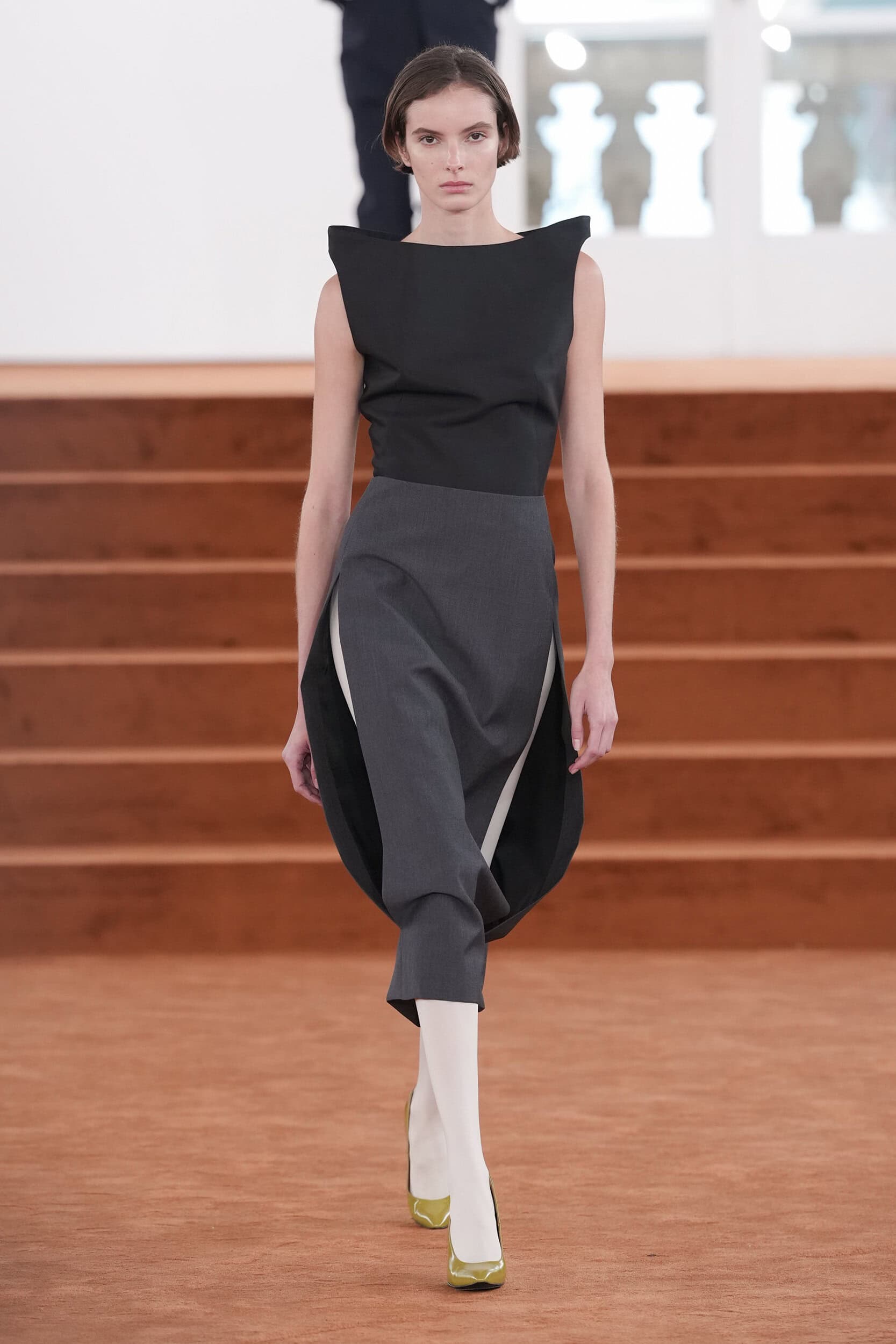
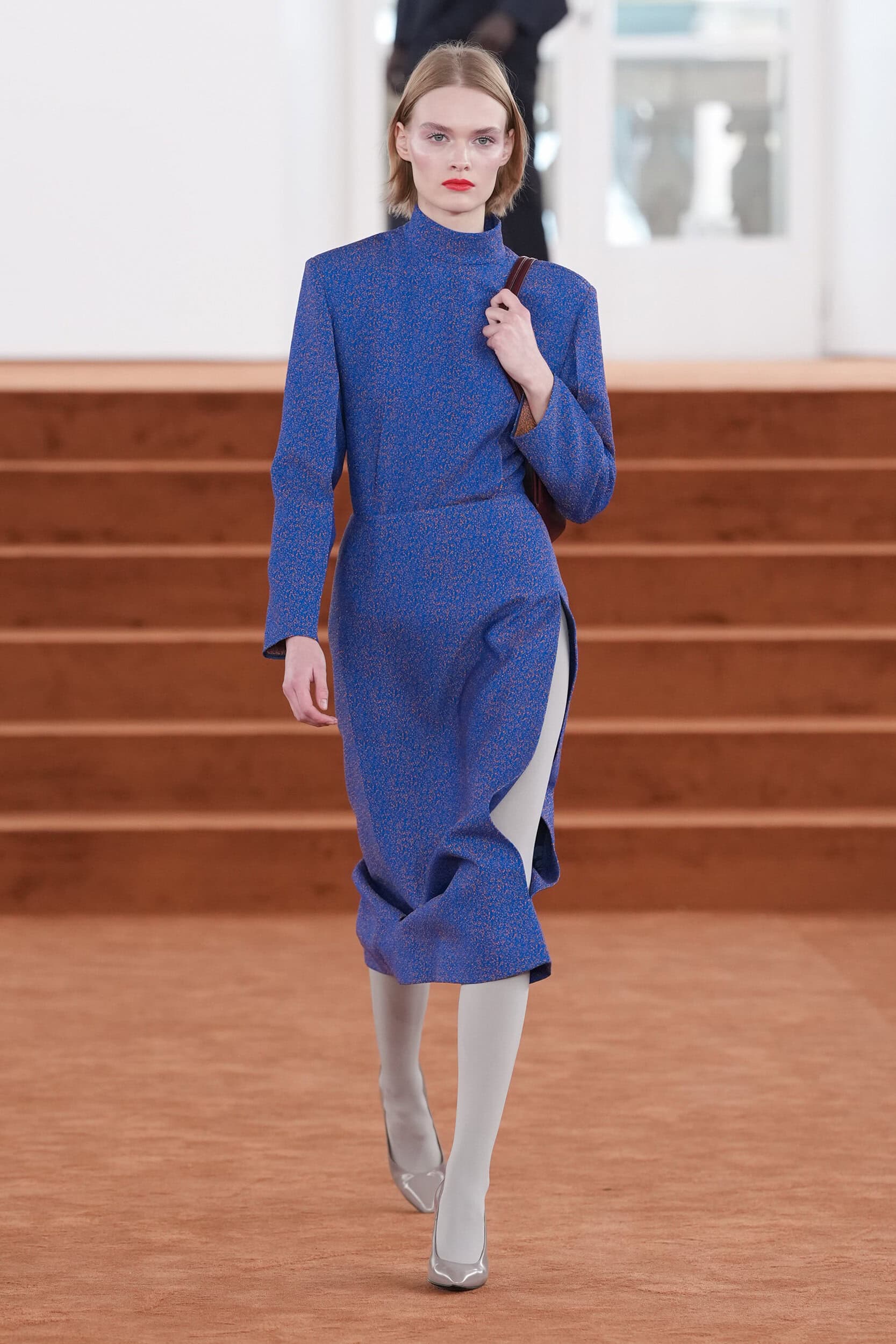
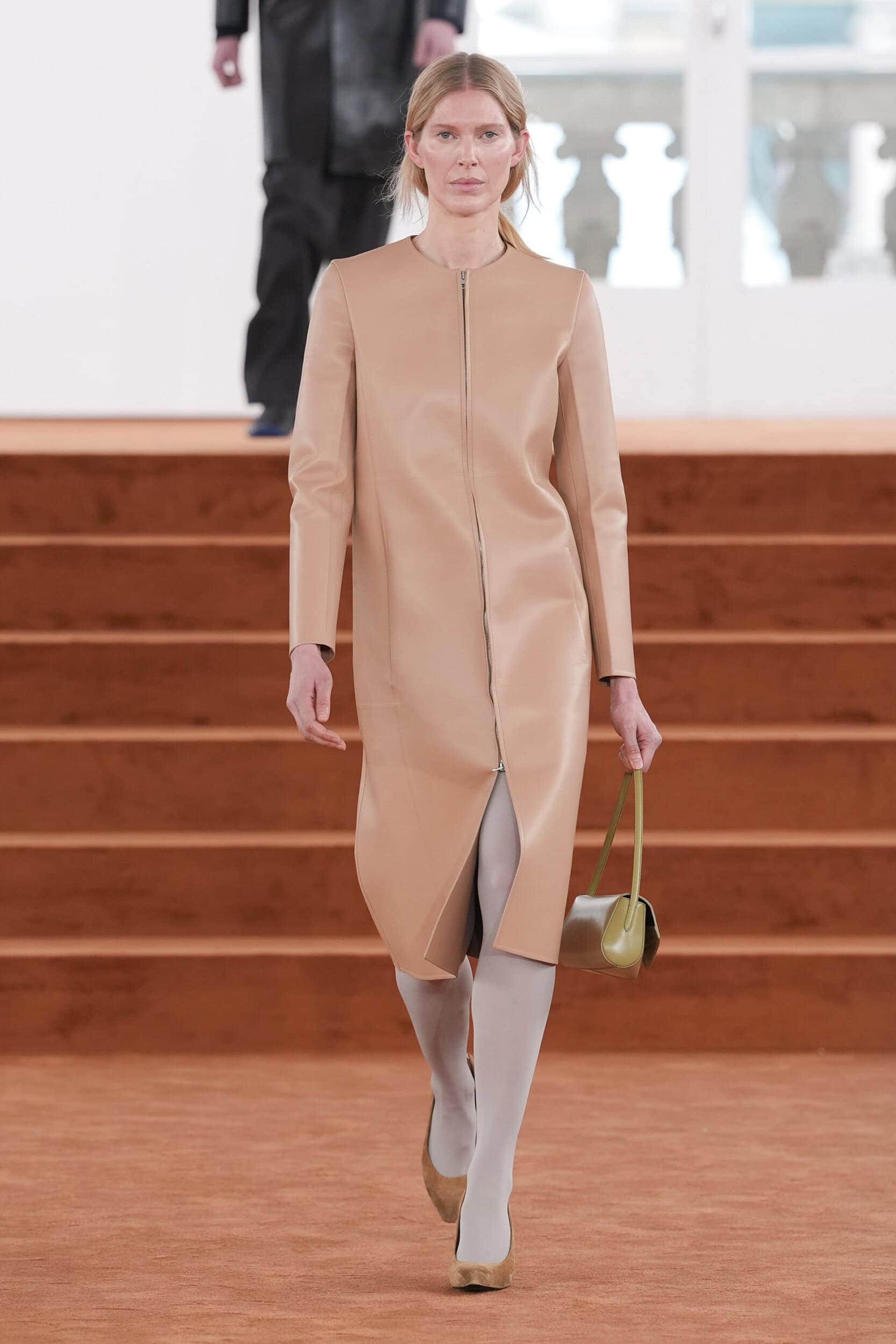
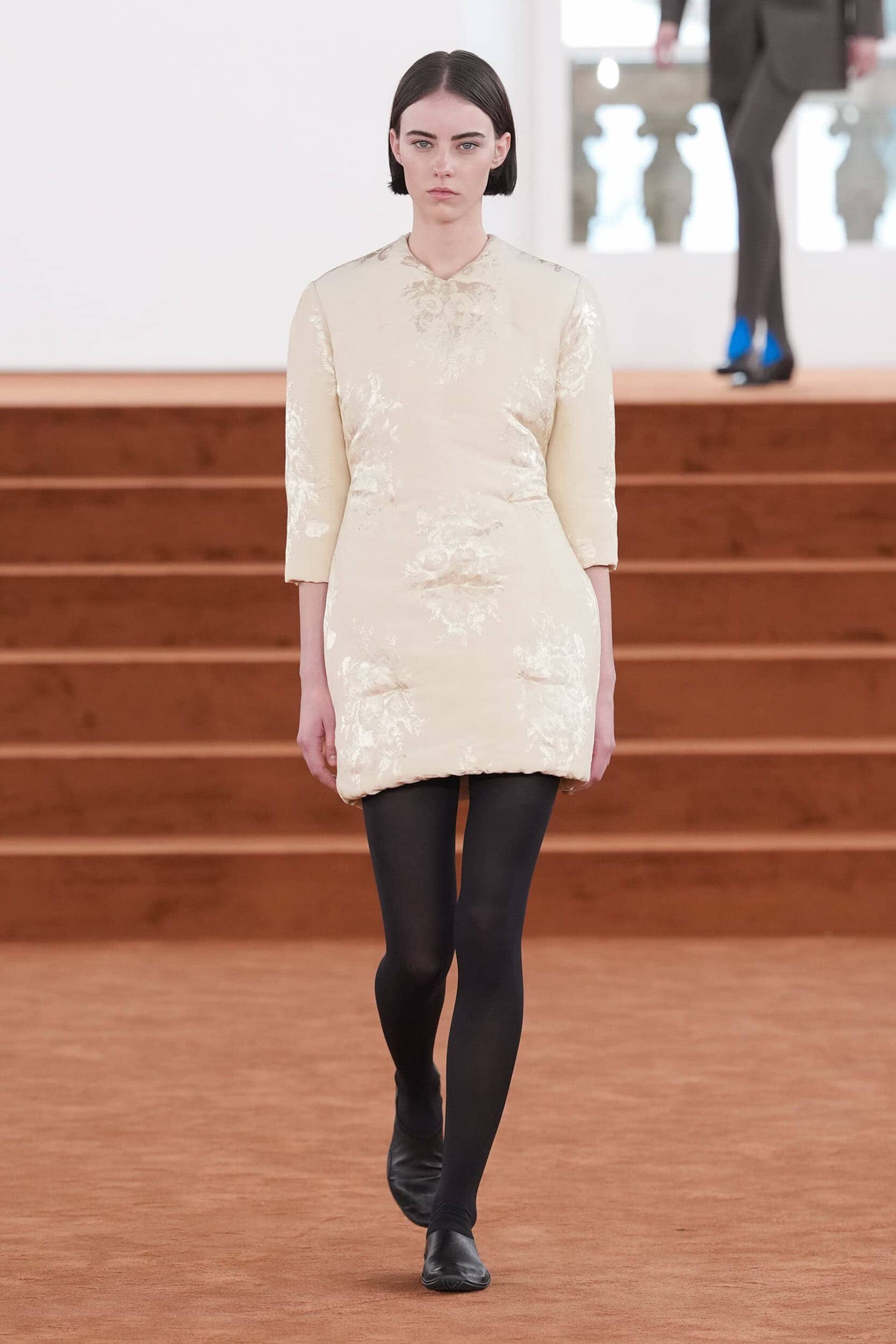
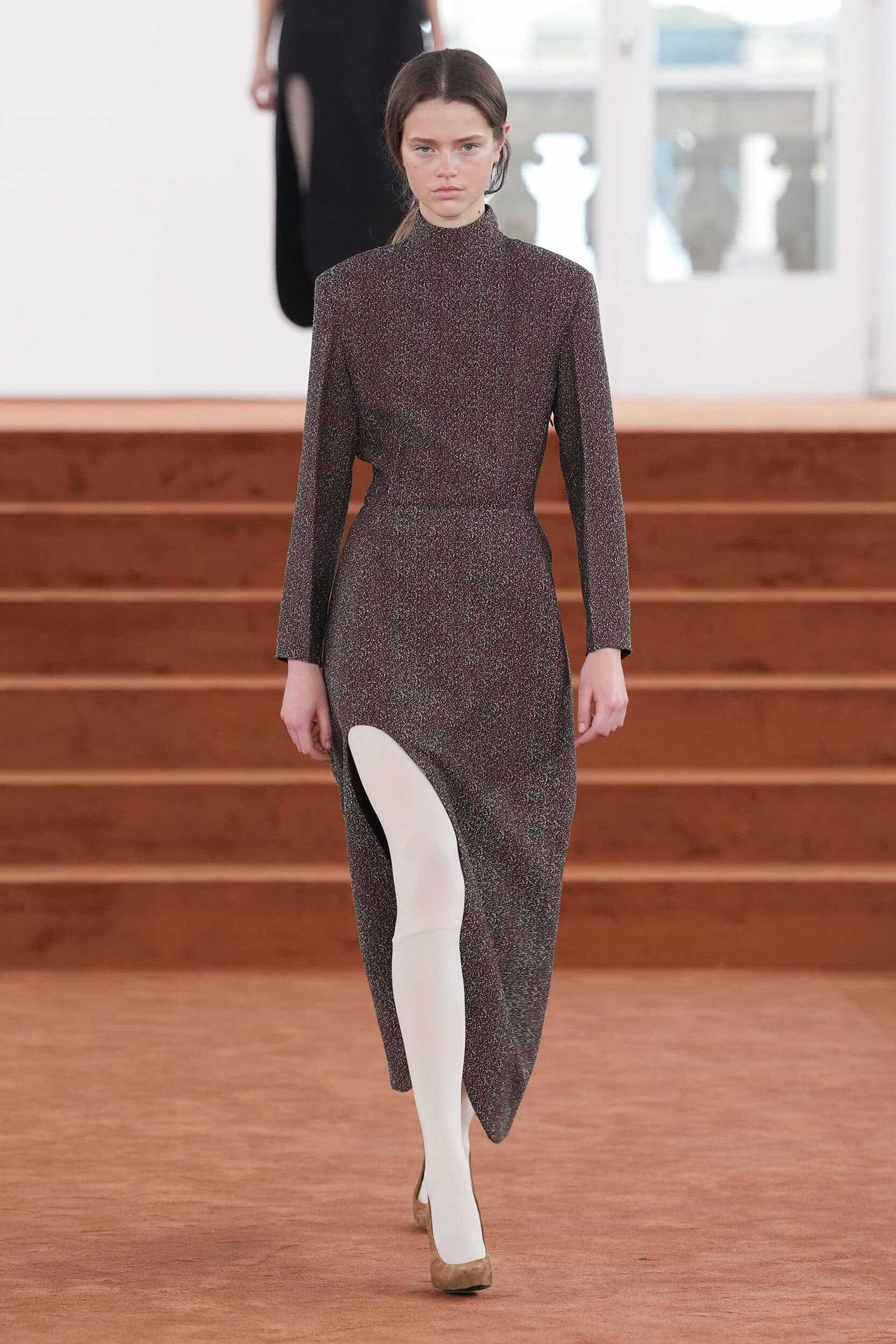
For fall he looked to answer his own (and the critics) questioning of what comes next, once it was understood that he was attuned to the essence of Jil Sander as a brand that has always practiced a certain level of “heightened restraint”. In moving away from a singular minimalist handwriting, Bellotti wittily referred to his new collection as ‘Moreness with meaning!’ But can the brand ever move into the arena of excess? To play in the world of the superfluous and still present clothes that are read as essential? This play on contradictions was attempted through prim high-collared dresses with extended side splits, a jacquard mini dress padded to resemble a newly upholstered chair, double-breasted coats featuring tucks at the waist, and asymmetric hem blazer dresses.
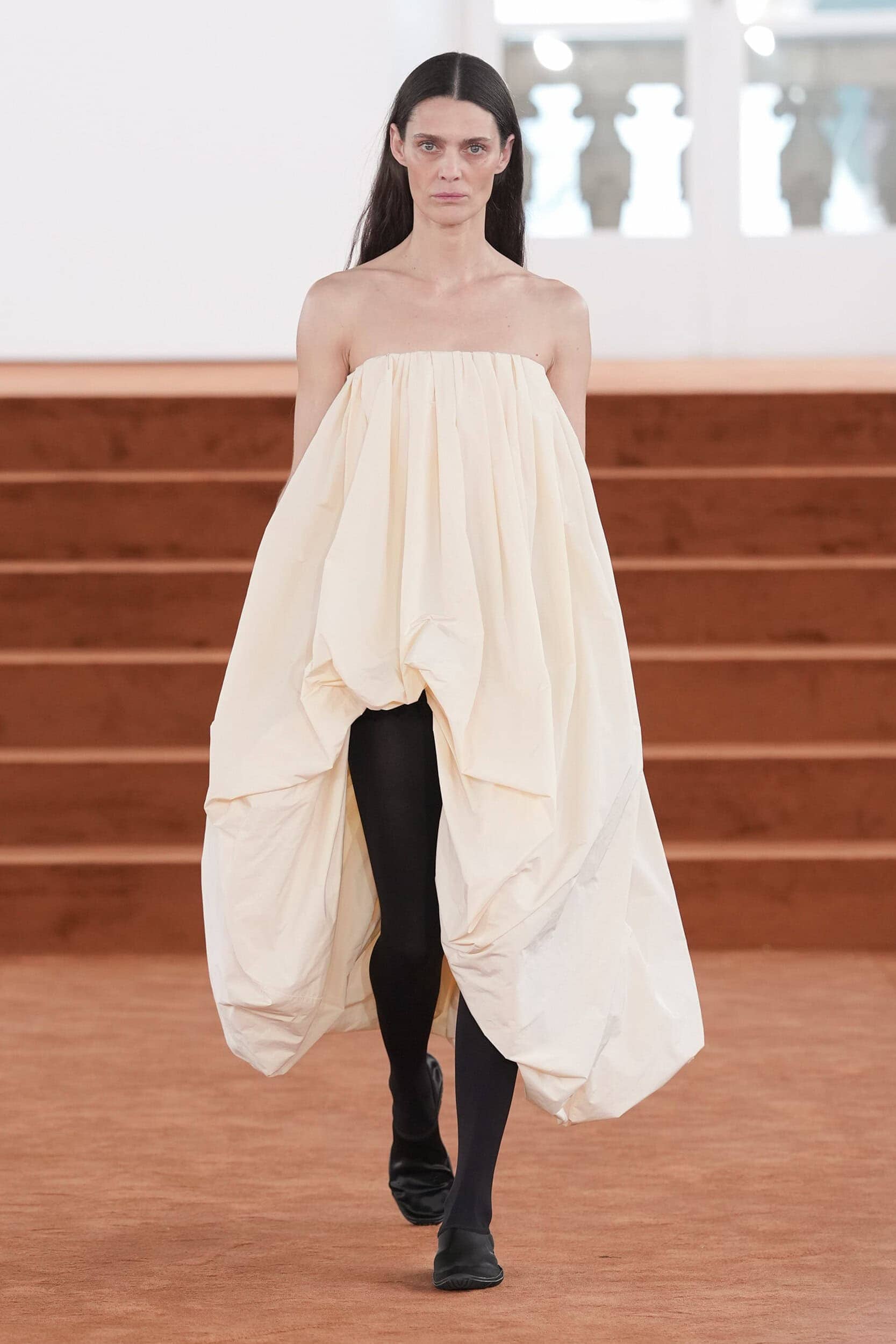
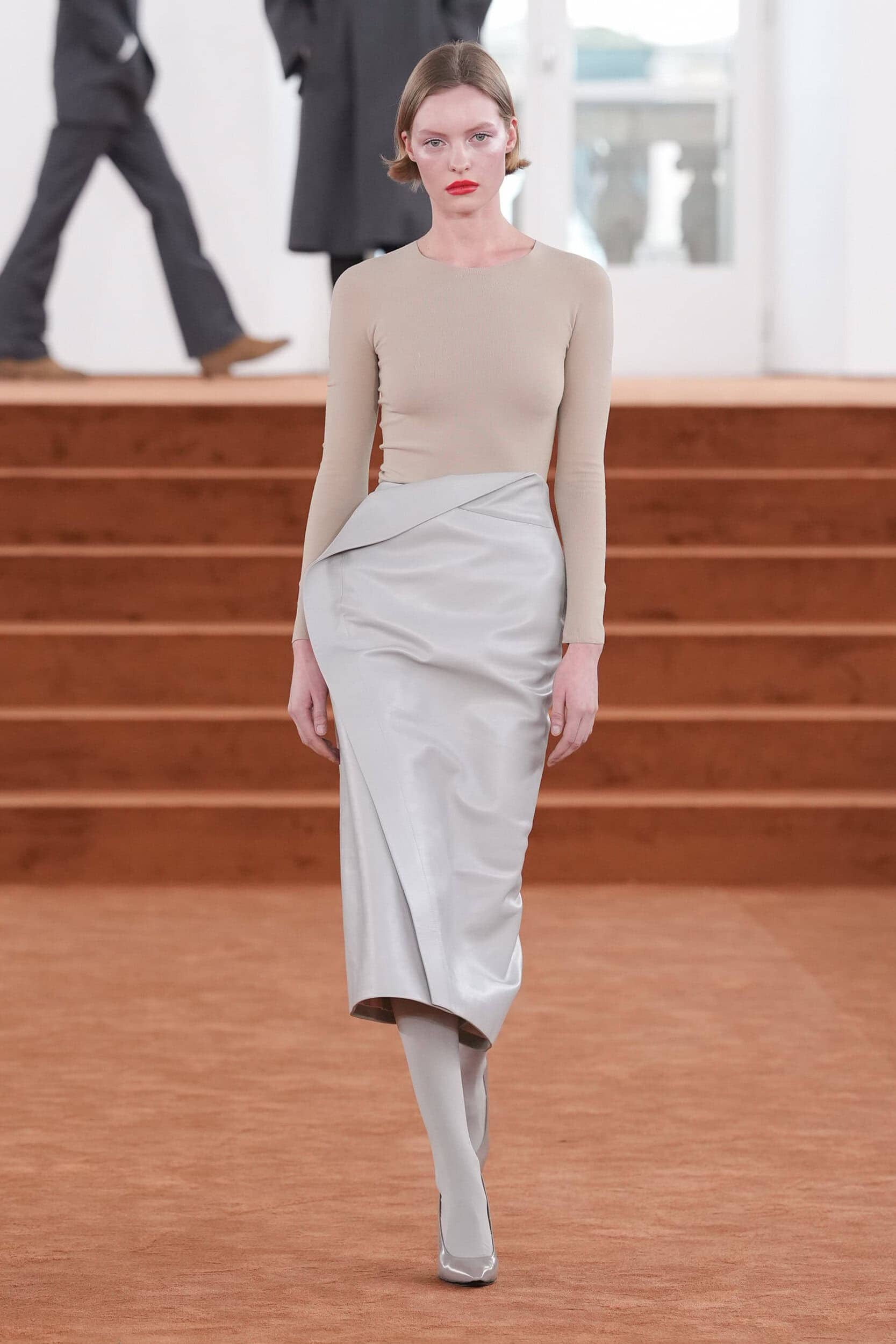
In the poem the teenagers of the family escape and become runaways, experiencing the danger and detachment of the big city, eventually returning home. And in a way this desire to escape was emulated in the movement and flow of fabric of dresses and skirts. The waist of a midi skirt folds over and sweeps to one side, thigh-high slits curve around the leg, an S-curve seam adds interest to a leather shift, and a strapless bubble-hem dress that billowed as the model walked was caught high at the front to control the motion.
In escaping from and returning to the house codes Bellotti is building something that – in its newfound contradictions – is becoming essentially more Jil Sander.
THE WRAP UP
For his sophomore collection Bellotti proposed a collection based around what he termed “moreness with meaning,” introducing subtle disruptive gestures to the brand’s house codes, now that he has begun to convey both his respect and understanding for them. Manifesting in high-collared dresses with daring splits, padded jacquard minis meant to mimic newly upholstered furniture (and nod to his upbringing) and tailored coats and blazer dresses twisted slightly off-kilter. The push and pull of what is expected versus what is familiar was the tension of contradictory ideas that the designer sought to exploit.
While the collection’s power may lie in its details that are best appreciated up close, it signalled that Bellotti is confidently rearranging the furniture of the house he now inhabits. And in embracing the contradictions of excess that may go against the house codes, the designer is proving that evolution at Jil Sander need not be restrained to be relevant.