
Driving comes with its fair share of annoyances:over-aggressive mergers, seemingly never-ending red lights, and bumper-to-bumper traffic to name a handful. But few are as rage-inducing as plopping into a gaping pothole. Science may have a new solution for the last one, and it involves a really large hose.
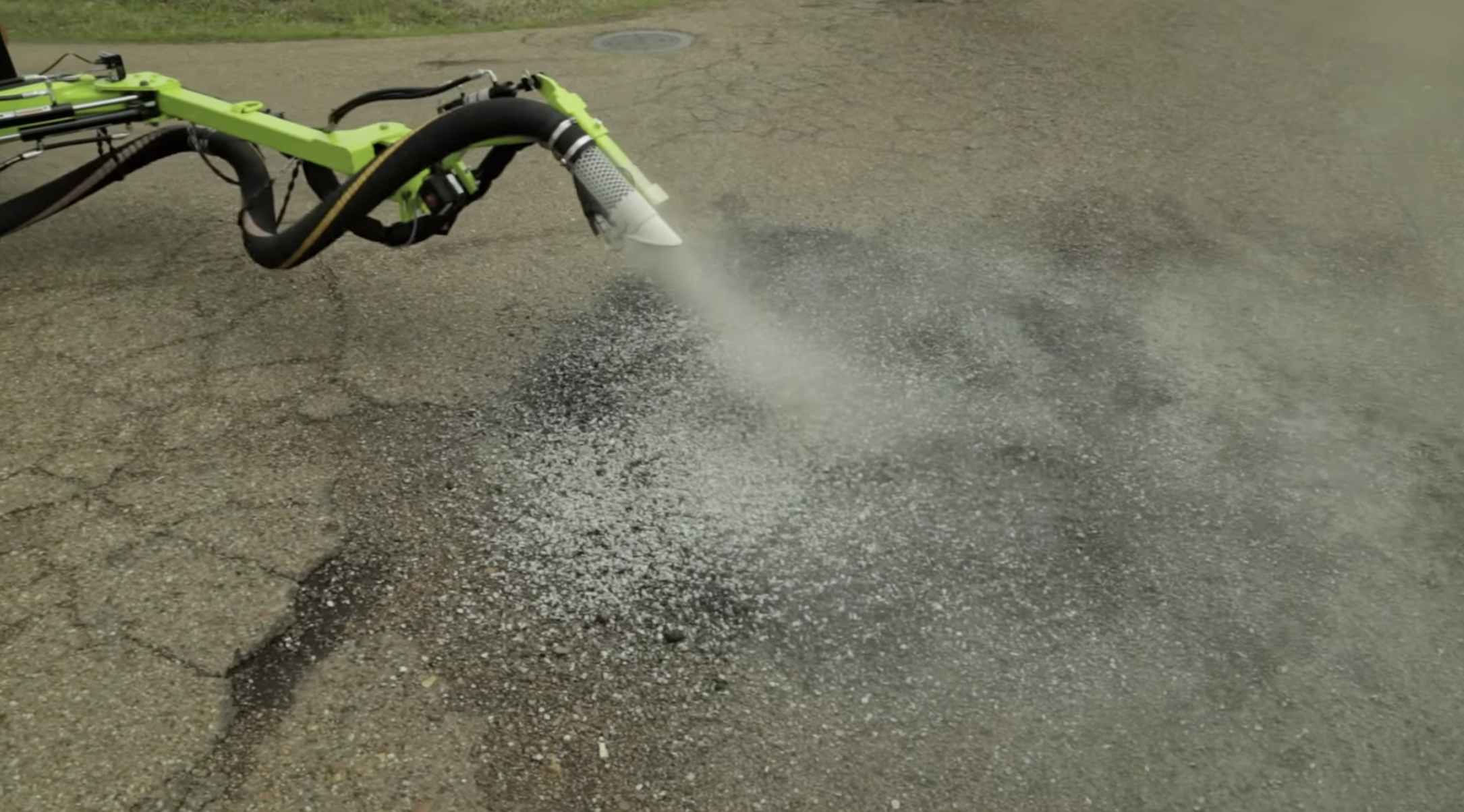
Several cities across the country have begun using a new one-person pothole-filling truck called the CimlineP5 which uses “DuraPatcher” technology to fill holes in a matter of minutes. The system consists of a large nozzle connected to the truck (an Isuzu model in this case) that is filled with a tar-like asphalt emulsion. When heated, the emulsion can be sprayed into a pothole to seal it. Once filled, the road can reportedly reopen to traffic within two minutes.
In Amarillo, Texas, where the DuraPatcher is already operating, local officials say crews can patch up to 146 holes per day. That’s up from an average of just 20 per day without the machine. With only one person needed to operate it, there’s less need to close large sections of streets or divert traffic.

Cimline P5 One-Person Patcher with DuraPatcher Technology™
The DuraPatcher vehicle addresses fixing potholes in three steps: cleaning, tacking, and filling. The large boom arm folds up and sits flush against the truck’s chassis until it’s ready to get to work. From there, it extends out until the nozzle is placed around 9-12 inches from the hole. A built-in compressor blows away any debris or water that might obstruct the repair. The machine then heats the emulsion stored in a 300-gallon tank and sprays it directly into the target. At maximum capacity, Cimline says the vehicle can hold around 10 tons of patching material—more than enough to handle multiple jobs at once.
Related: [New asphalt could make potholes extinct]
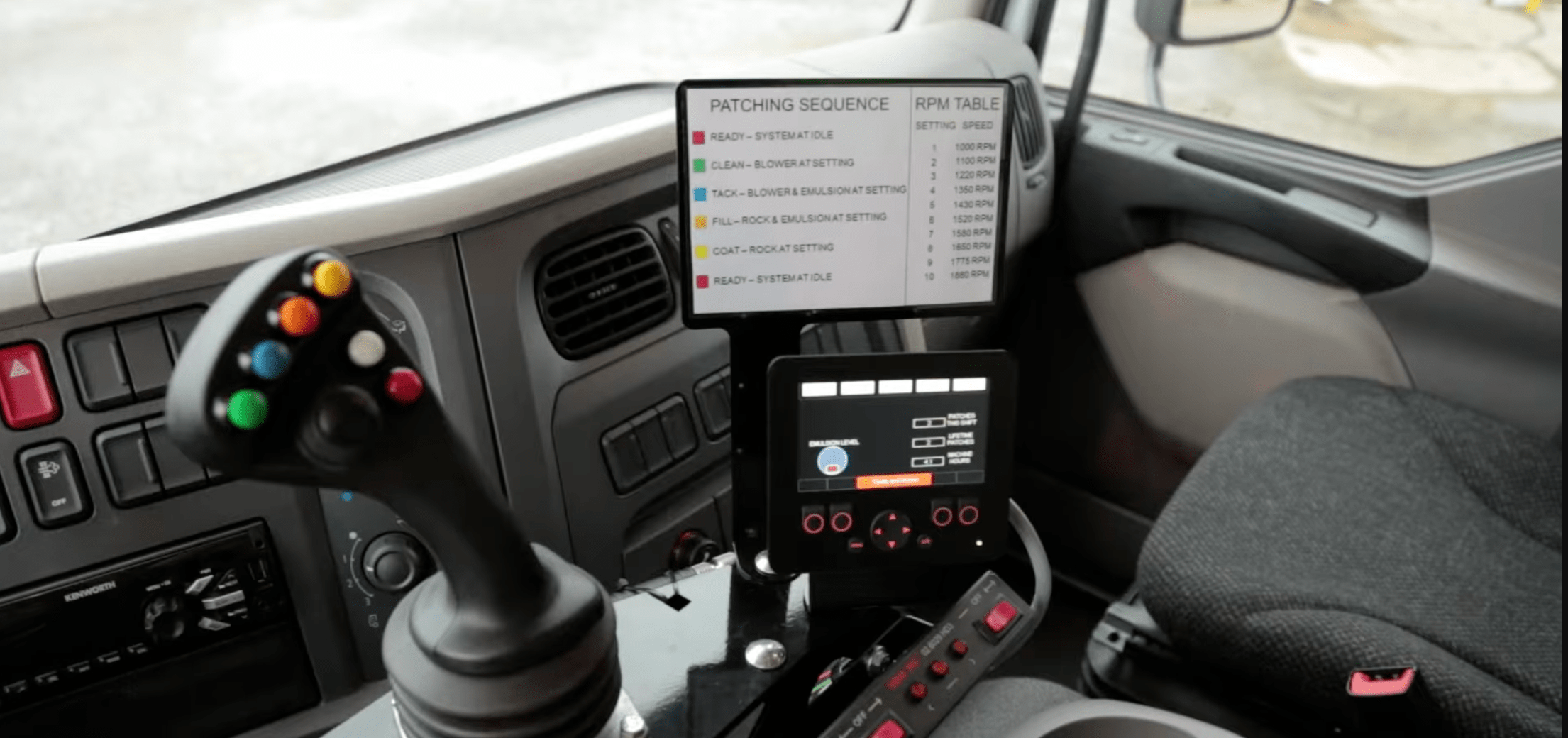
Drivers operate the machines through an interface similar to a video game. The truck’s interior cabin features a large joystick with four colorful buttons that resemble SweeTarts. Nearby, a pair of digital displays tracks job data, including current measurement levels, the total number of patches completed, and total hours of operation. The entire system is operated by one person. That cuts down on costs for local public governments but Cimline claims it’s also a potentially safer approach since it means less need for other workers on the road in the path of heavy machinery. And just because it’s fast doesn’t mean it’s a bandage. City officials in Akron, Ohio, recently told News 5 Cleveland they consider the DuraPatcher a “permanent” fix for its pothole problems.
“It’s very durable. It lasts longer. This is a permanent fix for these potholes. We will not be out in three to six months to fill this pothole again,” Akron Public Works Deputy Public Works Manager. Anthony Dolly told News 5 Cleveland.
Whether or not this pothole-filling truck becomes a staple in more cities remains to be seen. Though Cimline doesn’t list the unit’s price on its site, city officials in Akron told the Akron Beacon Journal they spent $300,00 on each of their trucks. So, they aren’t cheap. Some online commenters in areas where it has been deployed also say the system struggles to properly level surfaces after holes are filled, which can lead to speed bump–like bulges. Still, with an estimated 55 million potholes carving up U.S. streets, any additional help in the fight to prevent blown out tires may be welcome.

2025 PopSci Best of What’s New