
After renegades like Seamus Blackley pitched the Xbox to Microsoft, it was up to Ed Fries, former head of Microsoft Game Studios, to build the games for it.
Without those games, the original Xbox would have been a failure. As it was, the console lost $4 billion in its first generation, and it only started closing that profit gap with the follow-up Xbox 360 game console. Now gaming at Microsoft is a profitable $24 billion business, and its new leader is Asha Sharma, a Microsoft executive who has no gaming experience but led the charge in the CoreAI group.
(Check out our contrasting interview with fellow Xbox founder Seamus Blackley here on his thoughts on the new Xbox CEO).
Sharma is replacing Phil Spencer, a 38-year Microsoft veteran who ran Xbox for 12 years. Spencer is retiring and Sarah Bond, president and COO, is also leaving the company. Sharma is taking the Xbox CEO role while Matt Booty serves as No. 2 in charge of content. Sharma’s appointment has created a firestorm of conversation. Booty and Sharma gave their first interview here.
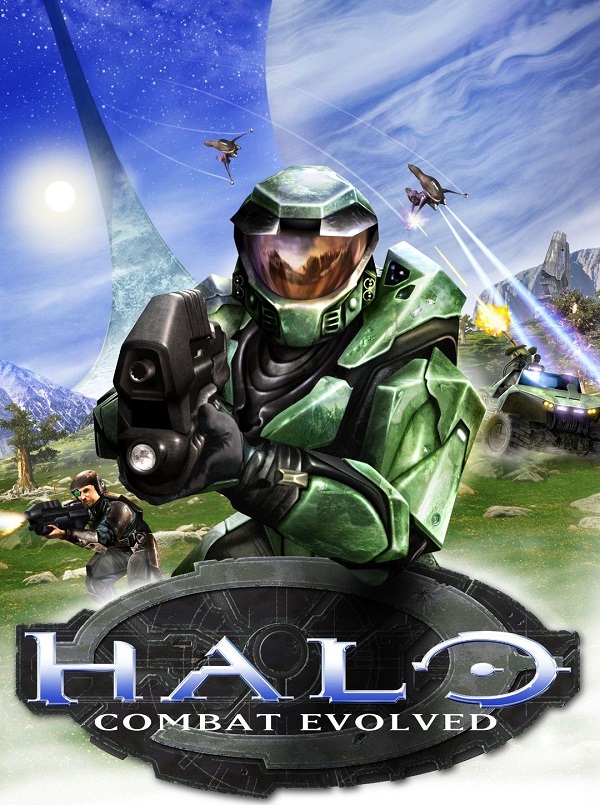
I talked with Fries, who left Microsoft after nine years leading games in 2004. During that time, Microsoft launched the Xbox and found its first major console hit in Halo: Combat Evolved. When Xbox launched in 2001, Microsoft had perhaps 400 game people across 10 different game studios. Now it has nearly 40 studios with tens of thousands of employees. Many of them are working on franchises that Fries helped start, like Gears of War and Forza.
Fries was a gaming focused executive who could identify good game developers, studios and games and grow them over time. But he worked with many other people who handled the business side, including chief gaming officer Robbie Bach, who made his name with Office at Microsoft and didn’t know games.
Fries was probably the fifth person at Microsoft to sign on to create the original Xbox more than 20 years ago, and he figured prominently in both of my books, Opening the Xbox and The Xbox 360 Uncloaked. I asked him for his impressions of the leadership transition at Xbox and his advice for the new CEO.
Fries has gone on to a long career in games, including advising entrepreneurs in the Seattle area as well as founding 1Up Ventures, a game venture capital firm.
Here’s an edited transcript of our interview.
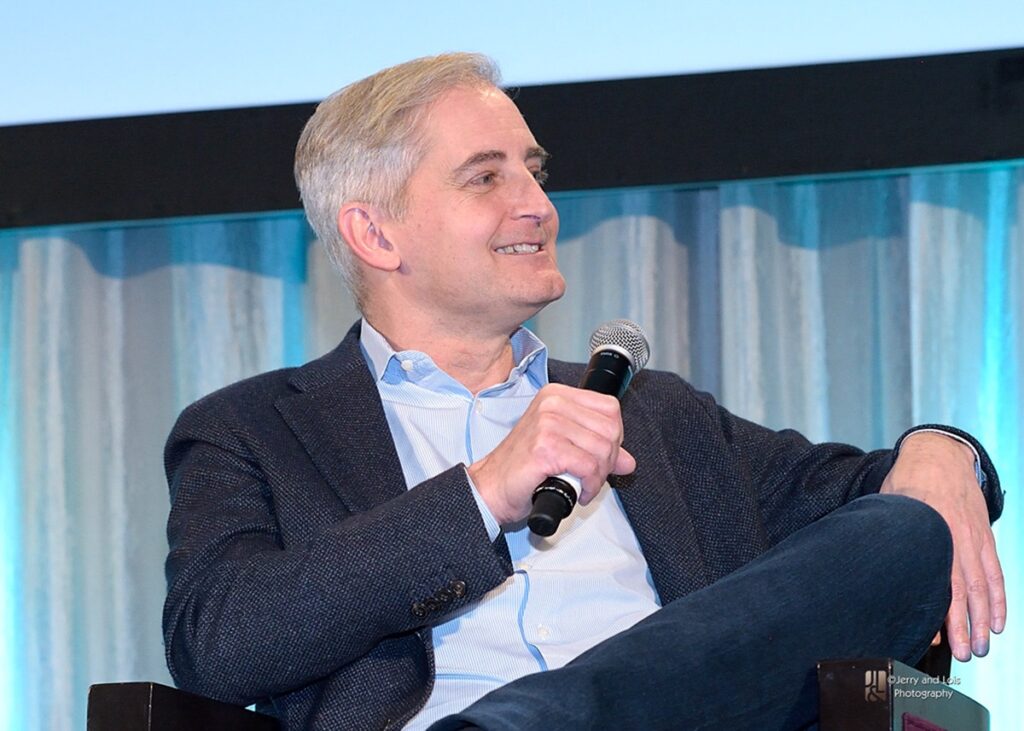
GamesBeat: This is, what, generation five of Xbox leaders, something like that? I don’t know if you’ve read or seen some of the reactions people are having, or if you have one yourself.
Ed Fries: I haven’t seen a lot. I maybe can guess what some of the reactions are. I think I’m generally pretty upbeat about it all.
First of all, the relationship between Matt [Booty] and Asha Sharma–it reminds me a bit of the relationship between Robbie [Bach]and me. I was mostly looking down, trying to build the content, build the games, and Robbie was managing Bill and Steve, sales and marketing, stuff like that. For the most part, that worked pretty well. I see it as getting back to that kind of structure, which I think could be good.
Matt is really good at what he does. Comes from the games business, super focused on games, been there a long time. Asha doesn’t seem to have any real game experience, but that was true when I worked for Robbie, too. Robbie didn’t come with any game experience. As long as each person respects what the other person is good at, that can work fine. There’s a lot of work to do at Microsoft to just deal with the company, keep the company out of your way, and fit what you’re doing at Xbox into the bigger company structure.
I’m not worried that Asha doesn’t come with game experience. I think that’s going to be okay. Maybe that’s a concern some people have had. I heard a little about her. She was described to me as bright and capable. I heard an anecdote about her when she was an intern working for someone, a while ago. People at the company all decided they were going to work for her someday. She was that good.
They were laughing about how that’s now coming true. That all seemed like a good sign to me. Again, I have no personal experience with her at all.
GamesBeat: But some of the [veterans] have a good opinion of her, then?
Fries: I’m just sharing a couple of anecdotes. I can’t tell you where they came from. But that’s what I heard. The things that I have heard about her are positive. We talked about Matt already. He’s been at Xbox more than 15 years. Before that, he was at Midway for a long time. I first met Matt at the pinball and arcade show. I think that’s the first time I met him. He came up to me years ago. This is a show that happens here in the Seattle area every year. People who are into old arcade games and pinball machines go. He came up to me. He knew who I was and wanted to say hi. We have a shared passion for that kind of stuff. He’s always been, in my opinion, a good guy. Focused on games.
GamesBeat: I was thinking about all the different people who came in from outside the game industry. Besides Robbie, there was John Riccitiello. Reggie was another. Peter Moore. Eric Hirshberg. It’s not uncommon to have that kind of executive move.
Fries: That’s a list of some great people, and some pretty good people. I have different opinions about all those people you mentioned, but we don’t need to get into that. Thinking about the history of Xbox–do you know my go-to story about Phil? For the last whatever years, the story I’ve told the most about him.
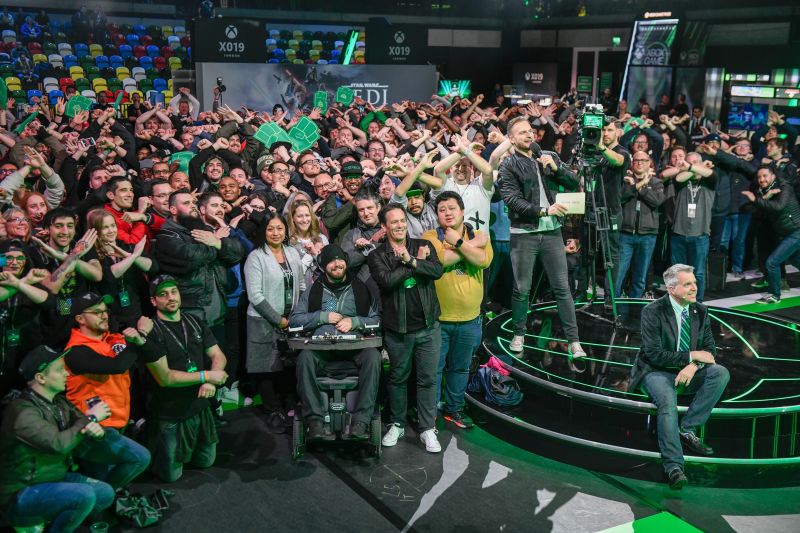
When I was quitting Microsoft, I had about 1,200 people who worked for me. One of them came into my office the day that I was leaving. It was Phil. He said, “Should I quit too?” I said, “No, you don’t need to quit, Phil. I appreciate the loyalty. I think you should stay.” That always stuck with me.
GamesBeat: Did he say why he felt that way?
Fries: You could ask him that question. I took it as, he was just expressing loyalty to me. He knew I was upset about some of what was going on. There’s that.
GamesBeat: You were a spreadsheet guy yourself at first. But you always seem to have had the gaming habit.
Fries: I would say I was more than that. I started writing games when I was a kid in high school. Published three games for the Atari 800. I was very much a gamer on the side when I was doing Excel and Word. I was excited to get a chance to get back into games when I moved over the games group.
GamesBeat: That’s right. [I had forgotten about the early games.] I talked to Seamus [Blackley, Xbox co-creator] on Friday as well and wrote a story. He’s a little more hardcore about how you have to be authentic and passionate about games to run a games business. He thinks that if she’s not passionate, she should acknowledge that and not take this job.
Fries: That’s a hardcore position. I think there’s plenty of work to go around. Like I said at the beginning, as long as they respect each other’s position, it can work. I think you can also see some of the risks from the history of Xbox as well. I’ll agree that there are some risks.
When I look back at the times–after I left there was a lot of cancellation of projects that I didn’t agree with. Kind of a spreadsheet mentality, almost an accounting mentality of how to look at games, rather than realizing that we’re trying to create future hit franchises and that means taking bets. If you look at 360 and Xbox One, going into those eras, there was a real push to go beyond games. Even on the original Xbox. “Oh, music is more important, movies are more important, sports are more important.” You remember they brought up some big athletes at Xbox conferences, stuff like that. That always felt like people didn’t think games were as important. Certainly not as important as I did. Even up into the Don Mattrick time that was true.
After Xbox One launched really poorly, it was clear to everyone that there was a problem there. Don and Robbie leaving, Phil stepping in–really, what Phil should be remembered for is rejecting all of that and bringing it back to being about games, all about games.
GamesBeat: He seemed to resist some things, like the craze of the day around going into VR. Phil didn’t partake in that.

Fries: He was conservative about that. He was conservative about doing a handheld probably as well. But he brought other innovations. He brought the innovation of Game Pass. First party was in pretty bad shape when he took over. He did a lot to rebuild it. Acquiring Mojang, acquiring Bethesda, acquiring Activision Blizzard.
GamesBeat: Spinning out Bungie, too.
Fries: Bungie was gone before he took over. That was really–Bungie left, basically, because of the fight they had with Shane Kim after I left. It took them a while to leave, but they made a deal to leave pretty quickly after I left. Is that what you meant?
GamesBeat: I saw a quote from Don McGowan saying that he was involved in negotiating the exit of Bungie from Microsoft. He said that Phil was supportive of that the whole way, and in hindsight he thought it turned out to be a good move for Microsoft. Even though most people at the time were saying that they should keep Bungie.
Fries: I think it was a bad move. I disagree. But he may have been involved in how that deal worked. They had to do three versions of Halo, if I remember correctly, before they could be free.
GamesBeat: It does seem like the mission of the day is to have the Xbox team move into the era of AI. That seems to be the biggest statement in naming Asha as the CEO. Do you have an opinion on that, how that could turn out or what’s the best way to do that?
Fries: Has Asha said that?
GamesBeat: She did say that we’re going to focus on great games and we’re not going to do AI slop. It was almost like she was heading off that criticism that people had.
Fries: If you look at Asha’s–I’ve only looked at her LinkedIn. But she’s worked on a lot of different things. The AI has been a pretty recent thing. I didn’t take it as a statement about AI myself. I know some people took it that way. I would wait to see what Asha has to say about AI. It sounds like she said something already about AI slop.
I mean, the fact is, no one in the game business can ignore AI. But also, nobody knows–this is true of every technology, but more so with AI. It’s more amplified. We know that we’re going to incorporate this technology. From a game design point of view it could have benefits. From a game development point of view it certainly has benefits. From an art development point of view, more controversially, it has benefits. It’s just a question of how far we go and how fast.
I think they would be thinking about AI whether Asha had an AI background or not. I wouldn’t get hung up on that.
GamesBeat: I do wonder about the move toward appointing a young person into a role like this, instead of a veteran. That happened with Andrew Wilson and Peter Moore at EA. Possibly the way the board might think about something like this, if they feel like the direction has not been making enough progress–in the case of Peter Moore, they may have passed him over because they thought they were going to get more of the same strategy out of him as John Riccitiello. They wanted a more drastic change and went to a newer generation, somebody who was going to last decades in the job. If you want that, you go to someone like Andrew Wilson. It feels similar in that respect. They didn’t choose to go with a veteran, and instead chose someone who was more of an outsider, maybe someone who could look at it with fresh eyes and develop a new strategy.
Fries: I think if they’re the right person, there could be some benefits to having someone younger in that job. I think it’s more about connections between the generations. Getting toward Gen Z more. The TikTok culture and that kind of thing, where entertainment is going, where there could be some benefits. You could tie that to other things, anime and internet culture. There could be benefits to that.
GamesBeat: Is there some advice that you would offer her? What direction should they go? They have all kinds of things on the table. Will they do a console or not? That’s what all the gamers have been wondering. Will there be another console? Or do they believe in this idea of Xbox everywhere?
Fries: Those are big decisions to make, for sure. For me, I generally agree with the path that Phil has been taking. I don’t think there’s a need to do something radical to start, at least. I’m sure they’re going to come up with their own opinions over time. I’ve been an outspoken critic of Game Pass, but mostly I was worried about Game Pass growing into something like Spotify, and it doesn’t seem like that’s happening.
GamesBeat: It seems like maybe it should be a choice for the people who want that. 30 million people have chosen that. But there’s still a lot of people resisting it as well. It’s not necessarily going to become Netflix.
Fries: I was more worried about it affecting the whole business. They’ve really scaled back the size of their Game Pass deals. They have a great team picking the things they’re picking. Chris Charla and those guys have done an excellent job of curating that. So long as it doesn’t try to become Spotify, where everyone who creates a game, the only way they can sell it is through some kind of subscription service and they’re all fighting over the same dollars–that’s the thing I was worried about there.
As far as whether there should be a physical Xbox, I think so. You and I have been around this industry a long time. One thing I’ve heard over and over again is, this or that part of the game industry is going to die. Every time there’s something new. PC gaming is going to die. I’ve heard that for decades now. PC gaming is still strong. Mobile didn’t kill PC gaming. It didn’t kill the console business. Mobile might be the biggest part of the game business, but that’s because it grew. Everything else is still there.
I just built a new computer with my younger son over the summer. It was fun, but it’s a lot of work to build a gaming machine. That’s for a certain kind of person that wants a certain kind of thing. But for a lot of us, just to have a machine that solves all the problems for you–buy it, plug it in your TV, and it works. You have your game controller and you play a game. I don’t see that going away any time soon. I think it’s going to make sense for Microsoft and Sony and Nintendo to keep making those machines.
Sure, we’ll have other new inventions that come along. I think if Microsoft stops making them, people would buy the Steam box. The audience wouldn’t go away. A different company would just provide them.
GamesBeat: Steam seems to be offering a more credible alternative with every passing day.
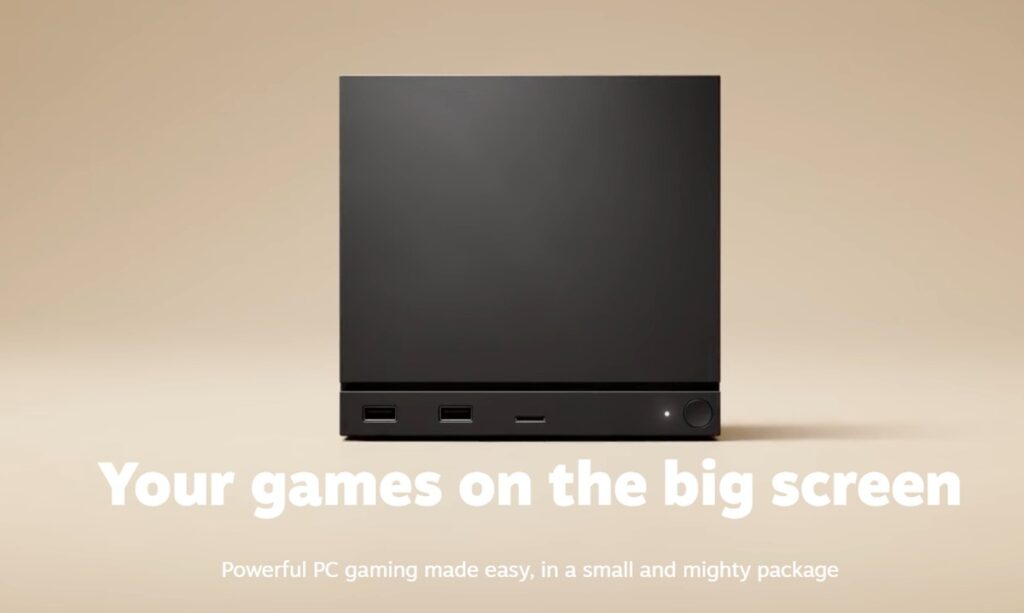
Fries: No one bought the Steam box when they first did it. Then they did the handheld, and the handheld–I think people didn’t buy the original Steam box because there were better alternatives in existing consoles. But there wasn’t really a great handheld solution for PC games. That worked well.
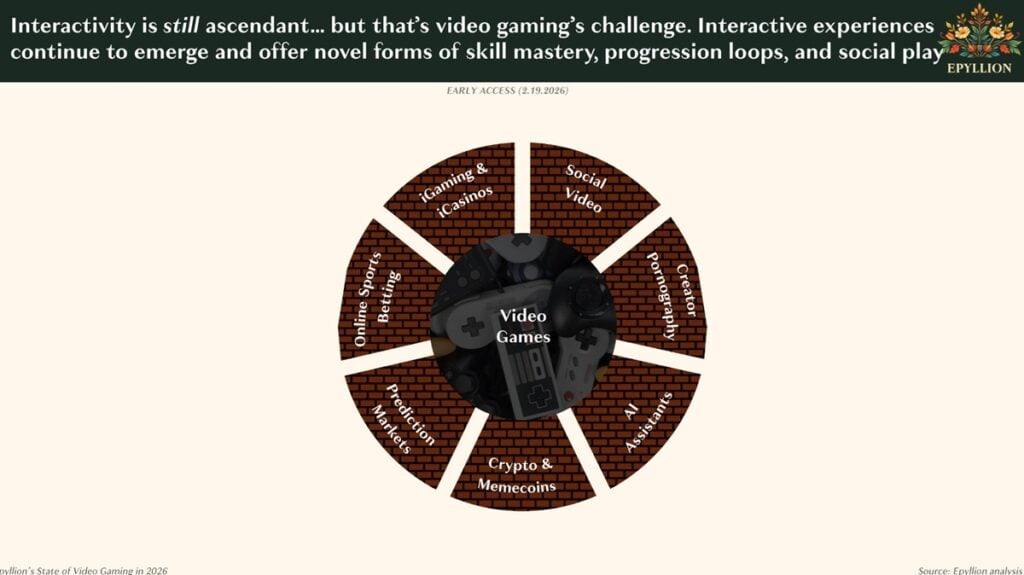
GamesBeat: Matthew Ball dropped 164 slides last week on the game industry in 2026. The part that was troubling was all the competition for gaming time that he spelled out. He was pointing to AI companions and TikTok and sports betting and prediction markets. All these things are taking up more time and more dollars. The addiction side of things is possibly more popular than the fun side of things.
Fries: Remember the chart I showed you when I spoke in Seattle? I had a chart where I took a Matthew Ball chart from last year where he was predicting the game business was going to decline. I said that he’s totally misinterpreting the numbers. You should draw a line that cuts through the pandemic and keeps going up. His new report shows that I was completely right. We had another great year of growth. He says we grew five percent. Most people are saying we grew seven and a half percent last year, but whatever. But it’s exactly the same slope as the line that I drew, cutting off the pandemic. You’re misinterpreting that the pandemic years were weird years and the game business continues to grow.
He can make those arguments that somehow the game business is under attack by these other uses of time. But the numbers don’t show it. The numbers show the game business on almost a 20-year-long slope now, going like this, growing at least five percent year over year. He lists OnlyFans, for example, as a competitor. Sure, there’s lots of competition for people’s time. But the game business continues to grow, continues to make great games. That’s what we would focus on. We should focus on our medium and the fact that we’re continuing to grow around the world, expand around the world.
We have a lot of world left to expand in. We’re expanding in South America. We’re expanding in the Middle East. We’re starting to expand into Africa. There’s a huge potential market there in the long term. I just think there’s at least another 20 years of great growth for the game business.
GamesBeat: From there, do you circle back to more advice for Xbox as far as what Asha should do? If that’s the trend you believe in.
Fries: One thing to think about–this sounds almost political, and I apologize for that in advance. The other two console makers are from Japan. Electronic Arts just got bought by the Saudis. Xbox is our chance to express American culture through this medium. And of course, Xbox is a lot more than just American game developers, but there’s something about your culture of origin that I think affects the kinds of media that you produce. I think that’s part of why Xbox has always been successful.
When we entered the console business, console games mostly looked like they were for children. We basically ported a PC mentality that was grittier and darker to the console business when we created the Xbox. That’s part of what Xbox has always represented, more of that point of view, from a content point of view. We pulled, I think, to some degree, the arcade business toward more of a PC mentality, which is kind of toward a Western mentality.
I was just reading the book Super Nintendo, which is an excellent book and really well-written, but it gives absolutely no credit to any of the things that were done on PC before Nintendo did them. “Nintendo invented this, Nintendo invented that.” No, those were all done on PC before Nintendo did them.
GamesBeat: Going back to the AI question, does AI help games? Or does it help these other things more, the addiction side of the business?

Fries: I think of games as I think of books and movies. I think of them as, at least, escapism. I can go into another world and be taken on an adventure and have fun. At best, I think they’re art. They can change the way we feel about ourselves and the world and what we think is important. I think you can say that about books. I think you can say that about movies. I think you can say that about games. I don’t think you can say that about AI girlfriends. To me, that’s two completely different conversations.
People spend their time doing all kinds of things, but in the end, we’re producing experiences for people that they can’t have any other way. The question is, how much can AI create those experiences for us itself? How much do we need a human being involved in the creative process so that it’s authentic, so that it speaks to us as human beings? That’s what people got out of Expedition 33. I know I did. It was an incredible story at its heart, a story about a family grieving their loss, expressed through a video game. That’s why it won every game of the year award this year. That’s the best of our medium. That’s what we should all aspire to.
Will AI accelerate our ability to make more products like that? For sure. Will it take over and completely be able to generate them by itself? I kinda doubt it. Again, it’s a tale about what it means to be human.
GamesBeat: One thing that gaming has going for it is its cross-generational appeal. Nintendo used to be the way that kids would first encounter games. But games are still pretty well lodged in with the youngest generation, with things like Roblox and smartphones. EA keeps saying that people first encounter sports through games these days, rather than through actually playing them.
Fries: That’s interesting. I don’t know if that’s true or not, but that’s interesting.
GamesBeat: Those habits form young. The branding becomes familiar to them very young. They carry that into adulthood. They don’t just drop it. You don’t start with these addictive things when you’re super young. You only cross over to those when you’re an adult.
Fries: Hopefully.
GamesBeat: That’s a way for games to embed themselves in someone’s consciousness, well before anything else competes. That’s why I’m not quite as pessimistic as some of Matthew Ball’s slides.
Fries: I wasn’t last year. I haven’t looked through his whole presentation this year. But mostly I haven’t looked at it yet because his one last year, honestly, made me mad. I think I’m going to be mad about this one too.
GamesBeat: He does point to five bright spots. Roblox is one of those.
Fries: I agree.