
by David Maurice Griffin
February 28 is called HIV Is Not a Crime Awareness Day. For most Americans, it’s a moment to reflect on how far we have come in combating HIV. But for people like me — and people living with HIV — it is also a reminder of how far our laws still trail behind science, compassion, and justice.
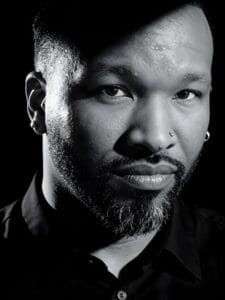
I write as a faith leader, massage therapy educator, U.S. Navy veteran, and a community activist. And as a gay black man living with HIV in the South, this is an outpouring from my heart. I did not die from my diagnosis. It didn’t erode my belief, purpose, or dignity. After learning about my status, I have also served congregations in my church, taught my students, created community programs, and advocated in the fight for public health. I have a full and productive life, like millions of Americans who are living with HIV today.
But nationally, too many people are still being arrested, prosecuted, and imprisoned just for being HIV positive. Some 30 states have enacted laws criminalizing HIV — many of them enacted during the heat of the AIDS crisis in the 1980s and early 1990s, when fear and uncertainty gripped public policy. Those laws usually allow for criminal charges related to a person’s HIV status, often escalating charges or penalties when there is no transmission. HIV was poorly understood when these laws were enacted. There were few treatment options and public anxiety was high. Policymakers responded to a crisis with the information readily available to them. But the world has changed.
Now, modern medicine has made it so that HIV is no longer a deadly disease but an easily manageable chronic condition. Effective treatment has helped those who suffer from HIV reach an undetectable viral load or point where the virus can no longer be sexually transmitted — a scientific maxim summarized in the broadest way possible, in the public health message of “Undetectable equals Untransmittable,” or U=U. Science has evolved. Most laws, though, unfortunately have not.
The legislation on the criminalization of HIV often today has been out of step with current medical evidence. And a lot of public health specialists now think that laws like these do little to stop transmission and can in fact harm prevention efforts by pushing people away from testing and heightening stigma. But fear of legal jeopardy or sanctions has deterred even those with the most severe problems by making them reluctant to find out about their health or seek care, leading to suffering for people and communities.
As a faith leader, I am certain that injustice must be anchored in truth. Compassion, restoration, and accountability are all about wisdom (the Bible tells us). There can be no true justice with laws based on old assumptions. They are not appropriate to reality. HIV isn’t a moral failing. It’s not a reckless act or wrongdoing. It is a health condition. Among other people living with HIV are parents caring for families, military veterans, teachers educating the next generation, clergy serving as a source of spiritual guidance, and healthcare professionals. We are not just defined by a diagnosis.
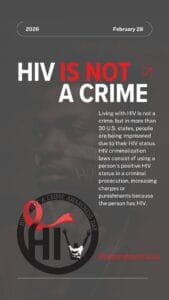
In my advocacy work with Beyond Our Status, I have seen many people fighting not really to control HIV but the stigma HIV puts on them. Stigma isolates individuals. It fuels misinformation. And it perpetuates fear for years long after science has made things clear. Changing HIV criminalization laws is not about abandoning accountability. It is about adjusting legislation to align with modern medical discoveries and making sure our laws benefit the public good rather than penalize people living with a medical condition.
Some states have moved to update their statutes, passing laws that reflect real intent to harm and that eliminate HIV-specific penalties. These reforms prove that it is possible to change when government gives heed to the opinions of scientists, healthcare providers, and any groups most directly responsible for such problems. HIV Is Not a Crime Awareness Day should require us (from each legislative level or congregation within faith circles and healthcare providers among their citizenry) to consider if our laws represent fairness, or more simply that they contain evidence.
And yes, my own path with HIV has not been a source of embarrassment. It’s a story of resilience, faith, and purpose. Each day, people with HIV give something back to society, raise families, and live life to its fullest. We do this not despite our diagnosis, but with it. At our fingertips emerges the question: will our laws continue to have a basis in fear derived from generations past, or will they evolve to meet scientific truth and human dignity? HIV is not a crime. And justice remains unfinished until policies reflect that reality.
Author Bio
David Maurice Griffin is a faith leader, educator, and public health advocate living with HIV. He is the founder of Beyond Our Status, an organization focused on empowerment, education, and advocacy for people living with HIV.