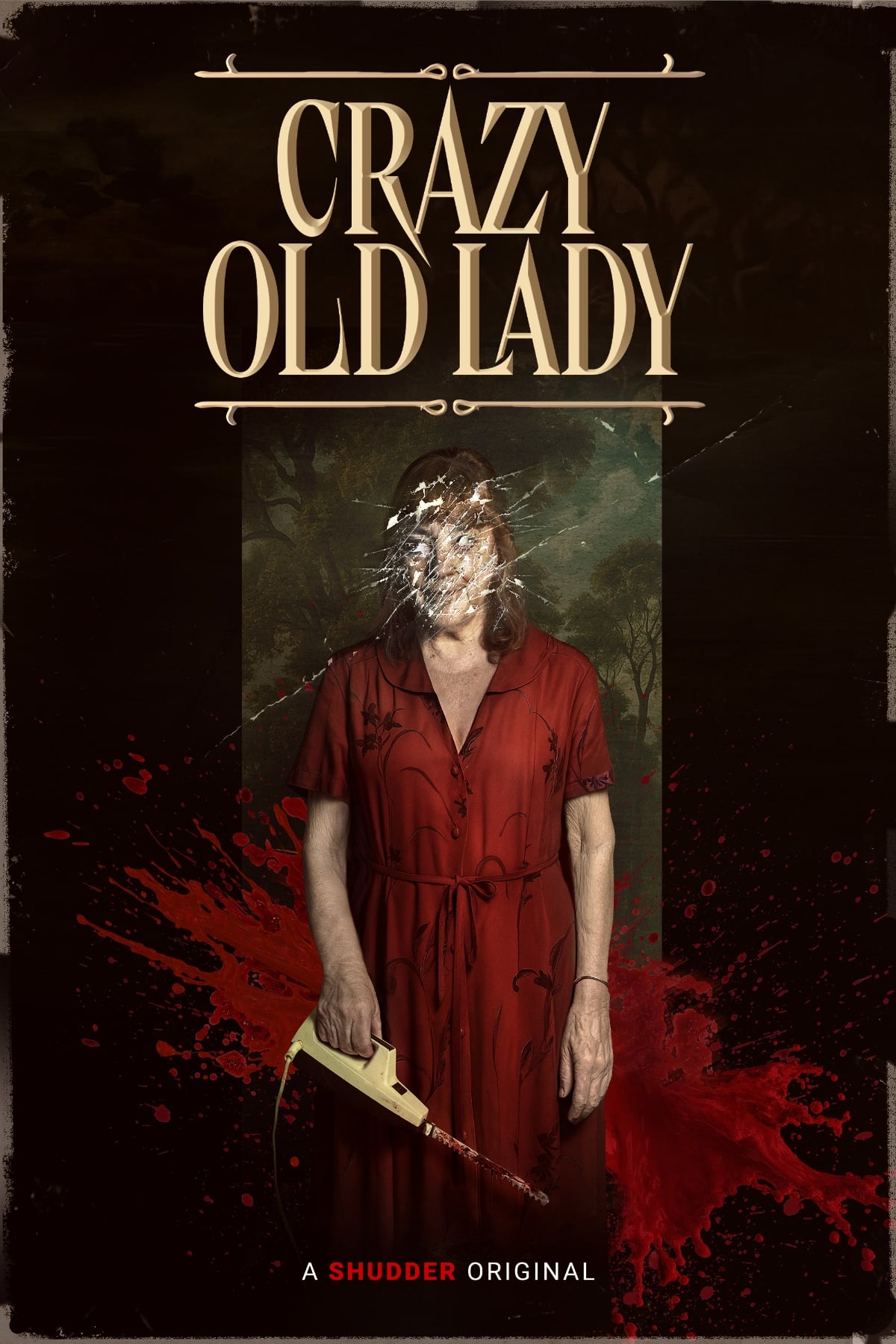
As ruthless and merciless as any slasher to stalk their victims on the silver screen, dementia is unfortunately a disease that has affected many families in the real world (mine included), so when I saw that it was a key element of Vieja Loca (a.k.a. Crazy Old Lady), I felt an urgency to see how the new film approached its story about a woman with dementia named Alicia (Carmen Maura), who confuses her daughter’s ex-boyfriend (Daniel Hendler) with an abusive lover from her past, resulting in a violent night of torment, paranoia, and long-harbored revenge as Alicia takes matters into her own unforgiving hands.
Suffice to say I was not disappointed, as prolific screenwriter Martín Mauregui skillfully delivers a nerve-shredding cinematic experience with his feature-length directorial debut that is reminiscent of the captivating tension and visceral terror of Misery.
With Crazy Old Lady now streaming on Shudder, Daily Dead had the pleasure of talking with Martín via a translator about his new movie, including balancing horror and humor, working with the amazing Carmen Maura and Daniel Hendler, looking at dementia from a different perspective, and collaborating with renowned filmmaker J.A. Bayona, who produced Crazy Old Lady and gave Martín invaluable advice along the way.
Martín, congratulations on Vieja Loca, a.k.a. Crazy Old Lady. It covers a lot of interesting themes, and at the end of the day, it’s a white-knuckled thriller as well, so congratulations.
Martín Mauregui: Thank you.
This is such an interesting and important film because you are dealing with a topic of dementia, which I think a lot of families can relate to, and you’re taking a very interesting approach to that. What was it about this story, particularly the theme of dementia, that made you really want to tell this story as both a writer and director?
Martín Mauregui: Yes, it happens to people who, around my generation, like around 40s or more, you keep encountering these situations around the elderly or older people that they need more care, they need more help with their things, so I wanted to approach this subject about dementia as a tool, just to show the sinister things that can be behind that dementia.
It does a really fantastic job of building these characters, too. Carmen Maura and Daniel Hendler, I love their chemistry together, and particularly Carmen, the way that she played Alicia, is just such a great character. How was it working with those two and getting them to interact on screen with with the horror and the humor of that relationship?
Martín Mauregui: That relationship between them is very, very important in the whole movie. We were working a lot, we rehearsed for weeks and weeks, just Maura and me, and then we welcomed Hendler as well. So, between the three of us, we created the whole [experience]. We were reading together, we went back and forward multiple times between that line between humor and horror, and it wasn’t just a challenge, it was also an invitation to think about the relationship between humor and horror, actually. So many actors, mostly from the comedy in the movies, generally they have this humor that comes from a deep, deep pain, so I wanted to dig deeper in that deep pain that creates a direct line between the humor and the horror.
Well, you certainly strike a really good balance with that, and it kind of reminded me a little bit of Misery, the Stephen King movie [directed by Rob Reiner]. Were there any cinematic influences when you were writing and directing that inspired your story in any way?
Martín Mauregui: Yes, actually, the movie, it’s inside of this genre that is kind of weird, and I think the name is “Hagsplotation.” It’s these types of movies who have, as a main character, an old woman who makes other ones victims, like What Ever Happened to Baby Jane? or Misery, there are so many movies of this genre. [In my film] this old woman is crazy but has a lot of power. So she puts under her control someone else. [It’s] the same in Sunset Boulevard, those are all very good movies where I looked for inspiration.
It certainly pays homage while doing its own thing, which I really love. And I have to mention, that you had J.A. Bayona as a producer on this film. What was that like having him on board this film, and did you get any advice from him? I know you have lots of experience as a screenwriter, but this was your first time directing a feature film. Did you get to talk with Bayona about the filmmaking process as you were working on Vieja Loca?
Martín Mauregui: Yes, Bayona was very involved in the movie. He actually gave us some ideas for the script. For example, when the dog dies, that was his idea, because we needed to introduce Pedro in a stronger way. Mostly he helped on finding the right tone for the movie, and he has always very high expectations. He used to say, “We need to get rid of eights and nines and just keep the tens.” But we cannot go to an extreme. We need an equilibrium because we need to give little doses of energy to create that suspense in the middle.
Yeah, you can really see that it all came together very well. It’s so great to see that it found a home on Shudder. Are you excited for everyone to check out Vieja Loca when it comes to Shudder here in the States on February 27th? Have they been a good partner to get this film out there for you?
Martín Mauregui: Yes, it’s been actually the best partner that I could have to launch this movie in the North. I’m always, in some degree, excited about the movie, but I also know that it’s a strong movie, and it could be very challenging, so maybe some people will find themselves in the movie, or maybe not.
Well, I’ve certainly found lots to enjoy and to relate to. Obviously, this is something that a lot of, maybe not to this extreme, but a lot of families are touched by dementia in many ways, so I appreciate you making this movie. Me gustó tu película.
Martín Mauregui: Yes, I do want to say something a little extra about dementia. I wanted for Alicia to have dementia, but I wanted for her to go through dementia from a different perspective, not from the victim, but from the one who makes other ones a victim, who can create pain, who takes action and who is violent.
And also, I really like your posters behind [you].
Thank you very much. Well, I’ll keep room for a Vieja Loca poster as well. Thank you, gracias. Thank you very much.
Martín Mauregui: Gracias, gracias.