
Licensed games cheat. They, perhaps more than every other kind of game out there, rely on your feelings to catch your interest. Deserved or undeserved, if you feel a special connection to Spider-Man, you’re going to buy and play a game with Spider-Man in it. Spider-Man doesn’t have to prove himself to Spider-Man fans—they bought in to the game at the premise. Does that make a game like My Hero Academia: All’s Justice underhanded? A cheat, thief, or a liar? I’ll cheat myself and give a definitive “maybe” to that idea. Licensed games like All’s Justice may be able to count on feelings to get you in the door, but feelings can also make or break the experience that comes after.
The average grizzled gaming critic is statistically likely to tell you that the most important part of a video game is the “gameplay.” Sadly, when it comes to licensed games, such critics would be terribly, undeniably, and embarrassingly wrong. No, licensed games don’t get judged on their gameplay—they get judged on their ability to make you feel. Everyone’s seen that meme IGN clip of the guy going on about feeling like Batman, right? That IGN guy may sound dumb saying it out loud, but his words tap into a deep primordial need we have for licensed games. They need to make us feel the things that the source material does. A licensed game could be technically competent in every way, but if it doesn’t make fans feel things, it will fail anyway.
All of this to say that I’m judging All’s Justice on how it is as both a game and what it really is: a feeling generator. I love My Hero Academia. Naturally, I feel strongly about anything that uses the name. While you could use that fact to take what I say about All’s Justice with a grain of salt, I’d say more to take it as a prerequisite for understanding it at all. This game exists for people like me. All’s Justice may have gotten me in the door just by existing, but I’m the one who decides whether it should exist. My quirk name? Judgment. It lets me write long, self-important intros to licensed game reviews for anime arena fighters.
All’s Justice concludes what has been an ongoing series of My Hero Academia arena fighters that has been running since the Nintendo 3DS days. Arena fighters tend to be the natural habitat of anime video game tie-ins, but I’ve historically been pleasantly surprised by the output. MHA fighters ride a nice line between simple to control yet satisfyingly responsive to hit buttons. Combos were easy, the rock-paper-scissor dynamics of battles were easy to understand, and the characters were distinct. For a licensed game like this, half the fun comes from messing around with your favorite characters more than sweating things out in intense competition, so the fighting system catered to its strengths. Given the pedigree, I expected All’s Justice to feel like a culmination of all the iterations prior.
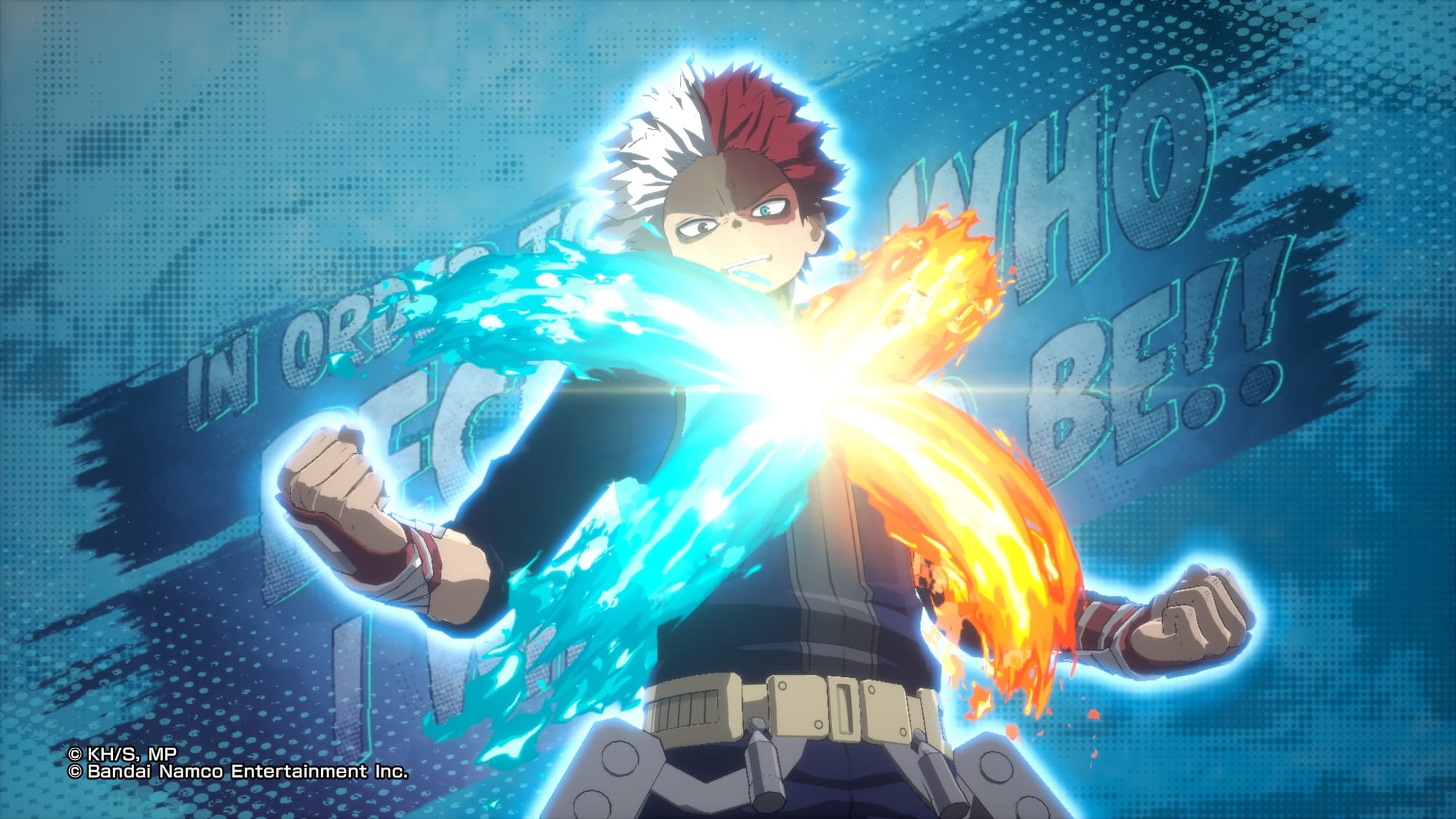
While technically All’s Justice builds on its predecessors, it revamps far more than I expected. Most characters have been reworked both visually and mechanically from the prior One’s Justice games. The One’s Justice games focused on 1v1 battles with the ability to call in 2 assists, not unlike Marvel vs. Capcom. All’s Justice pushes further in the MVC direction: each assist becomes a full fighter, making battles full 3v3 tag matches. This change leads to massive tag combos and more dynamic ways to use your assists. On top of that, a new “Rising” mechanic lets you power player characters up to gain a decisive advantage mid-battle. These new additions deepen the gameplay, but also the chaos.
These changes feel right. My Hero Academia as a story rarely boiled things down to one person making a difference. Battles were fought as team efforts, or at the very least, culminations of actions across many people. Moving even further from the idea that one person should shoulder the battle on their own fits with the series thematically, and makes for a more dynamic game to boot. Similar things can be said for the Rising mechanic—battles in My Hero Academia don’t have much fluff to them. They’re about big, impactful moments of the characters showing their convictions, and building that directly into the game makes sense. As a fan, I can easily understand and appreciate these additions.
As a gamer, however, I occasionally wondered if the game was becoming too hectic for its own good. The Risings don’t just make a difference—they dominate the flow of matches. On top of attack and health powerups, a Rising also gives each character unique abilities. Characters like Hatsume can summon giant bombs that can be hard to counter or predict, while others like All For One Rewind can use them to change the rules of the game itself by activating temporary immortality. While these powerups make the distinct traits of the characters shine, they can be hard to counter to the point that they reminded me a lot of Marvel vs. Capcom 3’s X-Factor. Depending on your timing, you can use these powerups to clutch out victories you arguably shouldn’t have, or easily pound someone far below your skill level into the dust. That chaos can make things fun, but also hard to take seriously.
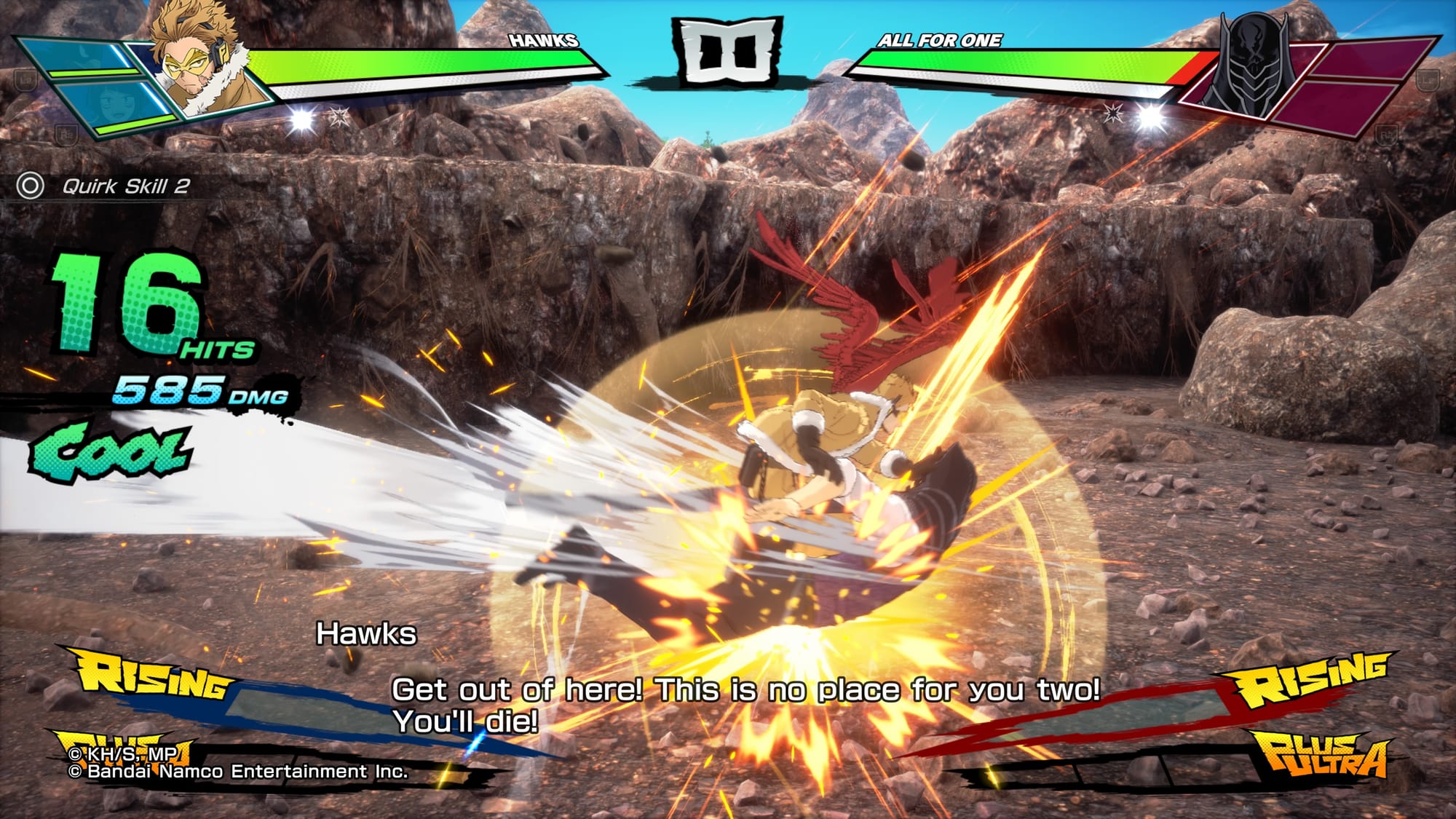
And normally, I wouldn’t take it all that seriously. Arena fighters like these don’t tend to be built for that kind of thing. Yet Bandai Namco consistently seems to disagree, which can be seen both in the fact that there is a ranked versus mode and in how the online seems to be emphasized so heavily.
Obviously, there should be an online mode, but the framing of it feels off to me. Just because you can try to play a game like this competitively doesn’t necessarily mean that you should, or at the very least that you should try to have that carry the game. I played a lot of All’s Justice online matches to try to appreciate the game’s combat on a deeper level, and I’m just not seeing it. All’s Justice combat has the tools to be fun—with simple, flashy combos and a rock-paper-scissors-esque balance between hits, throws, and guard breaks there’s enough material for some mind games and basic depth. More often than not, however, effective Rising use determined the victor above all else. With that being the case, this feels more like a mess-around-with-friends fighter than one I’d want to invest serious time into. I felt more compelled to focus my time on the single-player modes than the multiplayer.
The single-player offerings of All’s Justice look good on paper. A cinematic story mode adapts the final story arc of the manga. Team-up Missions channel some of the energy of the manga’s spin-off for some filler side content set in an open world. Archive Battles round things out by letting you play through iconic battles from prior points in the story, some covered by prior games and some not. While all good ideas, their execution let me down somewhat.
Story mode tells the story of the manga’s final arc through a series of themed fights held together by duct tape and cool cutscenes. I’d consider the storytelling to be a major step up from the prior MHA games, except that it doesn’t step up consistently. Key moments will get fantastically animated cutscenes that bring some scenes to life better than even the anime did. Moments that are…less key…will get text overlaying still screenshots of the anime. Except sometimes the still screenshots will animate a little, like the game presses play on your DVD for a second then quickly pauses it again. “Inconsistent” and “strange” sum up the overall narrative presentation.
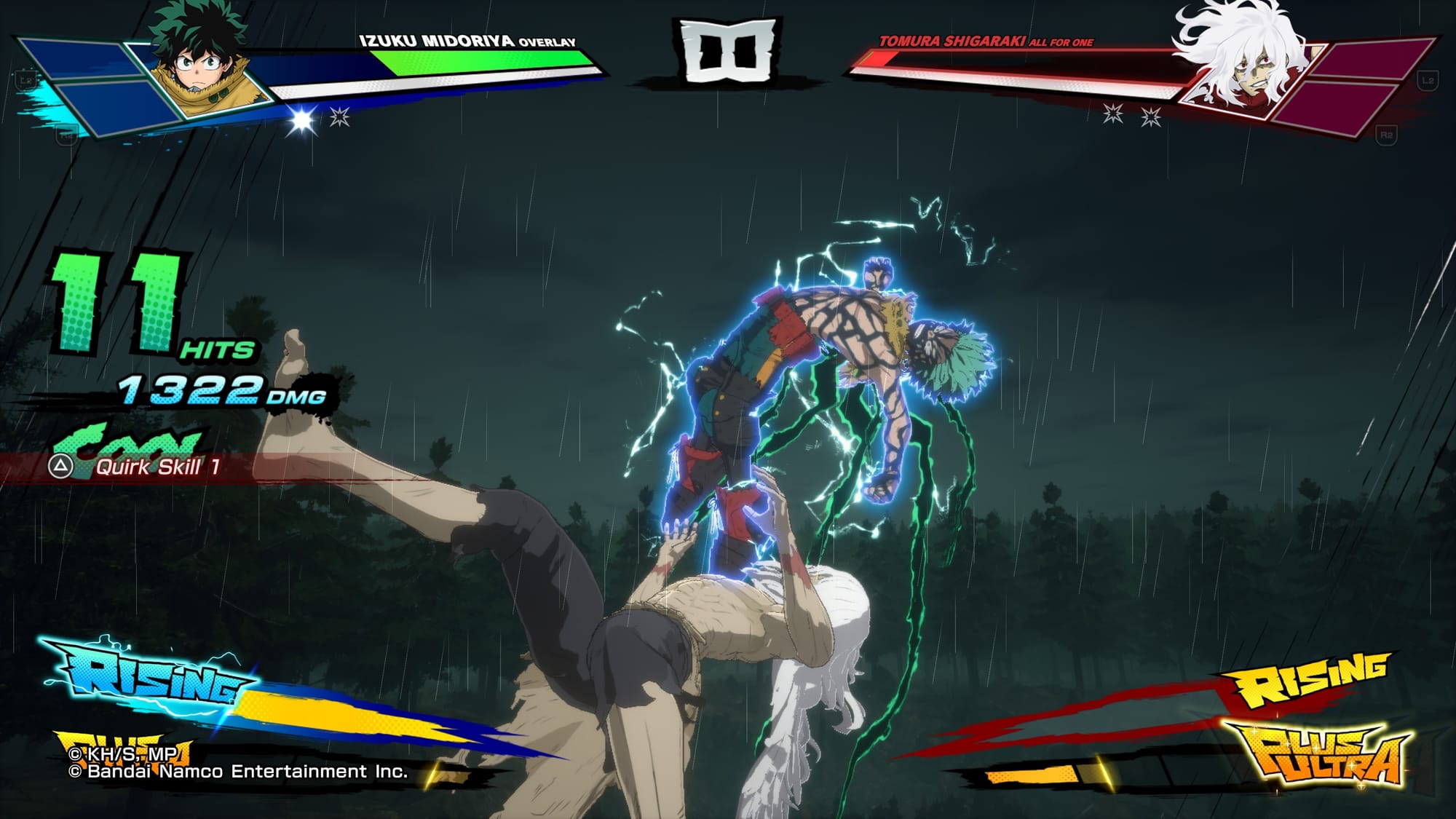
While All’s Justice may not have had the budget or anime licensing rights to do all of the story justice, it did manage to impress me with the gameplay sections themselves. Certain battles, particularly near the endgame, manage to translate the narrative stakes effectively, like having to give up various moves strategically to overcome a powerful boss. Where the anime screenshots faltered, the creative use of game mechanics picked up the slack to put me in the moment better than simply watching a cutscene could ever hope to.
Even that feeling can be taken too far, however. The final boss fight perfectly conveys the hopelessness of the situation and perseverance of the heroes, much to my dismay. This fight pits you against the cheap kind of boss that would make SNK blush. With his screen-filling attacks and ability to tank hits uninterrupted, he can quickly melt your health unless you know exactly when to block and when to sneak some hits in. That would be challenging enough, except that you don’t just have to beat him. You have to beat him over 6 times in a row without failing to fight his final form. If at any point you lose to him, you restart from the beginning.
Needless to say, this felt like a bit much for a goofy fan service arena fighter. Either they didn’t test this fight or they really wanted to push people to buy the DLC to unlock characters from the story mode without beating it. Not a good look, either way. After about an hour and a half of attempts, I managed to defeat him. To the game’s credit, I felt the gravity of the final battle, but at what cost?
While I understand the desire to include these direct story adaptations, personally, I can take or leave them. I’d much prefer these games take swings at original stories and situations, so I went into Team Up Missions expecting exactly that. This mode places Deku into an open world to fight bad guys and solve missions in a virtual training simulator. I like the premise, and I have to admit using Deku’s Black Whip to swing around town feels something out of an MHA dream game.
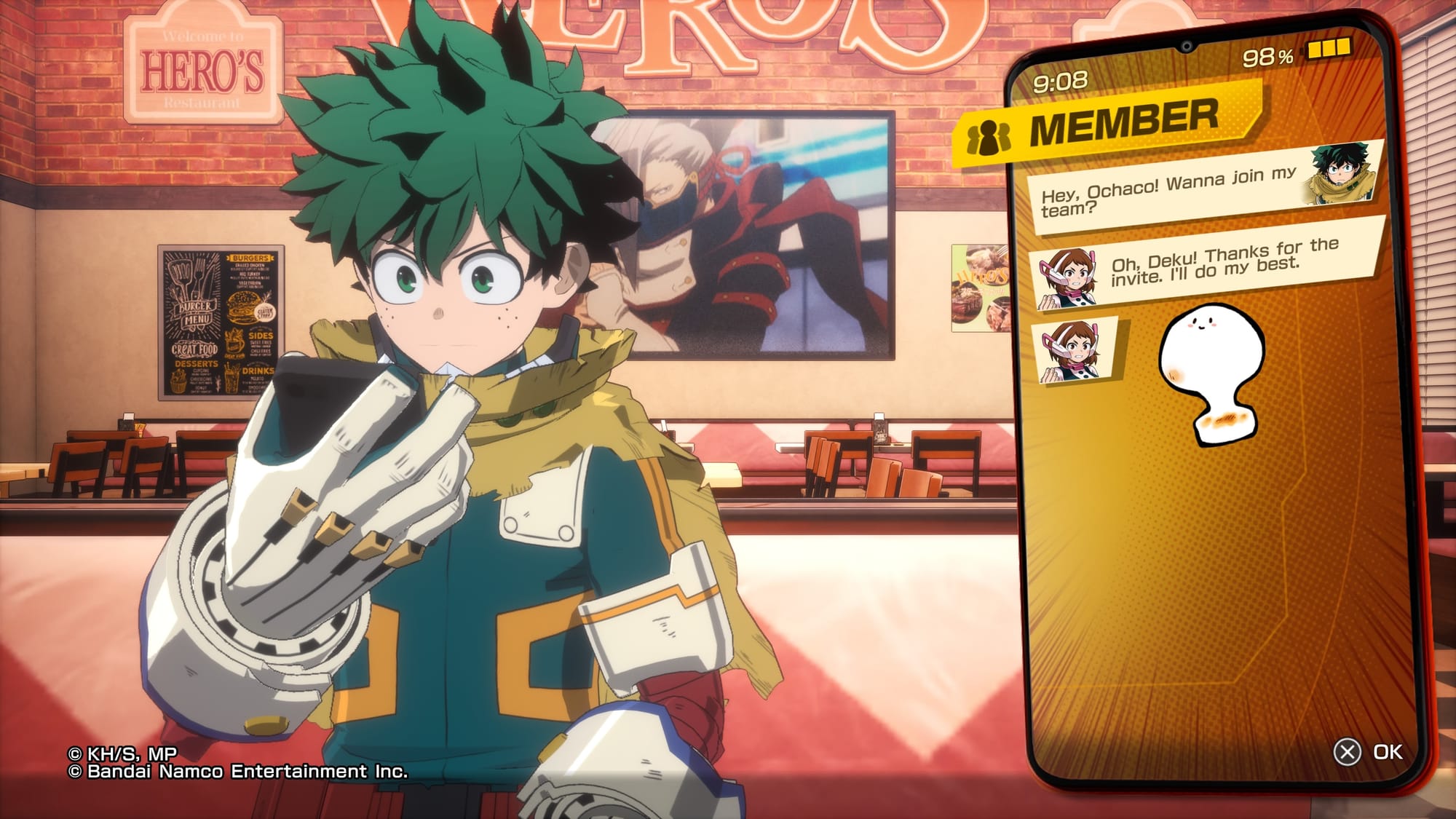
Unfortunately, Team Up Missions deals more in technicalities than delivering on expectations. Technically, the mode takes place in an open world—it just doesn’t extend very far and there isn’t much to do in it. Technically, it tells original stories set before the final arc, but they are more like thinly veiled retreads of prior story arcs in the series framed as “training.” My enthusiasm upon starting the mode diminished after clearing the first few missions.
Rather than being a true MHA open world experience, I’d describe it more like a mini chunk of a Yakuza game. Deku (and friends you can recruit as you progress) go around town doing main and side missions. Your actual activities range from fighting bad guys, clearing obstacle courses with your traversal abilities, or just running from point A to B and talking to people.
That would be fine as light fluff, but the structure of the mode itself wore me down the more I played. Each Team Up Mission takes place in its own iteration of a tiny open world. While this can change the locales and missions you encounter, it doesn’t change everything. Many Team Up Missions will feature the same maps with mostly the same side activities. Even if you wanted to ignore side content that you previously completed, the game incentivizes you to repeat it by tying your completion to a ranking system. If you want to unlock everything in the game, then you will need to grind out a lot of similar activities repeatedly.
That said, the fun here comes from soaking in little details of the MHA world. Through this mode you can interact at least a little with virtually everyone in the MHA universe. You’ll get little follow-ups on character dynamics that the main story proper lightly touched upon, like Sero’s concern for Todoroki, and even little teases like Deku talking about his elusive dad. Even if most of the side missions amount to repetitive fluff, the initial go-rounds felt faithful to how hero work often gets portrayed in the show. With some imagination and lowered expectations, Team Up Missions captures the spirit of pro hero-ism well.
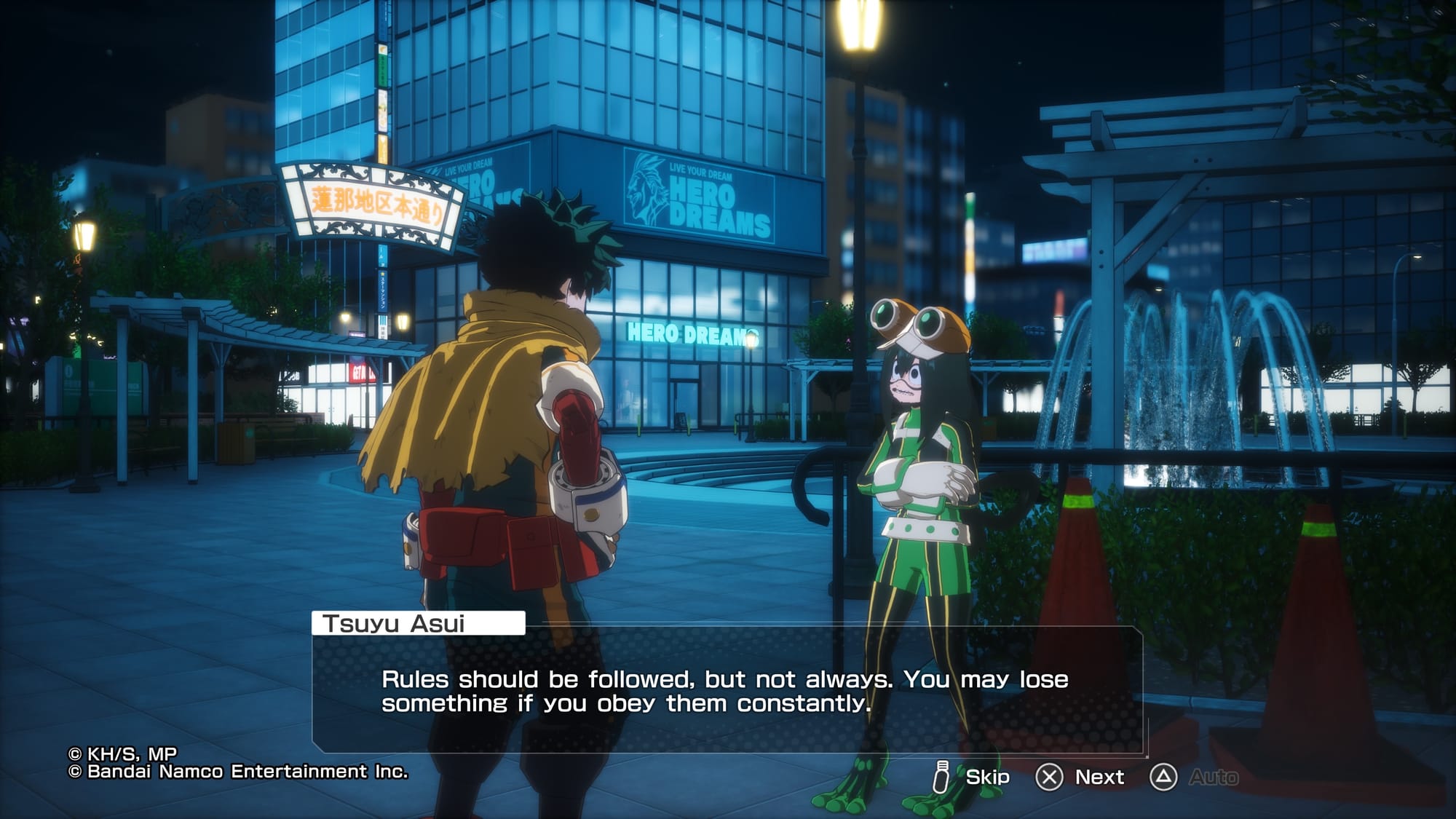
Archive Battles stood out to me as the strangest mode in All’s Justice. Technically, it’s the most basic. You pick from a small list of battles (unlocked by completing Team Up Missions), which then throws you into an important battle from various points in MHA history, not unlike the story mode proper does. That’s really all there is to it, except I noticed that these battles feature stages and character costumes that the main game itself doesn’t seem to let you access normally. I think just about every MHA fan would want access to Deku’s dark costume, yet the only way to access it is through this single-player exclusive mode. Huh?
I wrote earlier that I was expecting All’s Justice to be a culmination of the games before it. I can see the culmination of effort in the game’s large character roster, mechanical additions, attempts to beef up story mode’s presentation, and Team Up Mission’s ambitious nature. Yet at the same time, these efforts often highlight strange omissions. Why aren’t all of the stages selectable in every mode? Why can’t I play as Dark Deku? Why are characters like Spinner relegated to a boss fight rather than being a full playable character? I cynically can’t help but think that business realities are cutting into the fan service here, with the omissions being obvious cuts to sell to players later. Just like using fans’ feelings to sell the game in the first place, they’re hoping to further exploit them to sell this clearly finished content to us more formally down the line.
Even looking at the omissions charitably, the game lacks things they probably aren’t planning to sell later. I like the new single player content conceptually, but All’s Justice lacks a casually replayable single player mode like an Arcade mode to keep me coming back occasionally when DLC characters arrive. One’s Justice 2 had an Arcade mode, so why doesn’t this game? Instead, All’s Justice seems to rely on the online battles to carry the game, which seems ill-advised given its chaotic gameplay balance.
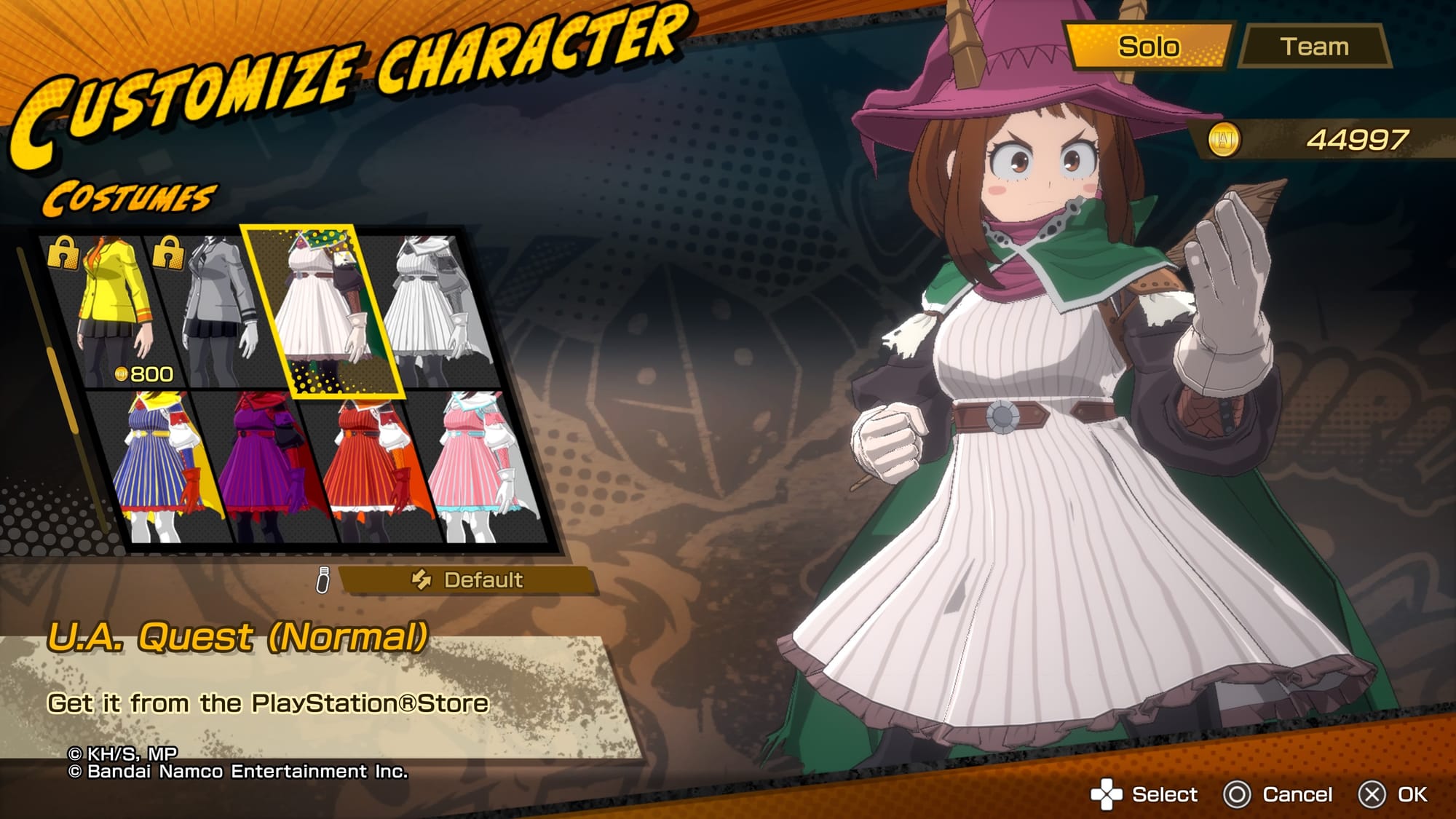
Perhaps the most disappointing cutback to me, however, was the gutting of the customization features. Prior One’s Justice games gave you a million unlockable costume parts to mess around with every characters’ appearance. You could often go online and see interpretations of characters that barely resembled their original look. All’s Justice cuts back heavily on this, instead giving most characters a few selectable costumes with no other way to change their looks, instead moving the customizations to tertiary UI elements and loading screens.
All of these changes result in a game that can be fun, but doesn’t feel like the United States of Smash I was expecting it to be. All’s Justice refines the core gameplay and does an admirable job of deepening the single player experience, but some key omissions make the package feel weaker than it should. As a fan, I enjoyed my time with All’s Justice. Yet, as a fan, I also expected a lot more.
Review Guidelines
70
My Hero Academia: All’s Justice
Good
All’s Justice delivers on the fundamentals for a great fanservice game. However, in some places it asks a bit too much from fans while failing to deliver what we’d expect by this point in the series.
Pros
- Refined, chaotic battle system
- Captures the feelings of the source material
- New modes are good in concept
Cons
- Doesn’t embrace being a casual fighter
- Single player modes all have drawbacks
- Obvious omissions
This review is based on a retail PS5 copy provided by the publisher.