
CONCORD, Calif. – The board of directors for the Bay Area Rapid Transit has approved an alternative plan to slash service and cut costs as the agency grapples with what officials describe as the largest financial crisis in its history.
The board voted 8-1 on Thursday to adopt the plan, which would take effect in January of 2027 if the agency doesn’t get additional financial help. The plan outlines sweeping reductions, including the potential closure of 10 to 15 stations and a more than 60% cut in train service.
The board will have to adopt the plan if voters don’t approve the “Connect Bay Area” measure, a 14-year sales tax on the ballot in November. It would raise taxes in Contra Costa, Santa Clara, San Mateo and Alameda Counties by .5% and by 1% in San Francisco.
Under the revised plan, station closures that were originally scheduled to begin in January would be delayed until next summer. The first phase of cuts would eliminate the Red and Green lines, end service at 9 p.m., lay off more than 1,000 employees and raise parking fees and fares.
BART officials say the measures are necessary to address a massive operating deficit driven by a steep decline in ridership since the COVID-19 pandemic.
“We have a structural deficit of $350 million to $400 million, so this plan is very serious,” said Alicia Trost, the Chief Communications Officer for BART. “It’s not just a proposal where there are other options. To cut that level of money from a high fixed rail system, you have to make a lot of cuts. And it’s not just service cuts and station closures, 1,200 BART employees would be laid off. So imagine what that system would look like.”
Board President Janice Li said the agency cannot afford to wait for the outcome of the November election before taking action.
“There is simply not enough time for us to wait to see what happens in the aftermath of what happens this November, for us to have the discussion, figure out what the board action is, then take the board action,” Li said. “We don’t have enough time to act.”
Other members of the board spoke of how big of an impact they expect these changes to have on the Bay Area.
Robert Raburn called the idea of laying off more than 1,000 BART employees a “gut punch.”
“By cutting those officers and cleaners and maintenance workers, we’re going to go back to a time that I don’t want to revisit,” said Raburn.
“There is no guarantee that if we get to the point where we have to close stations, that we will achieve a balanced budget,” said Victor Flores. “Because if riders leave, it will be unsustainable. And then the conversation is not going to be about which communities do and don’t have stations. It’s going to be about how we have to adapt to a Bay Area with no BART.”
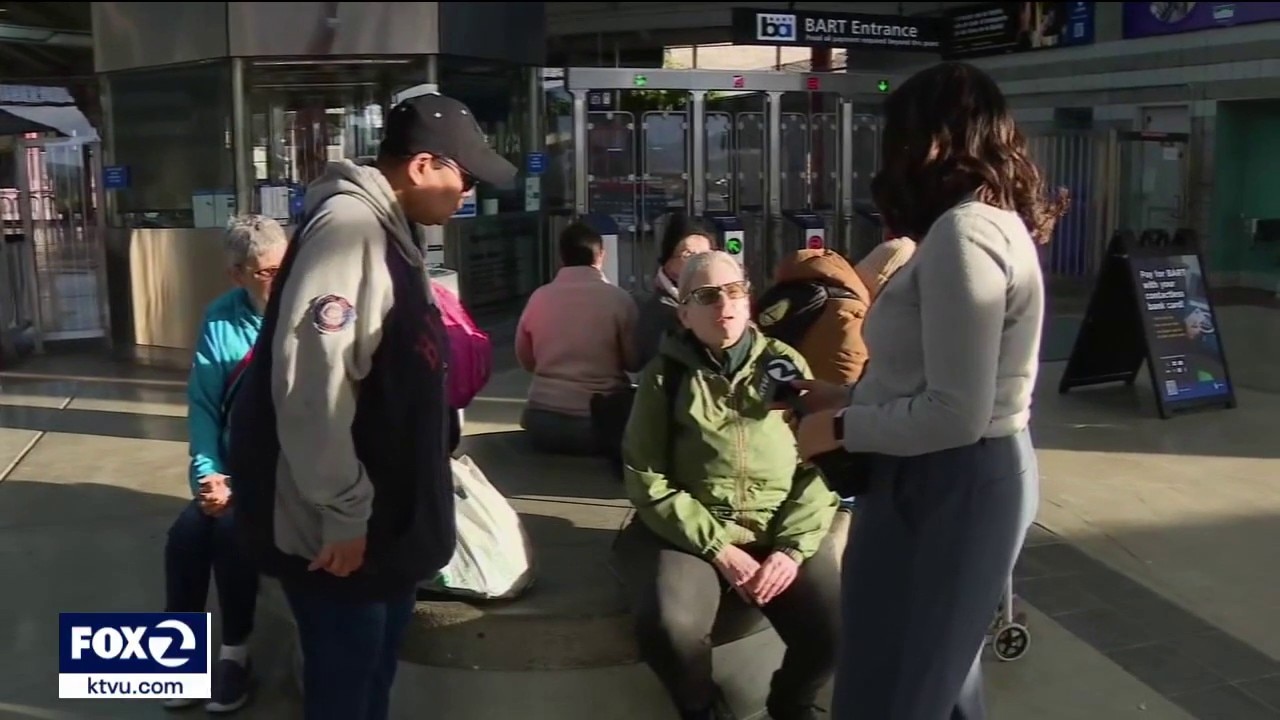
Some riders say the potential cuts would have serious consequences. Lorin Holmen, who commutes through Concord, said if the station closed, it would force him to reconsider his job.
“If I lost this station, I’d probably have to change jobs,” Holmen said. “It would affect me drastically. I wouldn’t be able to make the commute every day. It’s already a long commute, but BART makes it doable for me.”
Gov. Gavin Newsom recently announced a $590 million state bailout loan for Bay Area transit agencies, including BART. The loan would help bridge the agency’s budget gap but would need to be repaid with interest. However, without the ballot measure passing, BART officials say they won’t be able to take the loan because they won’t have enough money to pay it back.
Even with the proposed service reductions and cost-cutting measures, BART officials say the agency would still need an additional $150 million in revenue next year to avoid deeper cuts beginning in 2028.