
At home on the Navajo Nation with Naiomi Glasses and family.
The world knows Naiomi Glasses as many things: a seventh- generation Diné weaver. Ralph Lauren’s first-ever artist- in-residence. A talented fashion and home goods designer. A fierce cleft lip and palate advocate. A skateboarder and a horsewoman. Back home on the Navajo Nation, her family and friends know her simply as Bear.
For Glasses, all of her high-profile work has been a family affair. “I’m the youngest in my family, and they have always been my biggest cheerleaders,” says the 29-year-old multihyphenate. “It’s really important that they’re part of my journey because they’re so inspirational to me. We’re so close as a family, and being around them and feeling their love gives me this incredible energy. We keep each other grounded and energized.”
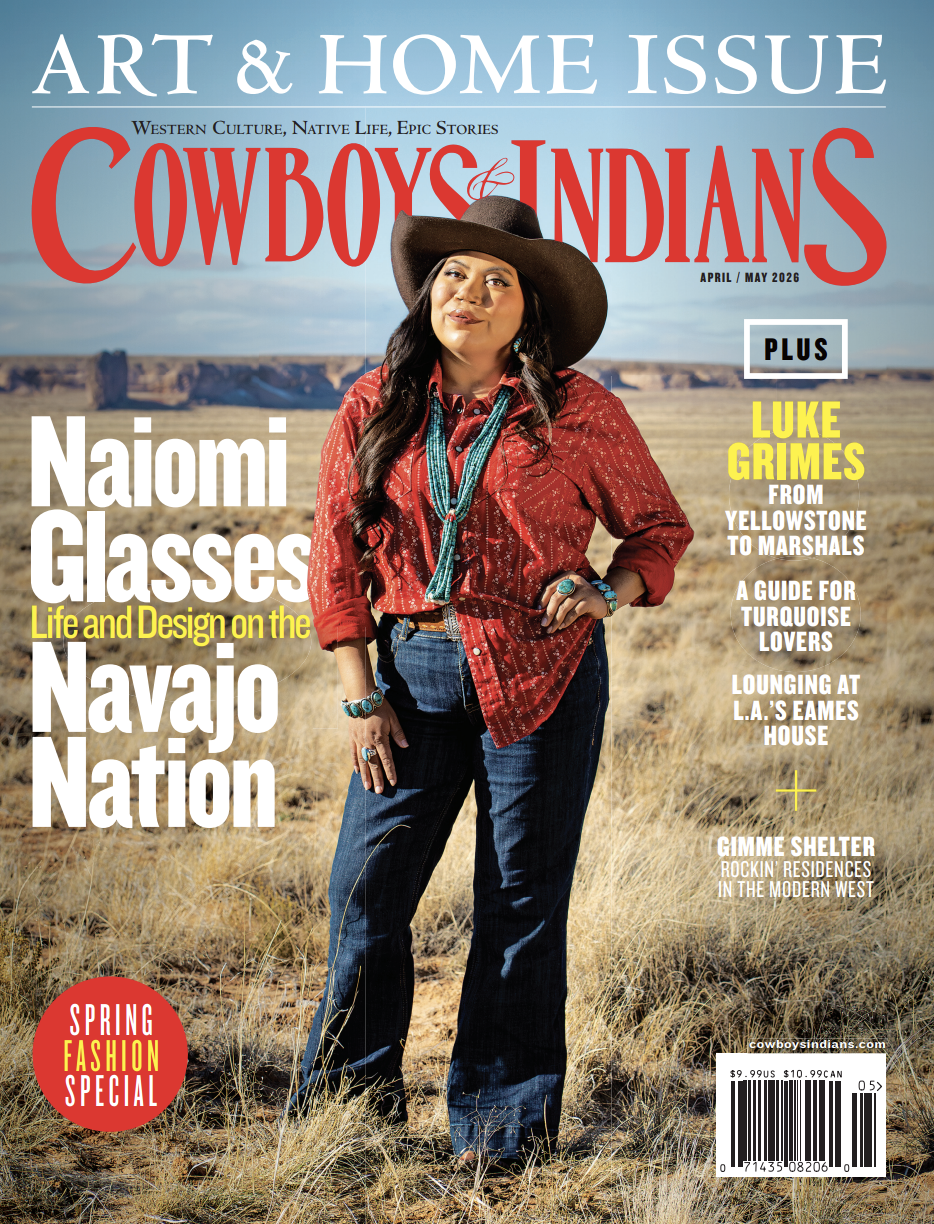
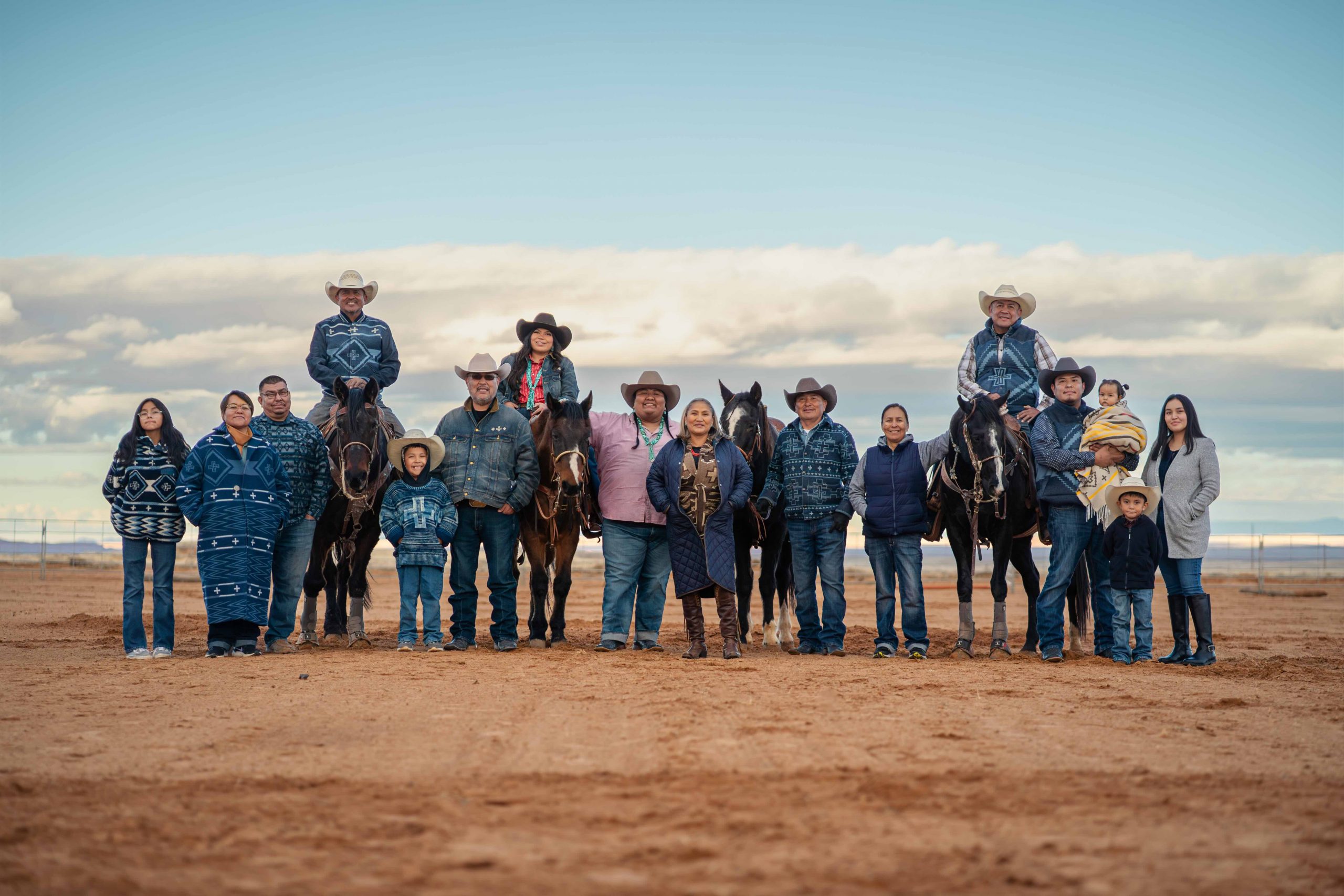
She’s referring to her parents, Tyler Sr. (known as Ty) and Cynthia; and her older brother, Tyler Jr. (known as TJ). They serve not only as Naiomi’s support system but also her frequent collaborative team. (Sadly, their middle sibling, Heather, passed away in 2023. Her spirit lives on in her daughter, Lorelei.) The four of them live together in their recently renovated house on the Navajo Nation, just on the edge of Rock Point Chapter. Also known as Dinétah, this is where they’ve resided for more than 15 years after a stint in the Phoenix area. It’s the same home where Ty grew up, with recent additions to accommodate the family’s changing needs.
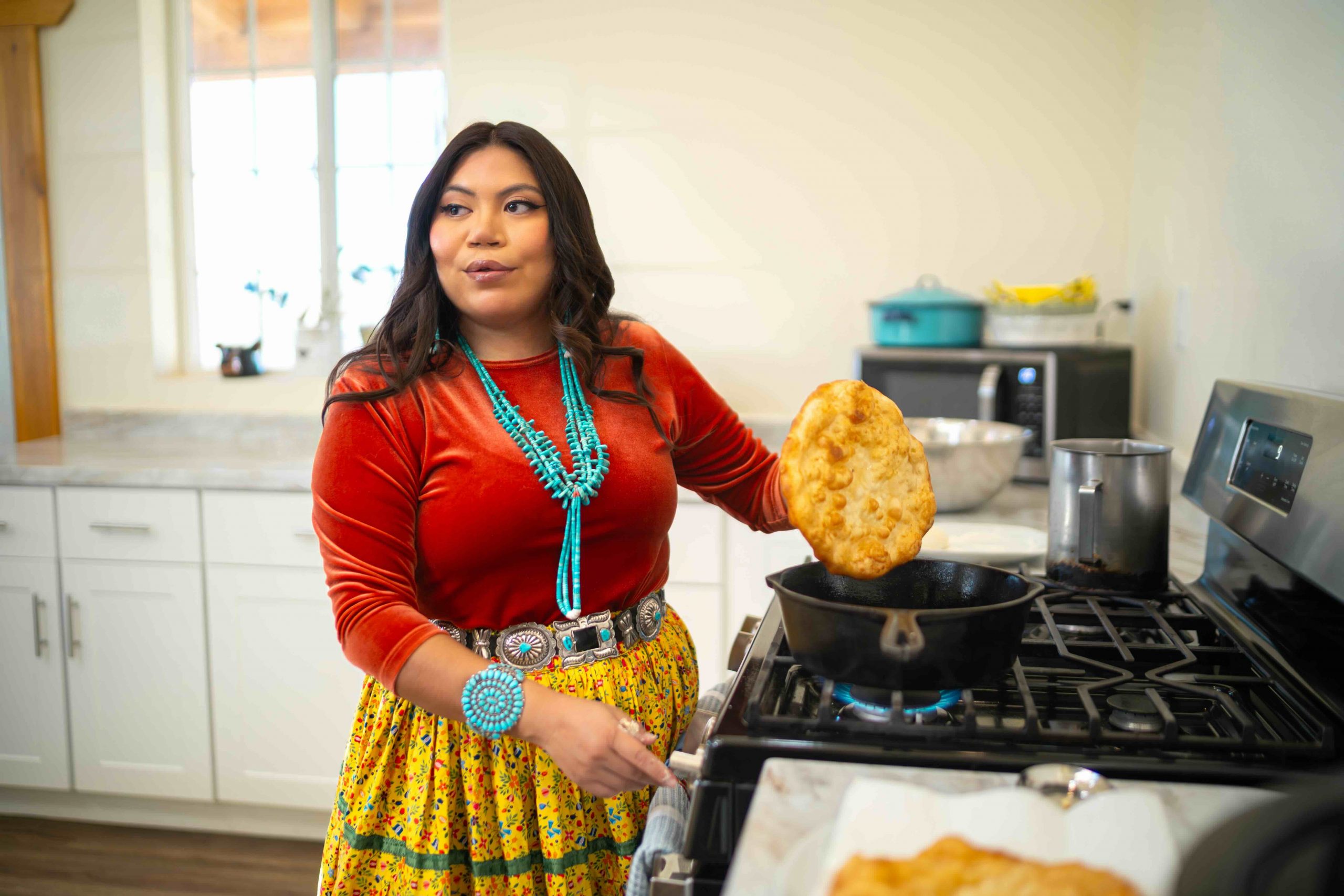
These days, their warm, welcoming abode also acts as a multihyphenate: a weaving studio, an impromptu Instagram photo-shoot backdrop, a test kitchen for Naiomi’s newfound baking passion, an extended family hosting spot. But first and foremost, it’s just home — and it’s been home for the Glasses dating back centuries.
This vast open place might appear to be filled with nothingness, but to them, it’s everything.
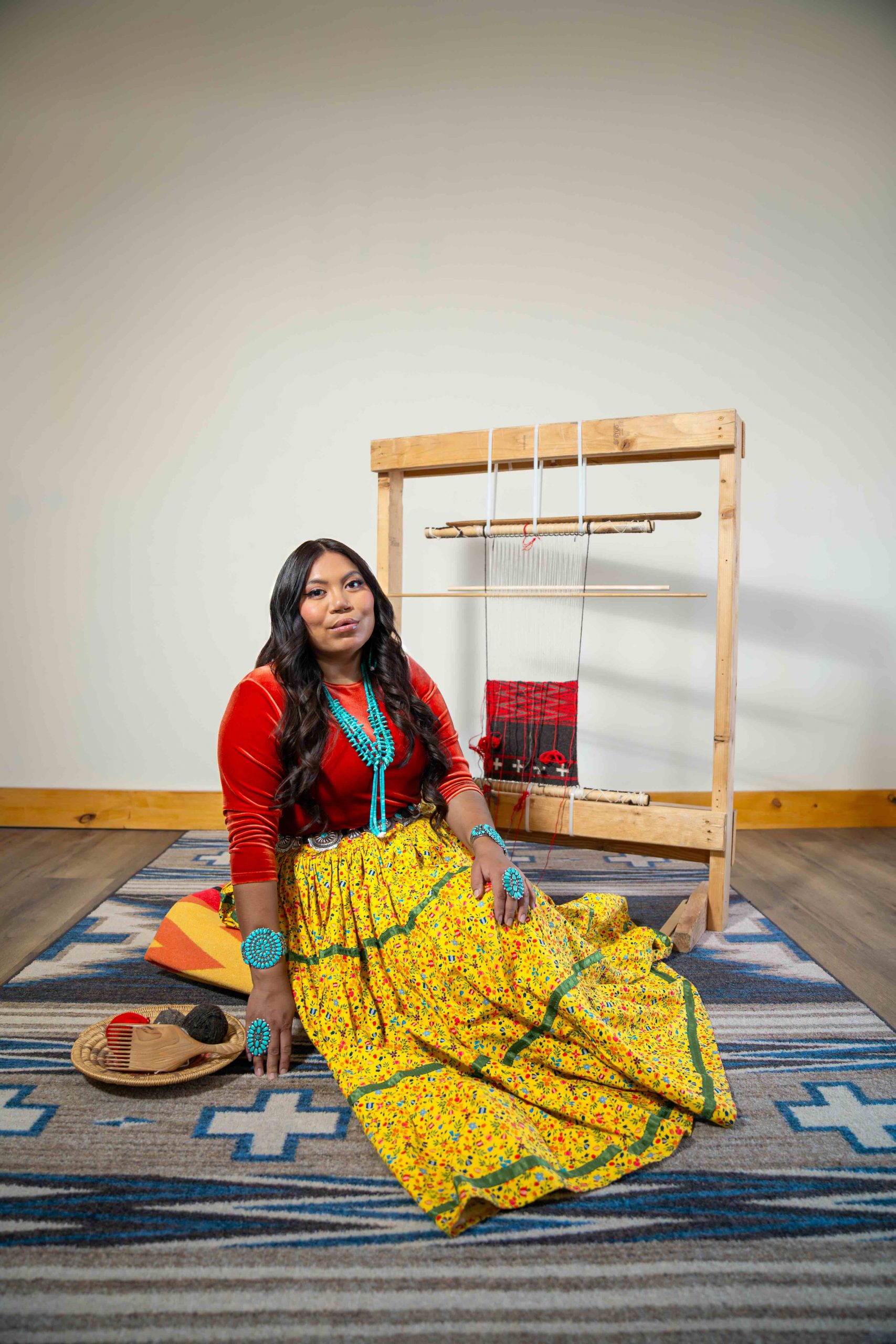
“Life on the Navajo Nation is really beautiful,” Naiomi says. “I’m grateful to be surrounded by so much of my culture every day. I’m grateful that I’m able to be here on this land that our family has been on for generations because I get to see the same uninterrupted beauty that my ancestors saw. I’m grateful for this life that I live.”
Ty and Cynthia both grew up on and off the rez, and to see this place through their children’s viewpoint gives them new perspective. “You don’t really appreciate this way of life until you see your kids living it and loving it,” says Cynthia, who serves as momager (but without the Kris Kardashian vibes). “Our generation was taught to be ashamed of our culture, so we have really learned to appreciate our culture, our language, our traditions by seeing through new eyes, by seeing through our children.”
Though beautiful in countless ways, life on the Navajo Nation isn’t easy. The largest Indian reservation in the United States, it spans more than 27,000 square miles across parts of Arizona, Utah, and New Mexico (roughly the size of West Virginia). Its approximately 164,000 residents are underserved when it comes to the modern-day conveniences that many people take for granted.
The entire population is served by just 12 Indian Health Care centers and 24 post offices. Grocery stores are few and far between. An estimated 30 percent of households don’t have running water. (In 2023, the U.S. Supreme Court ruled that the federal government isn’t required to ensure water access for the Navajo Nation.) High-speed internet is hard to come by, and cell phone service is spotty. As is the case with many Native American communities, Navajo Nation residents experience marked health disparities, disproportionate poverty rates, and ongoing discrimination and violence. These issues have prompted a recent exodus of rez residents, especially elders seeking specific care and young adults seeking greater opportunity.
Ty reflects on his own childhood on the rez. “We grew up with an outhouse, no electricity, and kerosene lamps,” he says. “We’ve just recently gotten our utilities here. We live in an area without running water, so we’re very fortunate to have a septic system and water tank. We don’t have asphalt out here, so when the weather gets bad, our dirt roads get washed out all over the place. That’s how it is on the reservation.” The entire family chips in on chores like hauling water, chopping wood, feeding the horses, tending to the cows, and helping out their fellow community members.
This ultra-remote rural existence is often romanticized, but few urbanites can imagine living this way. And yet, many people — the Glasses included — wouldn’t trade this life for any other life. “When we came back [after living in the Phoenix area], we realized why we need to be here,” Cynthia says. “Your love for your family goes with you wherever you are. But our kids didn’t have the same connection to culture, to language, to the way of life that we knew as kids until we moved back and they started spending more time with their grandma.”
1/2
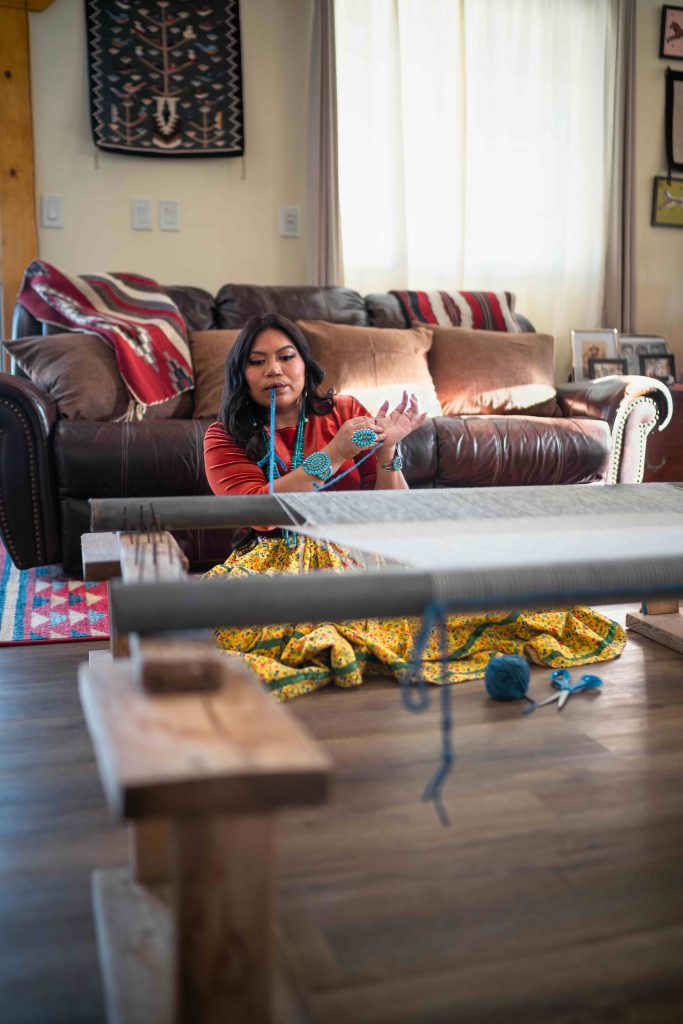
She’s referring to Ty’s late mother, Nellie. A renowned weaver herself, she taught her city-turned-rez grandkids the importance of continuing Diné cultural practices like weaving through everyday lessons. Those teachings took shape as days spent out on the land gathering plant dyes. And time spent caring for the family’s sheep herd, which once numbered in the hundreds but has since dwindled. And moments spent sharing Diné creation stories.
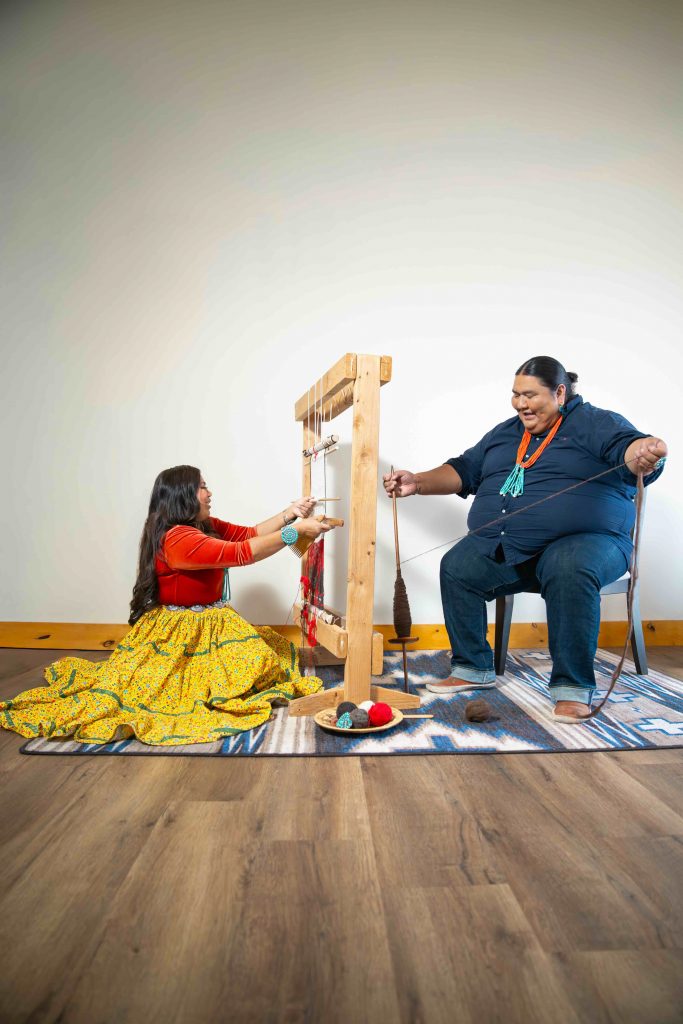
“When you learn weaving, you’re not just learning weaving — you’re learning everything about our way of life,” says TJ, who is eight years Naiomi’s elder. “You’re learning our lifeways and our stories. You’re learning how to identify different plant medicines, how to care for your animals, how to watch the land to ensure it doesn’t get overgrazed. That’s why it’s so important to continue to teach this cultural craft, because you learn so much about Navajo life.”
Although sheep and cattle have not been part of Diné culture since time immemorial, both have been fixtures on the Navajo Nation for centuries. The Navajo-Churro sheep, which are descendants of the Iberian breeds introduced to North America in the 1500s, are a prime example of Indigenous adaptation. Today, these important animals are incorporated into many aspects of Navajo life, such as the weaving the Glasses family has practiced for generations.
Weaving can seem simple to the uninitiated, but in fact, it’s a multi-step process, including shearing the sheep, skirting, dyeing, and carding the wool, and spinning the wool before the actual weaving can happen. The design itself is another complex aspect; contrary to common assumption, artisans don’t use templates or patterns.
“A lot of people don’t understand the process that goes into weaving,” TJ says. “There are many mills that make wool and fabric, so people lose that appreciation for the time, intention, and care that go into this heritage craft. As you’re weaving, you’re constantly counting; then when you hit the midway point, you reverse all your counts. We grew up watching our grandma and aunts do it, so we just thought it was normal, but when we bring it out into the broader world, people are really amazed by the process.”
Naiomi and TJ have stepped into the role of culture bearer, helping showcase these Navajo traditions on an international stage. Her star has been on the rise since late 2020, when a quick video TJ shot of Naiomi skateboarding atop a sandstone slope on the rez while out looking for their family’s sheep went viral on TikTok. That introduced the Glasses to a new generation of followers.
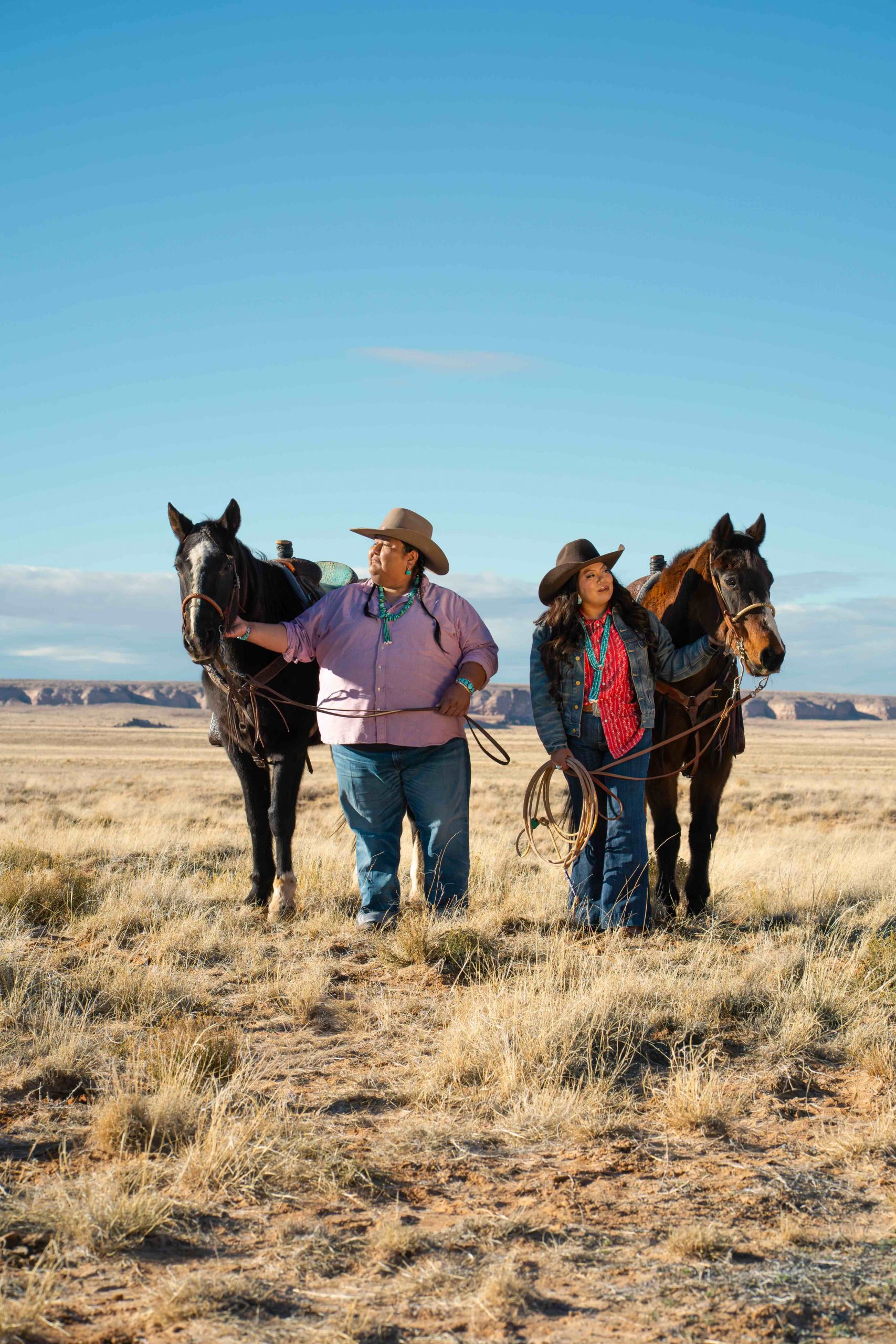
By the time that newfound fame hit, Naiomi and TJ had already been perfecting their craft weaving saddle blankets. “TJ originally wanted to weave saddle blankets to make our horse, Peppy, look prettier when we went to rodeos,” she says with a laugh. They soon added rugs and purses to their repertoire.
Aside from that accidental viral video, it’s all part of a bigger plan.
“I learned to weave when I was 16, at first just helping TJ and my grandma,” Naiomi recalls. “I started weaving my own pieces when I was 18. After I graduated from high school, I told my parents I wanted to take a gap year to fully immerse myself and see where this weaving thing could go. At the end of that, my parents told TJ and me that we couldn’t be starving artists and that we needed to figure out how to make a living doing this.”
Ty and Cynthia wanted to ensure that their kids were approaching their artistry with a business mindset, much like themselves. He worked in the construction business and she the corporate world, but beyond those day jobs, they had also witnessed his mom, Nellie, persevere as a weaver, though she struggled to make ends meet.
“The struggle during my childhood was really tough,” Ty recalls. “There were seven of us siblings, and I grew up watching my mom weaving all the time, selling her rugs at the trading post, and taking the sheep and cattle to market just to cover our expenses. I remember one time I saw some boots I wanted at the trading post and told my mom. A year later, she bought them for me. I was so excited, but that’s how long it took.”
So Ty and Cynthia were cautious yet supportive when their kids told them they wanted to follow in Nellie’s footsteps. They asked Naiomi and TJ to write out their hopes and dreams — designing rugs, blankets, and clothing, they said — as well as their strategy for successfully developing a business. They aimed to learn the ropes from an established company. At the top of their collaborator wish list? Ralph Lauren, a longtime favorite of Cynthia’s.
In hindsight that might seem like a manifestation in the making, but at the time, the Glasses had no idea how it might happen. “After they made those lists of goals, we prayed over it,” Cynthia says. “We live in the middle of nowhere, and we didn’t know how to reach anyone. So we prayed over it and just put it out into the universe, and they continued doing their weaving. We were just so clueless and didn’t really know how to do any of it. But they were able to get into the SWAIA Indian Market and the Heard Museum Indian Market, and now those are the only two markets they do.”
What followed was a series of fortunate events: Naiomi secured an internship with fashion house Gabriela Hearst via the Creative Futures Collective program and — after telling anyone and everyone who would listen that she dreamed of working with Ralph Lauren — connected with his brand’s Design with Intent team, who had been eager to meet her, too. It felt like kismet.
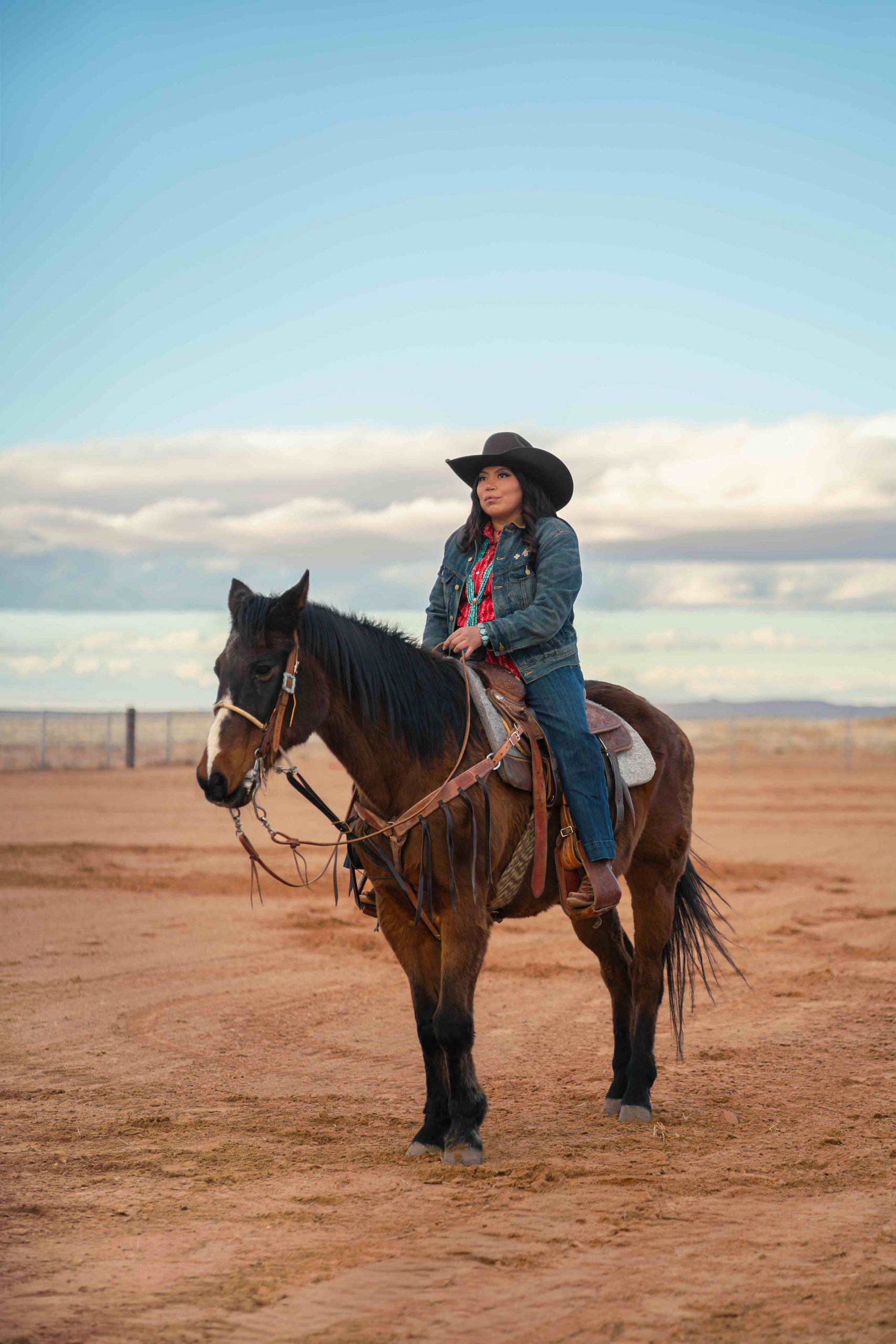
As the first-ever Ralph Lauren artist- in-residence, Naiomi debuted three capsule fashion collections starting in 2023, each focused on a different aspect of her multifaceted life. The first, “Love of the Land,” was an homage to her home on the Navajo Nation, with tribal motifs dotting earth tones. The second, “Color in Motion,” was a vibrant ode to her skateboarding side, bringing together bold colors in a playful yet purposeful manner. The third and final, “Denim Daydream,” was an indigo-hued ode to her love of rodeo and her family’s cowboy way of life.
With the Ralph Lauren collaboration, Naiomi has no doubt gotten a master class in mainstream fashion design. But she has also done it her way, working remotely from their family home on the rez and uplifting other Indigenous creatives on this giant platform. She sourced Native jewelry artisans to feature, tapped Native crew for marketing shoots, and ensured a portion of proceeds would support causes near and dear to her heart, such as the Creative Futures Collective that helped get her own career started.
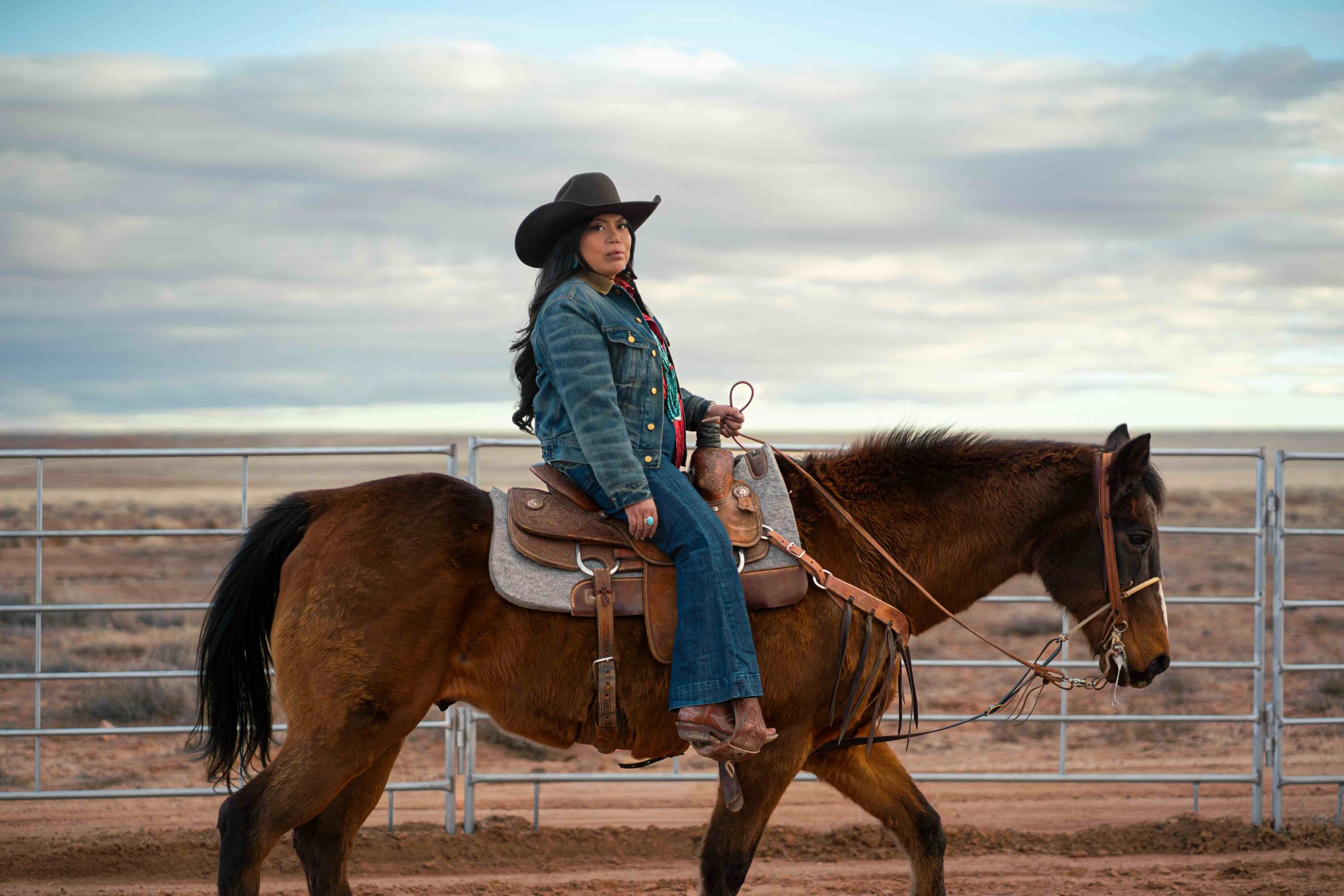
Last year, Naiomi and TJ rejoined forces with the Ralph Lauren team, this time for a home-goods collection. Featuring blankets, throw pillows, and other décor, it’s a direct reflection of the Glasses’ home on Dinétah. It’s also a direct reflection of their family’s tightknit nature.
“It’s been a dream come true working with Ralph Lauren in general, but working with the home team alongside TJ has been absolutely incredible,” Naiomi says. “It reminds me of those early days of us weaving, just sitting across from each other and sharing our ideas with our back-and-forth banter. A lot of those dreams we had at the loom have come true today.”
TJ appreciates not only that collaborative opportunity but also the chance to bring Navajo traditions to a global audience. “One of the best parts is telling the stories that go along with the designs,” he says. “Just getting these designs out there brings more visibility to our Indigenous communities. There’s still a misconception that we’re a monolith, but there are so many different Indigenous communities. My hope is that when people see a Navajo design, a Lakota design, or a Pueblo design, it will intrigue them to learn about and appreciate the cultures they come from.”
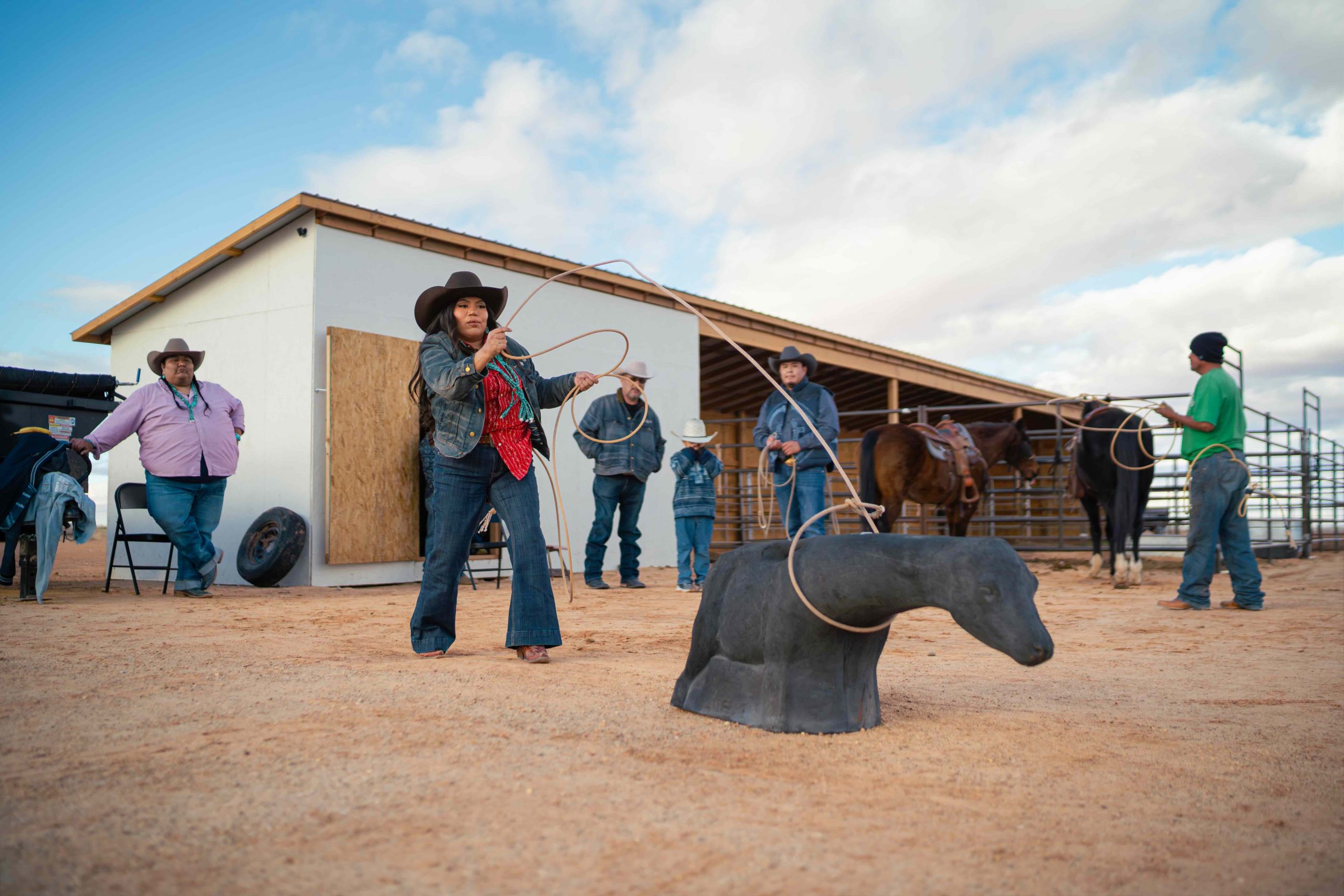
Beyond the Ralph Lauren partnership, the Glasses have also teamed up with brands including Nike (for its N7 line, dedicated to empowering Indigenous youth through sport), Sephora, and Sackcloth & Ashes. Naiomi and TJ debuted their fashion brand, the Glasses Collection, at the inaugural Indigenous New York Fashion Week (INYFW) last September. They also offer sustainable machine-made rugs under their eponymous label. They have quite literally traveled the globe as a family — often road-tripping together across the country, as was the case for INYFW — representing their family, their artistry, and their heritage.
But this isn’t about Naiomi, TJ, or even the Glasses family. It’s about community — a value that was instilled in them as kids. “We raised them to always be good to each other,” Cynthia says. “I think they started from there and realized they need to be good to their family, to their community, to the world. Our kids grew up volunteering with us — feeding the elders, picking up trash, whatever it might be. We made sure they understood it’s not a chore to help your community, and if you help out a community member, then they’ll pass that on.”
“Indigenous people are all about keeping good relations with community,” TJ adds. “In Navajo, we call it k’é, which means kinship. When you build k’é with everyone around you, you treat the world better, because you treat everyone like family.”
Back home on the Navajo Nation, the Glasses are living a life that at once appears similar to generations past and yet is beyond their wildest imagination. “Seeing the path that Naiomi and TJ are on is so exciting and so overwhelming that it sometimes makes me want to cry,” Ty says in a reflective moment, as tears well up in his eyes. “We never, ever could’ve dreamed of this. We are so blessed. I don’t know that I even have the words to say it. They’re such good kids. They’re so sincere and down-to-earth. I’m just so proud of who they are and how they’re living right now.”
From our April/May 2026 issue.
Written and produced by Kate Nelson; Co-produced by Conor Champley
Photography and videography by Lonnie Begaye
Makeup by Cece Meadows of Prados Beauty