
Two weeks in Greece is long enough to fall in love with the country and still leave feeling you barely scratched the surface. After a fortnight split between Athens, a couple of islands and the Peloponnese, certain patterns become clear: when Greece is unforgettable, it is truly extraordinary, and when it is frustrating, the reasons are often predictable and avoidable with better planning. This review looks beyond glossy postcards to what a contemporary two-week trip in Greece really feels like, from logistics and crowds to costs, climate and the small, human encounters that stay with you long after your tan fades.
Planning a Two-Week Greece Itinerary That Actually Works
Two weeks sounds generous on paper, but distances, ferries and heat quickly eat into usable sightseeing time. A recurring mistake visitors make is packing four or five destinations into a 14-day window, chasing a checklist of famous islands and spending a disproportionate share of their holiday in ports, on buses and repacking luggage. Experienced travelers and local hosts increasingly recommend a slower approach, suggesting that two or three bases across two weeks is a natural ceiling if you want to actually feel a place rather than simply pass through it.
For a balanced two-week route, one common pattern works well: three nights in Athens, five to six nights split between one or two islands and the remaining days on the mainland, often in the Peloponnese or around Delphi and Meteora. This structure reduces the number of ferry legs and domestic connections, giving you time to adjust to jet lag, explore at an unhurried pace and remain flexible when weather or transport disruptions arise. It also acknowledges that Greece is more than the Cyclades, encouraging exploration of quieter regions that often prove to be trip highlights.
Seasonality has become a decisive factor. Greek summers have grown demonstrably hotter in recent years, with long, intense heatwaves and occasional closures of major sites during peak afternoon temperatures. Travelers who can are increasingly shifting trips to late April, May, late September and October, when sea temperatures are still swimmable in many areas but daytime highs feel manageable and popular locations breathe a little easier. Within a two-week window, this shoulder-season timing can make the difference between energizing exploration and constant heat management.
Finally, planning now means building in contingency. Wildfires, occasional seismic activity in parts of the Aegean and heavy autumn storms are not everyday events, but they occur frequently enough that you should avoid razor-thin connections. Leaving at least one buffer day between long-haul flights and nonrefundable island stays, allowing extra time between ferries and flights and favoring flexible bookings where possible all contribute to a two-week itinerary that can absorb surprises without collapsing.
First Impressions of Athens: More Than a One-Night Stopover
Many itineraries historically treated Athens as an obligatory overnight on the way to the islands. After two weeks with a fuller three-day immersion, that feels like a missed opportunity. Athens today is an engaging, gritty, creative capital whose energy is felt as much in its cafés and street art as on the Acropolis. Staying in central neighborhoods such as Plaka, Koukaki, Pangrati or Psyrri makes it easy to walk almost everywhere, from ancient sites to contemporary galleries and small independent shops.
The Acropolis itself remains as moving as ever, but the experience is very sensitive to timing and weather. In hot months, there are often capacity controls and occasional midday closures during extreme heat, so early morning or late-afternoon entries are not just pleasant but sometimes necessary. Pairing the site with the Acropolis Museum on a single day works well, but spreading major sights across several days allows you to weave them into a rhythm of shaded café breaks, long lunches and evening strolls rather than a single exhausting marathon.
Beyond the marquee ruins, what stands out in Athens is the everyday life unfolding around them. Evening promenades through car-free streets, locals packed into traditional kafeneia, families out late with children and an evolving food scene that mixes classic tavern staples with inventive contemporary Greek cuisine all give the city an immediacy that surprises many first-time visitors. Even in a tightly planned two-week trip, assigning at least two full days to simply exist in Athens, without an ambitious checklist, helps you understand Greece as a living country rather than a museum backdrop.
There are downsides to acknowledge honestly. Summer air quality can occasionally feel heavy, traffic and noise are part of the urban fabric and protests or strikes sometimes disrupt transport or require minor detours. Yet for most visitors, these factors remain background texture rather than trip-defining obstacles. In return, Athens offers a depth of culture and spontaneity that often becomes a favorite chapter of a two-week journey, rather than a transit point to be endured.
Island Experiences: Beauty, Crowds and the Cost of Chasing Icons
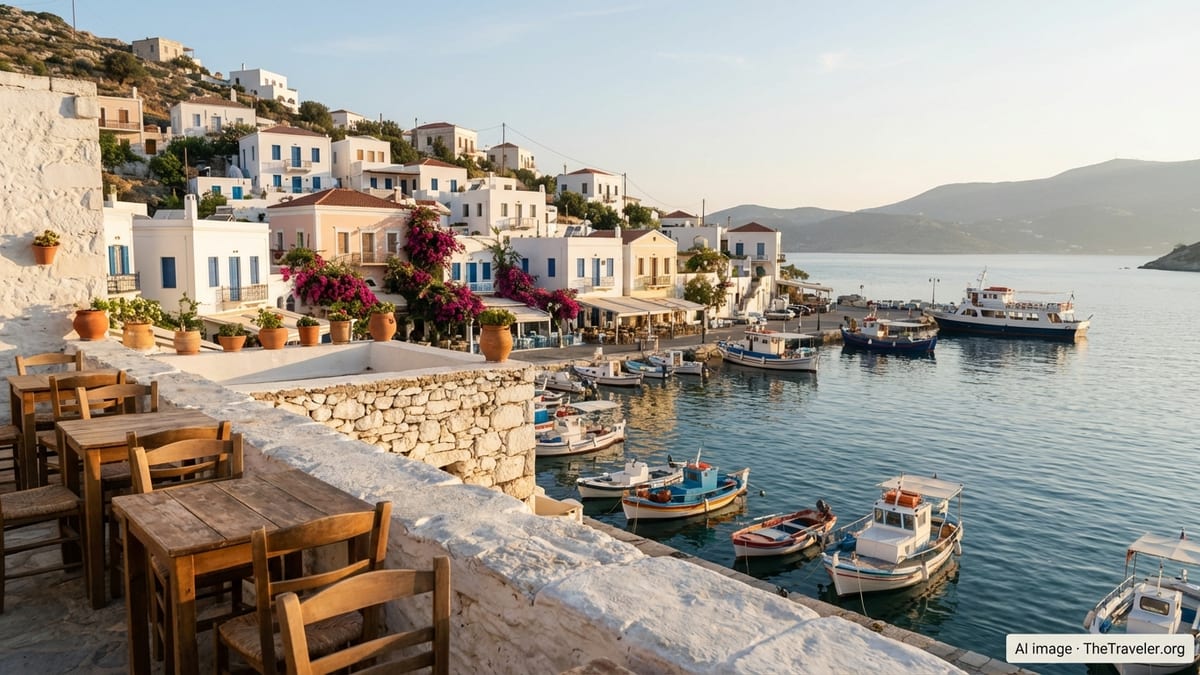
Few places live up to their visual reputation quite like the Greek islands. Approaching a Cycladic harbor to see whitewashed houses climbing a hillside, cats sleeping in doorways and bougainvillea spilling over stone walls feels dreamlike, even after decades of tourism. Over two weeks, however, the realities of ferry logistics, crowds and rising prices quickly reveal that how you visit the islands matters as much as where you go. The difference between a restorative week on a single island and a rushed sprint across three or four can be the difference between returning home renewed or depleted.
Ferries remain the arteries of the Aegean and Ionian, and while the overall network is extensive and generally reliable, it is not immune to weather disruptions, high winds, occasional strikes or schedule changes. In shoulder seasons, some routes operate less frequently, limiting same-day connections. In peak summer, certain popular sailings book out well in advance and ports feel congested. Within a two-week itinerary, this means treating each ferry leg as a half-day commitment on travel days and resisting the temptation to scatter islands across distant clusters simply because they look close together on a map.
The islands themselves span a wide spectrum. World-famous destinations can feel overwhelmingly busy in high season, with congested lanes, premium pricing and pressure on local infrastructure. Less publicized islands often provide equally beautiful beaches, excellent food and a more relaxed rhythm at more approachable prices. Across both, there has been a gradual but noticeable rise in accommodation and dining costs in recent years, especially for seafront or sunset-view locations. Visitors who anchor themselves on one or two islands, choose lodgings a short walk back from the busiest waterfront strips and prioritize family-run tavernas over the trendiest venues often report more authentic experiences and better value.
What endures most from island time in a two-week trip are not the famous sunsets or infinity pools, but the smaller moments: an unplanned swim at a quiet cove, an impromptu glass of wine with a taverna owner after closing, walking back to your room under a sky thick with stars. These experiences reward travelers who slow their pace, accept that they cannot see everything and build their days around the island’s natural rhythm rather than social media expectations.
The Peloponnese and Mainland: Greece Beyond the Postcards
If islands are Greece’s most photographed face, the mainland and Peloponnese often provide its most unexpectedly rewarding experiences. Over two weeks, even three or four days by car in this region can completely recalibrate a trip. The peninsula offers a concentration of archaeological sites, traditional stone villages, mountain landscapes and quieter coastal towns that reveal a different, more grounded side of the country. Travel times remain reasonable, and you can often combine several contrasting experiences in a single day without feeling rushed.
Driving in the Peloponnese is generally straightforward, especially on the newer highways connecting Athens to major hubs. Once off the main routes, roads narrow and wind through hills and villages, but patient, defensive driving keeps journeys pleasant. Self-drive itineraries make it possible to visit classical sites, hilltop fortresses, olive groves and seaside tavernas at your own pace, stopping wherever a view or village invites a detour. For many travelers, this autonomy becomes one of the most satisfying contrasts with more regimented island ferry schedules.
Accommodation on the mainland tends to offer strong value, with family-run guesthouses and converted mansions providing character, local insight and often generous breakfasts featuring regional produce. Coastal towns in the Peloponnese, for example, can deliver swimmable seas, fresh seafood and quieter evenings than some islands, especially outside of August. Inland, villages built of stone cluster on mountainsides, offering cooler evenings, hiking opportunities and the feeling of briefly stepping into a slower, older Greece.
Mainland days often feel less choreographed. You might visit an ancient theater in the morning, stop at a roadside stall for fruit, swim in a small bay in the afternoon and end the day in a village square as children play around the tables. After two weeks, many travelers realize that the mental image of Greece they carry home is as likely to be a Peloponnesian sunset over olive groves or a quiet mountain church as it is a Cycladic harbor. Including this dimension in a two-week plan adds variety and resilience to the trip, particularly if ferry disruptions or island heat waves become an issue.
Costs, Value and the Changing Reality of Greek Tourism
Greece still offers good value compared with many Western European destinations, but a two-week stay in recent seasons makes clear that the country is no longer a budget secret. Prices have risen across accommodation, dining and transportation, especially in the most in-demand locations and dates. Popular islands and iconic neighborhoods now command room rates and restaurant bills that rival other major Mediterranean hotspots, and spur-of-the-moment choices in headline destinations can quickly escalate daily spending beyond expectations.
That said, value is still very much present for travelers who plan thoughtfully. On a two-week itinerary, costs can vary dramatically between nights in famous island towns and nights in mainland or less publicized island locations. Choosing midrange, locally owned accommodation set a few streets back from the main waterfronts, dining where locals outnumber visitors and traveling in May, June, late September or October can significantly stretch a budget without feeling deprived. Even in central Athens, excellent meals of grilled fish, seasonal salads and house wine remain attainable at fair prices away from the most touristed strips.
Transport costs are another area where realism helps. High-speed ferries, taxis and last-minute domestic flights add up quickly across multiple hops. Simplifying routes, using slower conventional ferries where schedules allow, and occasionally opting for buses or shared transfers instead of private vehicles can steady the transport budget. Over two weeks, small decisions such as walking short distances in ports instead of defaulting to taxis or refilling water bottles at public fountains where safe to do so add up without feeling restrictive.
Ultimately, the question is less whether Greece is objectively cheap or expensive than whether the experiences feel worth what you pay. When you are watching the light change on stone that has stood for millennia, swimming in clear water or sharing a late-night conversation with new friends in a village square, the answer often feels unambiguously yes. The key lesson from two weeks on the ground is that aligning expectations with current realities, planning where to splurge and where to save, and avoiding purely trend-driven choices make the financial side of the trip feel balanced rather than stressful.
Weather, Crowds and Practical Realities on the Ground
Recent years have underlined how central climate and crowd management have become to Greek travel. Extended heatwaves, particularly in July and August, have led authorities at times to close major archaeological sites during the hottest hours of the day and to issue work restrictions for outdoor laborers. For visitors, these conditions translate into altered sightseeing hours, a greater need for shade and hydration and, occasionally, reconfigured plans. Within a two-week stay, heat waves can dominate several consecutive days, making early starts and afternoon breaks in air-conditioned spaces less a suggestion than a survival strategy.
Crowds ebb and flow with the calendar. Island towns and central Athens feel markedly calmer in May, early June and October, when cruise ship calls are less frequent and European holiday periods have not yet peaked or have already passed. In contrast, late June through early September, and particularly August, bring maximum visitor numbers, higher prices and more strained infrastructure, from ferries to local buses. A two-week trip in the heart of this period requires patience, advance booking of key elements and a willingness to seek out quieter corners even within famous destinations.
Practical considerations extend beyond weather and crowds. Strikes affecting ferries, public transport or air traffic occur occasionally, often announced with some lead time but not always. Local protests, particularly in Athens and Thessaloniki, can disrupt traffic and require detours, though they are typically well managed and localized. Wildfires in hot, dry summers periodically affect parts of the mainland and some islands, leading to temporary evacuations or road closures in affected areas. None of these elements should deter a well-informed traveler, but a two-week review makes clear that flexibility, travel insurance and up-to-date local information are genuinely important rather than optional extras.
Despite these challenges, day-to-day life as a visitor is generally smooth. Card payments are widely accepted, though small cash reserves remain handy for village tavernas, kiosks or taxis. English is commonly spoken in tourism-facing roles, especially among younger Greeks, and signage in major transport hubs and sites is typically bilingual. Over two weeks, many visitors find that what initially felt like a complex landscape of timetables and local customs quickly settles into a manageable, even enjoyable routine of ferries, strolls, siestas and late dinners.
Cultural Encounters and What Lingers After Two Weeks
Beyond logistics and scenery, it is the human texture of Greece that most often colors a two-week trip in hindsight. Hospitality remains a defining feature, whether in the form of a complimentary dessert or liqueur at the end of a meal, a handwritten map from a guesthouse owner or casual conversations that drift from football to politics and local history. These encounters do not happen at every table or in every hotel, but they occur often enough that many travelers cite them as their strongest memories, particularly outside the busiest tourist zones.
Food plays a central cultural role. Two weeks provide enough time to move beyond basic expectations of grilled meat and Greek salad to discover regional variations and seasonal specialties. On the islands, seafood, capers and sun-dried tomatoes might dominate, while in mountain villages, slow-cooked meats, wild greens and hearty pies take center stage. Even simple items like bread, olive oil and tomatoes often taste more vivid than visitors are accustomed to, reflecting short supply chains and strong culinary traditions. Embracing the local rhythm of late dinners and shared plates often becomes part of the pleasure of being in Greece.
Religion and tradition also surface in everyday travel, sometimes unexpectedly. Church bells marking feast days, village festivals with dancing and live music, and family gatherings in seaside tavernas all remind visitors that Greece is not a stage set but a society with its own calendar and priorities. Traveling around Orthodox Easter or during major summer festivals can add a rich cultural layer to a two-week stay, though it may also influence opening hours and availability of certain services. Observing respectfully from the sidelines often yields glimpses of communal life that feel far from the usual tourist circuit.
As the trip ends, what tends to linger is a blend of contrasts: the drama of ancient sites against everyday scenes of laundry on balconies, the intensity of midday sun followed by the softness of evening light on stone, busy harbor arrivals and the silence of an empty beach at dusk. Two weeks are enough to understand that Greece is at once deeply familiar and endlessly surprising. For many travelers, the most honest review of a fortnight in the country is that it feels like a prologue. They leave with practical lessons for next time and a growing list of places they now want to see more slowly and more deeply.
The Takeaway
After two weeks in Greece, the country emerges as a destination that richly rewards thoughtful planning and flexibility. It is no longer the ultra-cheap, lightly discovered escape it once was, and the pressures of climate, crowds and global popularity have introduced new layers of complexity. Yet the essential appeal of Greece remains powerfully intact: luminous landscapes, layered history, warm hospitality and a lifestyle that invites you to stretch out each day rather than rush through it.
The most successful two-week trips are those that embrace depth over breadth. They limit the number of bases, respect the realities of heat and transport, and weave in mainland or lesser-known regions alongside a carefully chosen island or two. They budget realistically, accept that some famous spots will feel busy and focus instead on creating space for unplanned swims, lingering meals and quiet walks through backstreets. In doing so, they transform a packed itinerary into a lived experience.
For travelers considering Greece now, the honest review is encouraging. With eyes open to current conditions and a willingness to slow down, two weeks in Greece can still feel timeless. The country’s challenges are real but manageable, its rewards enduring and immediate. If anything, the evolving landscape simply makes intentional travel more important. Approach Greece with curiosity, patience and a flexible plan, and a fortnight here is likely to leave you planning a return before you have even boarded your flight home.
FAQ
Q1. Is two weeks enough time to see Greece properly?
Two weeks is enough for a satisfying introduction if you limit yourself to two or three bases, such as Athens, one island and a mainland region like the Peloponnese.
Q2. How many islands should I include in a two-week itinerary?
For comfort, plan on one or at most two islands in two weeks. Adding more often leads to fatigue and time lost on ferries instead of exploring.
Q3. When is the best time of year to spend two weeks in Greece?
Late April, May, early June, late September and October generally offer milder temperatures, fewer crowds and better value than the peak summer months.
Q4. Do I need to book ferries and accommodation in advance?
In peak season, yes. Book key ferries and stays several weeks or months ahead. In shoulder seasons there is usually more flexibility, but popular spots still fill.
Q5. Is it better to rent a car or rely on public transport?
In Athens and some islands, public transport works well. For the Peloponnese and rural areas, renting a car offers far greater freedom and efficiency.
Q6. How expensive is a two-week trip to Greece now?
Greece is no longer a strict budget destination, especially on famous islands, but careful choices of season, location and dining can still keep costs reasonable.
Q7. How do recent heatwaves affect travel plans?
In hot summers, plan early starts, long midday breaks and be prepared for possible afternoon closures of major archaeological sites during extreme heat.
Q8. Is island hopping still worth it?
Island hopping can be wonderful if done slowly. With only two weeks, focusing on one or two islands usually offers a richer experience than rapid multi-island circuits.
Q9. Is Greece safe for travelers right now?
Greece is widely considered safe for visitors. Normal urban precautions apply, and staying informed about local weather or transport disruptions is sensible.
Q10. What is the one change you would make after a first two-week trip?
Most travelers say they would slow down, cut at least one destination and add more unscheduled time for spontaneous swims, village walks and relaxed evenings.