With Welcome to Iltopia earning finalist recognition at the Oregon Book Awards, Steven Christian stands at a rare intersection of storytelling, technology, and research. What began as a personal response to transition and uncertainty has evolved into a fully immersive Afrofuturist universe—one that blends illustration, augmented reality, and speculative imagination. Through projects spanning Iltopia Studios and his MD/PhD work in neuroscience at the University of Nevada, Reno, Christian is redefining how stories are experienced, insisting that the future of narrative isn’t just read or watched—it’s inhabited.
Steven, for readers who are just discovering your work, you wear many hats as a creator, researcher, and innovator. How did your journey lead you to create Welcome to Iltopia, and what does it mean to you to see the book recognized as a finalist for the Oregon Book Awards?
My journey to creating Welcome to Iltopia wasn’t linear at all. In many ways, it was shaped more by circumstance than careful planning. A lot of the pivotal shifts in my life happened because doors closed, not because I strategically chose new ones.
After retiring from Division I college football, I found myself in unfamiliar territory. As an athlete, your path is structured. You train, you compete, you execute. But stepping into adulthood without that framework felt disorienting. I had ambition, discipline, and skills — but I didn’t see clear opportunities in front of me. That frustration became fuel.
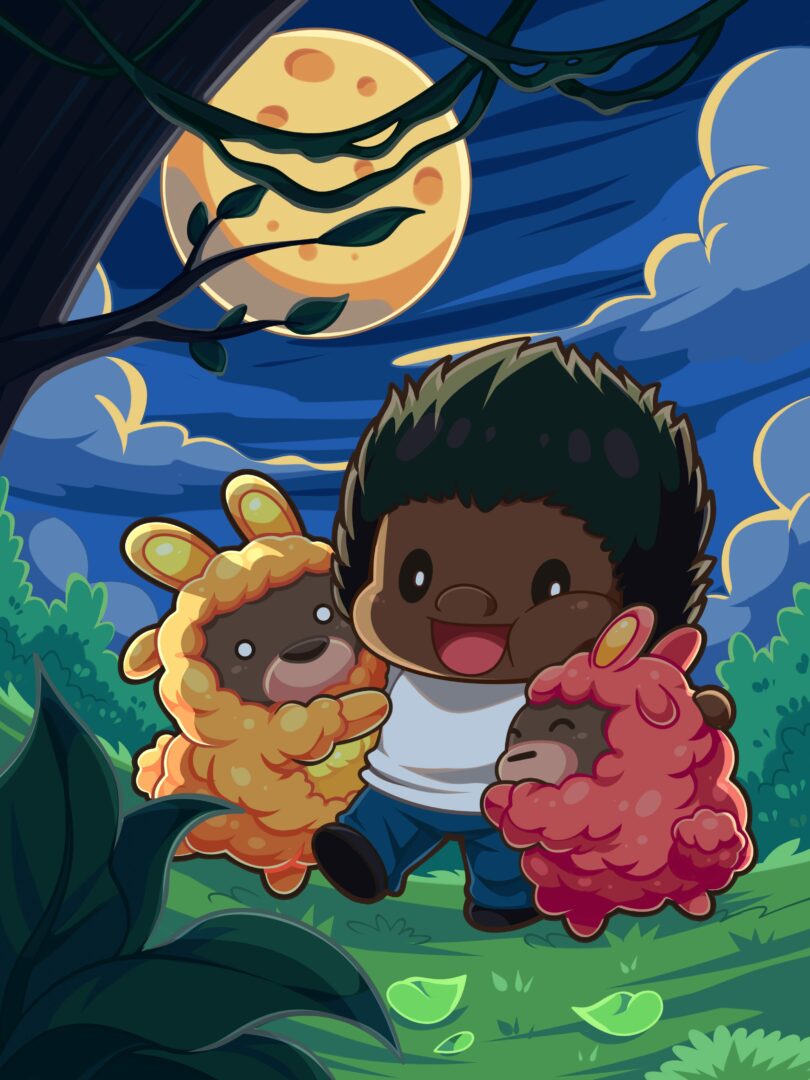
Iltopia began as a way to process that transition. I wanted to tell quirky, layered stories about navigating uncertainty — about trying to build something meaningful when the world doesn’t hand you a blueprint. Initially, the book was meant to be a portfolio piece — something I could use to get hired, to create opportunity for myself the way I once had to create opportunities on the field.
Ironically, it evolved into something much bigger. Instead of being the project that helped me find a team, it became the project that required me to build one. It became something I wanted to hire and collaborate around.
When I entered medical school, the idea expanded again. During the pandemic, I began developing skills in augmented reality, which allowed me to experiment with embedding animation directly into books. I became fascinated with the idea of creating an animated show inside a physical text — merging storytelling, illustration, and technology in a way that felt immersive and new.
While studying for my final board exam, I committed to developing the project consistently. What started from necessity — from wanting to create my own opportunity — turned into a deeply personal and innovative body of work.
Seeing Welcome to Iltopia recognized as a finalist for the Oregon Book Awards is incredibly humbling. It feels like validation not just of the creative risks I took, but of the uncertainty I pushed through. There were moments when I questioned the unconventional choices I made with the book — blending mediums, experimenting with form, building a world that felt emotionally vulnerable.
To have it received in this way gives me a sense of peace. It allows me to look back and feel that even when the path felt unclear, I was moving in the right direction.
Welcome to Iltopia blends speculative adventure, Afrofuturist worldbuilding, and immersive technology. What draws you to Afrofuturism as a creative lens, and how do you think immersive tools are reshaping how stories are experienced?
At its core, Afrofuturism feels natural to me because I experience America through the lens of Black culture and Black identity. Afrofuturism takes speculative fiction — which already asks “what if?” — and reframes it through cultural memory, resilience, and imagination shaped by historically marginalized communities.
When you look at history, communities that have been displaced or disenfranchised often survive by imagining beyond their present conditions. Hope becomes a strategy. Optimism becomes resistance. Afrofuturism embodies that impulse. It doesn’t ignore reality, but it refuses to be confined by it.
On a personal level, that framework has been grounding. There have been moments in my life where outcomes didn’t match effort. Things didn’t always work out in my favor. Leaning into Afrofuturism allowed me to maintain resilience — to see setbacks not as endpoints, but as part of a larger speculative arc. It’s a worldview that says the future is still open.
Worldbuilding, in that sense, becomes therapeutic. As a researcher, technologist, and future clinician, I’m constantly thinking about systems — biological systems, social systems, technological systems. Storytelling gives me space to reimagine those systems. It allows me to create environments where possibility is expanded rather than limited.
As for immersive technology, I think we’re living through a shift where value is increasingly tied to experience. Post-COVID especially, people care deeply about what feels real and embodied. We don’t just want content — we want presence.
Immersive tools like augmented reality and mixed reality change storytelling because they collapse distance. When you put on a headset or activate AR inside a book, you’re not passively consuming a story. You’re participating in it. You can’t replace that with someone describing it to you, and it’s fundamentally different from watching a video. The experience becomes personal and immediate.
For me, combining Afrofuturist worldbuilding with immersive technology is powerful because both center agency. Afrofuturism asks us to imagine ourselves in the future with power and complexity. Immersive tech invites the audience to step inside that imagined future. Together, they transform storytelling from something you observe into something you inhabit.
Through Iltopia Studios, you’re expanding storytelling beyond the page into augmented reality, merchandise, and interactive experiences. What excites you most about building a narrative universe rather than a single standalone project?
What excites me most about building a narrative universe rather than a standalone project is freedom. A universe gives me room to fully explore ideas instead of compressing them to fit a single format.
Early in my creative journey, I struggled to find opportunities within established systems. I wanted to work with agencies and contribute to projects with defined scopes, but those doors didn’t open. At the time, that felt frustrating.
In hindsight, it was formative. Because I didn’t have a lane to step into, I had to build my own.
That meant wearing every hat — illustrator, animator, creative director, technologist. Every project became a reflection of my full range of skills. Instead of creating one-off pieces, I was building ecosystems around ideas, often out of necessity. I wasn’t just trying to tell a story — I was trying to prove that I could execute across disciplines.
Before I discovered augmented reality, I felt boxed in by format. If I animated a story and released it online, I couldn’t physically share or sell that experience at conventions. If I turned a story into a book, I could bring it into physical spaces, but I lost the motion and interactivity that animation provided. I constantly felt like I had to choose between mediums.
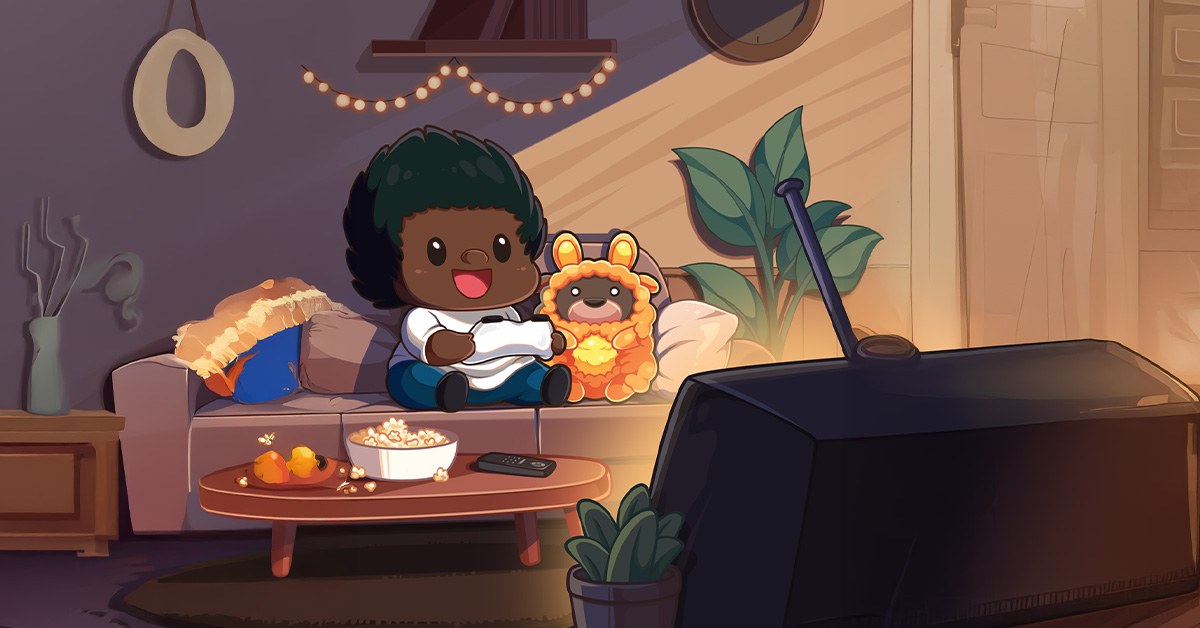
Augmented reality changed that for me. It allowed me to place digital experiences directly inside physical books. Suddenly, I didn’t have to compromise. The illustration, the animation, the interactivity — they could coexist. That opened the door to merchandise and interactive products that extend the narrative in meaningful ways rather than feeling like afterthoughts.
At that point, I stopped thinking in terms of projects and started thinking in terms of experiences. I’m not just releasing stories — I’m curating environments people can step into.
And there’s something powerful about witnessing that in real time. When I demo the work and see someone’s face light up as a character animates in their hands, that reaction reinforces why I build this way. Once you introduce audiences to a layered, immersive experience, it becomes the standard. It raises expectations — including my own.
Building a universe means I’m not limited by a single page or a single release. It means the story can evolve, expand, and adapt alongside the tools I’m using and the people engaging with it. That’s what keeps it exciting.
Your newly launched graphic novel Cütie Catcherz turns microbiology and dermatology into an AR-driven comic experience. Why was it important for you to make health education more accessible through pop culture and storytelling?
No matter what title I’ve held — medical student, researcher, entrepreneur, animator — the constant in my life has been storytelling. At the end of the day, storytelling is how we connect. It’s how we make sense of experience. It’s how we process resilience, failure, growth, and identity.
When I entered medicine, I was struck by how binary and rigid the communication often felt. The information is powerful. It’s life-changing. But it’s frequently delivered in dense, jargon-heavy ways that create distance rather than connection.
And that surprised me, especially in a world where people walk around catching Pokémon in augmented reality, build relationships through digital avatars, and bond over cinematic universes. We already live inside stories. So why isn’t health education using the same tools?
As a future physician, I’m training to serve a generation that grew up immersed in interactive media. If I want to communicate effectively with that population, I can’t rely solely on pamphlets and lectures. I have to meet them where they are.
The creative world excels at communication. Artists know how to take complex emotions and make them accessible. Medicine excels at information. But often, it struggles with delivery. When you combine those two strengths — rigorous knowledge and compelling storytelling — you create something transformative.
That’s what Cütie Catcherz represents for me.
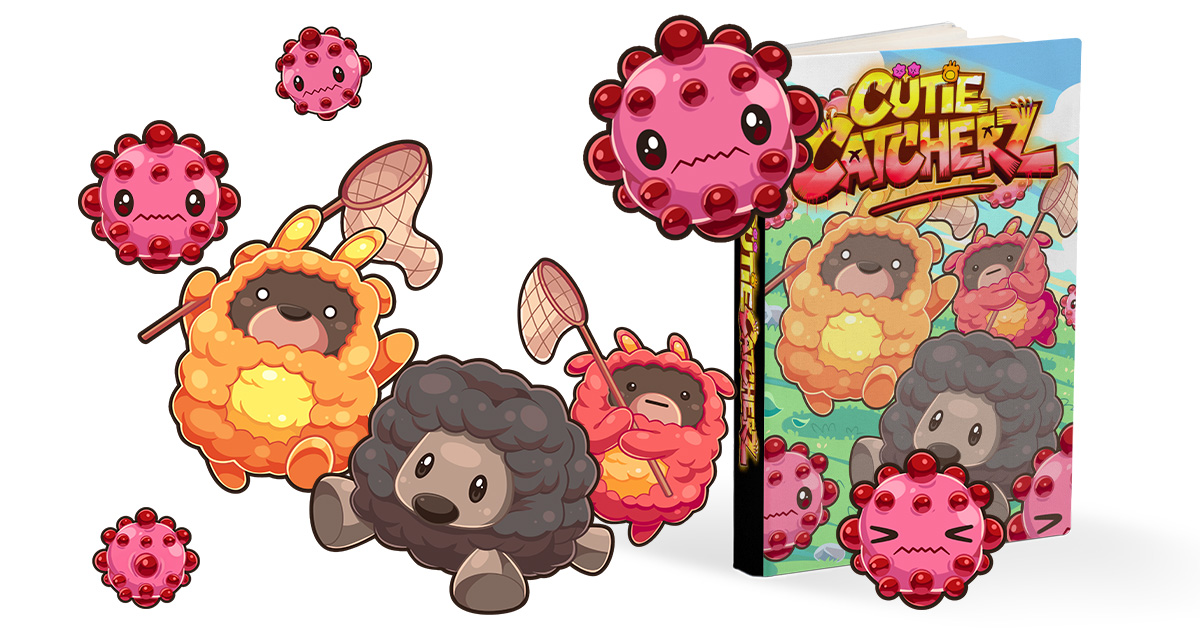
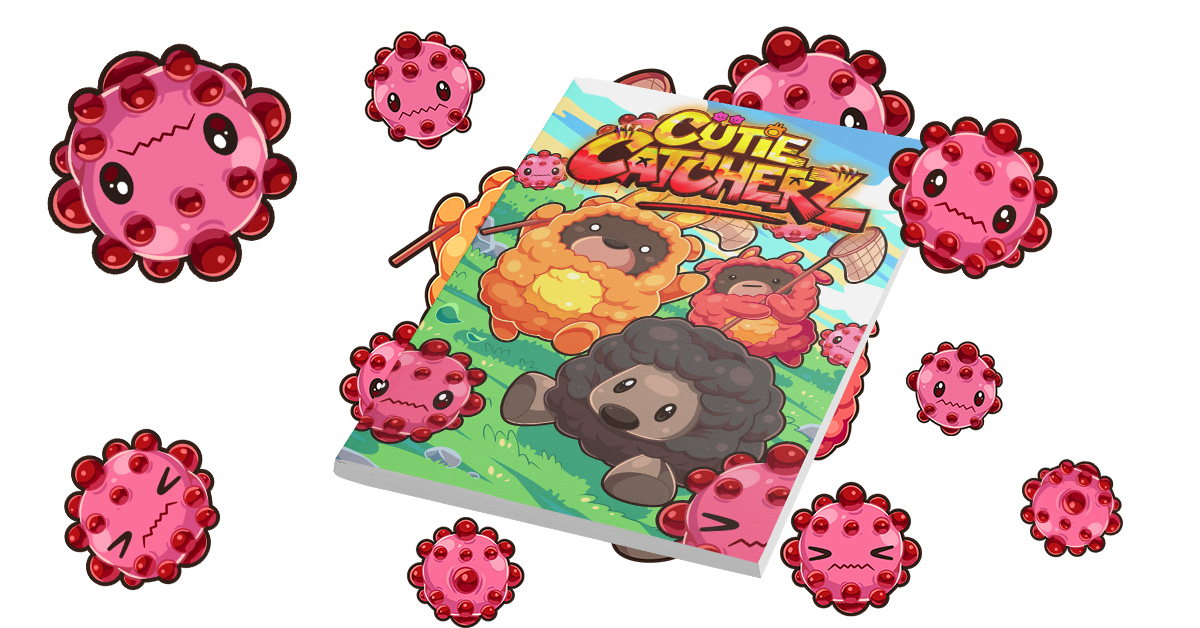
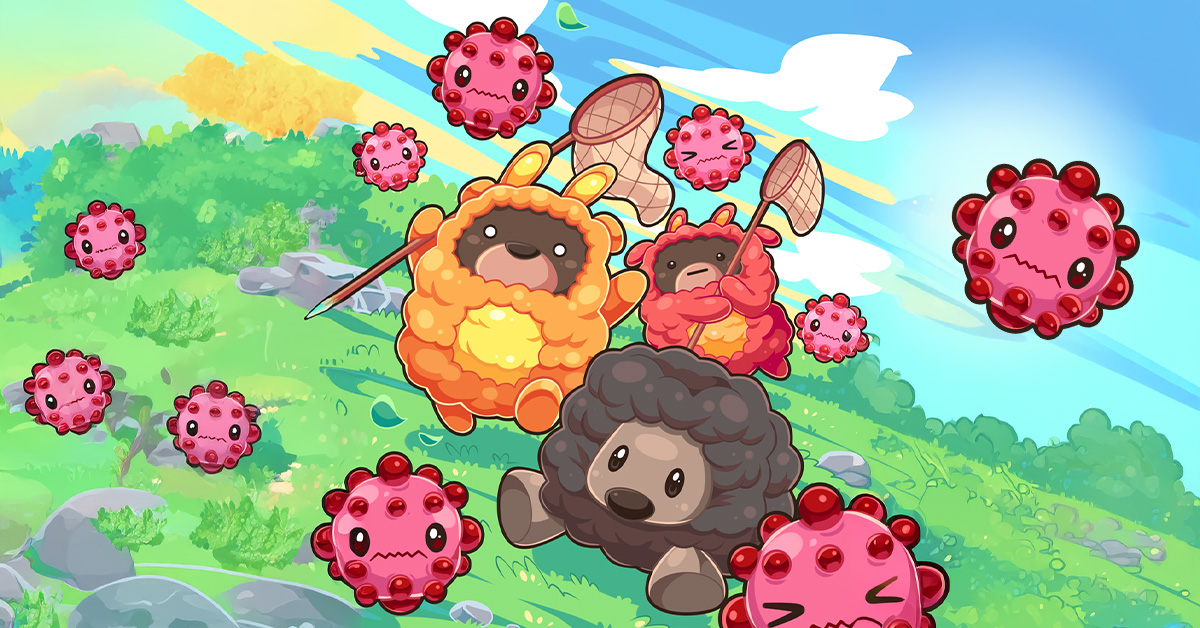
On the surface, it’s a playful adventure about a stuffed animal trying to save his best friend. Underneath, it’s a microbiology and dermatology lesson about Cutibacterium acnes — the bacteria that contributes to acne. The “cooties” in the story are metaphors for real biological processes. The strategies the characters use to fight outbreaks mirror real-world approaches to skin health.
Instead of handing someone a pamphlet or overwhelming them with terminology, I invite them on a journey. The mechanisms become plot points. The science becomes stakes. The treatment becomes action.
We all have personal experiences with acne. It’s universal, emotional, and often tied to identity and confidence. If we’re already living in a culture shaped by epic narratives and immersive worlds, why not use that same narrative power to teach something practical and empowering?
For me, making health education accessible through pop culture isn’t about simplifying science. It’s about respecting the audience enough to communicate it well.
Alongside your creative work, you’re pursuing an MD/PhD in integrative neuroscience at the University of Nevada, Reno and developing VR tools for early neurological diagnostics. How do your scientific research and creative projects inform each other, and where do you hope this intersection leads next?
It’s interesting to look back and realize that the things I once had to explain defensively are now the foundation of my daily work. When I was a pre-med student animating, making comics, and tabling at conventions, I would tell people about the future I imagined — blending medicine, technology, and immersive storytelling — and most of them didn’t quite see how it would connect.
Now I’m living inside that intersection.
As an MD/PhD student in integrative neuroscience, my day-to-day work centers on understanding how emerging technologies — especially virtual and augmented reality — can improve neurological diagnostics. I study how spatial disorientation, concussions, and other forms of traumatic brain injury affect perception and cognition. Then I design tools to measure those disruptions more precisely.
The fascinating part is that the same software, animation pipelines, and development frameworks I use to build creative projects like Welcome to Iltopia or Cütie Catcherz are the exact tools I use in my research. The difference isn’t the foundation — it’s the intent.
In my creative work, the experiences are polished, expressive, and aesthetically immersive. In my research, they’re streamlined and efficient — built to collect high-quality data. But under the hood, the architecture is the same. I write the code. I design the environments. I animate the interactions. I build the systems that people step into.
I often joke that my research involves designing games that intentionally induce disorientation so we can better understand it. But that’s not far from the truth. By using VR to simulate spatial instability or visual perturbations, we can measure neurological function in ways that traditional clinical tools can’t. And as headsets become more portable, affordable, and precise, these tools have the potential to move beyond specialized labs and into broader clinical settings.
To build that kind of future, you can’t just understand the medicine. You have to understand software development. You have to understand user experience. You have to understand how to make something people are willing to engage with.
That’s where my creative work feeds my scientific work. If I can design immersive experiences that people are excited to download or interact with in a storytelling context, I can apply that same engagement logic to clinical tools. The better I become at animating, coding, and building worlds, the more sophisticated and flexible my research tools become.
In many ways, entering medicine didn’t limit my creativity — it amplified it. It gave it structure, urgency, and real-world stakes.
Looking ahead, I hope this intersection leads to a future where neurological diagnostics are more precise, more accessible, and more human-centered. Where immersive technology doesn’t just entertain us, but helps us understand the brain, recover from injury, and improve quality of life.
If storytelling is about helping people see themselves differently, neuroscience is about understanding how perception itself works. Bringing those two together feels less like juggling disciplines and more like completing a circuit.
Links: