
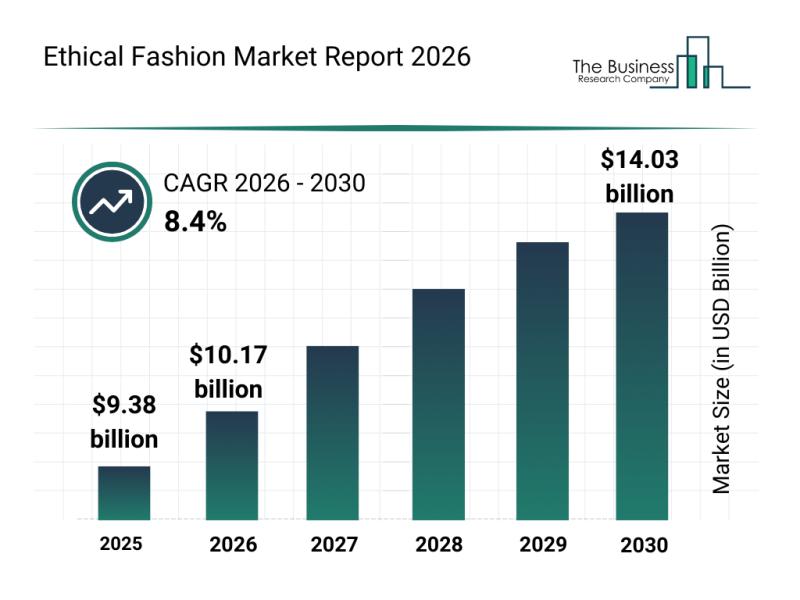
Ethical Fashion Market
The ethical fashion market is on track for substantial growth as consumer preferences shift toward more responsible and sustainable clothing options. This sector is evolving rapidly, driven by increased awareness and demand for transparency, circularity, and eco-conscious production practices. Let’s explore the current market size projections, key players, emerging trends, and significant segments shaping the future of ethical fashion.
Projected Expansion of the Ethical Fashion Market by 2030
The ethical fashion market is predicted to reach a value of $14.03 billion by 2030, growing at a compound annual growth rate (CAGR) of 8.4%. This growth is fueled by multiple factors, including surging interest in traceable fashion products, broader adoption of circular fashion models, higher investments in sustainable textiles, and the rising appeal of ethical luxury brands. Additionally, increased digital engagement with responsible fashion initiatives continues to boost market momentum. Key trends expected to influence the sector during this period include heightened demand for eco-friendly apparel, growing consumer preference for transparent supply chains, expansion of fair-trade fashion brands, increased use of recycled and organic materials, and a stronger emphasis on ethical labor practices.
Download a free sample of the ethical fashion market report:
https://www.thebusinessresearchcompany.com/sample.aspx?id=3980&type=smp&utm_source=OpenPR&utm_medium=Paid&utm_campaign=Feb_PR
Leading Players Dominating the Ethical Fashion Market
Several prominent companies are at the forefront of the ethical fashion industry, including Eileen Fisher, Patagonia Inc., People Tree Ltd, Armed Angels, Thought Clothing, Mud Jeans, Organic Basics, Amour Vert, Kotn, Outerknown, MATE The Label, Whimsy and Row, Encircled, La Causa, Back Beat Co., Finisterre, Beaumont Organic, Bibico, Gudrun Sjoden, Lowie, Mayamiko, SOLEREBELS, Tonlé, Shekudo, Animaná, Ecologyst, Cariuma, Ninety Percent, Fair Indigo, Fair Trade Winds, HOPE Made in the World, Hackwith Design House, No Nasties, Hemp Kari, Maati, NEEMIC, and Maito.
Strategic Collaborations Accelerating Circular Fashion
In June 2025, Sweden-based global fashion and retail company H & M Hennes & Mauritz AB partnered with Circulose AB, a materials company specializing in recycled pulp from textile waste, to establish a strategic sourcing agreement focused on circular materials. This alliance aims to scale up the use of Circulose pulp-produced from discarded textiles-in H & M’s fashion production. The collaboration supports circularity by reducing dependence on virgin materials and promoting sustainable sourcing throughout the apparel supply chain, helping accelerate the adoption of recycled textile fibers in mass production.
View the full ethical fashion market report:
https://www.thebusinessresearchcompany.com/report/ethical-fashion-global-market-report?utm_source=OpenPR&utm_medium=Paid&utm_campaign=Feb_PR
Partnerships and Sustainability Innovations Driving Ethical Fashion
Ethical fashion brands are increasingly forming partnerships to enhance sustainability efforts and reduce environmental impact across the industry. These collaborations aim to set new standards for a responsible fashion supply chain. For example, in June 2023, UK-based ethical fashion manufacturer Sheep Inc. launched the world’s first naturally negative carbon footprint t-shirt. Made from superfine Merino wool, this innovative garment offers year-round temperature regulation and self-cleansing fibers, resulting in less frequent washing compared to cotton. Working closely with suppliers and manufacturers, Sheep Inc. embedded NFC-enabled tags for full transparency, further promoting sustainability and accountability in the fashion sector.
Dominant Segments Within the Ethical Fashion Market
This report segments the ethical fashion market by certification and sustainability focus, product type, and end user. The main categories include:
1) Ethical Certification and Sustainability Focus: Fair Trade, Animal Cruelty Free, Eco-Friendly
2) Product Type: Organic, Recycled
3) End User: Men, Women, Kids
Within these categories, there are further subsegments such as:
– Fair Trade: Fair Trade Certified Clothing, Accessories, and Footwear
– Animal Cruelty Free: Vegan Clothing, Faux Leather and Faux Fur Products, Cruelty-Free Accessories
– Eco-Friendly: Organic Cotton Clothing, Recycled Material Clothing, Biodegradable Fashion Products, Sustainable Denim
These classifications highlight the diverse approaches brands are taking to meet the growing demand for ethical and sustainable fashion choices across different consumer groups.
Reach out to us:
The Business Research Company: https://www.thebusinessresearchcompany.com/,
Americas +1 310-496-7795,
Europe +44 7882 955267,
Asia & Others +44 7882 955267 & +91 8897263534,
Email us at info@tbrc.info.
Follow Us On:
LinkedIn: https://in.linkedin.com/company/the-business-research-company,
Twitter: https://twitter.com/tbrc_info,
YouTube: https://www.youtube.com/channel/UC24_fI0rV8cR5DxlCpgmyFQ
Learn More About The Business Research Company
With over 17500+ reports from 27 industries covering 60+ geographies, The Business Research Company has built a reputation for offering comprehensive, data-rich research and insights. Armed with 1,500,000 datasets, the optimistic contribution of in-depth secondary research, and unique insights from industry leaders, you can get the information you need to stay ahead.Our flagship product, the Global Market Model (GMM), is a premier market intelligence platform delivering comprehensive and updated forecasts to support informed decision-making.
This release was published on openPR.