Athens, Greece — On February 13, farmers across Greece mobilized, converging from Afidnes toward Syntagma Square in Athens after a nationwide committee organized roadblocks. Their demands were clear: urgent government reforms, including reductions in production costs and the immediate disbursement of subsidies. Conversations with the ruling party, New Democracy, led by Kyriakos Mitsotakis, have brought no comprehensive solutions.
In response to governmental neglect, farmers organized a protest. It began in Afidnes, where farmers gathered from all across Greece and waited with tractors lined up, ready to roll toward the parliament in Athens. For the farmers, this was a powerful act of defiance — a show of solidarity that aimed to gather more international recognition for their issues. Farmers of all ages came together, from teenagers to elders — they stood with anticipation, sharing both grievances and discontent toward the system.
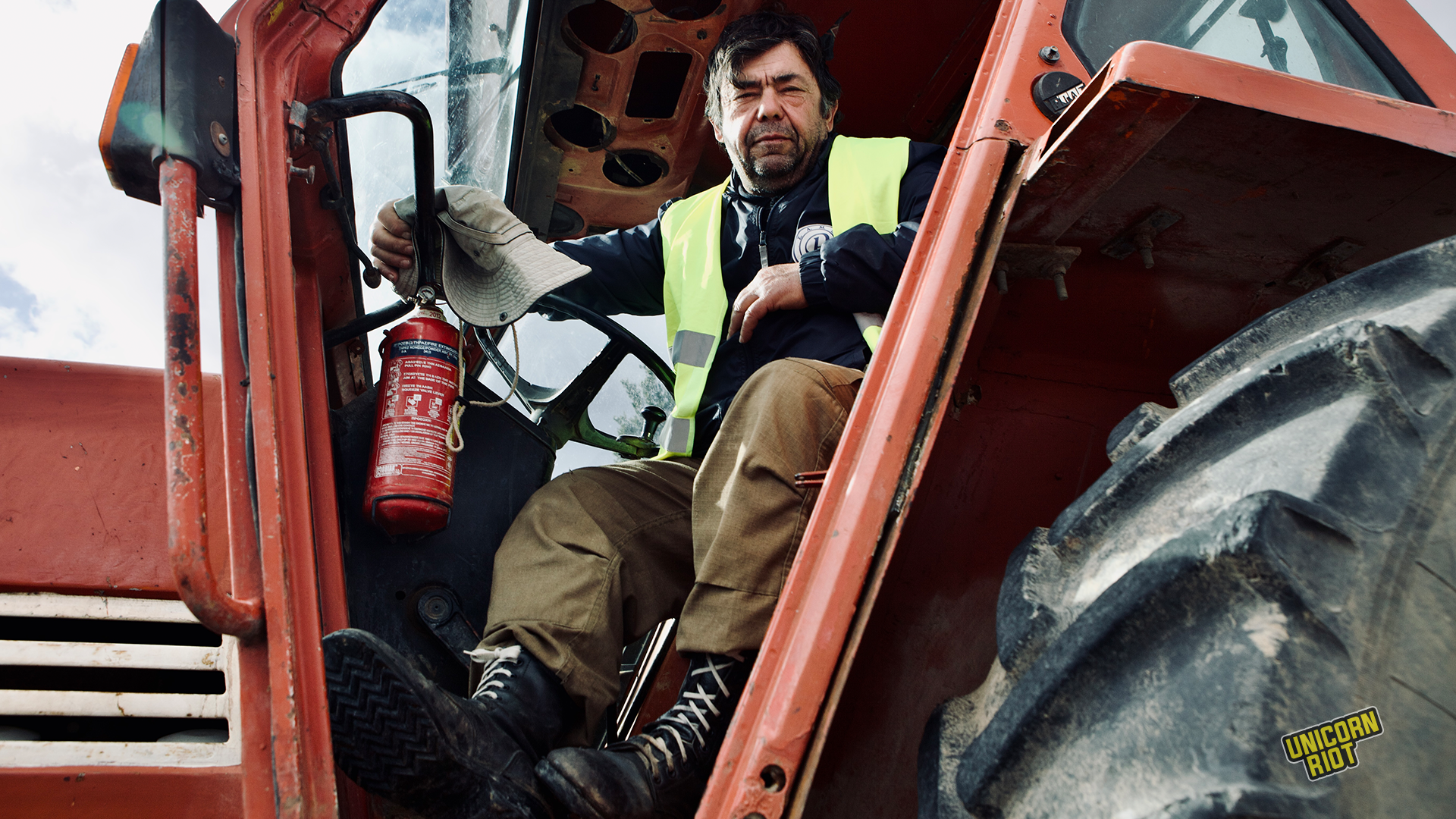
The Greek farmer mobilization is nothing new — it’s a recurring phenomenon, but one that has intensified in recent years. After the devastating storms of 2023, farmers escalated their organized actions by late 2025, targeting both the EU’s Common Agricultural Policy (CAP) and the government’s insufficient support, which left many farmers uncompensated for losses suffered from flooding and other damage.
According to polls, about 53 percent of the public support the farmer’s disruptive tactics, while most recognize their grievances as justified. It is a rough estimation, but a compelling indicator that much of society sees the farmers’ mobilization as a legitimate action.
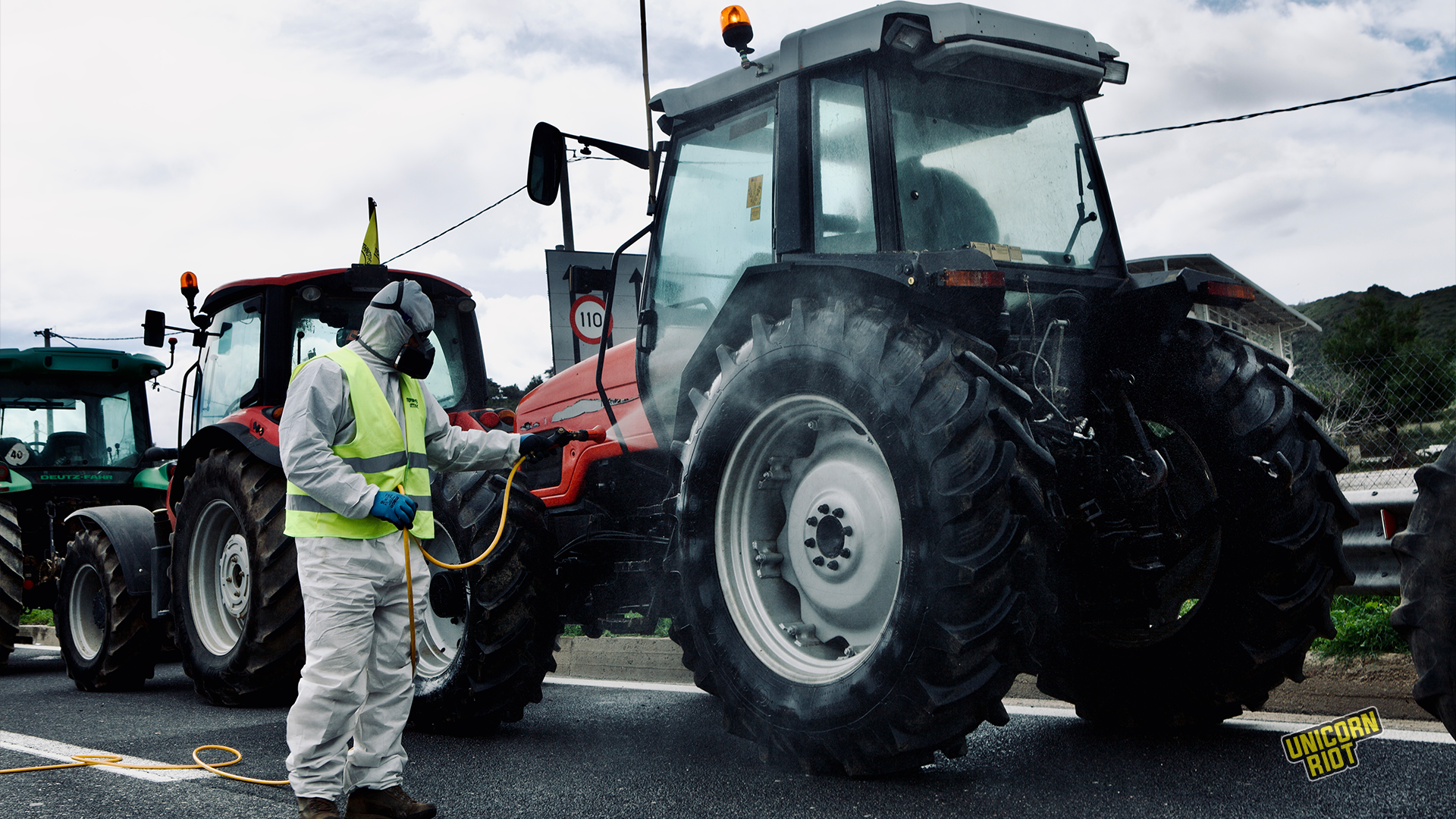
The agricultural sector has also been impacted by outbreaks of sheep and goat pox. This has led to the culling of hundreds of thousands of animals since 2024. At Afidnes, tractors were sprayed with chemical disinfectants before entering the capital. Reporters were warned to keep their distance due to the chemicals’ toxicity.
For many, the farmers’ movements are not simply symbolic. Everyone from small local farmers to specialized producers, including livestock breeders and beekeepers, emphasize that it is about survival. Their strategy was to converge, march toward Syntagma in front of the parliament, and apply pressure to the government. Roadblocks were also used to apply further force to the government to obtain a response.
At times, tensions have boiled over. In Crete, protests escalated into clashes when farmers directed their anger at the riot police. Mainstream media often portrayed these demonstrations as chaotic, framing the farmers’ actions as a threat going as far as to fuel a narrative of insurrectionist panic.
But again, this is nothing new. As far back as 2016, Greek farmers drew international attention when Cretan shepherds clashed with riot police in central Athens, wielding their traditional staffs outside the Ministry of Agriculture. They were demanding reforms, resisting tax hikes, and opposing pension changes.
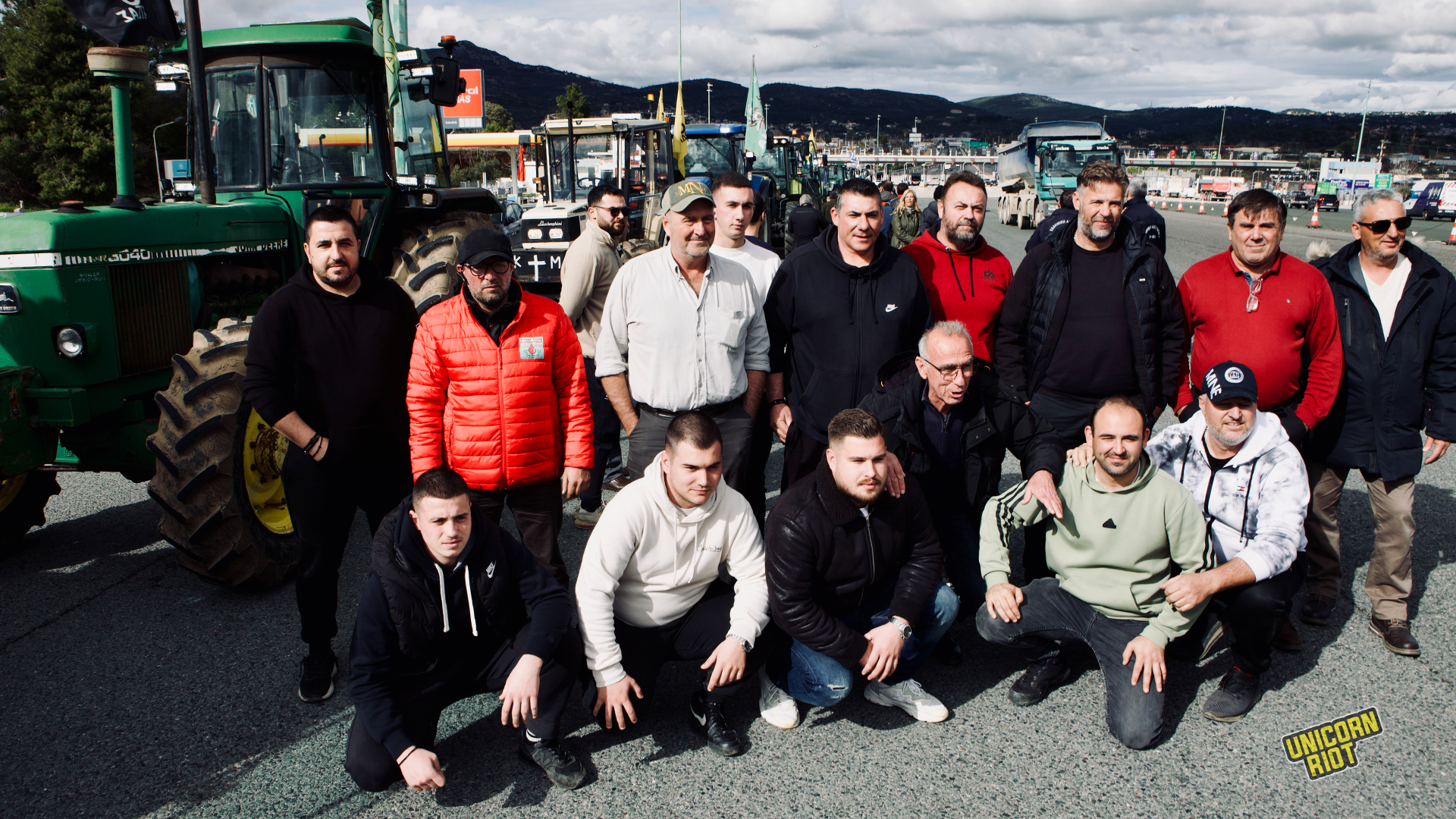
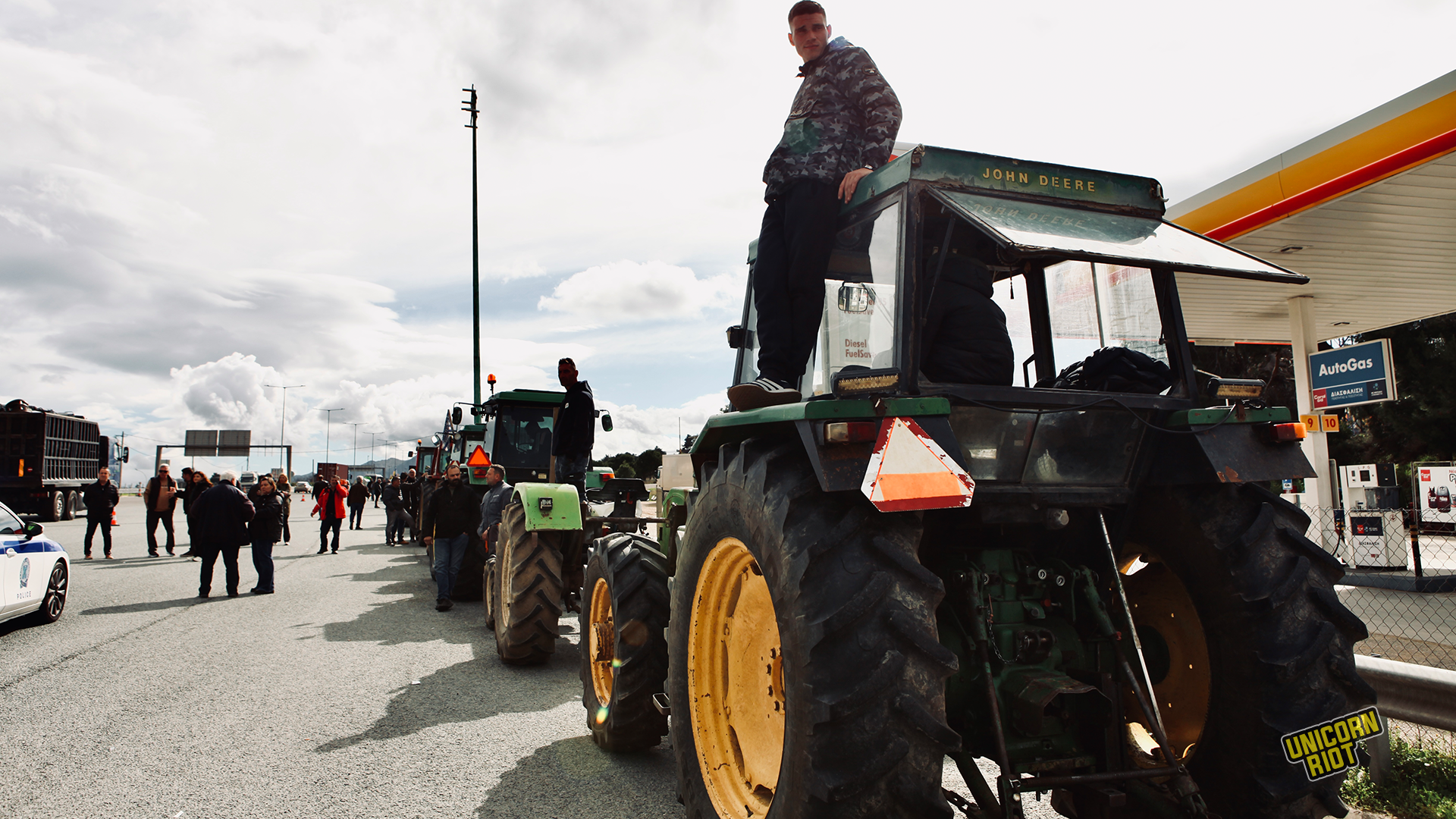
The convoy of tractors eventually grew in Afidnes, a slow-moving but powerful line signaling solidarity and anticipation. When more tractors arrived, the farmers’ union greeted them with cheers. Together, they began the long journey toward the city center, their frustration palpable but organized.
The farmers’ anger is rooted in tangible struggles: unpaid government subsidies, rising fuel and fertilizer costs, and worsening working conditions. Their message essentially boils down to the fact that without support, production will fall, and prices for consumers will climb higher in an already strained economy.
Although the government has introduced measures to address inflation and aid farmers, many see them as insufficient. Prices continue to climb, and the sense of abandonment fuel the protest, reflecting a broader dissatisfaction with New Democracy’s handling of rural and economic issues.
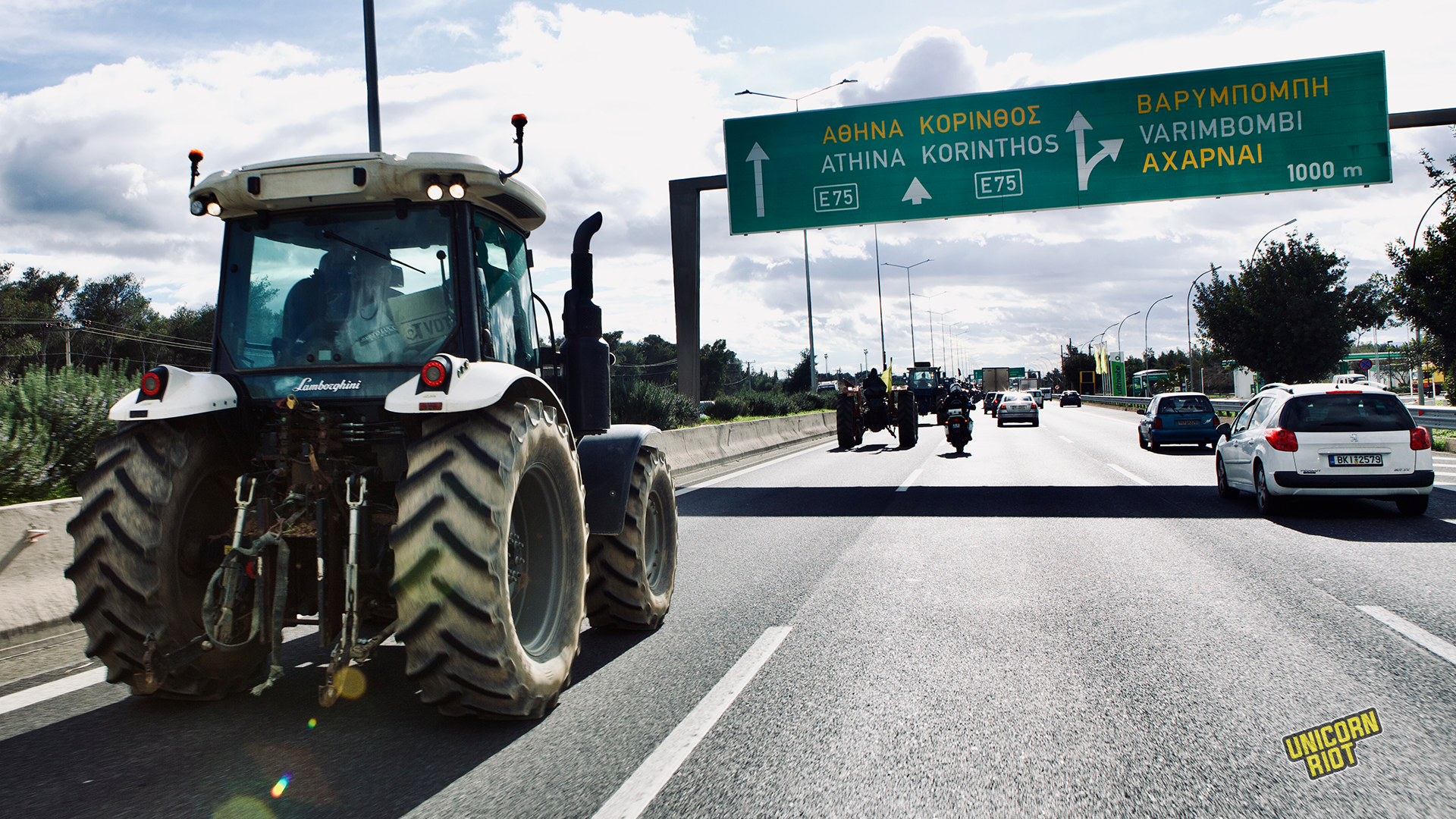
In total, around 70 tractors and farm vehicles lined up in Syntagma as they descended on Athens, spending the night in front of Parliament. The farmers entered the city center, welcomed by thousands of demonstrators. Farmers are protesting not just rising production costs but also calling for changes to ELGA regulations to broaden compensation for climate-related damages.
They also demand stronger support to protect their livelihoods from increasingly unpredictable weather. In Greece, the agricultural sector has been strained by climate change, with reports showing significant crop losses in recent years.
Tractors on the Highways, Survival on the Line: Greece’s Farmers Rise Up – Jan. 12, 2026
Farmers have also experienced delays in subsidy payments, in part due to corruption in Greece’s government. The scandals surrounding OPEKEPE – the agency responsible for distributing EU agricultural funds, has resulted in frozen payments amid investigations into mismanagements and corruption leaving many farmers without expected income.
Add destructive storms, a livestock disease crisis, mounting debts, and spiraling operational costs to that and it becomes clear that these farmers are carrying the weight of layered crises while still fighting to have their demands heard.
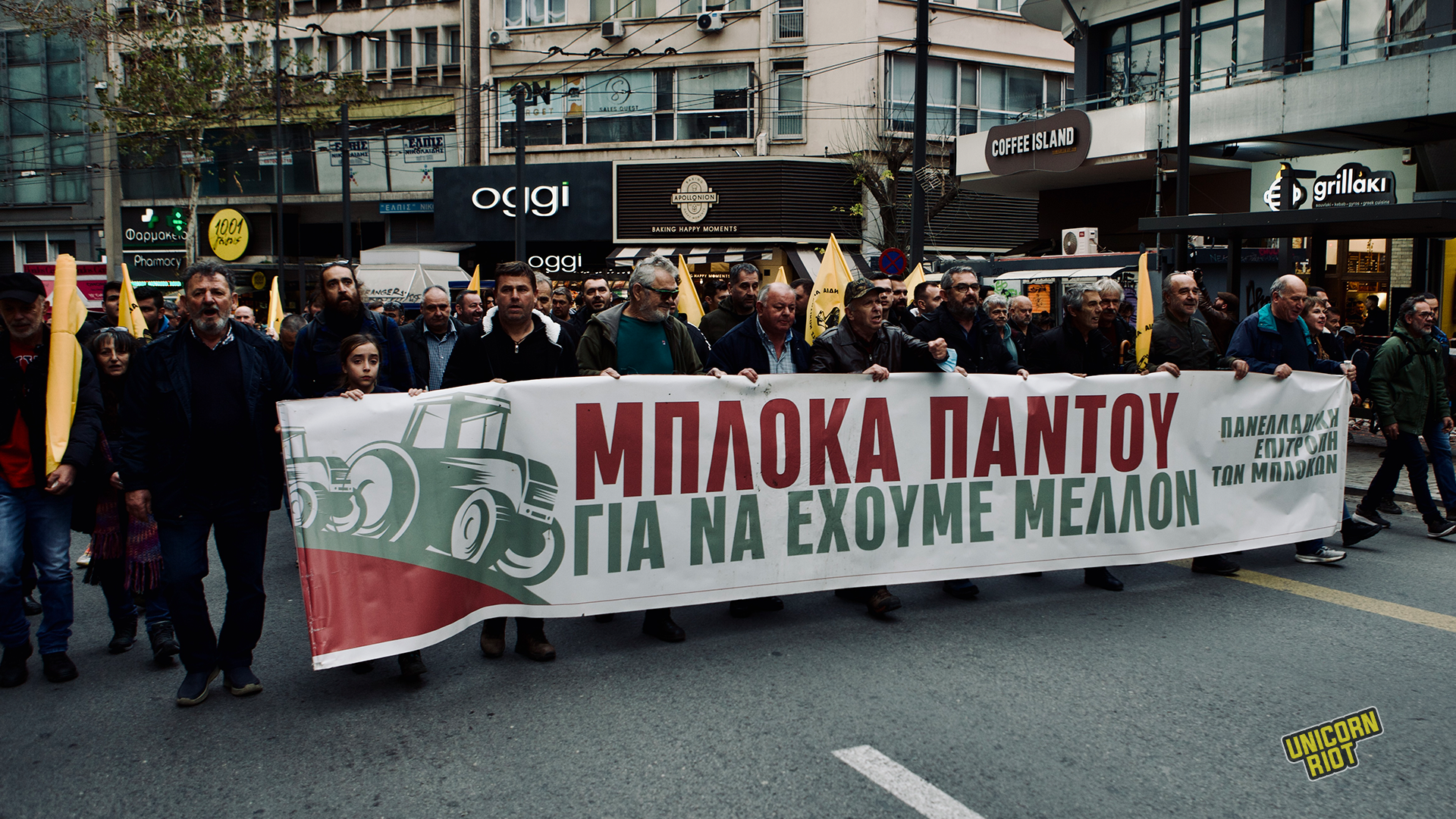
At Syntagma, nearly 200 farmers gathered with their horns blaring. Speaking from the square, the president of the Federation of Agricultural Associations of Larissa, Rizos Maroudas, stated that the government has the fiscal capacity but lacks the political will to address their demands. He added that mobilizations will continue until the farmers’ demands are satisfied.
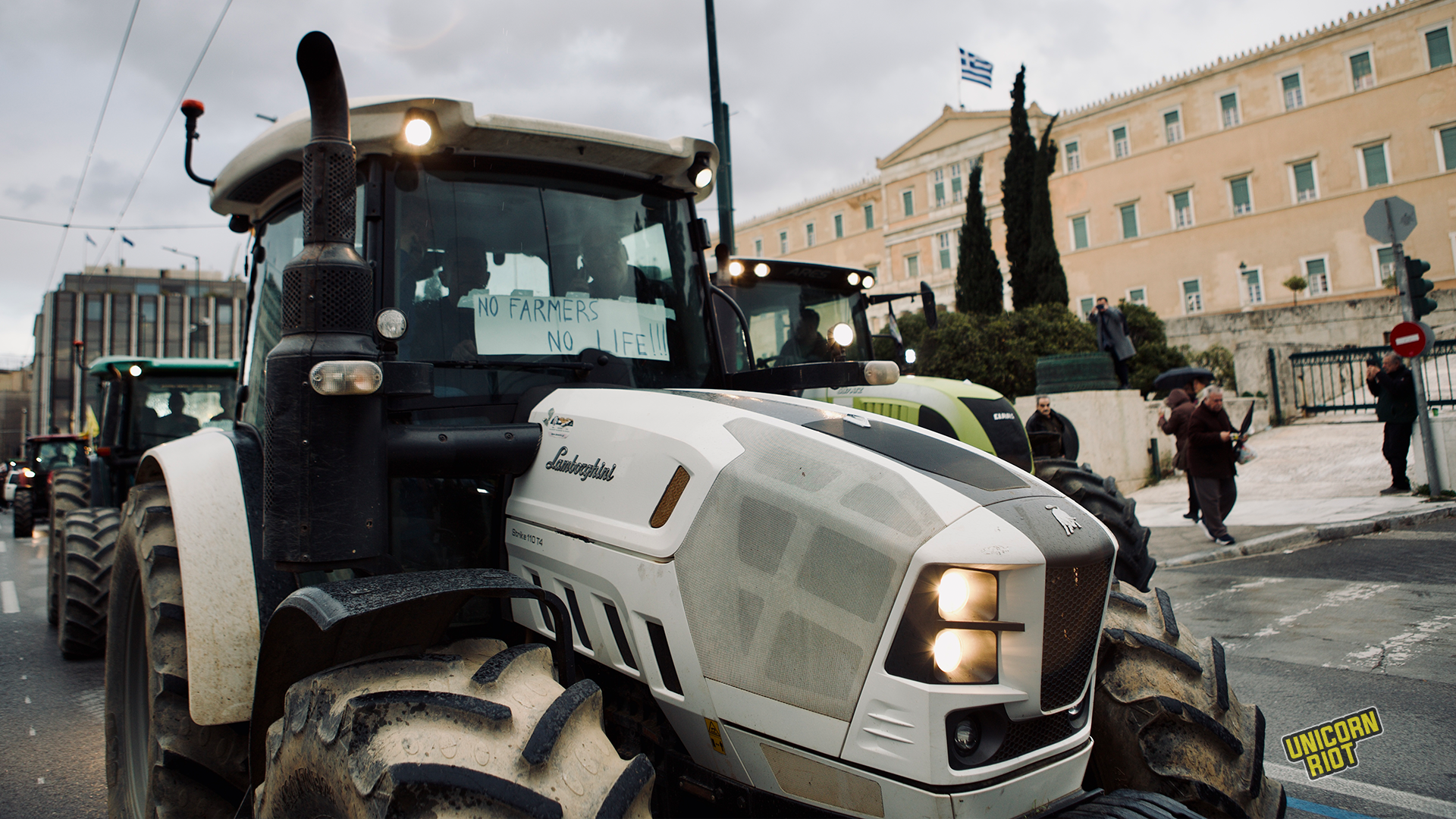
Farmers’ representatives are calling for a shift in focus — from highway blockades to urban gatherings — signaling that more protests are on the horizon. Following last month’s 48-hour blockades on major highways over soaring production costs and the European Union’s trade deals with South American nations, farmers remain determined to make their voices heard and challenge the government’s neglect in addressing their urgent demands.
After spending the night at Syntagma, the farmers left central Athens peacefully. Although they ended their blockades after 55 days, their trip to the capital highlights ongoing demands for urgent government action. Tension remains high, as major reforms have yet to materialize.
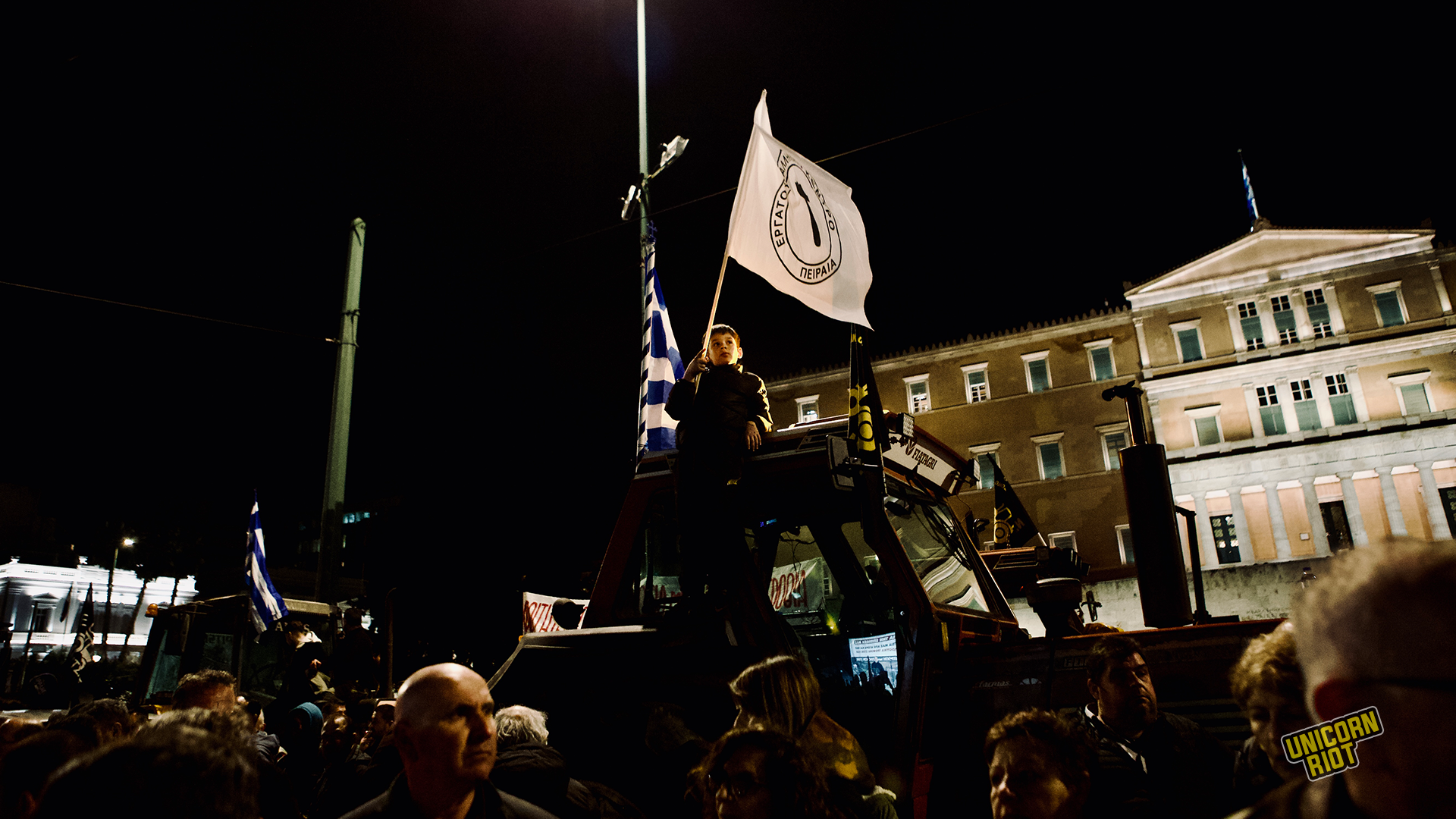
All photos, including cover photo, were contributed by Elvis Takahashi Mantello.
For more media from Greece, see our Greece archive page.
Follow us on X (aka Twitter), Facebook, YouTube, Vimeo, Instagram, Mastodon, Threads, BlueSky and Patreon.
Please consider a tax-deductible donation to help sustain our horizontally-organized, non-profit media organization: