
As tensions escalate in the Middle East, a worldwide caution issued by the U.S. Department of State has reshaped the landscape of international travel. American citizens have been advised to exercise increased vigilance globally, particularly in regions directly affected by recent developments. The advisory also notes the potential for disruptions to air travel due to periodic airspace closures.
In this climate, official U.S. travel advisories carry renewed weight, influencing not only individual travelers but also the broader tourism market. American outbound demand has long served as a barometer for global travel trends, both in volume and spending power. State Department assessments often ripple through industry decisions.
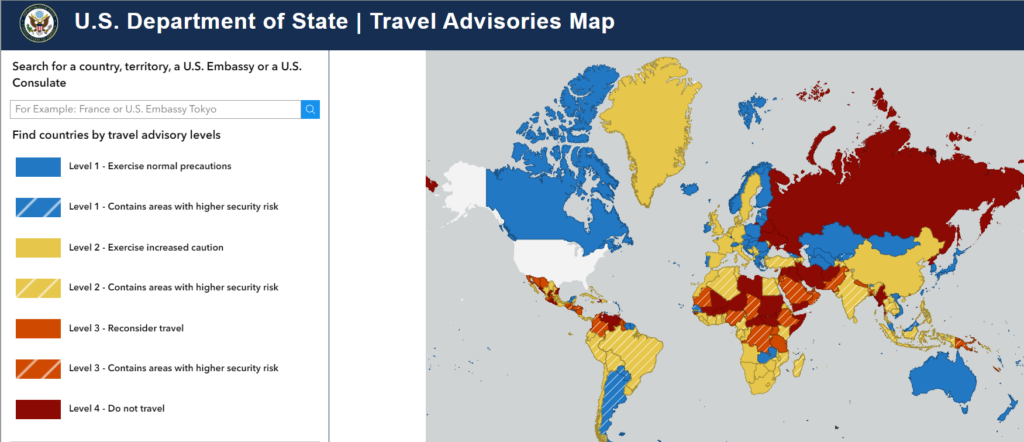
At Travel.gr reviewed the current safety ratings issued by the U.S. Department of State for American tourists traveling to Greece and other key destinations.
Greece at Level 1
Greece remains at Level 1: Exercise Normal Precautions, the lowest advisory level in the U.S. system. The guidance, in effect since October 23, 2025, indicates that Greece is generally considered a safe destination.
The advisory notes incidents of petty crime in popular tourist areas and the possibility of sudden demonstrations that could disrupt transportation or public services. There is no reference to systemic terrorist threats or widespread instability that would alter the country’s ranking. Maintaining this level is particularly significant at a time of heightened regional tension.
Mediterranean Europe at a Glance
Among leading Mediterranean destinations, Portugal joins Greece at Level 1, according to guidance issued December 23, 2025. The country is regarded as generally safe, with advisories focused mainly on petty theft in crowded tourist areas and on public transportation. U.S. authorities recommend that travelers monitor local news and follow the guidance of local officials.
Several other popular Southern European destinations are currently classified at Level 2: Exercise Increased Caution.
Italy, under an advisory in effect since May 23, 2025, is placed at Level 2 due to terrorism concerns. Potential targets cited include tourist sites, transportation hubs, shopping centers, hotels, and major cultural or sporting events.
Spain, with guidance effective May 12, 2025, is also at Level 2, citing both terrorism and civil unrest. Frequent demonstrations may disrupt transportation and public life.
France, under advisory since May 28, 2025, is classified at Level 2 for terrorism and unrest, with frequent pickpocketing in crowded areas also noted. Strikes and protests may affect transportation networks.
Albania remains at Level 2, based on guidance issued December 31, 2024, primarily due to crime and limited law enforcement capacity in certain areas.
Cyprus and the Regional Context
Regional developments are already influencing travel advisories in the Eastern Mediterranean. Cyprus is a notable example. According to a new advisory issued March 3, 2026, the country has been elevated to Level 3: Reconsider Travel.
The upgrade reflects concerns over the threat of armed conflict in the broader region following the outbreak of hostilities between the United States and Iran on February 28, as well as significant disruptions to commercial flights. The advisory also references a March 2 drone strike on a building at a British base in Cyprus.
U.S. authorities urge American citizens considering travel to Cyprus to carefully review their plans, maintain contingency departure options, monitor local developments, and enroll in the Smart Traveler Enrollment Program to receive updates from the U.S. embassy.
Stability in Uncertain Times
Travel advisories are not marketing tools. They are institutional assessments of perceived risk. A Level 1 classification does not imply the absence of challenges. It indicates that, based on available information, there is no elevated systemic risk requiring stricter warning.
For countries such as Greece, retaining this status in a fluid geopolitical environment underscores a sense of stability. In a global travel market increasingly shaped by risk management, stability remains one of the most valuable assets of all.