
Author | Huang Nan
Editor | Yuan Silai
Editor’s Note: As going global becomes an increasingly core strategy for Chinese companies, how to conquer the global market has become an extremely professional topic. In the evolution of globalization, many Chinese brands have stood at the forefront. In view of this, Yingke has launched the “Insight Global” column to explore the cutting – edge directions and opportunities for Chinese brands to go global from the perspective of brand growth and change, providing thinking and inspiration for players in the global market and the industry.
This is the 61st issue of our column – LAVA MUSIC started in Guangzhou. With the model of “material innovation + intelligent interaction”, it launched the world’s first one – piece carbon fiber guitar, LAVA ME, in 2017, quickly breaking through in the intelligent guitar market; in 2024, it released the stringless guitar “Elf”, lowering the threshold for users to get started; in 2025, it digitized and replicated hundreds of classic effectors and launched LAVA STUDIO, with overseas crowdfunding exceeding $2.26 million, refreshing the category record. Currently, its annual revenue reaches hundreds of millions of yuan.
Lu Zitian, the founder of LAVA MUSIC, looks like a musician walking out from the backstage of an independent music festival.
He has long hair and speaks gently. He may seem a bit taciturn at the first meeting. It’s hard to imagine that he runs a hardware company with an annual revenue of hundreds of millions of yuan.
Rather than introducing products with words, Lu Zitian is more used to getting up and playing a section on the guitar. During the several – hour interview, we listened to Guns N’Roses, Nirvana, and Jay Chou, and understood what professional terms like effectors and timbre really mean.
Actually, Lu Zitian’s resume is more like that of a musician and a product expert rather than a traditional boss.
Lu Zitian started learning the guitar at the age of 9. During his college years, he furthered his studies in guitar at the Musicians Institute (MI) in Los Angeles, USA, and then went to UCLA Extension to study film scoring, receiving the most top – notch and systematic training all the way. There is the world’s largest musical instrument retail store, Guitar Center, next to the apartment where he lives. Every weekend, Lu Zitian would go there to try out various musical instrument equipment and has experienced various top – notch musical instrument brands around the world.
But after all, Lu Zitian is from Guangdong, and the idea of starting a business is deeply ingrained in his blood. He studied music at school, but at home, he always pondered programming and various technological products.
At that time, Lu Zitian found that those musical instruments regarded as classics seemed to have had no substantial breakthrough for decades. The inherent limitations of materials, the bulky and inconvenient form, and the high learning threshold that was enough to discourage ordinary people made the entire industry seem to be in a stagnant state of “relying on experience and rejecting change”.
In 2013, right after graduation, Lu Zitian founded LAVA MUSIC with two partners and started making guitars under their own brand.
In 2017, LAVA launched the world’s first one – piece carbon fiber intelligent guitar, LAVA ME. In 2024, LAVA released the Elf wireless guitar, targeting the overseas market and highlighting professional tone libraries and intelligent arrangement capabilities.
In 2025, LAVA launched the LAVA STUDIO personal music creation platform, refreshing the global musical instrument crowdfunding record with an amount of over $2.26 million, and the company’s annual revenue reached hundreds of millions of yuan. The product also appeared at Luo Yonghao’s “Technology Spring Festival Gala” and became the accompaniment product for the finale performance of the band Wutiaoren.
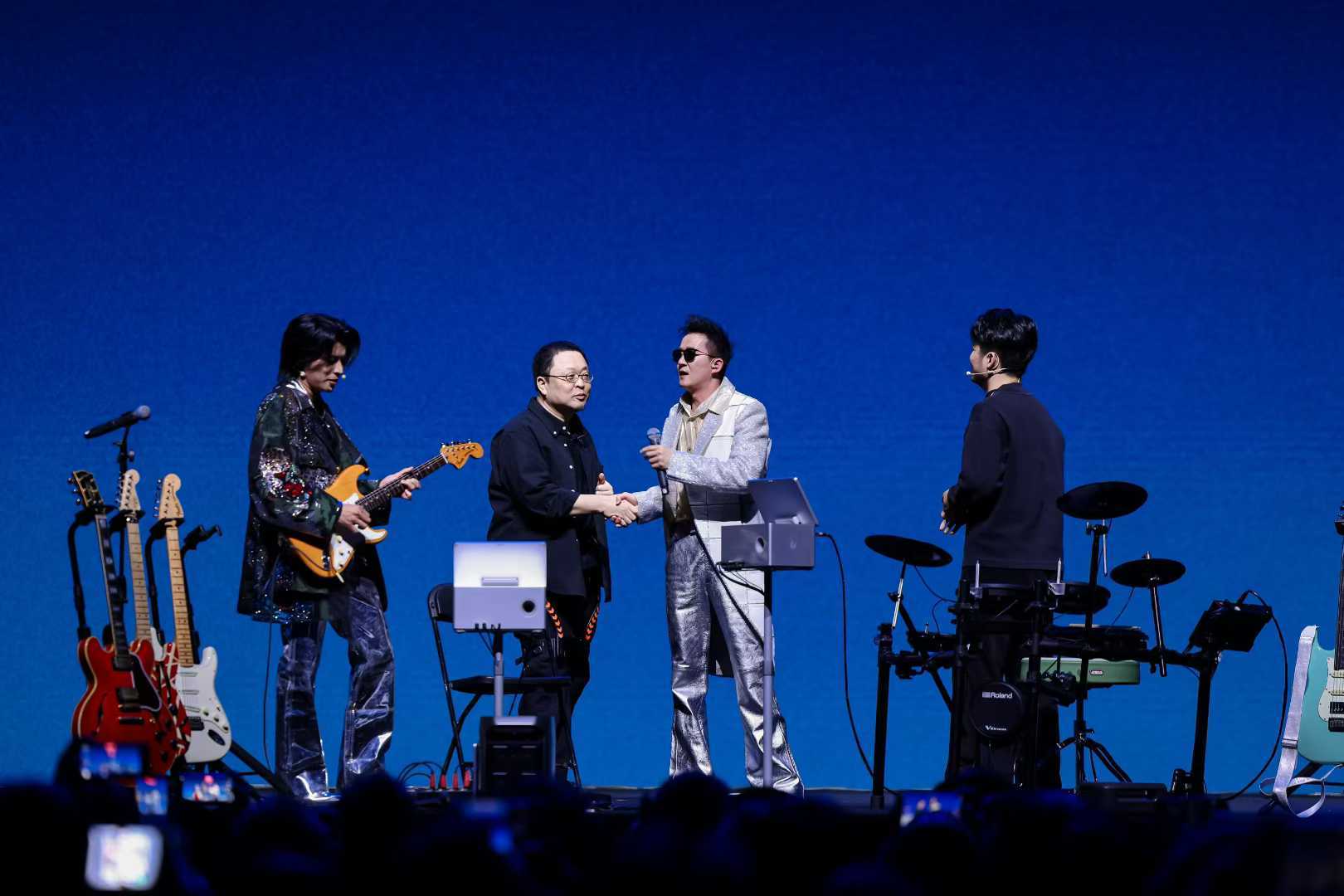
The band Wutiaoren performing with LAVA guitars at Luo Yonghao’s “Technology Spring Festival Gala” (Source/Enterprise)
From the one – piece carbon fiber design to the stringless interaction and then to the integrated studio, LAVA’s product development rhythm seems quite restrained. This may be related to Lu Zitian’s professional background. LAVA’s products were mainly targeted at professional musicians at first, and it was not until the stringless guitar product era that they were truly targeted at the general public.
Since last year, LAVA’s revenue growth rate has continuously exceeded 50%, showing a strong growth momentum. It has built a moat with a posture of respecting music itself and has been growing steadily.
The “Engineering Era” of a Guitar
In the summer of 2015, in a hot and humid studio in Guangzhou, Lu Zitian and his partner disassembled the guitar in their hands again. Shavings and sawdust were flying in the air, and the box structure was exposed.
The sound quality of traditional wooden guitars highly depends on their resonant boxes. For a long time, the inside of the box has been supported by a set of wooden beam structures, and its production highly depends on the personal experience of craftsmen, resulting in low production consistency, and the wood is easily deformed by temperature and humidity. In addition, there will be vibration losses at the joints between multiple parts, affecting the sound conduction efficiency.
The starting point of LAVA’s new product concept was to challenge this physical limitation. At that time, the team’s idea was simple and direct: cancel all the beam structures and manufacture an integrated structural box.
When using materials such as wood and composite boards did not meet expectations, LAVA set its sights on a material that had never been used in the musical instrument field – carbon fiber composite materials.
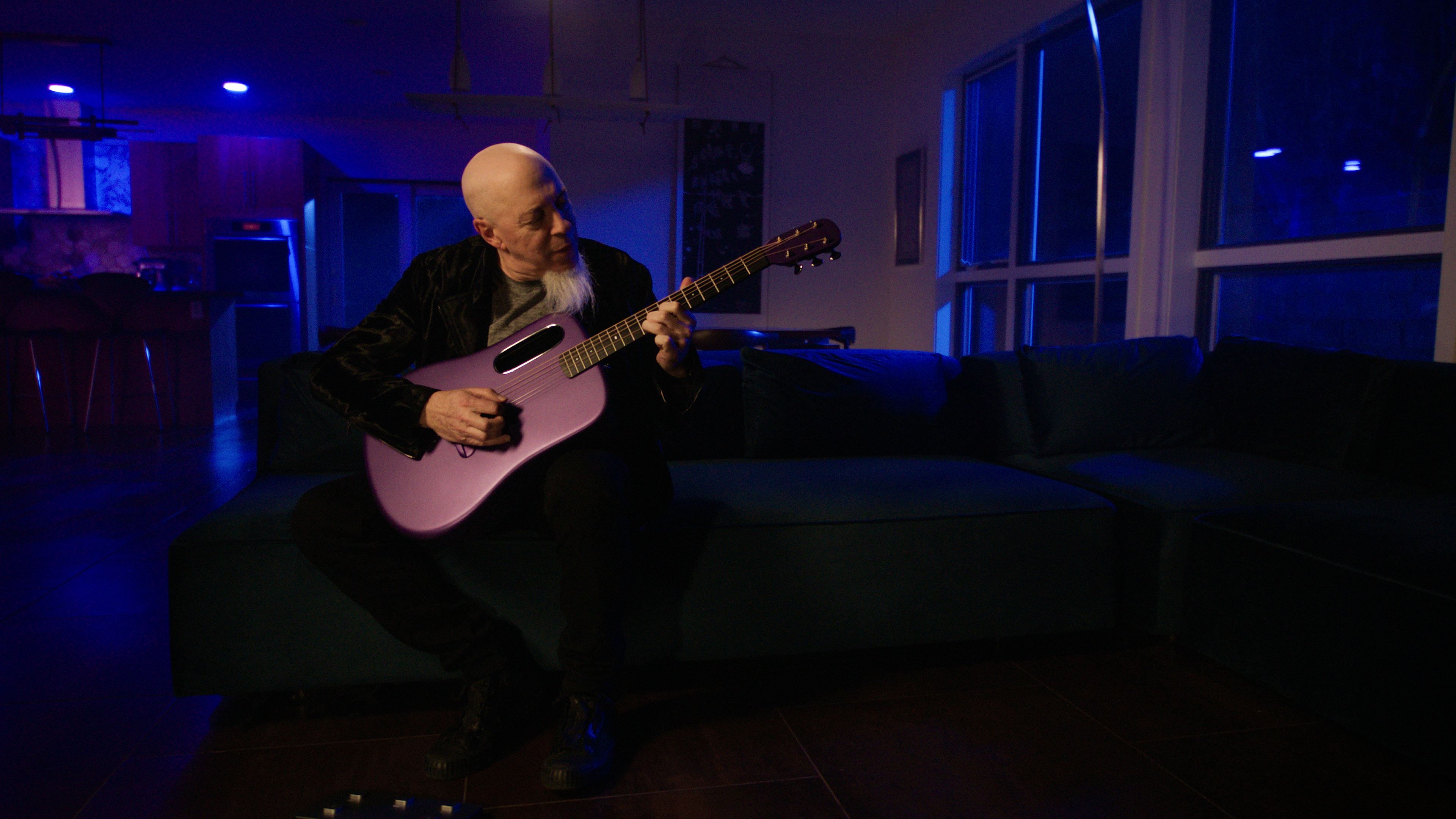
The world’s first one – piece carbon fiber guitar, LAVA ME (Source/Enterprise)
This was a bold cross – border idea. Carbon fiber, with its advantages of extreme lightness and strength, was commonly used in the core load – bearing parts of supercars and high – end e – bikes in the past and had never been used in musical instruments.
LAVA’s team proposed a composite material using chopped carbon fiber and engineering plastics. Simply put, it cut the originally continuous carbon fiber filaments short, mixed them in the plastic matrix, and achieved integrated molding through injection molding.
The absolute strength of this material may not be as good as that of top – grade woven carbon fiber, but it achieved an almost impossible balance: it retained the core characteristics of carbon fiber, which is light weight and high strength, could form any complex curved surface, and significantly improved production consistency and efficiency while keeping costs under control.
In 2017, LAVA released the world’s first one – piece carbon fiber guitar, LAVA ME.
After that, LAVA began to focus on the intelligentization of musical instruments. In 2021, LAVA ME 3 was released. This product installed a touch screen and an audio system on the guitar for the first time, integrating functions such as tuning, metronome, and hundreds of professional tone modules. Therefore, even users without professional music theory knowledge can directly combine and call various tones on the guitar according to their needs and preferences.
At the same time, in terms of user experience, LAVA ME also tried to integrate systematic teaching into the instrument’s interactive interface, including the visual prompt guidance commonly used in stringless guitars later.
However, LAVA had been unable to break out of the single category of acoustic guitars, so it was unable to accumulate a wider user base and a deeper technological moat. In 2022, Lu Zitian decided to invest in a more hardcore product – LAVA STUDIO.
From Intelligent Musical Instruments to a Creation Center
In October 2025, LAVA’s new product, LAVA STUDIO, was launched on an overseas crowdfunding platform.
This is a product that has been in development for nearly three years. Through AI audio model training, it condenses the core functions of a professional recording studio, such as speaker simulation, multi – track arrangement, and mixing monitoring, into one device.
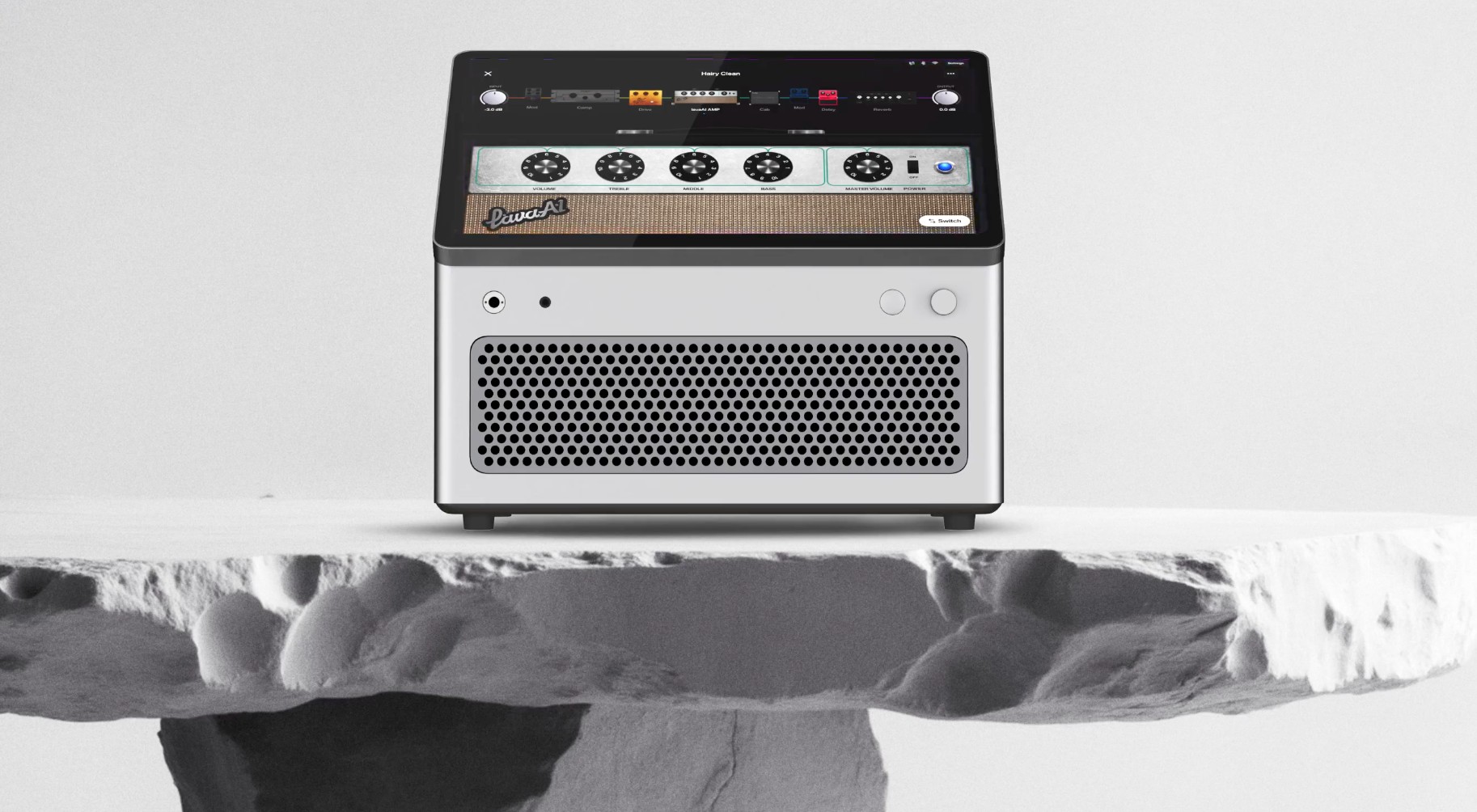
LAVA STUDIO (Source/Enterprise)
It uses AI to simulate nearly a hundred effectors and classic speakers that originally cost tens of thousands of yuan each. It integrates a mini DAW (Digital Audio Workstation) with AI audio track separation capabilities and a sound system for precise monitoring. Its goal is clear: to lower the creation threshold that used to rely on complex equipment and professional knowledge into a “one – click studio” that everyone can start on their desktop.
The fundamental reason for this design stems from Lu Zitian’s analysis of users’ needs.
Lu Zitian told Yingke that the current music market is mainly composed of three types of typical users. The first type is the “experience – entry – level” users, who are the largest in number. Their core demand is the low – threshold sense of pleasure and immediate sense of achievement. The second type is the “advanced – creation – type” users. They are not satisfied with simple playing along and start to stimulate and realize their creative inspiration through customizing chords, switching tones, and adapting styles.
To meet the needs of the first two types of users, LAVA launched the stringless guitar “Elf”, which meets users’ needs for quick start – up and easy sharing. At the same time, the rich tones and a certain degree of customization functions it provides also leave room for exploration and creation for advanced users.

LAVA’s stringless guitar “Elf” (Source/Enterprise)
However, in overseas markets, especially in Europe and the United States, the “advanced – creation – type” and “deep – culture – type” users form the core market.
These users have grown up in a diverse music environment. They are not only familiar with chords but also well – versed in rock, R&B, jazz, blues, and other music styles. Therefore, their needs go far beyond simple accompaniment. They hope to show their personalities and talents through creation and performance.
In LAVA STUDIO, for example, in the core arrangement link of music creation, LAVA has established a professional audio production system.
The founding team itself consists of senior musicians and arrangers. They professionally “re – arrange” popular tracks and different music styles and preset the split guitar accompaniments, independent drum beats, and other materials in the device. In this way, when users have an inspiration and open the software, they don’t need to build a complex framework. They can freely use the elements of various classic tracks, call professional musical phrases within a few seconds, and quickly piece together a complete work fragment.
These re – arranged accompaniment materials are not simply audio track slices. LAVA STUDIO adjusts the instrumentation, rhythm, and details one by one according to the hardware characteristics of different effectors to restore the “flavor” and professional listening experience of the original songs.
What makes this experience possible is that they use AI audio technology to simulate a large number of expensive hardware effectors and classic speakers.
“The sound of an electric guitar itself is very weak. The sound that the audience hears at the scene actually comes more from various effectors and speakers, and the sound of each effector is very different.” Lu Zitian said. For those classic songs, such as the highly recognizable tone in “Sweet Child O’Mine”, guitarists need to select and adjust the equipment themselves, and a single device can cost tens of thousands of yuan. In the LAVA STUDIO system, the AI – simulated versions of hundreds of classic devices have been integrated.

LAVA STUDIO (Source/Enterprise)
This is a “digital replication” of physical devices. Lu Zitian and his team disassembled various effectors and speakers, studied the composition of coils and parts, found the source of tone differences, and finally wrote the code to form their own music AI model.
This requires a deep understanding of music theory and tone, and only those who have received professional music training can complete such work. “We don’t just pile up raw materials. Instead, we work backward from the final effect we want to achieve to figure out how to record samples and how to arrange them.” Lu Zitian explained.
As the manufacturing threshold of intelligent hardware has been significantly lowered by the Chinese supply chain, the hardware of LAVA STUDIO itself may not be enough to form a barrier, and the music large model behind it is LAVA’s core competitiveness.
Currently, the intelligent musical instrument market has become crowded. A simple and novel experience cannot support continuous growth, and it is even more difficult to form user stickiness.
Lu Zitian analyzed to Yingke that the future growth of this market will not come from the micro – innovation and value war of homogeneous products, nor will it only come from products that are left unused after three months of use. Its growth comes from a re – imagination of the entire life cycle of music lovers. All players need to find ways to explore diverse markets, including different users at home and abroad, as well as musicians from beginners to experts.
When musical instruments are completely evolved into infrastructure that can be accurately digitized, freely created, and easily shared, a broader era of music popularization may truly begin.