
Fashion houses are increasingly leveraging premium gastronomy extensions to transform their retail flagships into multifaceted lifestyle destinations. By integrating Michelin-starred expertise and unique spatial design concepts, these maisons extend their sartorial heritage into the culinary realm, offering a brand experience that transitions from style to hospitality. This strategic shift into the “art de vivre” sector aims to maximise consumer engagement and brand recognition by targeting a broader clientele and moving beyond curating clothing options to address a new aspect of clients’ desires.
In practice, these spaces function as subtle dwell points. Potential customers may arrive intending to browse the latest collections but the promise of beautifully plated pastries, decadent cakes and carefully designed interiors encourages them to linger which then transforms a simple retail visit into a leisurely cultural experience. As the global capital of fashion, Paris is uniquely positioned to capitalise on this strategy. By extending Parisian brands into cafés and restaurants, fashion houses reinforce the city’s identity as a holistic lifestyle destination, where gastronomy, design and couture intersect — an approach that strengthens tourism appeal while embedding luxury maisons more deeply into the Parisian cultural landscape.
Dior’s Monsieur Dior and Le Jardin
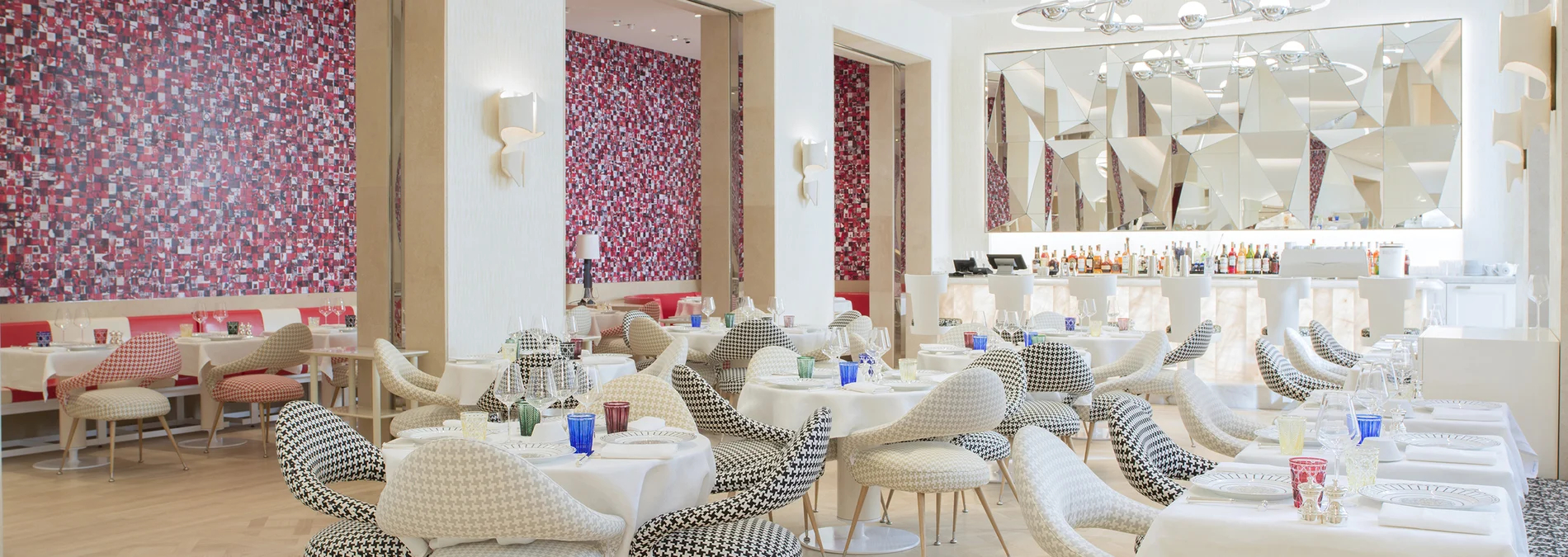
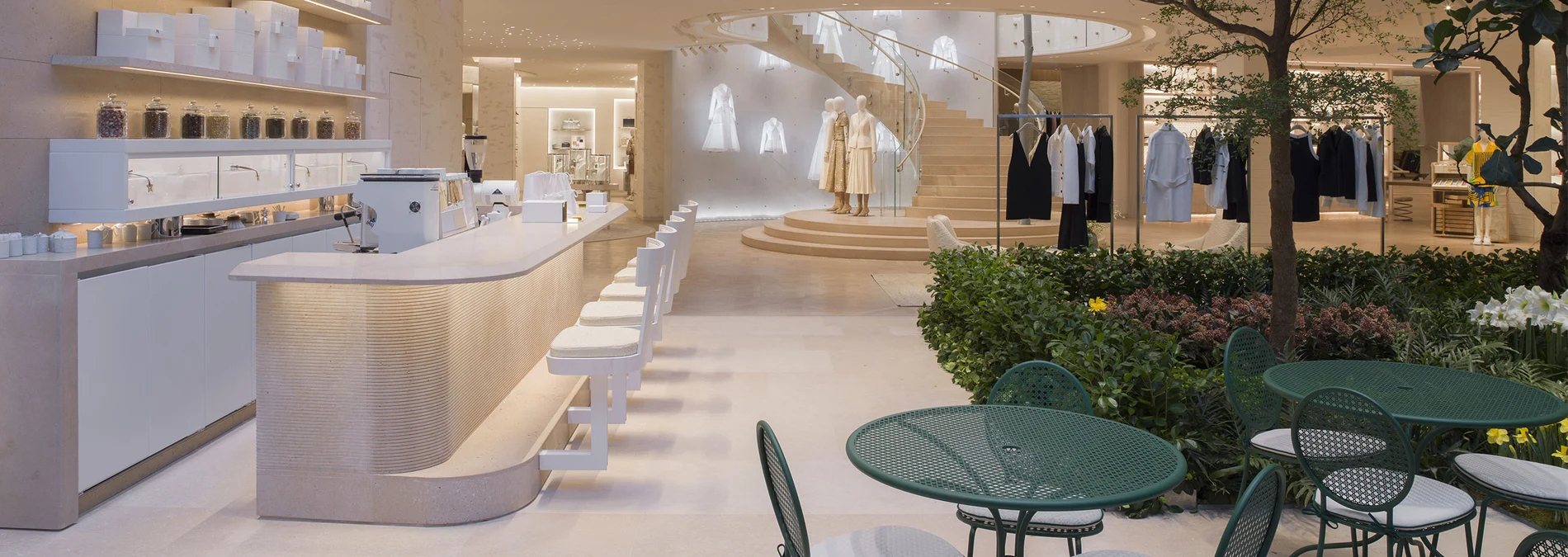
Dior has extended its lifestyle universe through two flagship culinary concepts at 30 Montaigne. Monsieur Dior serves as the primary destination for French gastronomy, featuring seasonal menus curated by chef Yannick Alléno. The restaurant translates the maison’s sartorial heritage into a permanent dining fixture, moving beyond traditional retail into high-end hospitality.
Adjacent to the restaurant is Le Jardin — formerly La Pâtisserie — which focuses on technical confectionery. The space offers refined pastries that mirror the brand’s visual identity through edible form. Collectively, these venues transform the historic flagship into an immersive destination where culinary artistry functions as a direct extension of the Dior brand.
Location: 30 Avenue Montaigne, 75008 Paris, France
Louis Vuitton‘s Café Maxime Frédéric
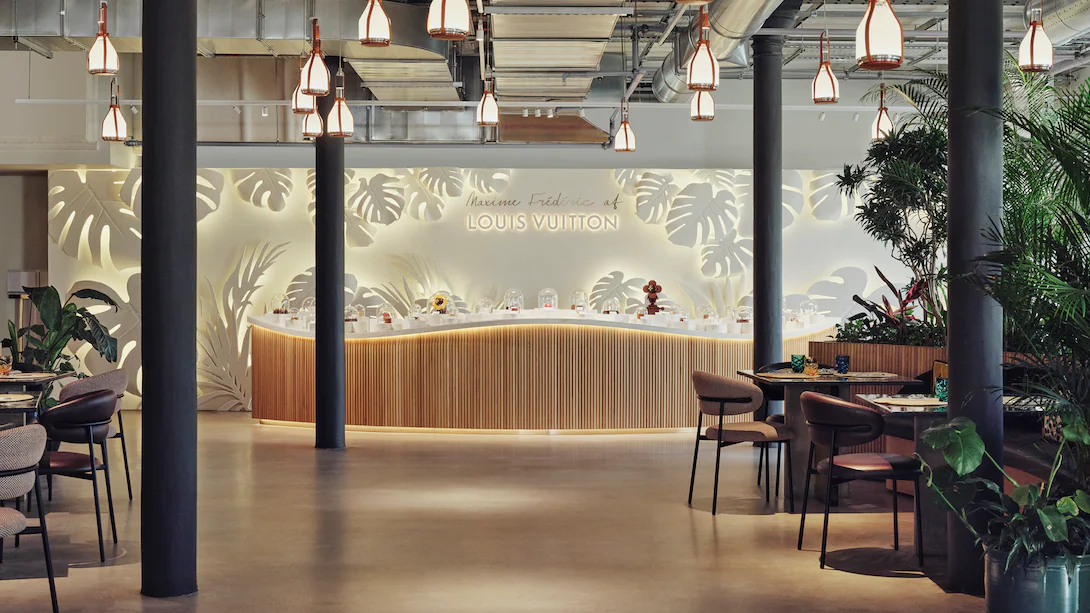
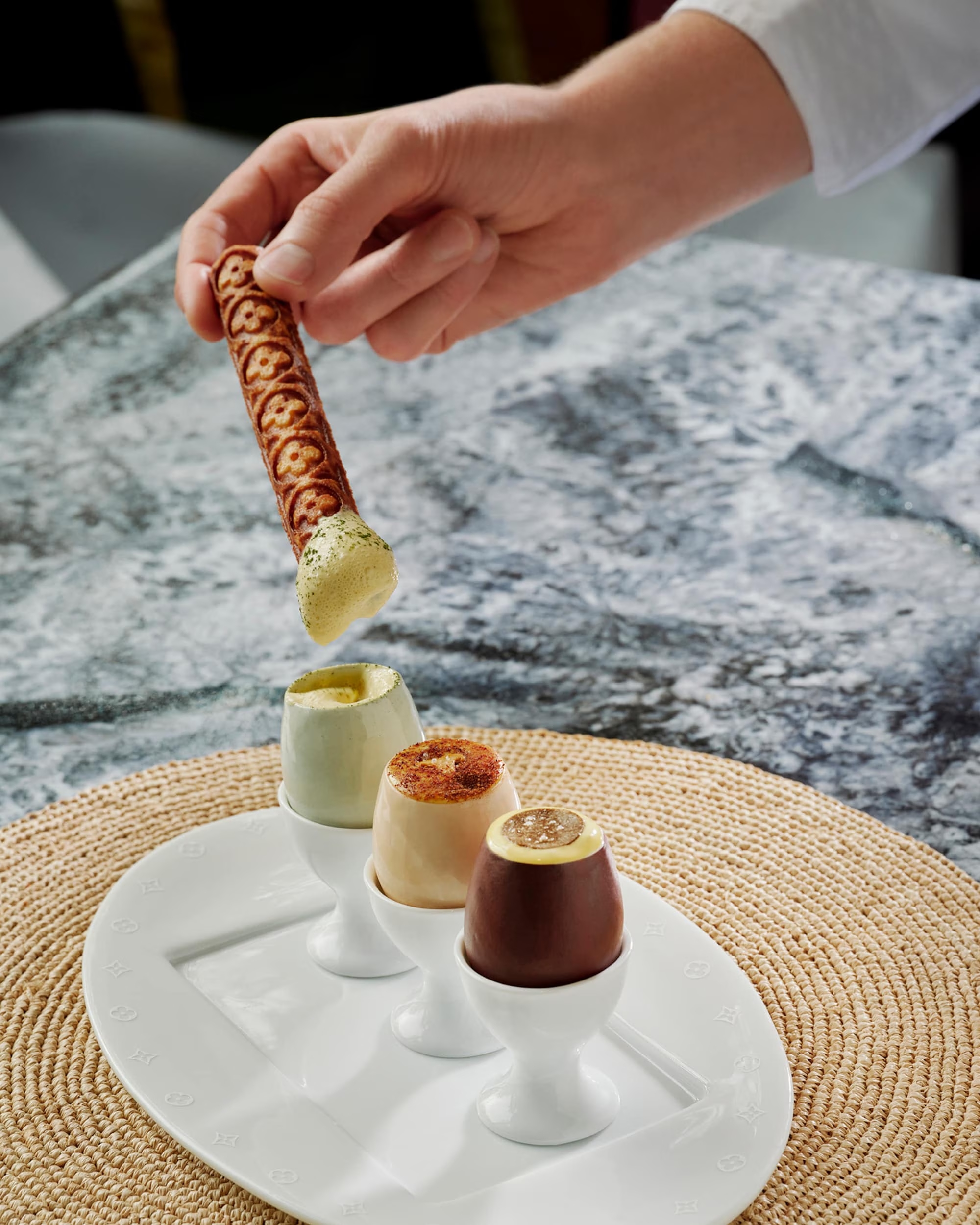
Louis Vuitton has integrated luxury gastronomy into its cultural programming via Café Maxime Frédéric — situated within the LV Dream exhibition space. Running from 26 September 2025 to 22 March 2026, the concept serves as a culinary extension of Louis Vuitton’s heritage, combining museum-style curation with professional pastry artistry.
The café is helmed by its namesake, Maxime Frédéric, the award-winning pastry chef of Cheval Blanc Paris. The menu features graphic, motif-driven creations such as “Monogram” ravioli and “Damier” tartlets, which translate the maison’s signature visual codes into edible form. By positioning a dedicated café and chocolaterie atop a historical retrospective, Louis Vuitton effectively enriches visitor engagement, transforming a traditional retail experience into a multi-sensory brand excursion.
Located in: LV DREAM, 2 Rue du Pont Neuf, 75001 Paris, France
Ralph Lauren’s Ralph’s
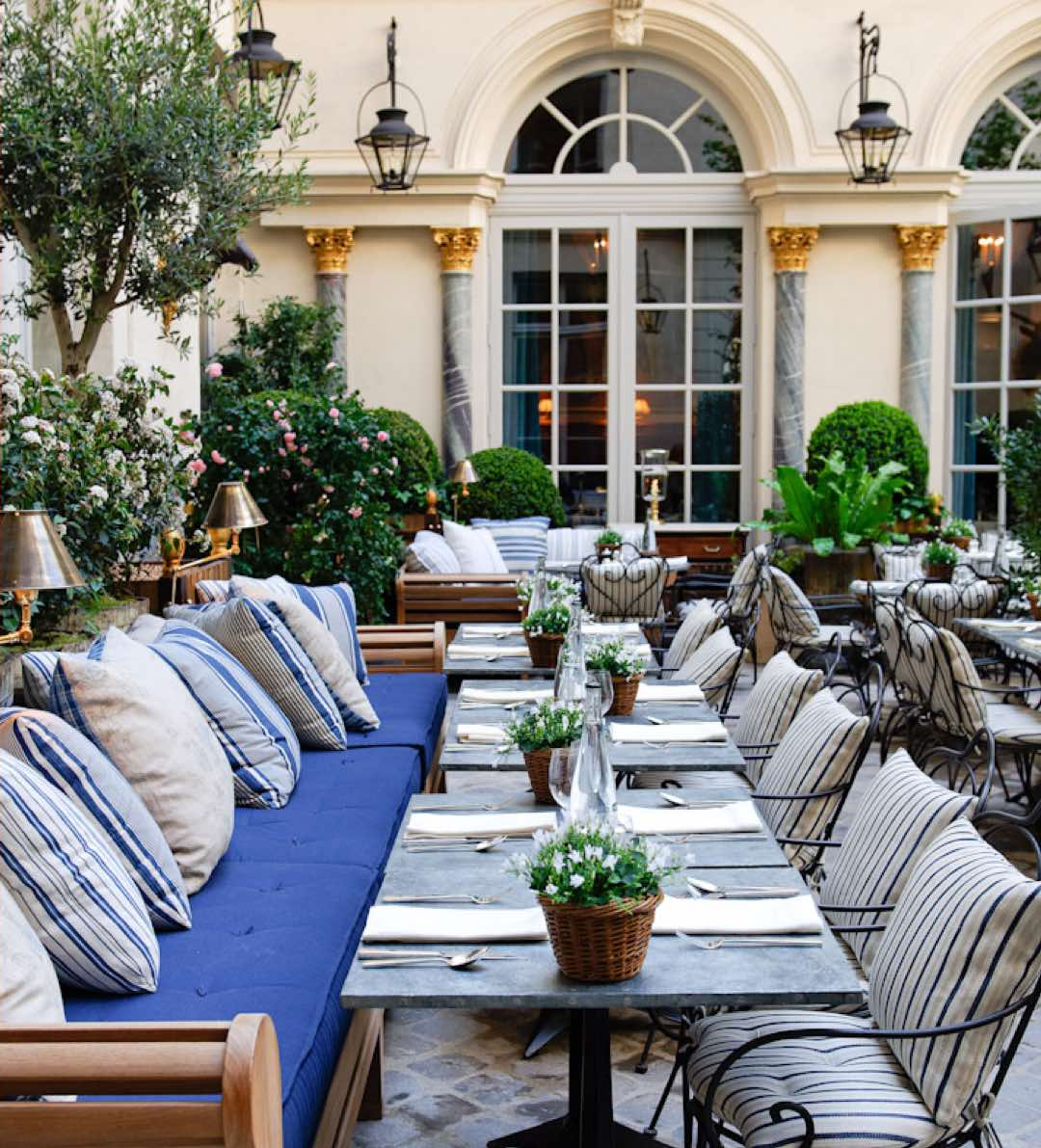
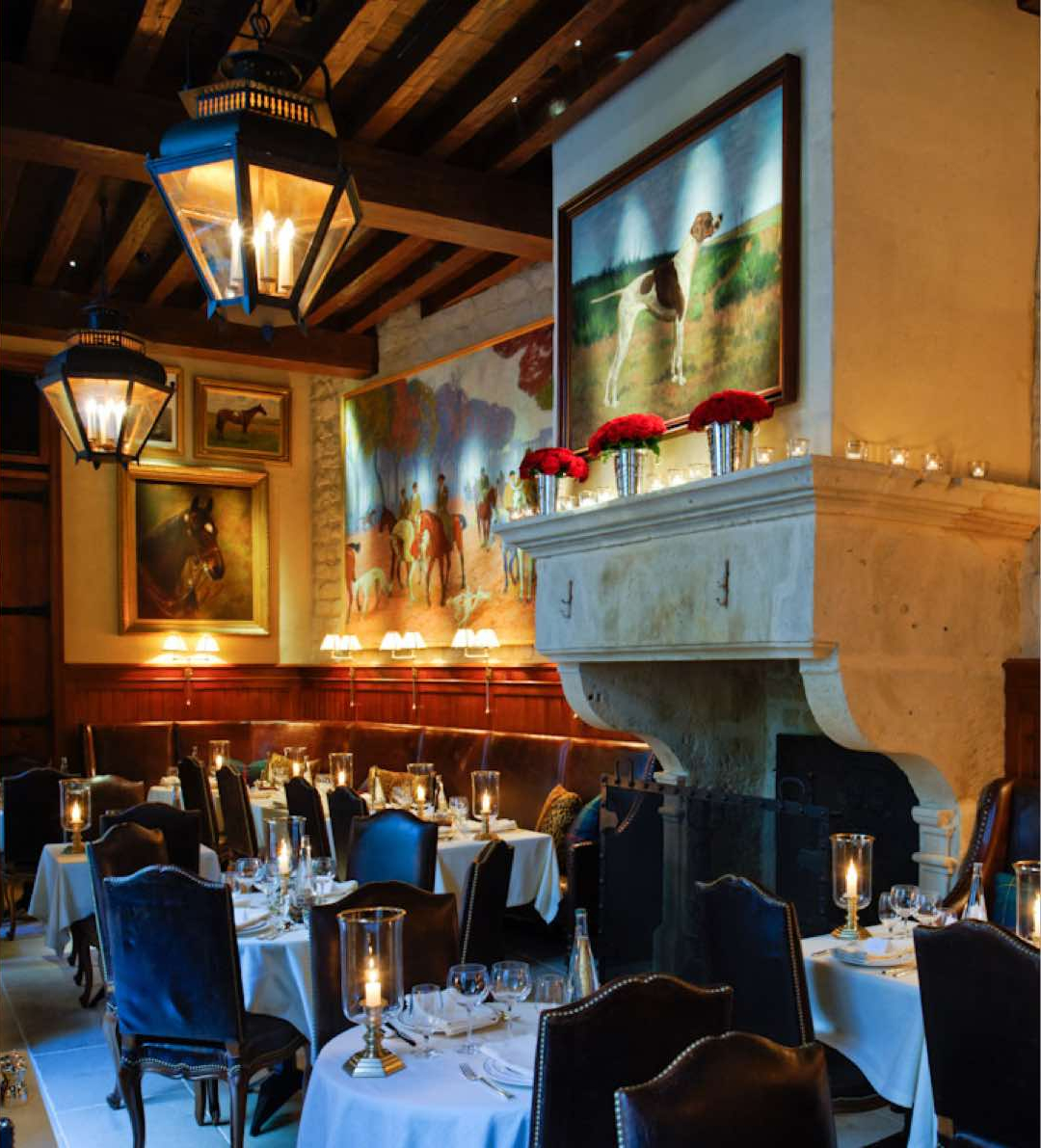
Ralph’s is the flagship restaurant concept created by Ralph Lauren, designed as an extension of the brand’s lifestyle universe rather than a standalone dining venue. Located inside the Ralph Lauren flagship on Boulevard Saint-Germain in Paris’s Left Bank, it opened in 2010 as part of a major restoration of a historic 17th-century hôtel particulier. The restaurant sits within a two-storey courtyard that once housed horses and carriages, reinforcing the brand’s equestrian heritage and creating an immersive retail-hospitality destination. Ralph’s was conceived as a physical expression of the Ralph Lauren lifestyle narrative—the idea that the brand represents not only clothing but a complete vision of living. The restaurant brings this ethos into gastronomy, blending American culinary traditions with Parisian elegance.
The interior design mirrors the brand’s sartorial codes, utilising weathered wood, wrought iron and vintage equestrian accents to create an exclusive social hub that feels inviting. Ralph’s also serves a commercial and experiential purpose. By embedding hospitality within the boutique, Ralph Lauren transforms the store into a lifestyle environment where visitors can shop, dine and socialise within the same branded universe. The Saint-Germain flagship itself spans roughly 13,000 square feet, making the restaurant a key element in creating a full luxury destination rather than a conventional retail space.
Location: 173 Bd Saint-Germain, 75006 Paris, France
Chanel’s Le Café du 19M
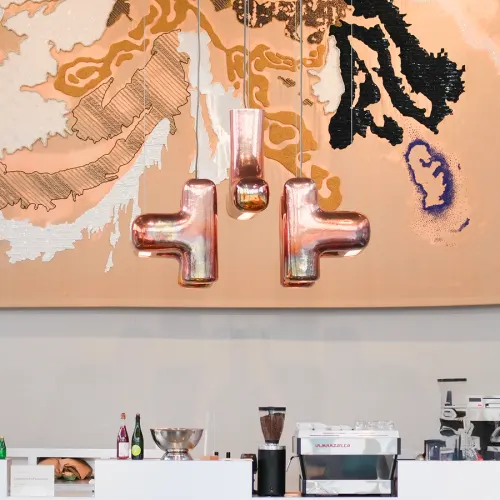
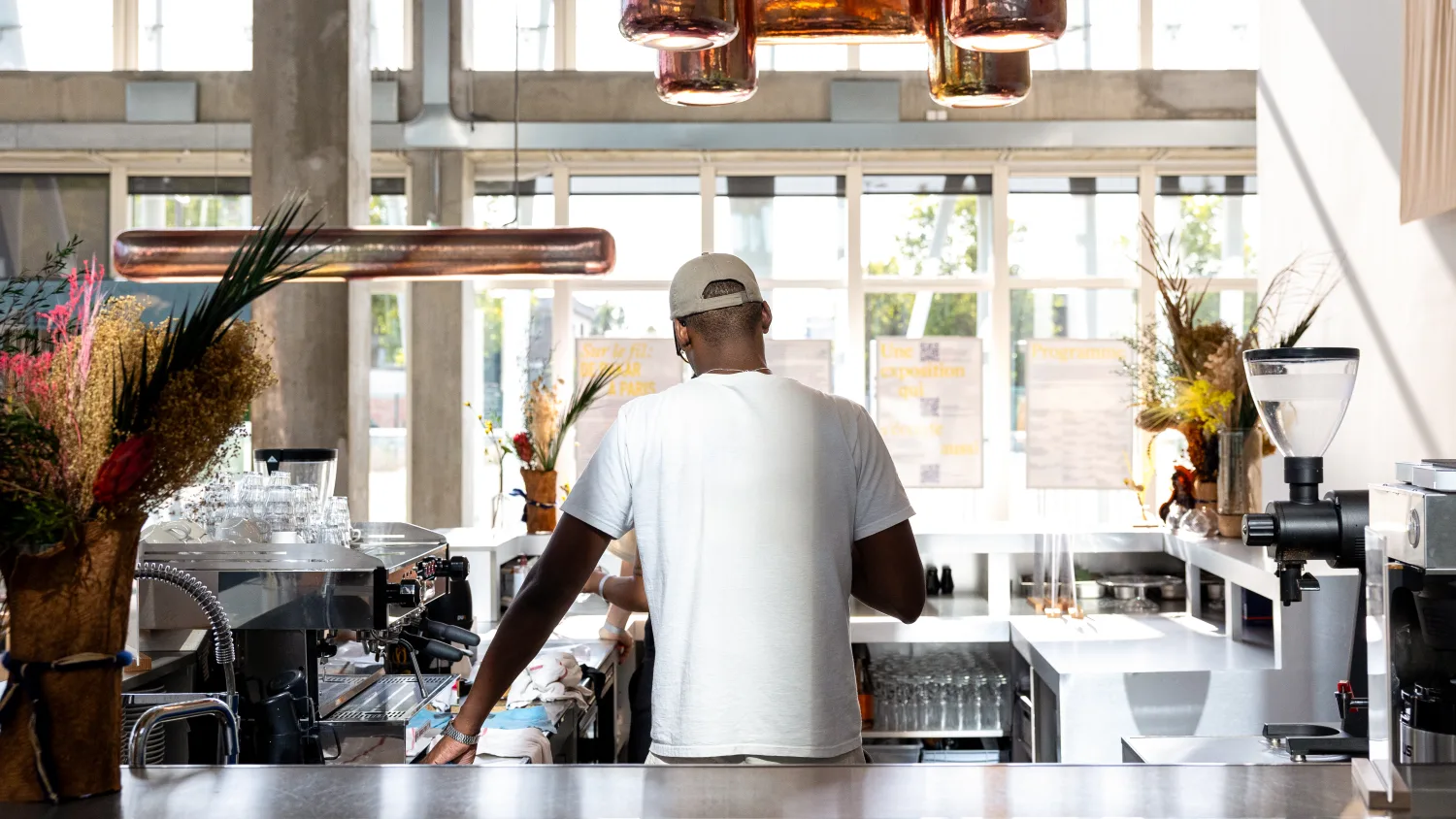
Le19M opened in 2021 in Paris’s 19th arrondissement, occupying a large architectural complex designed by Rudy Ricciotti. The name carries multiple meanings: 19” refers to the arrondissement and the birthdate of founder Gabrielle ‘Coco’ Chanel (19 August 1883) while the “M” stands for mode, métiers d’art, mains, maison and manufacture, referencing the crafts central to Chanel’s identity.
The complex houses around 600–700 artisans working across specialised métiers such as embroidery, featherwork, millinery, pleating and shoemaking — many belonging to the maisons d’art that Chanel has acquired over decades to preserve traditional craftsmanship. Within this ecosystem, the café functions as a public-facing hospitality space that complements the exhibitions and workshops at the venue’s gallery. It was opened in 2022 to extend the visitor experience after touring the exhibitions dedicated to fashion craftsmanship.
Location: 2 Place Skanderbeg, 75019 Paris, on the ground floor of la Galerie du 19M in the 19th arrondissement on the border of Aubervilliers.
Lacoste’s Le Café Lacoste
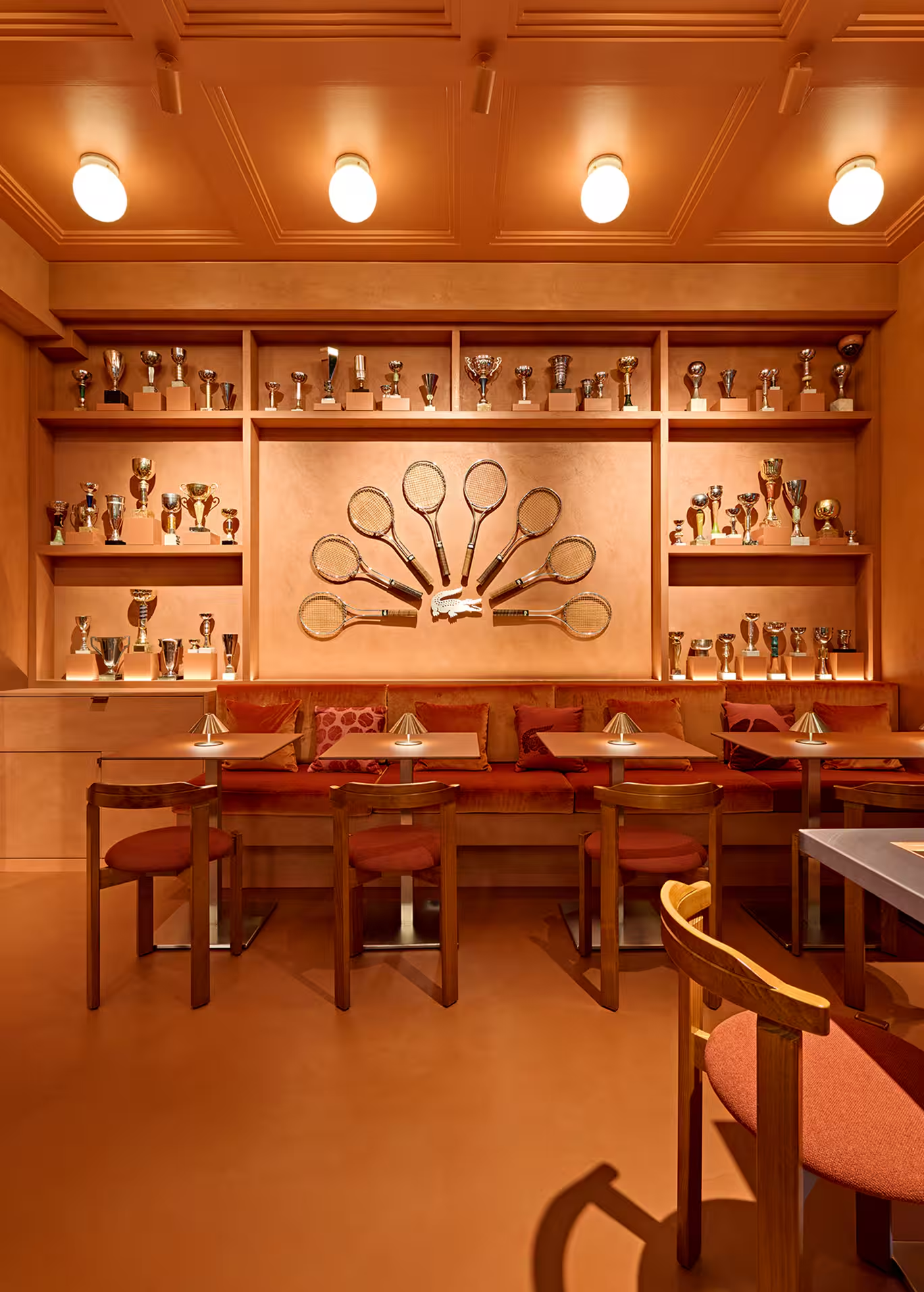
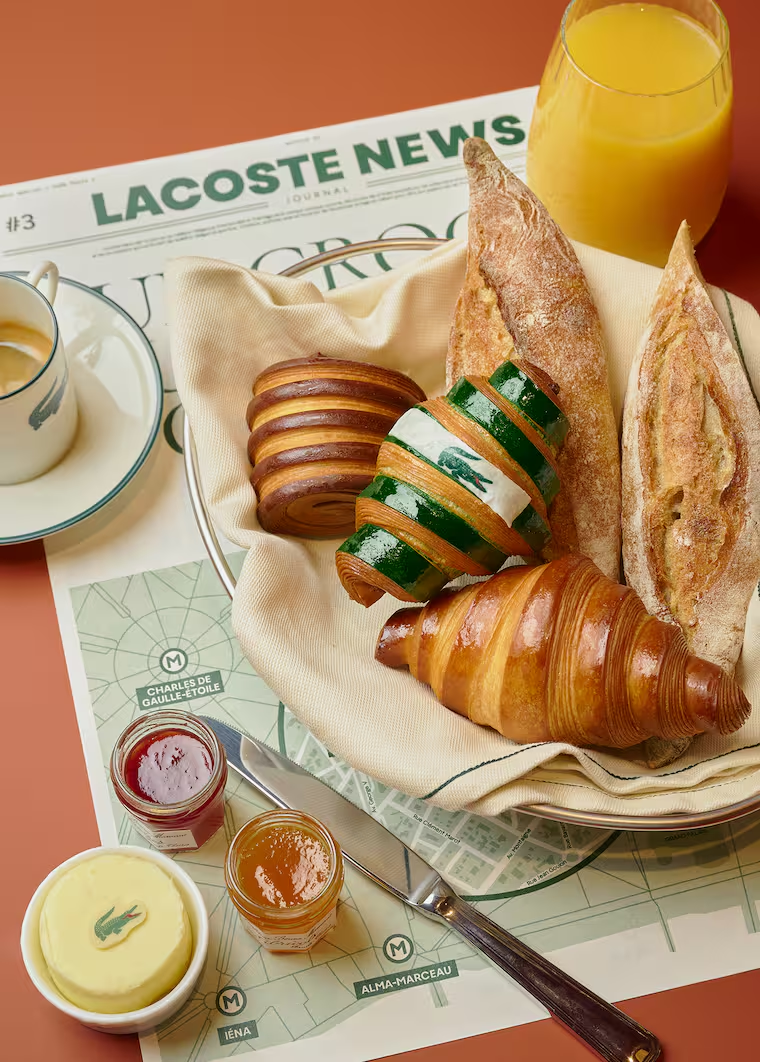
Earlier this February, Lacoste inaugurated its first permanent Café Lacoste in Paris’s 8th arrondissement, a 100-square-metre venue with 65 seats located just steps from the Champs-Élysées flagship. Developed with the restaurant group founded by Riccardo Giraudi, the project formalises Lacoste’s expansion into hospitality following a successful café pilot in Monaco. The interior design translates the brand’s sporting codes into a hospitality setting, using deep green and off-white tones, touches of terracotta, noble materials and architectural lines inspired by the geometry of a tennis court. Designed to mirror the rhythm of contemporary urban life, the café offers dine-in and takeaway services, with delivery planned, while its proximity to the flagship strengthens a neighbourhood ecosystem where fashion, sport and gastronomy converge.
The opening consolidates several years of hospitality experimentation through the brand’s Le Club Lacoste activations staged at major sporting events including the Australian Open, Wimbledon Championships and French Open, alongside collaborations with Shangri-La Paris and a café concept trial at Le Méridien Beach Plaza. Under the direction of chef Thierry Paludetto, the menu reinterprets familiar staples such as club sandwiches, fresh salads and seasonal dishes, alongside desserts including the signature green Polo Cake and drinks like L’Eau de Croco — a blend of coconut water, matcha and ginger — and “Le Chose”, a cocktail originally created by René Lacoste in 1967. Beyond food and drink, the venue incorporates a concept retail corner offering fine groceries, Lacoste-branded French porcelain and a dedicated textile capsule, reflecting the brand’s wider strategy of extending its identity beyond fashion into an experiential lifestyle ecosystem.
Location: 16 Av. Franklin Delano Roosevelt, 75008 Paris, France
Read More: Lacoste Expands Into Hospitality With Standalone Paris Café
Maison Kitsune’s Café Kitsuné
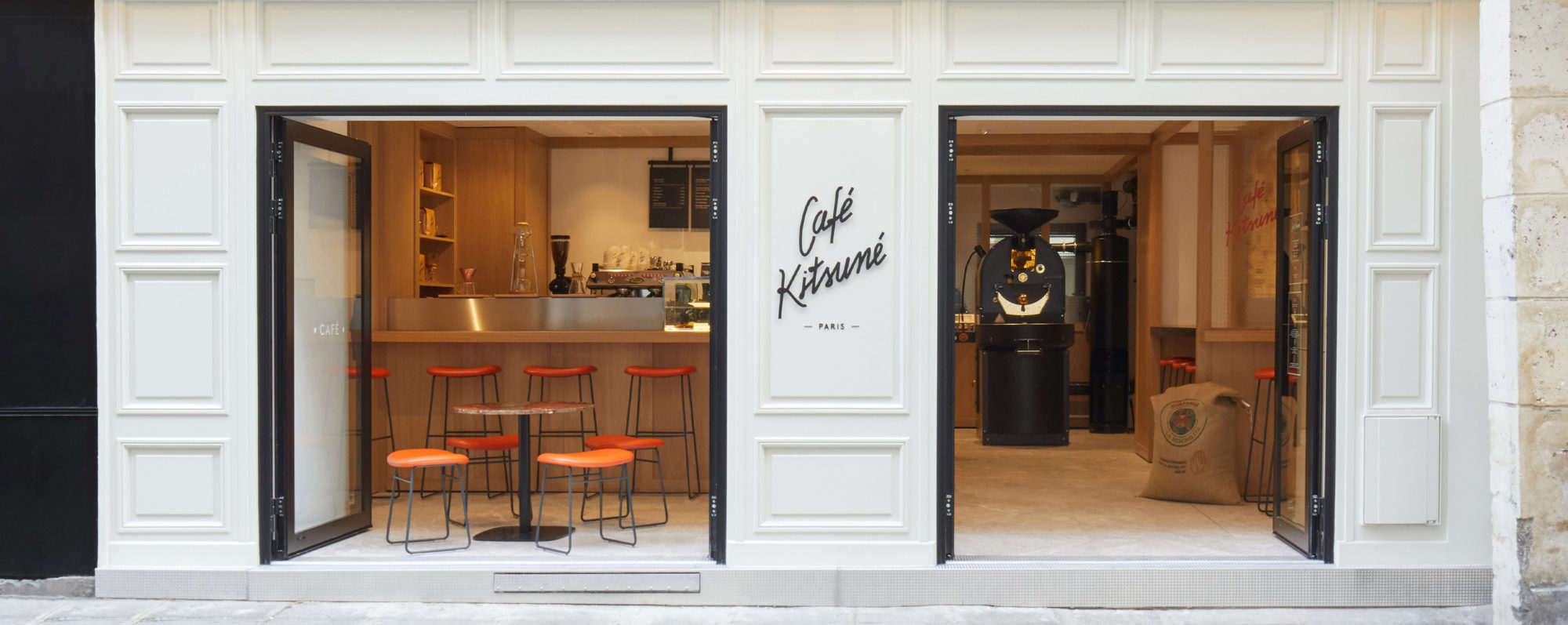
Café Kitsuné is the hospitality arm of the Franco-Japanese lifestyle label Maison Kitsuné, created to translate the brand’s fashion, music and design ethos into a café experience. The concept was launched in 2013, first opening in Tokyo before expanding to Paris, where the brand itself was founded by Gildas Loaëc and Masaya Kuroki. Conceived as a natural extension of the Maison Kitsuné universe, Café Kitsuné celebrates the ritual of high-quality coffee in architecturally distinctive settings, combining Parisian café culture with Japanese design sensibilities. The cafés typically feature minimalist interiors, natural materials such as wood and marble, and subtle branding referencing the label’s fox emblem — kitsuné, the Japanese word for fox, symbolising versatility and transformation.
In Paris, the flagship café at the Palais-Royal gardens became particularly emblematic of the brand’s approach: a compact stand-up coffee bar nestled within 17th-century arcades that invites visitors to pause between shopping and sightseeing. The cafés typically serve specialty coffee, matcha drinks, pastries and light desserts, while some locations incorporate retail merchandise, branded tableware and capsule collaborations. Through this hybrid model — part café, part cultural hub — Café Kitsuné functions as both a revenue stream and a brand amplifier, reinforcing Maison Kitsuné’s identity as a multidisciplinary label spanning fashion, music and contemporary lifestyle culture.
Locations:
Café Kitsuné Palais Royal: 51 Galerie de Montpensier, 75001 Paris. Positioned under the Rue de Rivoli arcades opposite the Jardin des Tuileries, this location combines a café and boutique format.
Café Kitsuné Louvre: 208 Rue de Rivoli, 75001 Paris. Located inside the gardens of the Palais-Royal, this is the original Paris café opened in 2014, known for its takeaway coffee counter and terrace overlooking the historic arcades.
Saint Laurent Sushi Park Paris
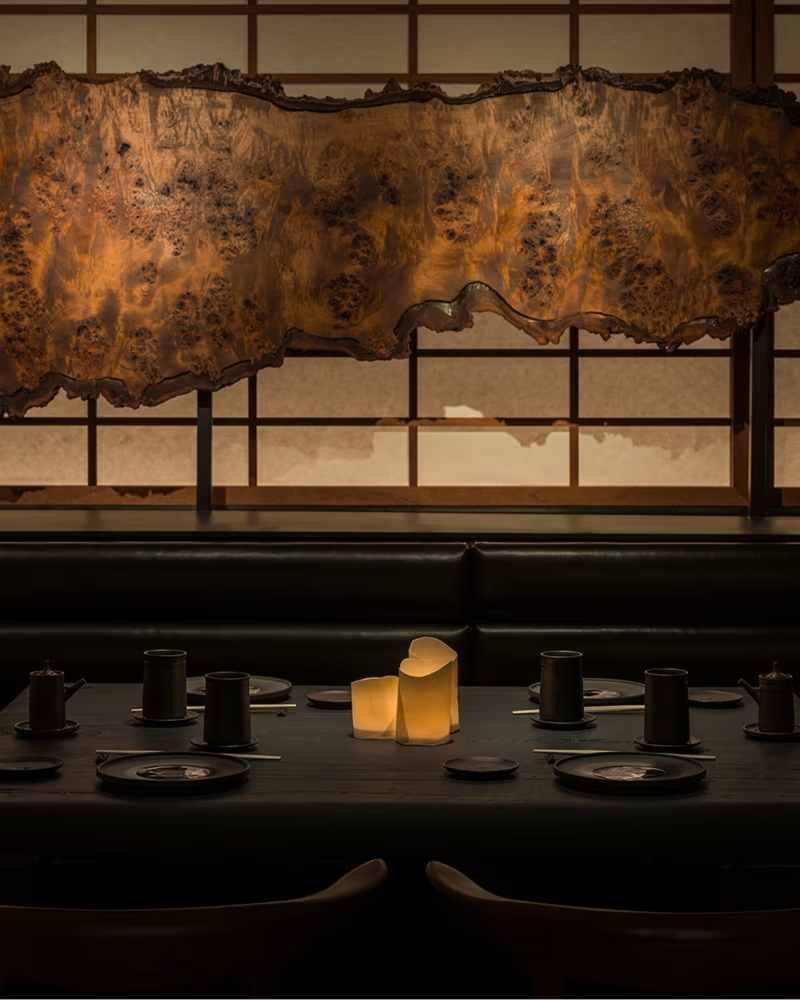
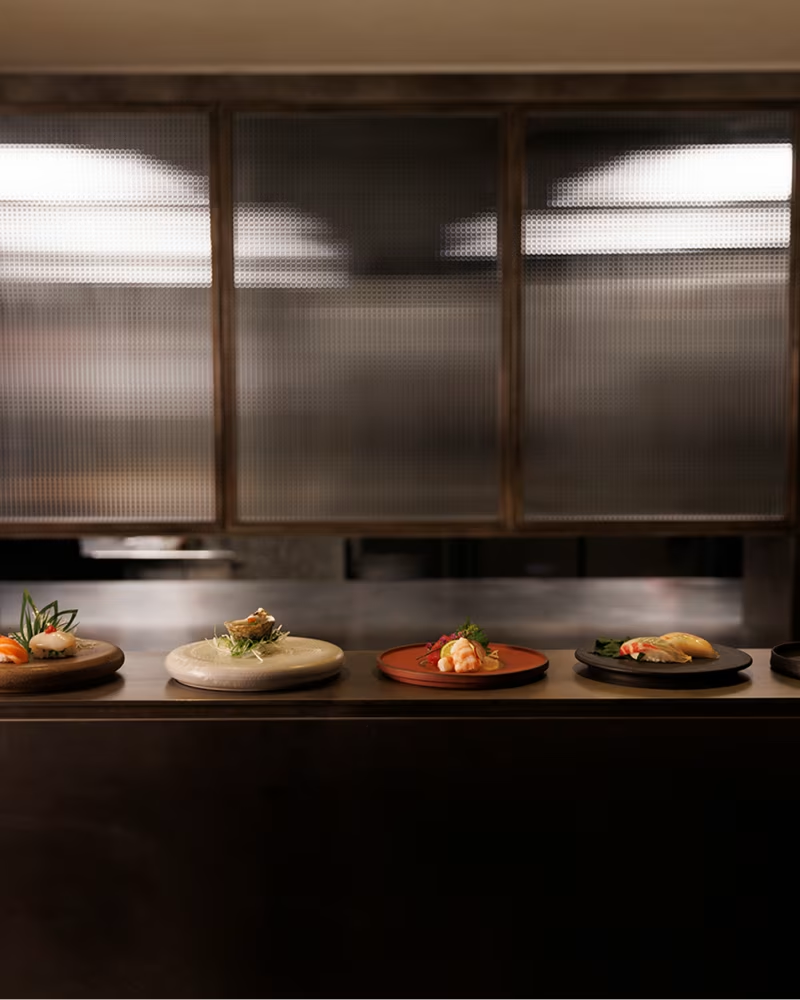
Sushi Park Paris is a high-end omakase restaurant created through a collaboration between Saint Laurent and Japanese chef Peter Park, founder of the cult Los Angeles sushi institution Sushi Park. The restaurant opened on 21 February 2025 as the first permanent Sushi Park location outside California. The concept centres on traditional omakase dining, where guests entrust the chef to curate a sequence of sushi and seasonal dishes prepared in real time. This approach reflects Sushi Park’s purist philosophy: the menu avoids trendy items such as California rolls or heavily modified sushi, instead focusing on meticulous preparation, premium fish and minimalist presentation
The interior mirrors Saint Laurent’s distinctive aesthetic: moody minimalism and architectural restraint. The dining space incorporates dark wood panelling, waxed concrete, steel elements and soft recessed lighting, creating an intimate atmosphere centred around the sushi counter. The menu is built around Chef Park’s signature omakase tasting, composed daily according to the freshest seasonal seafood. Diners experience a curated progression of nigiri and sashimi prepared directly by the chef at the counter.
Seating is intentionally limited and offered through two evening services from Tuesday to Saturday, reinforcing the exclusivity of the experience.
Location: 8 Rue du 29 Juillet, 75001 Paris, France
Emporio Armani’s Emporio Armani Caffè and Armani/Ristorante
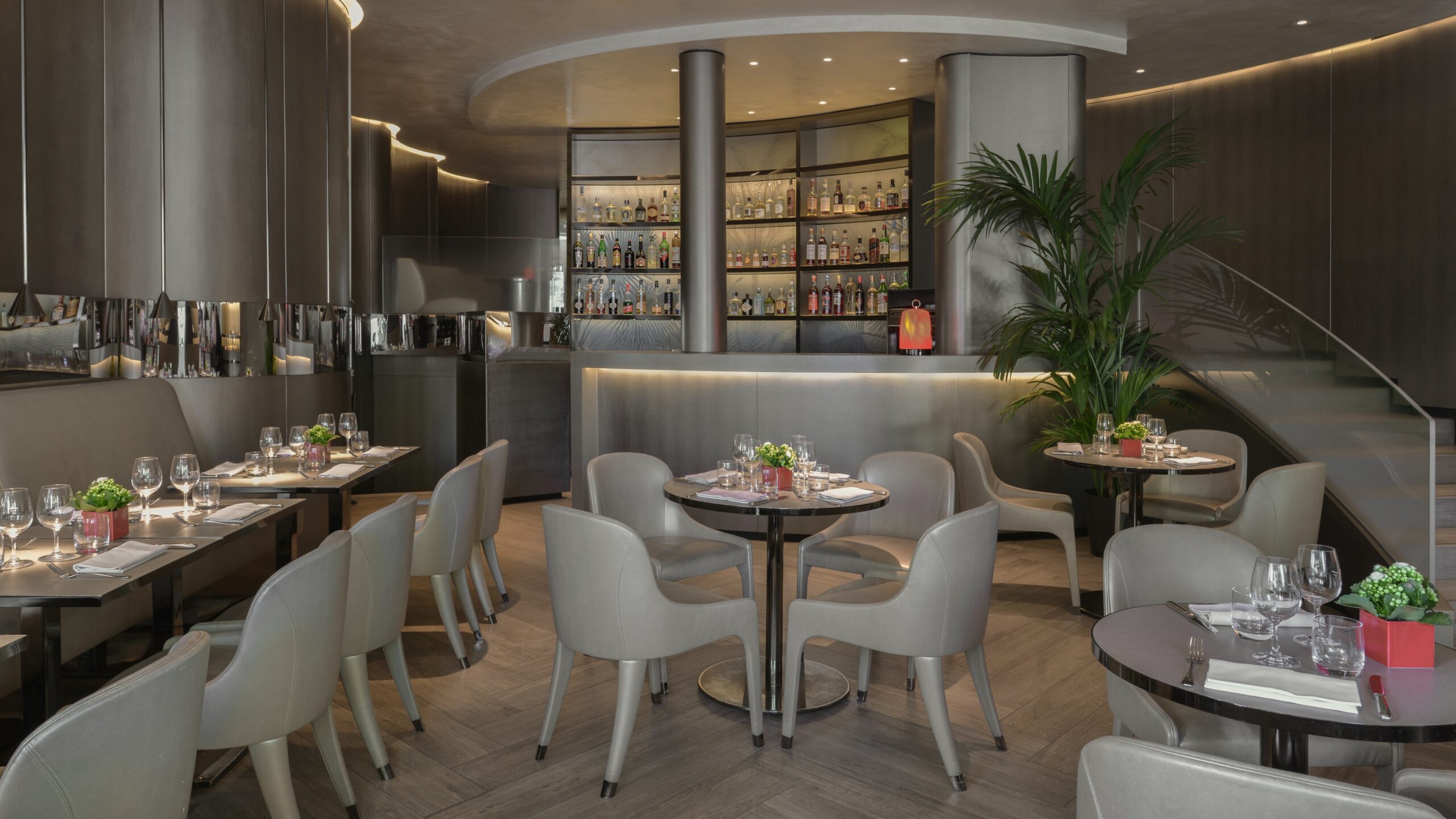
Located at 149 Boulevard Saint-Germain in the 6th arrondissement, on Paris’s Left Bank and directly across from the historic café Les Deux Magots, Emporio Armani Caffè forms the ground-floor component of a dual hospitality concept developed by the Armani group. The café first opened in 1998, making Giorgio Armani one of the earliest fashion designers to move into gastronomy as a lifestyle extension of a fashion brand.
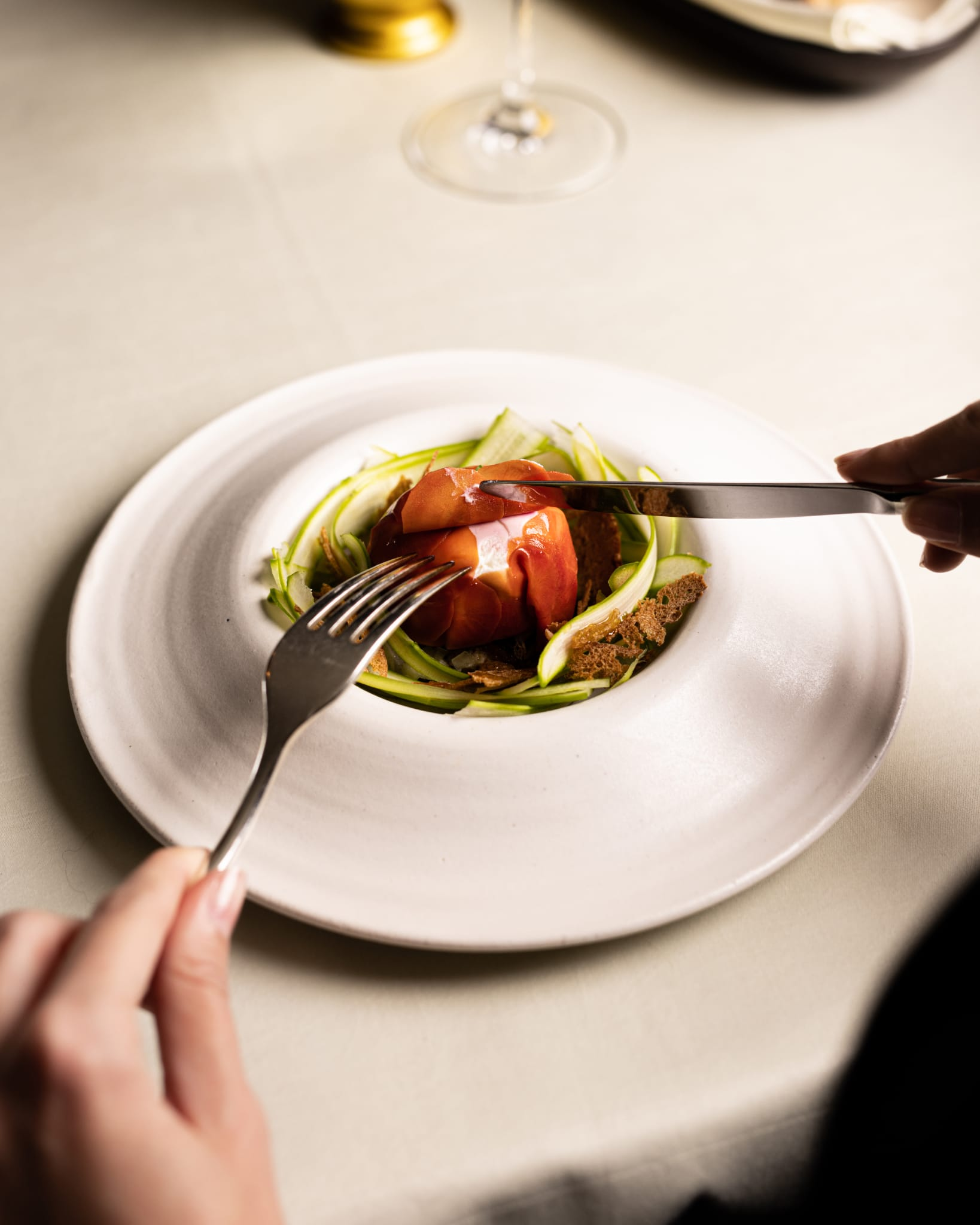
The space operates as a contemporary Italian brasserie serving classic dishes executed with traditional techniques. The menu includes staples such as linguine alle vongole, risotto, ravioli del plin and spaghetti al pomodoro, alongside desserts like house tiramisu and artisanal gelati. The interior reflects Armani’s signature aesthetic — muted tones, leather seating, metallic finishes and herringbone timber flooring — while a sleek terrace and veranda offer outdoor dining along Boulevard Saint-Germain. Designed as an all-day venue, the café transitions from espresso and light lunches to aperitivo and evening dining, attracting both local clientele and fashion-week visitors frequenting the Saint-Germain district.
The Emporio Armani Caffè and Armani/Ristorante on Boulevard Saint-Germain function as a physical manifestation of Giorgio Armani’s restrained aesthetic and commitment to hospitality as part of its global lifestyle ecosystem.
Location: 149 Bd Saint-Germain, 75006 Paris, France
Azzedine Alaïa: Le A CAFÉ RESTAURANT BAR
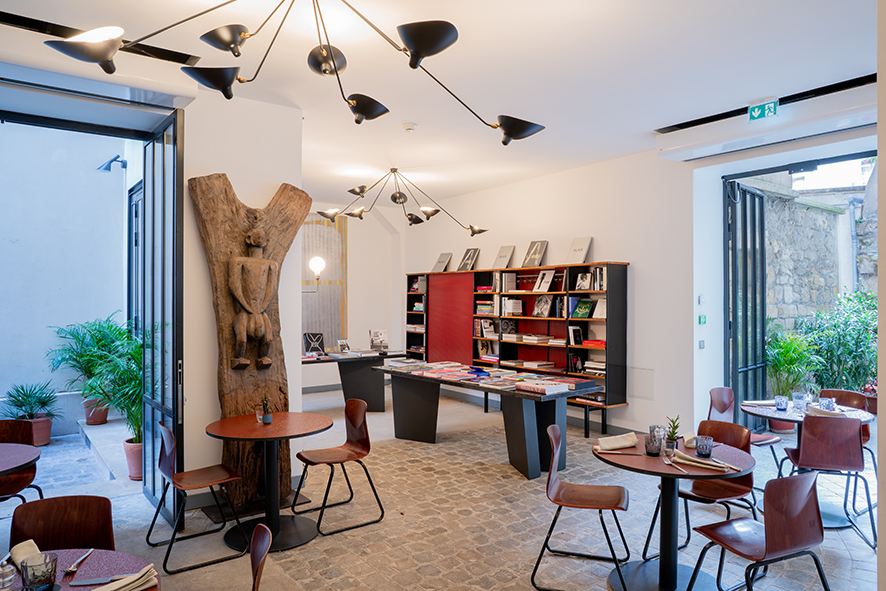
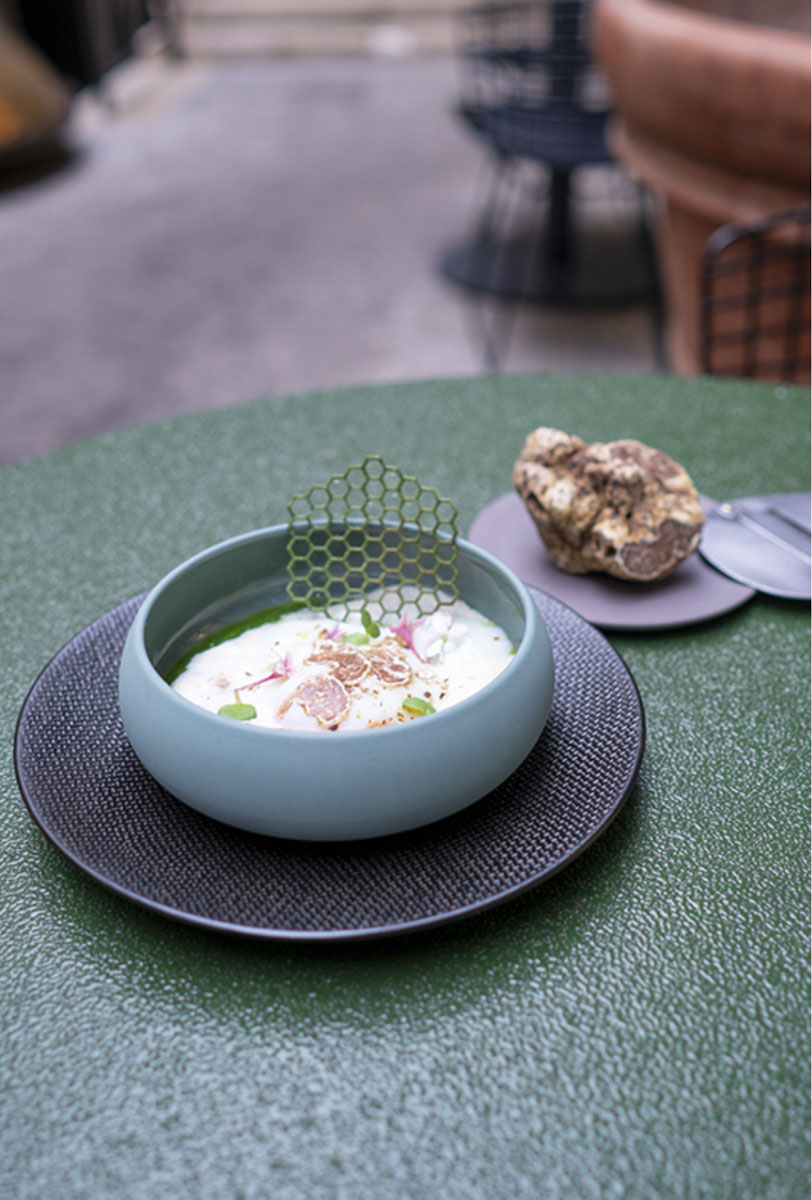
Le A is situated within the Fondation Azzedine Alaïa in Le Marais, serving as a permanent tribute to the late couturier’s tradition of hosting intimate meals. The dining room overlooks the foundation’s internal courtyard, maintaining a discreet atmosphere that prioritises Mediterranean generosity over commercial retail trends.
The menu features refined Franco-Mediterranean cuisine that mirrors the sculptural precision and understated sensuality of Alaïa’s work. Under Italian chef Ivan Schenatti, the kitchen serves Italian‑inspired cuisine with seasonal market influences, blending simplicity, freshness and regional flavours. Reviews and local guides describe dishes that span risottos, fresh pastas and seasonal mains, all reflecting a thoughtful balance between casual dining and refined technique.
Rather than functioning as a standard luxury brand café, the space operates as a cultural salon, preserving the house’s legacy of warmth and intellectual exchange within a private, artistic setting. The café also offers quality coffee, cocktails and light drinks, making it suitable for lunch, dinner or an aperitivo amid the museum‑like environment. Rather than functioning as a standard luxury brand café, the space operates as a cultural salon, preserving the house’s legacy of warmth and intellectual exchange within a private, artistic setting.
For more on the latest in luxury lifestyle and gastronomy reads, click here.