
Greece can be remarkably good value, but only if you know how the system works. From transport and ticketing rules to new museum admission policies and changing toll prices, a bit of planning can save you both money and precious holiday time. These essential, up to date tips focus on practical decisions that make a real difference once you land in Athens and start hopping between the mainland and islands.
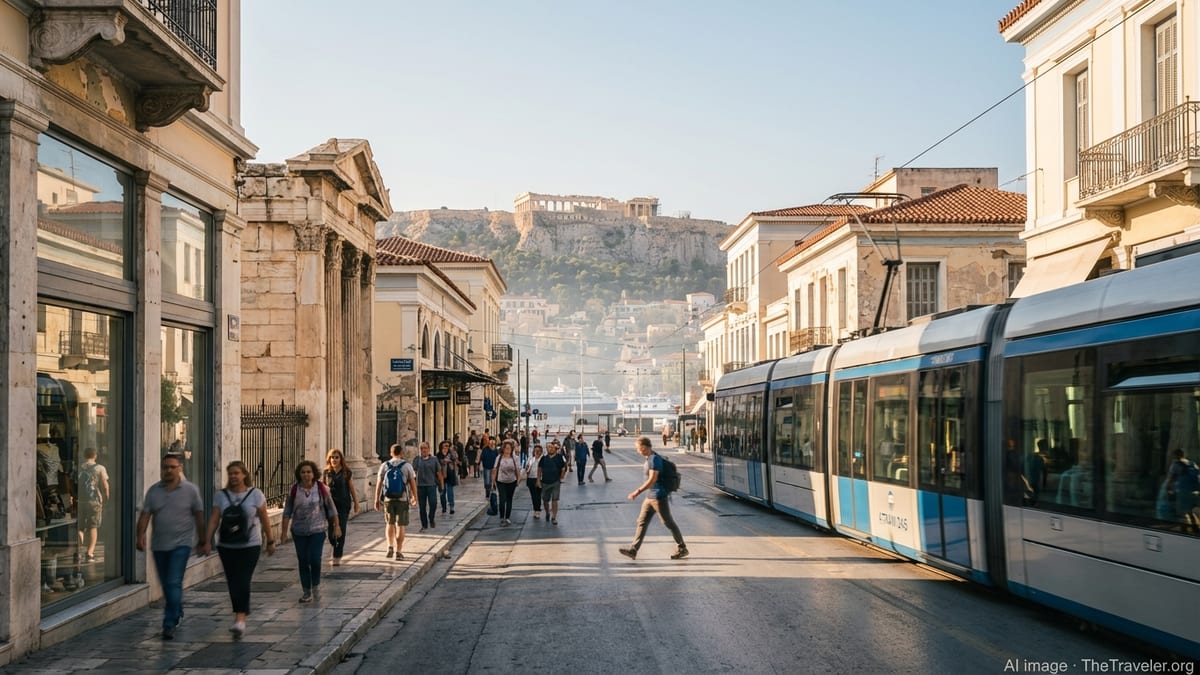
Plan Around Seasons, Strikes and Crowds
Timing is the single biggest factor in how much you pay and how much time you lose in queues. High season in Greece runs roughly from late June through early September, when hotel prices peak, ferries and flights sell out, and famous sights such as the Acropolis and Santorini’s caldera paths can feel packed from mid-morning onward. Traveling in shoulder periods such as late April to early June or late September to October usually means lower room rates, more flexible availability and milder temperatures that make sightseeing easier.
In winter, from November to March, many islands quieten significantly and some seasonal routes stop altogether, but major cities like Athens and Thessaloniki stay lively. For culture-focused trips this can be ideal. Crowds at big archaeological sites are far thinner, and you can take advantage of expanded winter free entry days at many state-run museums and sites, which now include both the first and third Sunday of each month plus several cultural and national holidays. You trade beach time for serious savings and calmer visits.
Allow room in your plans for potential transport strikes, particularly in Athens, where metro and bus stoppages occur periodically. These are usually announced in advance and reported widely in local media and on public transport information websites. Building in a buffer day around long-haul flights and avoiding extremely tight connections between ferries and flights can prevent a one-day strike from derailing your entire itinerary.
Regardless of season, think in terms of time-of-day strategy. Popular sites are busiest from around 10:00 to 14:00, when tour groups arrive, and again in the early evening. Starting early, or booking late entry slots where available, helps you see more in fewer hours and take better photographs, while also reducing the chances of heat-related fatigue in the summer months.
Use Athens Transport Smartly to Cut Costs
Most itineraries start or end in Athens, and how you move around the capital has a major impact on both budget and stress levels. The city’s public transport network of metro, buses, trams and trolleybuses operates on a unified ticketing system. Standard city fares are currently structured around a 90-minute single ticket and short-term passes such as 24-hour and 5-day products, as well as a 3-day tourist ticket that includes a round-trip to the airport. For many visitors, these integrated options are far cheaper than relying on taxis for every journey.
A recent innovation in Athens is a contactless “Tap2Ride” style system on city transport. Instead of queueing for paper tickets, you can simply tap a contactless bank card or compatible phone at the validator when entering the metro or boarding buses and trams. You are charged the standard single fare per ride, with a built-in daily cap aligned to the cost of a 24-hour ticket. Once you hit that cap, additional rides that same day are effectively free. This greatly reduces time spent at ticket machines in busy stations such as Syntagma and Monastiraki and ensures you automatically pay the lowest day-rate without advance planning.
For longer stays or for those who prefer not to rely on bank cards, reloadable smartcards remain a good option. You can load them with city tickets, multi-day passes or stored value and simply tap in at gates and validators. Children under six travel free on Athens public transport, and older youths and other eligible groups may qualify for reduced fares, though these discounts usually require proof of status issued within Greece or the European Union. Since airport routes have separate pricing, always check whether your chosen ticket or pass covers the metro or bus to and from the airport before boarding to avoid fines.
Time-wise, you save the most by avoiding rush hour on the metro and key bus routes. Lines serving central hubs can be extremely crowded between roughly 8:00 and 9:30 in the morning and 17:00 to 19:30 in the evening. If you have luggage or children in tow, travel outside those windows whenever possible. Current rules also set a flat legal taxi fare between the airport and central Athens, which simplifies budgeting; if a driver insists on using the meter for this journey or quotes a significantly higher price, politely decline and use a reputable taxi app or the airport’s official taxi stands instead.
Navigate Ferries, Flights and Island Hopping Efficiently
Moving between islands is where travelers often lose the most money and time. Ferry tickets in Greece are generally more affordable if booked in advance on busy summer dates, particularly for high-speed vessels and popular routes such as Piraeus to Santorini or Mykonos. Unlike earlier years, demand has rebounded strongly and last-minute deals are rare at peak times, so leaving bookings to the final days of your trip can mean paying extra for premium classes or less convenient departure times.
When comparing ferries with domestic flights, factor in not only base fares but also transfers and time. A budget flight from Athens to a distant island may look more expensive than a slow ferry, but it can save you an entire day at sea. On the other hand, for shorter distances in the Aegean, a conventional ferry can double as a scenic mini-cruise and spare you the luggage restrictions and airport waiting time involved with flying. Picking no more than two or three bases instead of trying to tick off five or six islands in a week also saves multiple ferry fares and at least a full day of lost time to each additional transfer.
Where possible, travel on weekdays and outside the busiest departure windows. Friday afternoons, Saturday mornings and periods before or after major holidays tend to see the highest passenger loads and longest queues at ports. Arriving at the port well ahead of time is still wise, especially at large, complex hubs like Piraeus, where gates are spread out and signage can be confusing on a first visit. Printing or downloading your boarding pass in advance often allows you to skip ticket office lines altogether and go straight to your ship.
Keep an eye on weather-related disruptions, particularly in autumn and winter when strong winds sometimes lead to cancellations in the Aegean. Ferry companies usually post updates on the day, but if you are traveling during these periods, try to avoid scheduling long-haul flights the same day as a critical ferry connection. A flexible, open-jaw route that starts on one island and ends on another, with Athens in between, can minimize expensive backtracking and reduce your exposure to cancellations.
Save on Museums and Archaeological Sites
Greece’s cultural treasures are a highlight of any visit, but admission costs can add up quickly in a country packed with ancient theaters, temples and museums. Recent changes to ticketing policy have raised general admission prices in many places and abolished several popular combination tickets in major cities. However, carefully timed visits and knowledge of free-entry rules can still keep costs under control, especially in the cooler months.
State-run archaeological sites and museums now offer free entry not only on specific international and national observance days, but also on the first and third Sunday of each month from November through March. For travelers with flexible schedules, planning your Athens sightseeing around these dates can eliminate entry fees at multiple major sites in a single day. Policies differ slightly for certain institutions such as the Acropolis Museum, which follows its own calendar of free days, but it too opens without charge on several widely publicized dates each year.
Youth and certain other groups benefit from generous permanent concessions. Citizens of European Union countries up to the age of 25 enjoy free admission to many state heritage sites, while non-EU visitors under 18 are also eligible for free entry under the revised rules. Seniors from Greece and other EU member states can obtain half-price tickets, although this reduced rate now generally applies only during the low season from October through May. As always, carry official identification, since eligibility is usually verified at the ticket window.
Because combination tickets that once allowed multi-day access to clusters of sites in cities like Athens have been scaled back, it is increasingly important to make a short list of your “must see” places and group them by area. Visiting several sites in the same neighborhood on the same day reduces both walking time and transport costs. In high season, consider pre-booking timed entry online for headline attractions such as the Acropolis itself. This often lets you bypass long purchase lines at the gate, shorten your total visit, and avoid the heat and congestion that build up by late morning.
Accommodation, Dining and Everyday Spending Hacks
Where and how you stay can change your daily budget dramatically. In Athens and larger islands, neighborhoods just beyond the main tourist clusters often offer significantly better prices while remaining convenient. In Athens, for example, areas within a couple of metro stops of Syntagma and Monastiraki typically have lower rates than those directly on the main squares, yet you can still reach key sights in minutes. On islands, staying one or two blocks back from the most photographed waterfronts or clifftop promenades can yield quieter rooms and lower prices without sacrificing views entirely.
Self-catering capacity is one of the easiest ways to reduce food costs without missing out on Greek cuisine. Booking studios or apartments with at least a small kitchen lets you prepare simple breakfasts and occasional light dinners from ingredients bought at neighborhood bakeries, street markets and supermarkets. Morning coffee and a pastry from a local bakery cost far less than repeated café breakfasts on a busy thoroughfare. For main meals, look for traditional tavernas a short walk away from the busiest tourist strips; menus posted in Greek as well as English and a good mix of local patrons are often signs of fair pricing and generous portions.
Tap water is safe to drink in most mainland destinations and some larger islands, particularly in cities such as Athens and Thessaloniki, which can significantly reduce your spending on bottled water and cut plastic waste. On smaller or more arid islands where tap water is not always potable, consider buying larger multi-liter bottles from supermarkets rather than single small ones from kiosks near beaches or sights. Carrying a reusable bottle to refill where appropriate keeps you hydrated in the heat and avoids repeated small purchases.
Everyday expenses such as coffee, snacks and public restrooms also add up. Ordering your coffee at the counter and taking it to go is generally cheaper than table service. When it comes to toilet breaks, many cafés and fast-food places allow paying customers to use facilities, so timing a small drink or snack purchase with a restroom stop can be more economical than searching for paid public facilities. Tipping in Greece is appreciated but usually modest: rounding up the bill or leaving about 5 to 10 percent in restaurants with table service is common, while for taxis and cafés simply rounding up to a convenient amount is generally sufficient.
Driving, Tolls and Getting Around Beyond the Cities
Renting a car can be excellent value on the mainland and larger islands, particularly if you are traveling as a couple or group and want to reach sites poorly served by public transport. However, you need to factor in fuel, tolls and parking to understand the true cost. Greece’s main motorways operate on a pay-as-you-go toll system with periodic price adjustments. As of early 2026, many routes, including the ring road around Athens and segments between major cities, have seen modest increases in toll charges. Individually, each toll may not seem high, but a long journey that crosses several booths in each direction can make a noticeable dent in your budget.
Using a toll calculator or at least glancing at current rates before setting out allows you to compare the cost of motorway travel with slower, toll-free national roads. In some regions, such as the Peloponnese and Central Greece, the older highways provide scenic alternatives that add only limited extra time to your journey. They can be more demanding to drive, with occasional narrow sections and passing through villages, but for travelers who are not in a hurry they often provide a richer experience and savings on toll fees.
Fuel prices fluctuate, but they are typically higher on islands and along isolated motorway stretches than in large towns on the mainland. Refueling before boarding a ferry or before entering sparsely populated areas can save you both money and anxiety. Many filling stations accept card payments, but in smaller places it is still wise to carry some cash. When parking in cities, look out for marked zones, local regulations and any time limits. Leaving your car slightly outside the most central districts and walking or using public transport in the final stretch can save on high parking fees and avoid fines or towing.
From a time-saving perspective, think carefully before renting a car in dense urban areas such as central Athens. Traffic congestion, one-way systems and limited parking can make a car more of a burden than a benefit there, and public transport usually offers a faster, cheaper way to navigate the city. A hybrid approach works well: rely on public transport and walking in major cities, then rent a car only for specific days when you plan to explore regional sights, returning it before re-entering the densest areas.
Money, Payments and Avoiding Small but Costly Mistakes
Greece is part of the eurozone, and card payments are widely accepted, especially in cities and tourist regions. Contactless transactions are standard, and even small kiosks increasingly support major debit and credit cards. This makes it easy to travel without carrying large amounts of cash. However, keeping a mix of payment methods is still prudent, as small rural businesses, very modest guesthouses or remote beach bars may prefer cash or may face temporary card terminal issues.
One of the most common money drains is poor use of bank cards and currency exchange. When paying by card or withdrawing cash, always decline “dynamic currency conversion,” which offers to charge you in your home currency. The exchange rates used are usually unfavorable compared with your own bank’s rate. Instead, choose to be charged in euros. Use bank ATMs attached to major Greek banks where possible, as they tend to be more transparent about fees. Taking out larger amounts less frequently can reduce the impact of per-withdrawal charges, as long as you can store the cash securely.
To avoid roaming surprises, check your mobile provider’s current policies on data and calls in Greece before departure. European Union residents benefit from “roam like at home” arrangements, but visitors from elsewhere often find that prepaying for a local SIM or eSIM with a clear data allowance is cheaper than paying per-megabyte roaming rates. Reliable data access helps you use local navigation apps, public transport planners and translation tools, which in turn saves time and reduces the risk of costly wrong turns or missed stops.
Finally, keep digital and paper copies of important documents, such as passport ID pages, driving licenses, car rental agreements and travel insurance details. Having everything easily accessible can cut down the time needed to resolve issues such as lost items, traffic incidents or medical visits. While Greece is generally safe and welcoming, petty theft can occur in crowded tourist areas and on busy public transport lines, so using a money belt or keeping valuables in a secure, zipped bag worn in front of you is a simple precaution that may save you significant hassle and expense.
The Takeaway
Greece rewards travelers who do a little homework. Choosing your travel season carefully, using Athens’ integrated transport system intelligently, and planning island-hopping routes with realistic transfer times can transform both your budget and your experience. Recent shifts in museum and archaeological site ticketing make it more valuable than ever to check free-entry dates and concession rules before you go, especially if you qualify for youth or seasonal discounts.
By staying in slightly less obvious neighborhoods, embracing a mix of self-catering and local tavernas, and paying attention to practical details such as tolls, fuel stops and payment methods, you turn potential money traps into opportunities for savings. Perhaps most importantly, slowing your pace and trimming overly ambitious itineraries gives you room to enjoy long meals, unplanned swims and quiet village walks without constantly watching the clock. In Greece, time well spent is as precious as money well saved, and with the right strategies you can make the most of both.
FAQ
Q1. Is Greece still affordable for budget travelers?
Greece can be very affordable if you avoid peak summer weeks, use public transport in cities, limit the number of islands you visit and take advantage of free museum days.
Q2. What is the cheapest way to get from Athens airport to the city center?
The public express bus and metro are usually the most economical options, while taxis charge a fixed legal fare that is higher but convenient, especially late at night or with heavy luggage.
Q3. How can I save money on ferries between the Greek islands?
Book popular routes in advance for busy summer dates, consider regular ferries instead of high-speed ones, travel on weekdays when possible and avoid trying to visit too many islands in a short trip.
Q4. Are there ways to visit major archaeological sites in Greece for free?
Yes. Many state-run sites offer free entry on specific cultural and national days, as well as on certain Sundays in the winter months, and young visitors often qualify for free admission year-round.
Q5. Is it worth renting a car in Greece?
Renting a car is cost-effective on the mainland and larger islands if you want to explore remote beaches or villages, but in dense cities like central Athens it is usually better to rely on public transport and walking.
Q6. Can I drink tap water in Greece to save on bottled water?
Tap water is generally safe on the mainland and in big cities such as Athens and Thessaloniki, but on some smaller islands it may not be recommended, so check local advice and use supermarkets for bulk bottled water if needed.
Q7. How much cash should I carry in Greece?
Card payments are widely accepted, so you do not need to carry large amounts of cash, but keeping a modest amount for rural areas, small purchases and emergencies is sensible.
Q8. What is the best way to save on public transport in Athens?
Use the integrated ticketing system or contactless tap-in payments, which cap your daily spending at the level of a day pass, and consider short-term passes if you expect to make frequent journeys.
Q9. When is the best time to visit Greece to avoid crowds and high prices?
Late April to early June and late September to October usually offer a good balance of mild weather, smaller crowds and more reasonable accommodation and flight prices compared with peak summer.
Q10. Do I need to tip in Greece, and how much should I budget for it?
Tipping is appreciated but modest; rounding up the bill or leaving around 5 to 10 percent in restaurants with table service is common, while for taxis and cafés simply rounding the total is usually enough.