
To better understand how to support inclusive business development for micro, small, and medium enterprises (MSMEs) across the APEC region, the Asia Pacific Foundation of Canada hosted a high-level public-private workshop, titled “Connecting Policy, Business & People: Digital Finance and Market Readiness for Inclusive MSMEs,” on the margins of an APEC Business Advisory Council (ABAC) meeting in Jakarta on February 6, 2026.
The workshop brought together ABAC members, senior government officials from five Indonesian ministries, representatives from the Embassy of Canada to Indonesia and Timor-Leste, MSME support organizations, and others.
Empowering Women-Led MSMEs: A Call for Inclusive Infrastructure
ABAC Indonesia member Anindya Novyan Bakrie, who also serves as Chairman of the Indonesian Chamber of Commerce and Industry (KADIN), emphasized that Indonesia’s economic future hinges on its 64 million MSMEs, which account for over 60 per cent of the country’s GDP and 97 per cent of its employment. He noted that women lead more than half of these enterprises, making their success critical to the nation’s growth story. He also stressed that the focus must shift toward building consistent, scalable systems that drive real income growth.
Mr. Bakrie highlighted the opportunities afforded by digital finance tools like the QRIS system—a single national QR code that lets customers make digital payments easily with any partner app, which is already used by 40 million merchants. He urged treating QRIS not solely as a payment method but as a cash flow ecosystem, providing women-led MSMEs with access to essential financial tools. He called for prioritizing demand-driven market linkages, pathways to economic freedom, and intentional program design for women-led MSMEs, stressing that inclusion must be deliberately engineered and pointing to collaborative efforts between the Indonesian government and the private sector as a model for success.
Advancing Digital Financial Inclusion
A panel discussion on ‘Strengthening Digital Financial Inclusion for Women Entrepreneurs’ focused on how digital payments, e-wallets, and online marketplaces can help women-led MSMEs improve efficiency and expand access to domestic and regional markets. It also addressed barriers such as digital literacy gaps, data privacy concerns, and the need for tailored financial products. APF Canada’s Vice-President Research & Strategy, Vina Nadjibulla, moderated the discussion with three Indonesian panellists: Siti Azizah, Deputy Minister of Entrepreneurship, Ministry of MSMEs; Shinta Kamdani, ABAC Indonesia; and Tamara Wu, Founder & CEO of Liberty Society, a social enterprise that empowers marginalized women in Indonesia by providing skills training and employment to create eco-friendly, upcycled products for corporate clients.
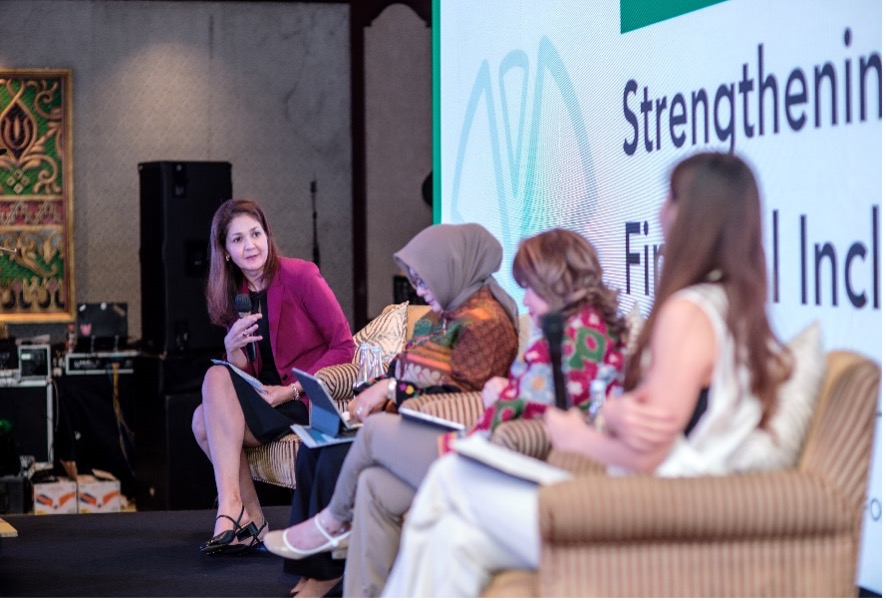
Deputy Minister Azizah described the challenges Indonesian MSMEs face regarding digital financing. With 97 per cent of the country’s e-commerce activity being conducted by MSMEs, generating around 1,280 trillion IDR (approximately C$103 million) every year, effectively supporting and advancing their businesses remains a significant task for her ministry. To address this challenge, the ministry has created numerous programs to enhance capacity building and digital intelligence among MSMEs, especially owners of micro-sized businesses (annual sales of up to 2 billion IDR, approximately C$160,715.00). She emphasized that increased support from and collaboration with other ministries and the private sector is vital to effectively scale these initiatives and address the sector’s needs.
Ms. Kamdani provided an overview of MSMEs across the APEC region, noting that they account for around 97 per cent of enterprises and employ more than 50 per cent of the combined workforce. ABAC has a strong interest in supporting MSMEs, with a key focus on market outreach, access to capital, and supporting their transition from the informal to the formal economy. She also highlighted that cross-border payments could improve MSME market access, citing the ASEAN QR code payment system launched in 2023 as an excellent example. This system is convenient for both customers—especially foreign visitors—and MSME owners, who can now access foreign buyers more easily. Ms. Kamdani added that not only has this initiative been highly successful, but it also supports other objectives, such as improving digital literacy among MSMEs and facilitating the formalization process.
Tamara Wu, who provided the MSME perspective, shared the story of her business, Liberty Society, and her experience as a young woman business owner in the supply chain. Liberty Society supports and employs refugees from Afghanistan and Iran, demonstrating how MSMEs can address social issues and help people across borders. Ms. Wu emphasized that digitalization is crucial for MSMEs, noting that her company now relies on artificial intelligence for 40 per cent of its decision-making. She also stressed that investment is vital for MSME development, and her own company has grown thanks to both domestic and foreign investors. Liberty Society’s story further illustrated how larger corporations can support MSMEs.
Ms. Kamdani shared her experience setting up a fund to support women startups in Indonesia, which provides both financial assistance and mentorship on practical skills such as digital financing. “By grounding policy dialogue in lived business realities, we can deliver more effective and gender-responsive MSME solutions,” said Ms. Nadjibulla in her concluding remarks.
Strengthening Women-Led MSMEs in Regional Value Chains
Following the panel, a roundtable discussion with ABAC members and senior government officials explored practical strategies for using digital tools to strengthen women-led MSME participation in domestic and regional value chains. ABAC Canada member Janet De Silva moderated the discussion among ABAC members from New Zealand, Thailand, Mexico, and Indonesia, who participated alongside senior officials from Indonesia’s Ministry of MSMEs, Ministry of Trade, Ministry of Women Empowerment and Child Protection, Ministry of National Planning, and the National Committee for Sharia Economy and Finance in Indonesia. Discussions focused on digital adaptation, formalization, certification and standards, export readiness, and the use of free trade agreements to unlock new market opportunities.
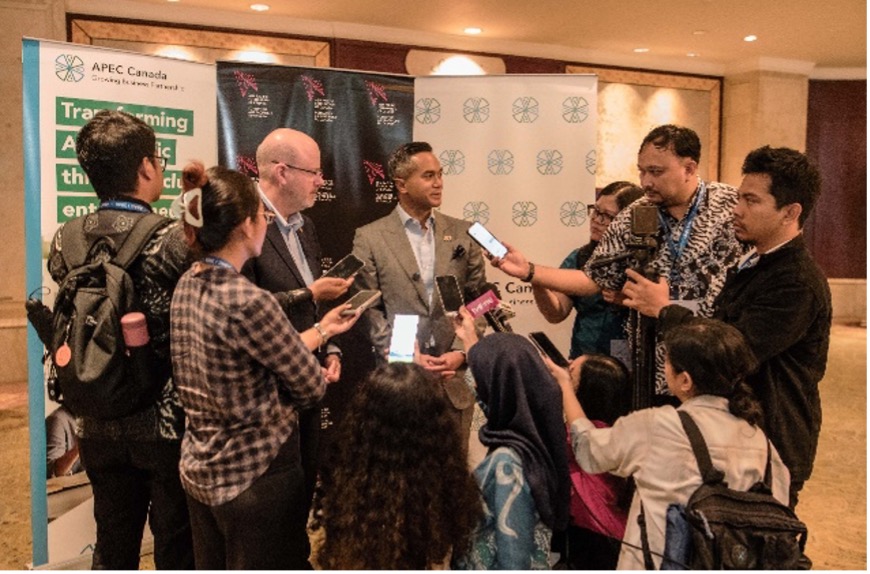
The Ministry of MSMEs showcased the recently launched Online Single Submission (OSS) platform for issuing Business Identification Numbers (NIB), and thereby supporting MSME’s transition from informal to formal status. The Ministry of Women Empowerment shared an example of using TikTok to train housewives in social media marketing, helping them avoid online scams and predatory online loans. New Zealand ABAC Member Brett O’Riley pointed out that governments can also support women MSMEs through procurement policies that benefit women, noting that New Zealand has used this approach to help its women and Indigenous MSMEs access markets and join supply chains.
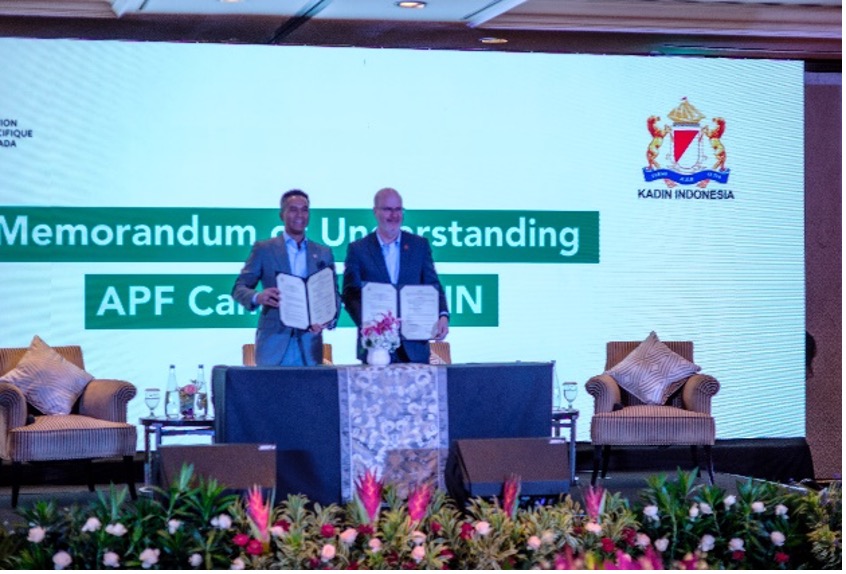
On the sidelines of the workshop, APF Canada and the Indonesian Chamber of Commerce and Industry (KADIN) formalized a new Memorandum of Understanding (MoU), reflecting the growing depth of Canada–Indonesia co-operation at the intersection of policy, research, and business engagement. Signed by Mr. Jeff Nankivell, APF Canada’s President & CEO, and Mr. Anindya Novyan Bakrie, Chairman of KADIN, the MoU establishes a framework for closer collaboration on foreign policy analysis, trade and commercial strategy, and applied research in areas of shared interest. Through the partnership, both organizations will exchange knowledge, conduct joint research, and convene policy dialogues on issues such as critical minerals, food and energy security, as well as the effective implementation of Canada–Indonesia economic agreements.
This event was part of Phase Two of the APEC-Canada Growing Business Partnership project — a five-year, C$2.5-million initiative funded by the Government of Canada and implemented by APF Canada in Indonesia, Malaysia, the Philippines, Thailand, and Vietnam. The project aims to promote inclusive economic growth for MSMEs with a focus on supporting women entrepreneurs.
• Edited by Erin Williams, Director, Programs, APF Canada