
So you thought the Universe was a place of peace and calm? Think again.
Yes, the night sky looks the same as centuries ago – a trustworthy and unchanging backdrop to daily life that helps to ease your mind.
But appearances are deceiving: cosmic detonations are all over the place.

Every so often, the seeming tranquility is punctuated by unimaginably powerful explosive events. Stars detonate, neutron stars flare, black holes collide.
For a flash in time, the Universe erupts with points of energy that are vastly more powerful than the Sun’s steady output – and astronomers get busy trying to make sense of the heavenly fireworks.
With an estimate of how each compares to the power output, or luminosity, of our Sun, here are 10 of the most energetic and enigmatic types of cosmic bangs that we know of so far.
Novae

100,000 times the energy of the Sun
On 29 August 1975, a bright new star appeared in the constellation Cygnus, the Swan. Nova Cygni 1975 (‘nova’ is Latin for ‘new’) remained visible to the naked eye for a week.
But it wasn’t a new star at all. Nova eruptions occur when a compact white dwarf – about as small as Earth but as massive as the Sun – sucks in material from a larger companion star in a tight orbit.
Gas from the companion accumulates on the surface of the white dwarf.
Eventually, temperatures become high enough to initiate a runaway thermonuclear explosion about 100,000 times as bright as the Sun.

Binary systems containing white dwarfs are plentiful, so nova explosions are pretty common.
However, really bright ones like Nova Cygni 1975 occur only a few times each century.
Since both stars in the binary system usually survive the turmoil, many novae are ‘recurrent’, albeit with long lag times.
The naked-eye star T Coronae Borealis, which last erupted in 1946, is expected to go nova again sometime in 2026. Stay tuned!
Type Ia supernovae

Five billion times the energy of the Sun
As the name implies, supernovae are much more powerful than novae. Indeed, they can even outshine their parent galaxy.
But just like regular novae, Type Ia supernovae occur in binary systems that contain a white dwarf star.
The difference is the white dwarf’s mass. If enough material is dumped on its surface and the dwarf becomes 40% more massive than the Sun, nuclear fusion will reignite in its very core and, within seconds, the star is completely blown apart.

Another way to blow up a white dwarf is for it to collide with another white dwarf in the same binary system.
This is probably the cause of the majority of Type Ia supernovae, although that’s not always easy to determine.
The galactic supernovae of 1572 and 1604, observed by Tycho Brahe and Johannes Kepler respectively, were Type Ias.
Since they are all thought to have more or less the same true luminosity, Type Ia’s can be used to gauge how far off their parent galaxies are, so they’re popular with cosmologists for working out the vast distances across the Universe.
Type II supernovae

100 times the entire lifetime energy of the Sun
The catastrophic stellar explosion in July 1054 that created the Crab Nebula in the constellation Taurus was a Type II supernova involving a solitary giant star.
At the end of its brief life, the core of a massive star starts to collapse under its own gravity.
Runaway fusion reactions lead to the formation of an ultra-dense 25km-wide (15.5-mile) ball of nuclear particles called neutrons.
The resulting avalanche of neutrinos (yet another type of particle) helps to violently tear the star apart, leaving behind the so-called neutron star (or, if the doomed star was massive enough, a black hole).
A single supernova (of either Type Ia or Type II) releases almost as much energy as the Sun does during its entire life.
That makes them visible – at least to large telescopes – across billions of lightyears.
From our perspective, supernova explosions are rare events: on average, they occur in the Milky Way about once a century.
But in a Universe containing many billions of galaxies, multiple supernovae go off each and every second!
Gamma-ray bursts

A trillion times the entire lifetime energy of the Sun
A Type II supernova is impressive enough, but when the dying star is very massive and rotates very fast, the resulting explosion can be even more energetic.
The massive star’s core collapses into a black hole, called a collapsar
The black hole propels two narrow jets of particles along its rotational axis, in opposite directions.
At near light speed, these jets plough through the star’s exploding outer layers and crash into tenuous shells of gas that were blown into space at an earlier epoch.
The result is a powerful, seconds- or minutes-long burst of gamma rays – the most energetic radiation in nature.

Gamma-ray bursts (GRBs) were first detected in the 1960s by American military satellites, but it wasn’t until 1998 that astronomers discovered their extragalactic nature and their incredible energies.
Today’s gamma-ray satellites, such as the Fermi Space Telescope, detect about one or two GRBs per day throughout the observable Universe.
GRB 221009A (the numbers indicate the date it was detected) was the most luminous cosmic explosion ever observed, about 1,000 times more energetic than your average supernova.
Fast X-ray transients

Billions of times the energy of the Sun
Short-duration bursts of energetic X-rays were first discovered in 2013 in archival data from NASA’s Chandra X-ray Observatory.
Without supporting observations at other wavelengths, astronomers didn’t know what they could be.
But the Chinese–European Einstein Probe satellite launched in 2024 has begun to solve the mystery; so far, it has detected dozens of fast X-ray transients (FXTs), sharing their positions with the astronomical community within minutes.
In one case, FXT EP240315a, the half-hour-long X-ray burst coincided with a 50-second gamma-ray burst and a faint optical transient – likely the GRB’s so-called afterglow.

This suggests that FXTs are associated with collapsars, although no one understands how the X-rays could start to emerge almost seven minutes before the gamma rays.
Moreover, some ‘dark’ FXTs have no optical or gamma-ray counterpart at all.
Others last for many weeks instead of minutes and could be caused by stars that are ripped apart by black holes.
Even the origin of EP240315a is uncertain; colliding neutron stars could also be the culprit.
Kilonovae

Hundreds of millions of times the energy of the Sun
Less luminous than a supernova but about 1,000 times more energetic than a classical nova, a kilonova occurs when two ultra-dense neutron stars collide.
The two stars spiral in towards each other as they lose energy through the emission of gravitational waves.
When they eventually collide and merge, they produce a short gamma-ray burst lasting less than two seconds or so, while the expanding cloud of debris emits visible and infrared radiation for days or weeks.
Most of the gold and platinum atoms in the Universe are forged in the nuclear cauldrons of kilonovae.
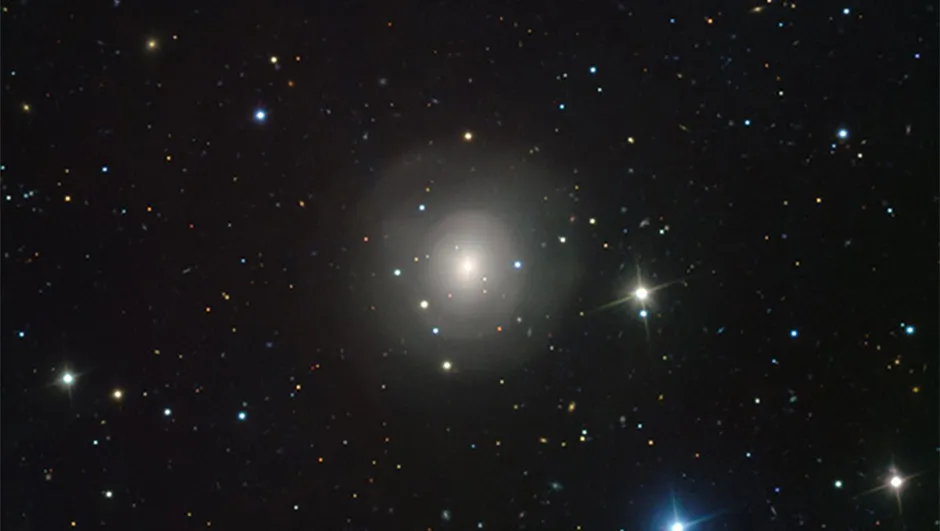
In late August 2017, this theoretical scenario was borne out when a brief burst of gravitational waves coincided with a short gamma-ray burst.
Within a day, telescopes in Chile found the associated kilonova in the galaxy NGC 4993. Although short GRBs are very common, not many kilonovae have been discovered so far.
Apparently, most collisions between neutron stars result in a black hole without leaving much of a trace.
Gravitational-wave events
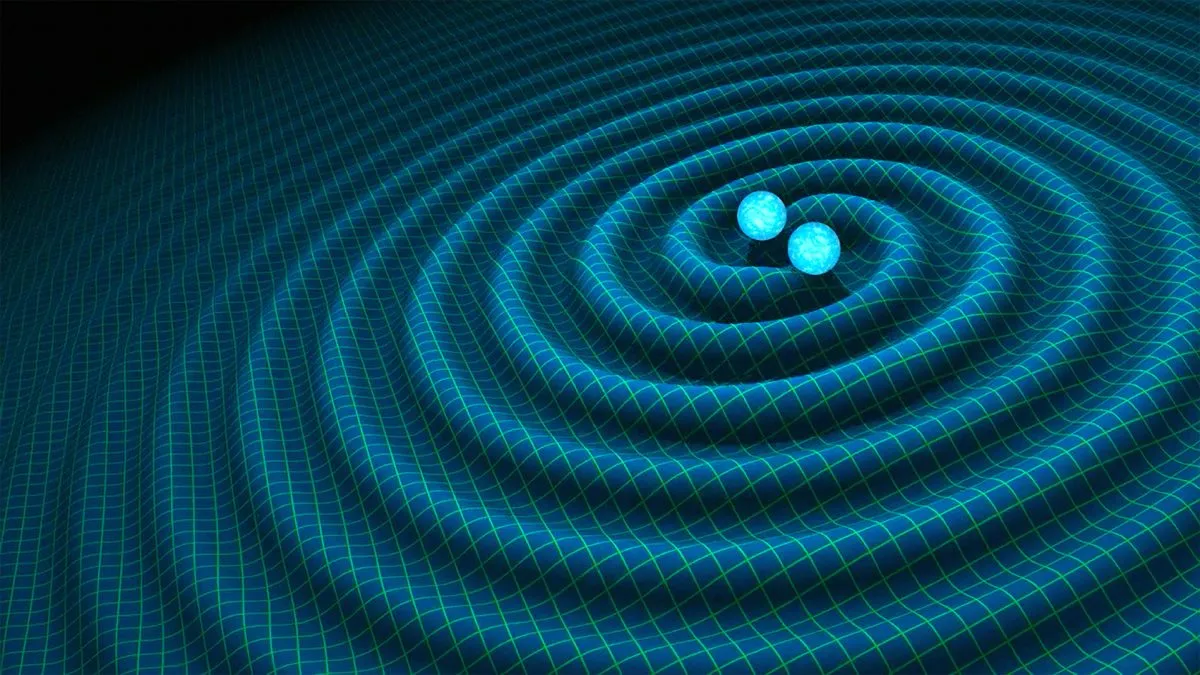
Tens of times the energy of all the stars in the observable Universe
Gravitational waves – tiny ripples in spacetime predicted more than a century ago by Albert Einstein – were first discovered in 2015 by ultra-sensitive detectors on Earth.
They’re produced when large masses are subject to high accelerations, such as when two compact objects – like neutron stars or black holes – orbit each other at close distance and eventually collide.
To date, a few hundred of these events have been detected and all but one appear to be due to merging black holes in remote galaxies (the exception being the neutron star mergers mentioned in the Kilanovae section).

The total amount of energy released in a gravitational-wave event is comparable to the energy of the most luminous gamma-ray bursts, but in the case of colliding black holes, no single form of observable radiation is emitted at all!
Future gravitational-wave detectors, both on Earth and in space, are expected to ‘feel’ each and every invisible explosion throughout the observable Universe.
Fast radio bursts
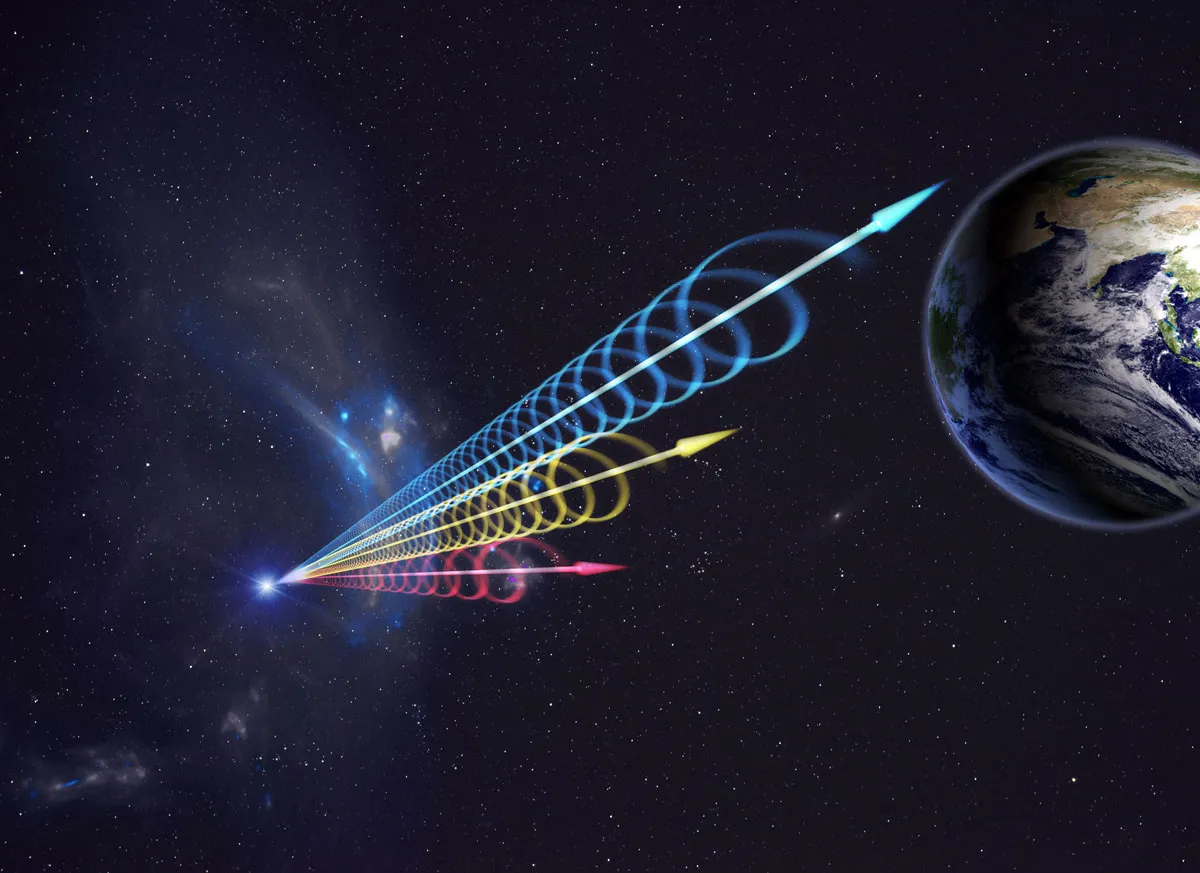
Hundreds of millions of times the energy of the Sun
Compared to the catastrophic phenomena we’ve described so far, fast radio bursts (FRBs) are modest explosions of low-energy radio waves.
Still, they pack a week’s worth of total solar energy into one thousandth of a second.
Because of their extremely brief duration, they weren’t discovered until 2007. Now, thousands of them have been observed all over the sky, usually in remote galaxies.
Some FRBs appear to be singular events; others repeat at irregular intervals.
Most astronomers believe FRBs are explosions on or near so-called magnetars – neutron stars with an incredibly strong magnetic field.
In fact, one magnetar within the Milky Way produced a (weak) FRB in 2020. But, as with the fast X-ray transients mentioned earlier, there may be multiple types.
Even if their true nature remains uncertain, fast radio bursts are playing an important role in cosmology.
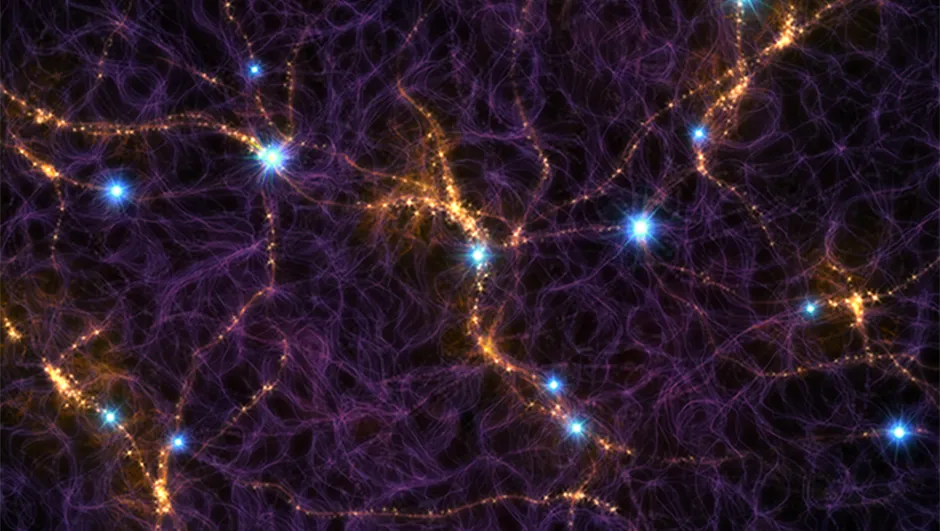
Charged particles that exist between the source and Earth leave their telltale fingerprints in the radio signals, so studying huge numbers of FRBs tells us about the distribution of matter in the Universe.
Tidal disruption events

Billions of times the energy of the Sun
If a transient astronomical event lasts for weeks or even months, could you still call it an explosion?
Maybe not, but tidal disruption events (TDEs) create about the same total amount of energy as regular supernovae.
First observed in the 1990s, TDEs are produced when a star ventures too close to a supermassive black hole in the core of a distant galaxy and is torn apart by tidal forces.
Dozens of TDEs have been found so far, usually by survey telescopes such as Hubble and the Zwicky Transient Facility.

Depending on the mass of the unfortunate star, it may take months or even years before all of the stellar remains end up in the black hole, after spending time in the hole’s accretion disc.
Radiation is produced over a wide range of wavelengths, from X-rays to radio waves, and for massive enough black holes, TDEs can briefly outshine their host galaxies.
The most energetic tidal disruption events, sometimes called extreme nuclear transients (ENTs), involve very massive stars and can launch gamma-ray-burst-like jets.
Luminous fast blue optical transients

Billions of times the energy of the Sun
Since 2018, survey instruments like the global ATLAS telescope network and the Zwicky Transient Facility (ZTF) in California have discovered weird supernova-like explosions that are bluer in colour than regular supernovae.
They also evolve at a faster pace. Since no one really knows what causes them, they are simply called luminous fast blue optical transients, or LFBOTs.
Most likely, LFBOTs are ‘smothered’ collapsars, where the collapsing star is enshrouded by a thick, dense cloud of gas.
The blast wave from the stellar explosion slams into this material, producing the bright (and rapidly fading) initial visible-light burst.

Meanwhile, the jets from the newly formed black hole are stalled. LFBOTs may result from a different type of star than gamma-ray bursts, but no one is really sure about their true nature.
The LFBOTs discovered by ATLAS and ZTF carry convoluted, hard-to-memorise designations, like AT 2018cow, ZTF18abvkwla and AT 2023fhn.
Creative astronomers, inspired by the letter combinations, have named them the Cow, the Koala and the Finch, respectively.
This article appeared in the March 2026 issue of BBC Sky at Night Magazine