
If you are giving a talk about climate change, the very last thing you want to do is flip through a series of slides with graphs and statistics showing greenhouse gas levels, temperature rise, the number of extreme weather events. You can’t fact-and-horror your way to convincing people climate change is real or spurring them to action—at least that’s the conventional wisdom, and the research supports this. People are motivated by stories and feelings and a whole tangle of irrational influences. Facts are a hard sell.
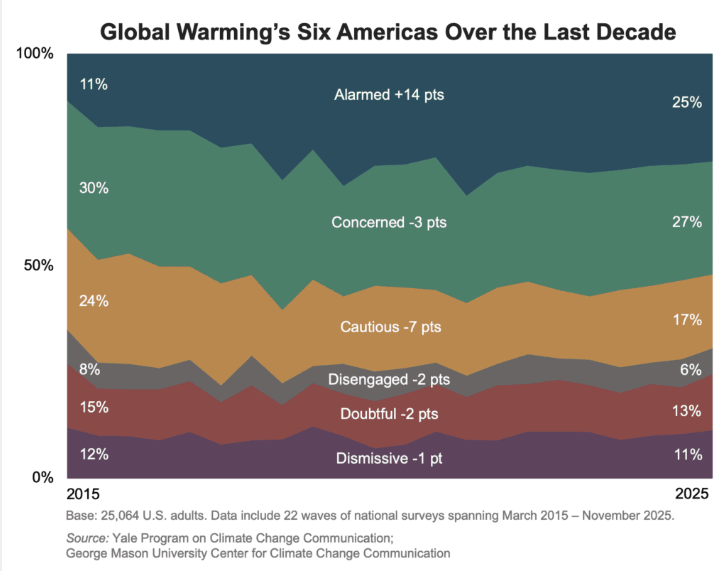
Unfortunately, facts and graphs and statistics are science’s best and most familiar tools. Which might explain, in part, why generations of climate scientists have been slide-flipping like crazy and, Cassandra-like, being mostly ignored, at least in the US. However, that’s changing. According to the latest Yale Climate Communications Six Americas Survey data, over half (52%) of Americans are alarmed or concerned about climate change, with 25% in the alarmed category. (Only 11% are dismissive, a persistent and apparently intransigent minority.) Meanwhile, across the world, over 80% of people want their governments to take stronger action to mitigate and adapt to climate change.
Communicating accurately—and motivationally—about climate change remains a challenge, though, especially in the current greed-motivated frenzy of moral poison and gleeful disinformation in the US. We are woefully science-illiterate and highly motivated to ignore facts we don’t like. To respond to his problem, newer generations of scientists are addressing the need for better science communication. Interestingly, many of the best current science communicators are women. RJ readers may know about Katharine Hayhoe, since she is not only an atmospheric physicist and master communicator, but also an evangelical Christian. Ayana Elizabeth Johnson, a marine biologist, author, and podcaster, is another one of my favorites. And then there’s Kate Marvel.
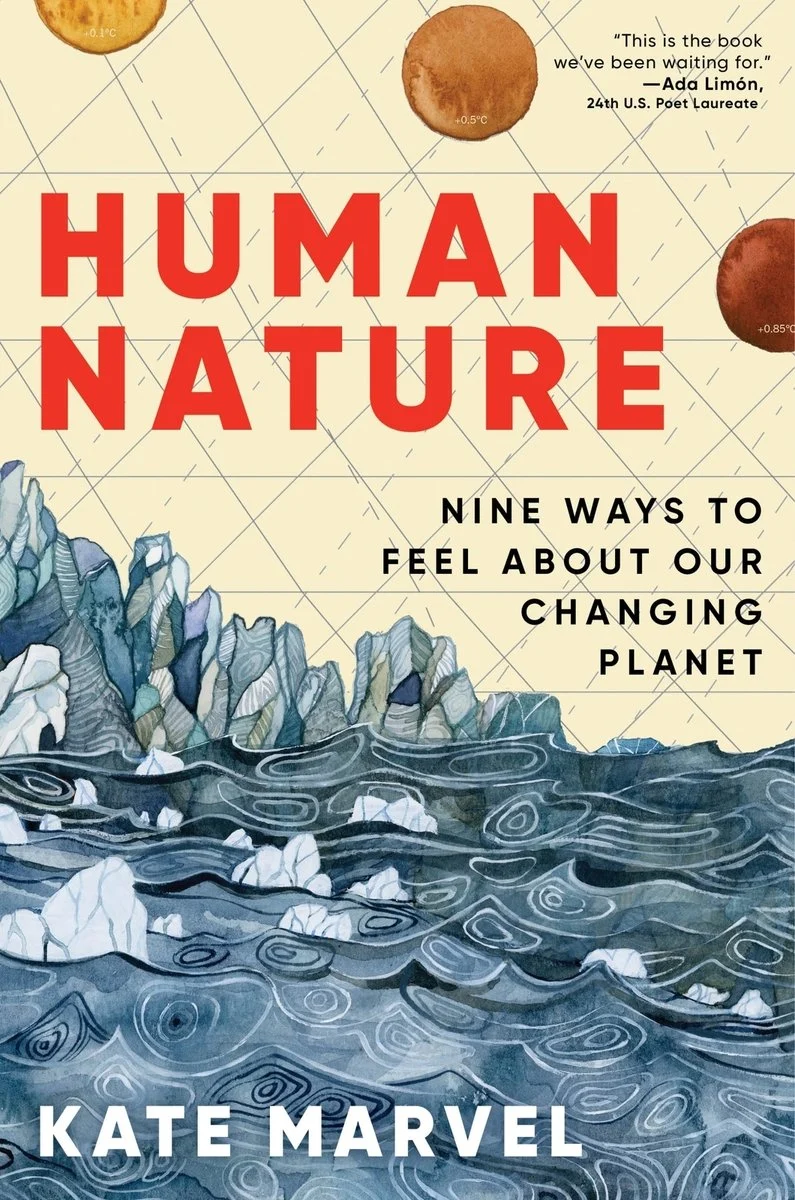
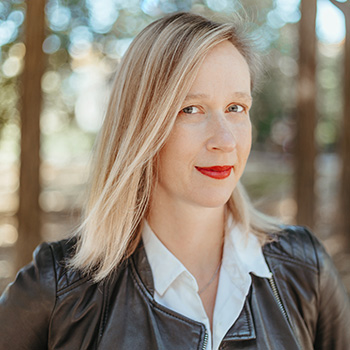
Marvel’s recent book, Human Nature: Nine Ways to Feel about our Changing Planet (Ecco/HarperCollins, 2025), takes that stories-and-feelings communications strategy as a cue for the book’s approach and organization. An astrophysicist, NASA Goddard climatologist, and climate modeler, Marvel is also—this may come as a surprise—a person. Traditional science has tried, for good reasons, to set aside the particular humanity of the researcher in the interest of objectivity. However, as Marvel discerns, maybe it’s time we communicate science to the public with more attention to who is doing the science and how it happens. In English 101 class, we might say that scientists are discovering the importance of ethos and pathos when they dish out all that logos. Marvel writes:
Aren’t researchers supposed to be perfectly objective, unemotional, and neutral about the world we study? I can’t be. I need to declare a conflict of interest regarding Earth: Everyone I love lives here. … Pretending we feel nothing about our changing world doesn’t make us objective. It makes us liars.
Marvel organizes the book by emotions that she (and all of us) feel: wonder, anger, guilt, fear, grief, surprise, pride, hope, and love. Each chapter tucks serious science into the folds of human stories, literature, history, personal narrative. The scientific explanations thread in and out so deftly, you hardly notice what’s happening. I found this approach captivating. I’ve read many, many books and articles on climate change over the last ten years, and I think this is one of the best, even for someone new to reading about climate.
Besides Marvel’s lovely writing—full of humor, longing, and good sense—the book’s greatest strength is the way Marvel not only explains the scientific results and facts but how we know these things. She’s clear about what we know: “Yes, it’s real. Yes, it’s us. Yes, it’s bad. Yes, we’re sure.” And she’s fair about what we don’t know. But Marvel understands how to translate technical jargon and embed science in everything from apt analogies to amusingly imagined movie scenes.
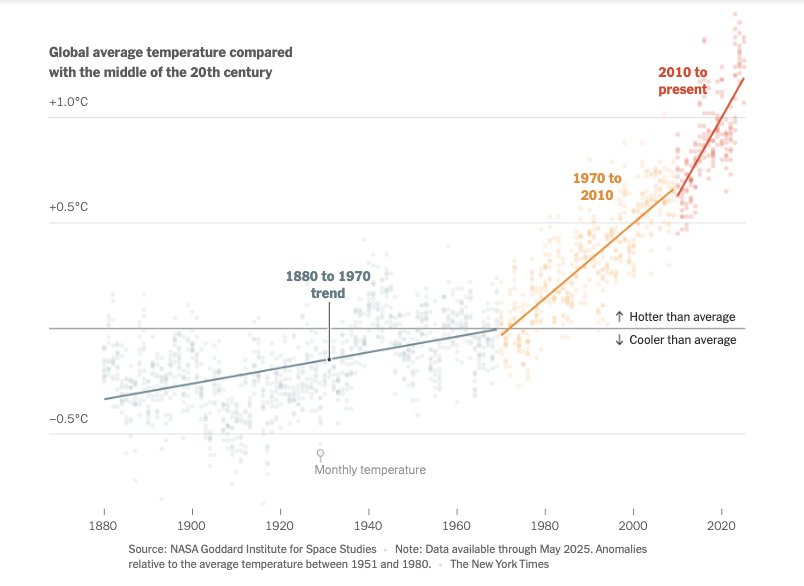
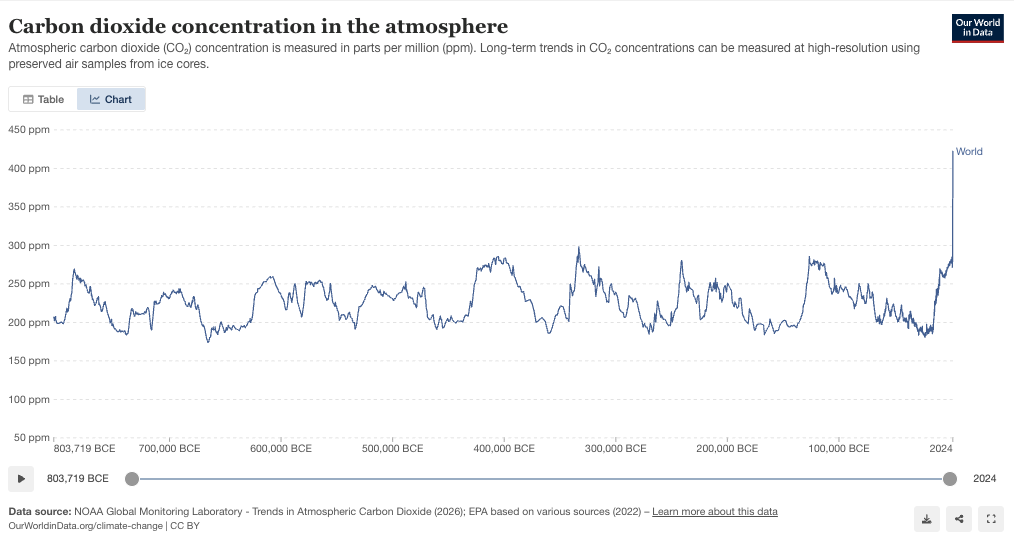
In the first chapter, Wonder, Marvel gives us a sense of how it feels to work with climate models, watching the world crash and burn or thrive and heal, depending on how you tweak the variables. In the Anger chapter, which comes next, she recounts the history of how we know that yes, excess CO2 is warming the planet, and yes, it’s from burning fossil fuels. She also gives a concise and chilling précis of the now-well-proven fossil fuel cover-up strategy. Exxon and the other fossil fuel majors knew already back in the 1980s exactly what burning their products would do to the planet, because their own scientists modeled it even more accurately than NASA. And instead of acting responsibly, Exxon and the other fossil fuel companies launched a distressingly effective, decades-long and ongoing strategy of disinformation and misinformation that plagues us still today.
Marvel’s anger is also, interestingly, gender-inflected. If people don’t believe older male scientists, imagine how they treat younger women scientists. In one of the funnier moments, she writes, “God save us from retired engineers,” having received numerous condescending letters from them attempting to explain to her that she’s wrong about climate change. “Let me tell you a thing or two, young lady,” is the tone, she writes. “[The letters] explain that the writer knows physics and should therefore be taken seriously. (My correspondents, it must be said, seem regrettably unaware of recent historical development that permit young ladies to know physics as well.)” [Sorry, engineers. We know you’re not all like that. –dkr]
In the Guilt chapter, Marvel patiently works through all the other culprits we might blame for a changing climate—orbital wobble, changes in the sun, volcanic activity, and so on—and explains how we know that these things, while they do have effects, are not the cause of our current debacle. The Fear and Grief chapters are about as hard to read as you can imagine.
My favorite chapter, however, is the one called Surprise. Here Marvel indulges her youthful love for terrible movies and writes a series of movie scenes in which scientists try to explain that we know the earth is getting hotter, but we can only predict how hot within a certain range. We have a hundred models, and they all show the same results, but the range differs: because clouds, believe it or not (for reasons she explains).
The chapter ends with a cheeky imagined movie scene in which world leaders all promptly do the right thing: “This is my dream: a movie in which the scientists issue a warning, everyone listens and acts accordingly, and then—surprise!—it turns into a romantic comedy. Please, I’m begging you: Make this movie. And then, to the extent possible, make it a reality.”
By the time you get to the end of the book, you’ve learned about geoengineering and carbon capture (not the magic solution billions of dollars in government subsidies seem to promise), feedback loops and tipping points, the history of the whaling industry, the Great Fog of London, the situation with ozone layer, and dozens of other relevant topics. The science, the history, it all slides down so easily when woven into human story.
The book ends with love, of course: her love for her husband and children, for California and Yosemite, even for her current home in Brooklyn. You feel with Marvel an aching love for this whole planet, for life. Her own current health struggles serve to intensify that aching love in her.
I think Marvel is exactly right to re-humanize scientists and the scientific process. After all, as she points out, we humans are the biggest variable in the climate models. We are the wild card that will determine what happens next. In the Hope chapter, she writes:
We clearly have no hope of preventing climate change; it’s already here. The world is more than 1.3° C (2.3° F) warmer than it was before the Industrial Revolution. It will get hotter still. We will not get a fairy-tale ending, maybe not even a tolerably happy one. Hope is difficult to cling to in these circumstances, and in the carnage on the news or outside my window I sometimes feel it slip away. Fine, then. Abandon all hope. We have something much better: certainty.
What she means is that we know what’s happening, we know why, we know what to do, and we have the tools to start doing it. She offers a short task list that is familiar to anyone who has been studying solutions: stop burning fossil fuels, build out renewable energy, reform land use, eat less beef, and so on. All these things are happening, which is the good news (actually, not so much the beef thing). They need to happen faster. Whether we will do the right thing as humans and actually work together on this massive project is the huge question hanging over us all. Previous environmental success stories, she writes, “show us that we will have to create the world in which we want to live. Science sets the limits; we write the story. It can be a hopeful one.”
Further reading, listening, and clicking
Kate Marvel. Human Nature: Nine Ways to Feel about our Changing Planet. ECCO/HarperCollins, 2025.
Ayana Elizabeth Johnson. What if We Get it Right?: Visions of Climate Futures. OneWorld, 2024 (new edition out this year).
This book focuses on solutions. Johnson’s chapters frame a series of lively interviews with people at the cutting edge of solutions across all sectors, from grid-scale batteries to regenerative farming.
Johnson’s interview with Marvel on her podcast.
Bill McKibben. Here Comes the Sun: A Last Chance for the Climate and a Fresh Chance for Civilization. Norton, 2025.
If you need some encouragement, read this one. It’s the most optimistic book McKibben has ever written, and that’s saying something from the author of The End of Nature way back in 1989, the first general-reader book on climate change (he’s written dozens of books since, too). Here Comes the Sun is an up-to-the minute account of the solar energy revolution and the clean energy buildout that is happening across the globe at breakneck speed (even, sort of, in sluggish, oil-drenched America). McKibben emphasizes the massive geopolitical decentralizing of power that this revolution entails, a theme worth pondering this week with the news from Iran.
Genevieve Guenther. The Language of Climate Politics: Fossil-Fuel Propaganda and How to Fight It. Oxford, 2024.
A good one if you want to understand the rhetorical strategies of various shades of climate denial and obfuscation.