Researchers at Haifa’s Technion-Israel Institute of Technology and Cornell Tech in New York City have taken an ancient Middle Eastern method of cooling down a room and given it a modern twist.
In their peer-reviewed study, the scientists say they have developed an eco-friendly method for making quick, low-cost hollow ceramic pipes that cool their surroundings via the evaporation of water, without polluting or using a power grid.
The research was conducted before the Cornell student assembly voted to cut ties with the Technion last week, alleging that Technion’s involvement with the Israeli military violates international law. Resolutions approved by the assembly are brought to the university president, who can accept or reject them.
The system, called CeraPiper, was developed by Ofer Berman, 40, a visiting assistant professor at the Technion specializing in industrial design, under the supervision of Thijs Roumen, assistant professor at Cornell Tech and director of the Matter of Tech Lab, and Ethan Zhi Ming Seiz, an undergraduate summer intern at Cornell Tech.
Berman told The Times of Israel that his research is in response to severe climate change, explaining that 2023 was the hottest year on record since meteorologists began tracking annual temperatures 174 years ago.
The heat has made air-conditioning systems “increasingly essential,” he said. “They cool things off inside but send hot air back into the environment.”
His concern for the way air conditioners pump greenhouse gases into the atmosphere, adding to dangerous rises in the earth’s temperature, prompted his development of a sustainable cooling system he called CeraPiper.
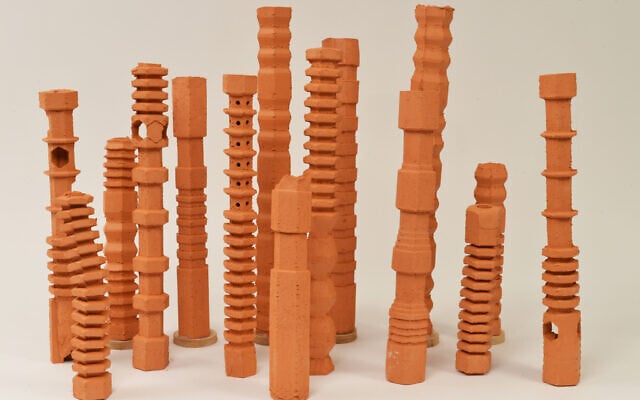
Berman’s proof-of-concept study, recently published in The Association for Computing Machinery, could pave the way for the development of pipes that provide coolness without damaging the environment.
‘Similar to sweating’
The CeraPiper cooling technology is based on simple water evaporation, Berman explained.
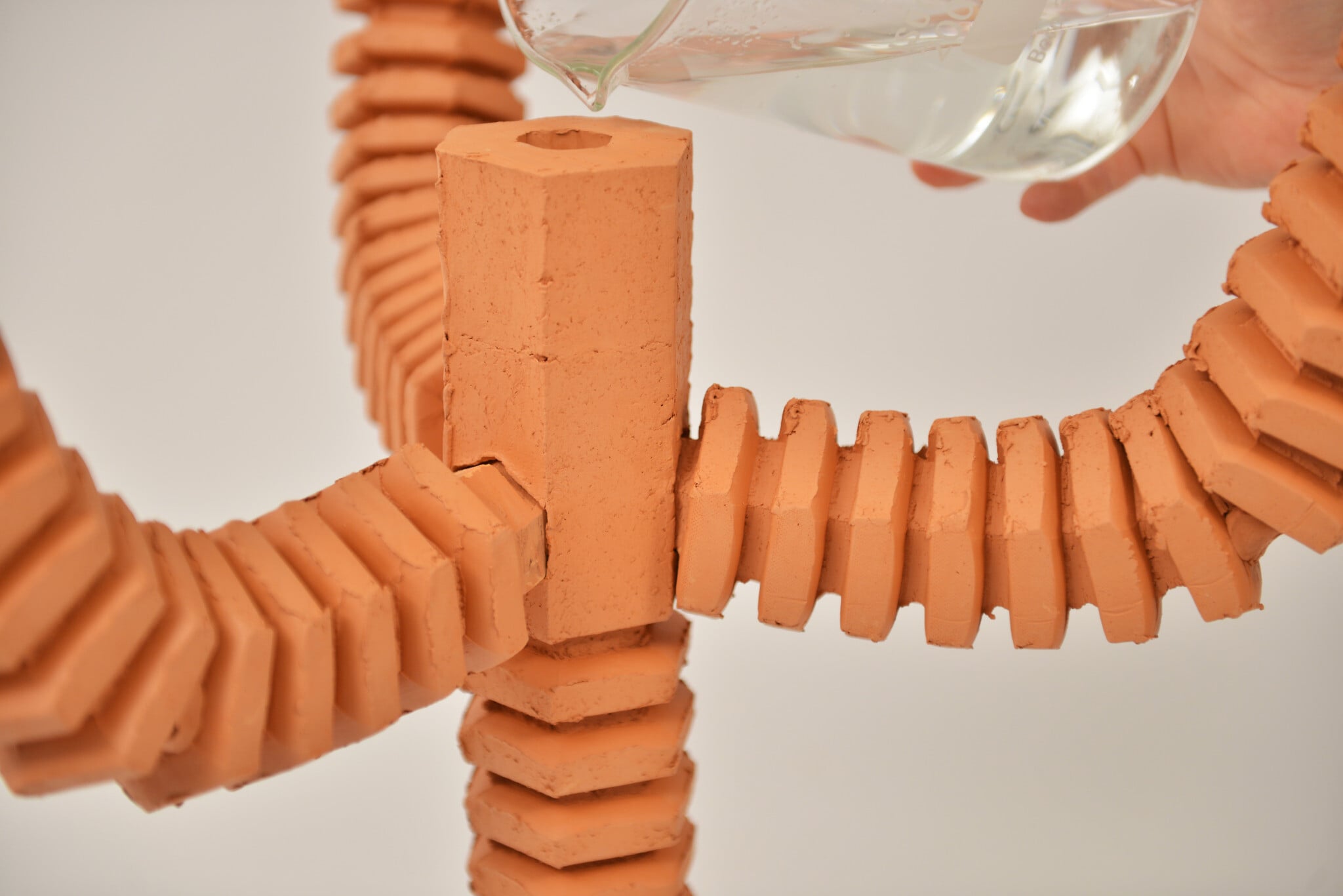
As water evaporates from the porous, unglazed pipes, it absorbs heat from the air, which makes the room feel cooler. The process is similar to sweating: when people are hot, their body produces sweat, and when that sweat evaporates off the skin, it takes body heat with it, leaving the skin feeling cooler.
Similarly, the ceramic pipes allow water to move to their surface and evaporate, removing heat from the environment.
Berman said he was inspired by traditional cooling techniques in the Middle East, including the Egyptian jarrah, a clay pot that can cool down water.
Around the world, Berman said, scientists are increasingly interested in trying to create alternative cooling methods because of severe climate change.
“There is an emerging role of designers as developers of their own fabrication tools and material systems, rather than users of off-the-shelf technologies,” Tom Shaked, head of the Architectural Robotics and Construction Automation Laboratory at Ariel University, told The Times of Israel. Shaked was not involved with the study.
At first, Berman tried 3D printing to manufacture clay pipes, but said the process took too long, so he decided to work with a machine that potters use for clay production.
The researchers took a standard industrial clay mixer, known as a pugmill, and added a custom-built nozzle, called a dynamic die, that the researchers could change according to a computer program that they developed.
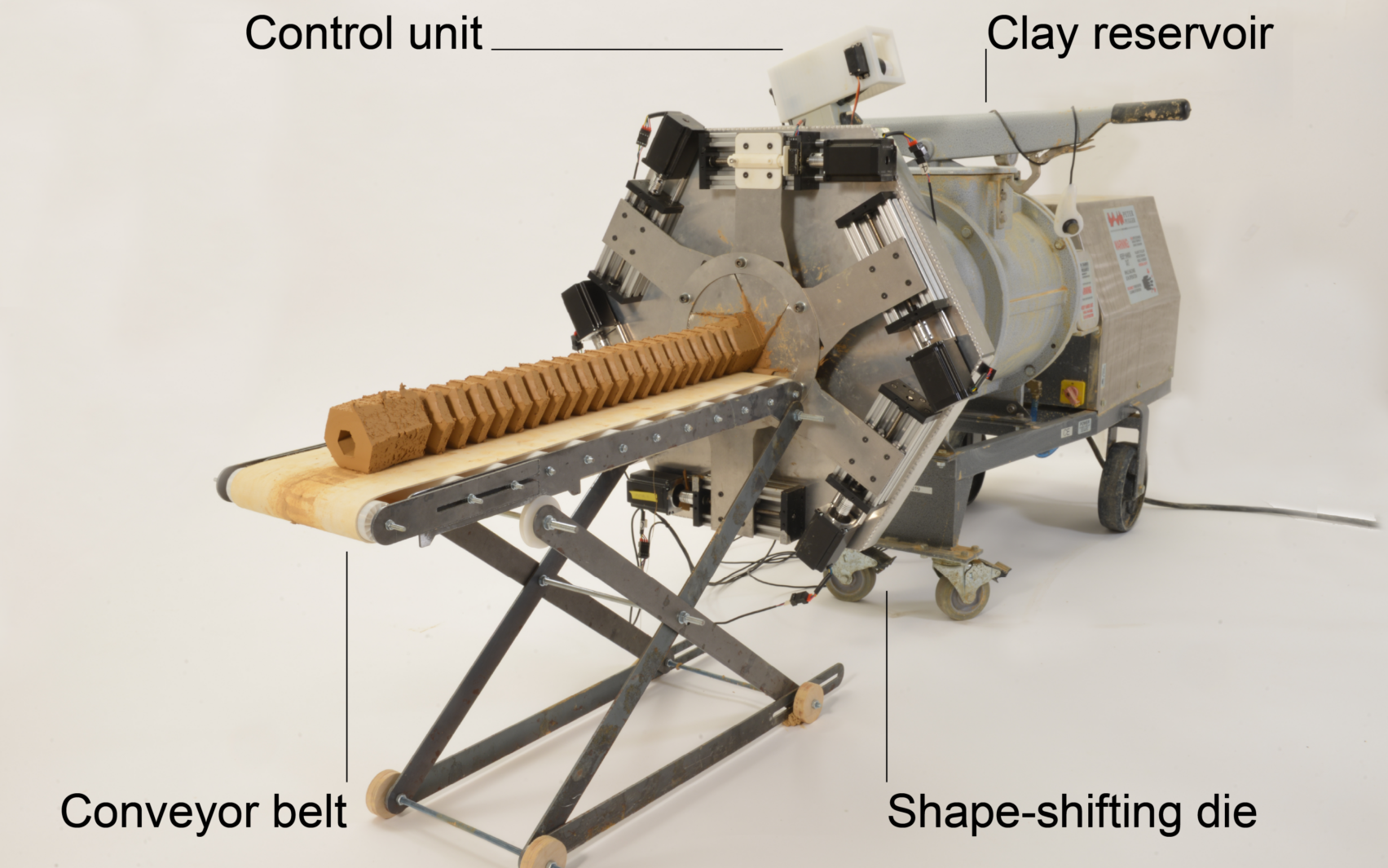
The program allows the researchers to change the diameter, shape, and length of the clay pipes. This allows the machine to create a wide variety of custom pieces without stopping to change parts.
Because the clay remains soft and flexible immediately after it is pushed through the machine, it can be hand-bent or molded into complex curves.
“If we don’t like the design, we can also turn it back into a mound of clay and try again,” Berman said.
Once the desired shape is reached, the pipes are hardened in a kiln at 900 degrees Celsius, or about 1,650 degrees Fahrenheit. The sections can then be connected to build customized cooling structures specifically designed to fit the dimensions of any room or outdoor space.
During a 60-hour period, “the evaporative cooling clearly reduced the temperature” in the chamber used to test the device, Berman said.
“By merging hardware, advanced computational design, and traditional ceramic knowledge, the work turns passive evaporative cooling into a scalable architectural component,” said Shaked, whose lab is working toward incorporating technology-driven solutions for architecture and construction.
Shaked added that “craft-based environmental know-how is not a relic of the past but a critical foundation for innovations in low-energy building technologies.”
Berman said that the pipes can now provide “thermal relief through evaporative cooling on a small scale.”
The innovative method now “opens the door” for projects ranging from cooling entire buildings to regulating the temperature in greenhouses.
“There are exciting future opportunities to explore,” Berman said.