
Director: Stephanie Laing
Writers: Jonathan Keasey, Brant Boivin
Stars: Rose Byrne, Octavia Spencer, Simon Rex
Synopsis: The true story of Amanda Ogle (Byrne), a homeless Seattle woman who fought her way out of tow-company hell to reclaim her life and car after receiving a tow bill for $21,634.
David vs. Goliath. Ford vs. Ferrari. Rocky vs. Apollo Creed (or Clubber Lang, or Ivan Drago). Bard vs. Smaug. The story of the little guy (or girl) who stands in the face of great odds and manages to come out on top is indelible in many cultures, including our own in the world of film. There is something inherently relatable about watching this battle, as most of us feel crushed and stomped upon by the Goliath in our own lives. This is especially true when our opponent is the system we all live under, as opposed to a particular person, regardless of size and/or skill.
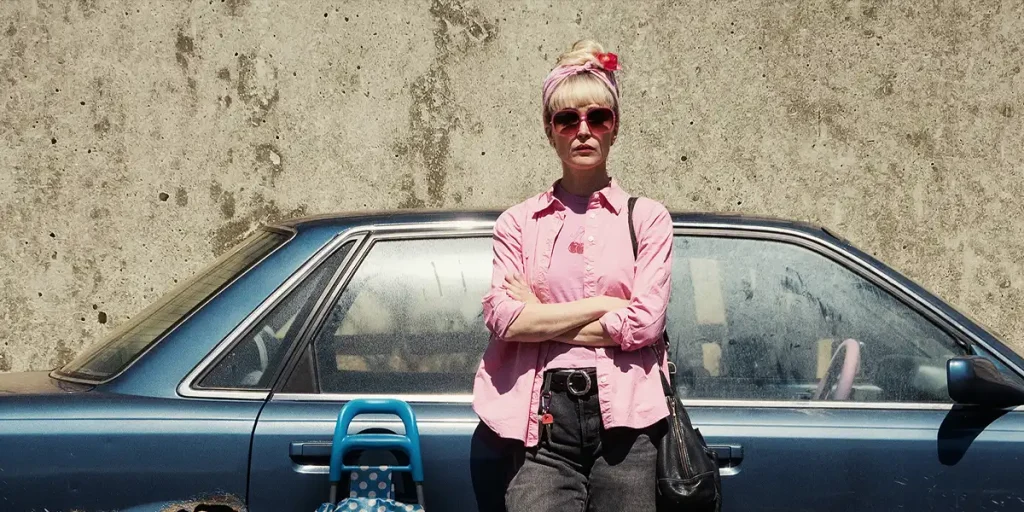
In Tow, based on a true story, Academy-Award nominee Rose Byrne plays Amanda Ogle, a woman who has been wronged by the system, and possibly by life itself. We are introduced to her during a job interview in which she swears that she has appropriate experience in pet grooming but has had to write it in the margins because of printer issues. The camera focuses on Byrne’s face in an uncomfortably close manner, which seems to be a pattern now, after If I Had Legs I’d Kick You. Byrne is one of the best actors currently working and is well up to the challenge of this level of focus, even when saddled with a vocal choice that a lesser actor would have folded under.
Immediately after this, her car is stolen, dropped off elsewhere, and then towed. Amanda attempts to get her car back, but the company has saddled her with the bill (which eventually escalates into thousands of dollars). Quickly, we find out a number of things about Amanda. She is not only unemployed, but is currently living in her vehicle, a 1991 Toyota Camry. Add on to this, she is struggling with substance abuse and has a contentious relationship with her daughter, Avery (Elsie Fisher), due to her absence.
And herein lies the problem with this, and many other movies about the plight of real people. In trying to do justice to them as complete people, movies can get easily muddled in what they are trying to get across. Is this a movie about recovery? Family? Fighting the capitalist system? The answer, of course, is all of the above. But sadly, most of these ideas never come to fruition in a cohesive or complete way.
The only things that Tow really has going for it is a pretty standard uplifting story and Rose Byrne, herself. Byrne holds court throughout the runtime and remains likeable, while also pulling at the heartstrings, especially during difficult phone conversations with her daughter. She seems to have an innate ability to pull us in, which is sorely needed here. As expected, Amanda makes some poor choices, but there is not a moment where we feel pulled to leave her side.
As she moves through the court system, and is assisted (kind of) by a well-meaning lawyer, Kevin (a sadly underused Dominic Sessa), a mechanic (Simon Rex), and a stern homeless shelter manager, Barb (Octavia Spencer), one cannot help but wonder if a more streamlined version of her story would be more effective. That being said, Byrne manages to keep all of these strands together, aided by a narrative device using her journal, which finally comes together at the climax of the film.
Spencer, in particular, is frustrating because this is a character she can play with one arm tied behind her back. Barb is a role that could have been fleshed out even more and feels like a waste of her many talents. Tow also engages in a bit of stunt casting with its other shelter residents. Denise (Ariana DeBose) and Nova (Demi Lovato) are the two main culprits, and their sole job is to provide distraction and motivation for Amanda when she loses a bit of steam. DeBose continues a troubling trend of uninspired choices after her Academy Award win, though this is nowhere near as embarrassing as Love Hurts. Lovato, on the other hand, shows promise, but you can basically start a countdown until she sings. Is it a good performance? Yes, but like most of the film, deeply predictable.
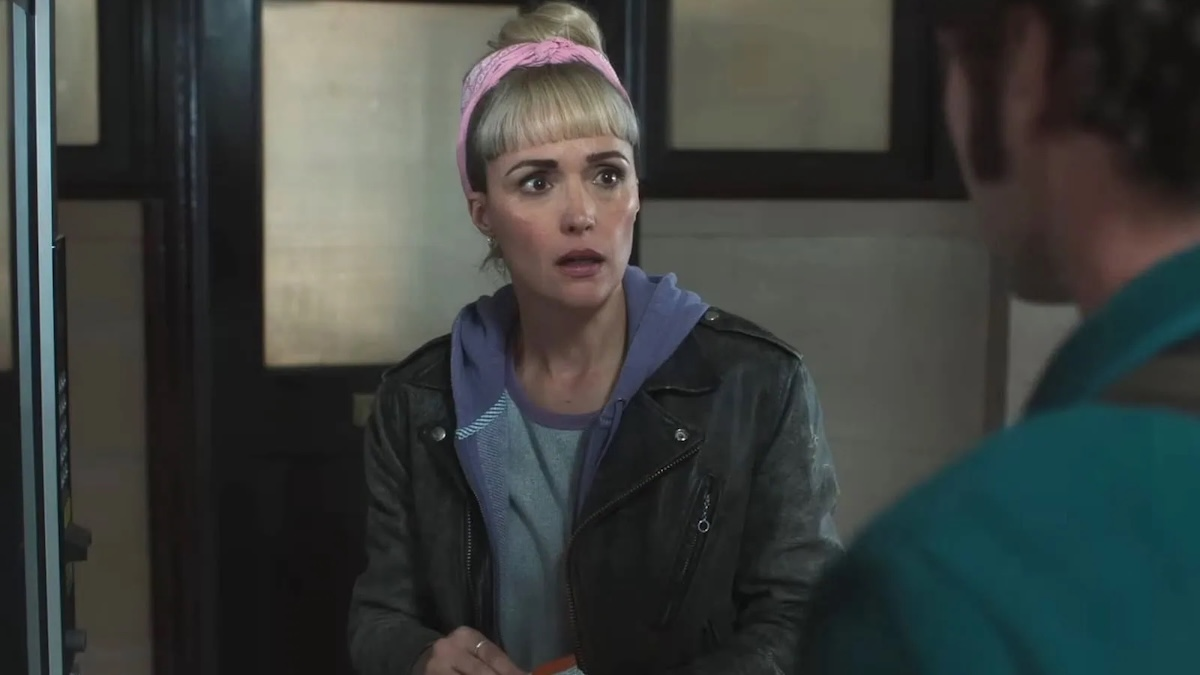
And frankly, that is all of Tow’s issues boiled down into a succinct sentence. It offers no surprises, even if you were not aware of the real-life story behind the film. Yes, our protagonist has her share of faults, but none of them are deep enough to challenge the audience. The antagonists, especially the lawyer for the tow truck company played with relish by Corbin Bernsen, are so cartoonishly evil that even these scenes are more laughable than enraging, as they should be. So, while it is impossible not to be moved by a woman wronged by the system, especially during a scene in which Byrne reads from her journal in a perfectly halting, emotional speech, one can’t help but think they have seen this all before, and in this exact order.