
A report from the Macau Economic Association notes the continued expansion of tourism-driven demand in the hospitality sector, including casino gaming.
In a report released Sunday, the Macau Economic Association (MEA) noted the region’s positive post-pandemic trajectory, particularly in gaming, tourism and hospitality. The recovery continues, the think tank stated, though “the overall performance [is] still uneven”.
For the first two months of 2026, gross gaming revenue reached MOP22.63 billion and MOP20.63 billion respectively ($2.8 billion and $2.5 billion) – up 13.9% year-on-year. Average daily revenue topped out at 7.30 billion yuan and 7.37 billion yuan for January and February, the second and third highest levels for a single month since the onset of the Covid-19 pandemic.
Study upbeat on tourism, revenue trends
Tourism-related indicators hold strong, with “overheated” visitor arrivals and hotel occupancy, the report continued. Tourism rebounded to 40 million visitors last year, up 14.7% over 2024 and beating the record of 39.4 million posted in 2019. This year, officials have set a target of 41 million arrivals, an increase of 2.3%, for a potential new high.
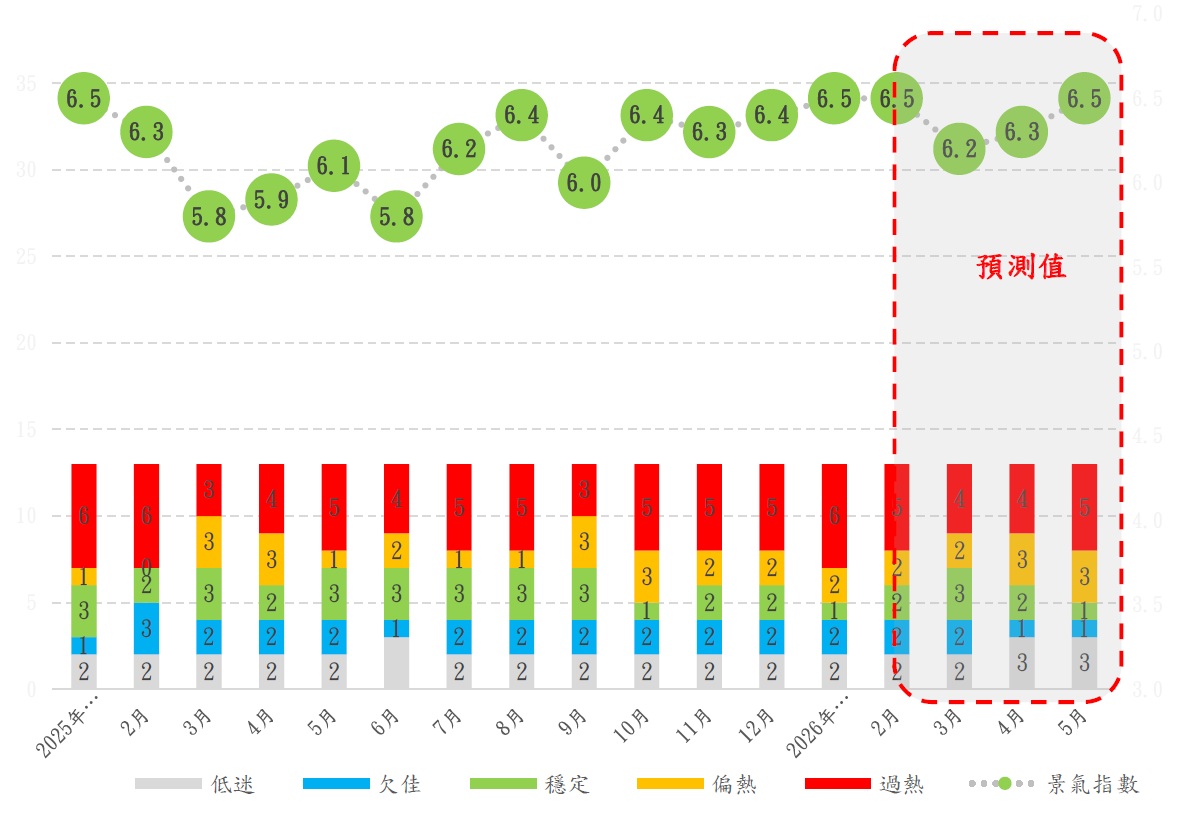
According to the MEA, Macau’s economic prosperity index will remain steady through the first quarter, with “stable” scores between 6.1 points and 6.3 points. The index is tabulated based on 13 elements, including GGR, tourism, hotel occupancy and the jobless rate.
Citi analysts forecast MOP22.5 billion in GGR for March, up 14% over the same period in 2025. JPMorgan expects growth of more than 10% this month, boosting first-quarter totals from between 13% and 14%. Seaport Research projects a GGR increase of 12.5% for March, for first-quarter GGR growth of 13.4%.
Bracing for effects of Middle East conflict
Despite the mostly favourable outlook and direction provided by China’s newly approved five-year plan (2026-30), the MEA warned that the rise in geopolitical tensions in the Middle East “may be relatively long-lasting”.
“Rising energy prices may exacerbate the cost of living for residents and erode corporate profits, further reducing consumer sentiment,” the report continued. “In the future, we must pay attention to the difficulties and challenges brought about by changes in the external environment and unbalanced and inadequate internal development.”

Marjorie Preston
Marjorie began her gaming career in 2007 and has focused on Asian gaming markets since 2020. Outside of work, she writes about travel and film and plays the drums.