
Long before the craze for “verified” social media accounts and an insatiable hunger for “followers,” there lived a portly man with a distinctive silhouette, who had understood the significance and hidden potential in branding through self-promotion. Quite a bit like today’s content creators—except, instead of the fast-food entertainment (?) of TikTok, he created multimillion-dollar blockbusters and timeless classics.
Initially, when Alfred Hitchcock started making movies, it was nothing but a “filler,” a practical solution to occupy an empty space on screen. But as years went by, Hitchcock grew into a Midas and started moving the needle, and with him, his transient “fillers” also gained status. They became a sophisticated game. Soon thereafter, these fillers didn’t remain just cameos or random appearances; they became calculated beats that established a direct, witty connection between the creator and the viewer.
Hitchcock turned himself into an Easter egg and ensured that audiences remained hyper-focused on every frame. This is a prime example of a visionary filmmaker gamifying the theater experience. By doing so, he made sure his face became as famous and noticeable as his leading men. Quite a genius move to keep his brand alive through every story he told!
The Art of the Subtle Silhouette
From Necessity to Nuisance
In the earlier days, these walk-ons or cameos were often just to save money on extras or fill a literal gap on the screen. But Hitchcock’s serious talent (and his unique, idiosyncratic personality) caught the audience’s attention. It became their obsession to spot him. Sadly, that was counterproductive to the viewing experience; they began ignoring the plot so they could focus on “finding Hitchcock.” This forced the director to change (modify) the strategy. He reduced his screen time and the number of times he would appear on the screen significantly. Now he started appearing only once, only for a few passing seconds, and only during the earliest few minutes of the movie.
Hitchcock’s Digital Thumbprint
While painters put their signatures on their art pieces, Hitchcock became the visual signature and “authenticates” his films—“Original Hitchcock.” This high-level marketing tactic made him the most recognizable director in the world. See it for yourself; there are several “Greats,” Billy Wilder, Orson Welles, Steven Spielberg, and many others, but the kind of visual recognition Hitchcock has is unsurpassed—except for Charlie Chaplin.
That’s a visionary move: refusing to restrict himself only behind the lens and stepping into his own cinematic universe to claim ownership of the tension he created for his viewers.
Alfred Hitchcock’s 19 Most Memorable Cameos
1. A photographer outside a courthouse (Young and Innocent, 1937)
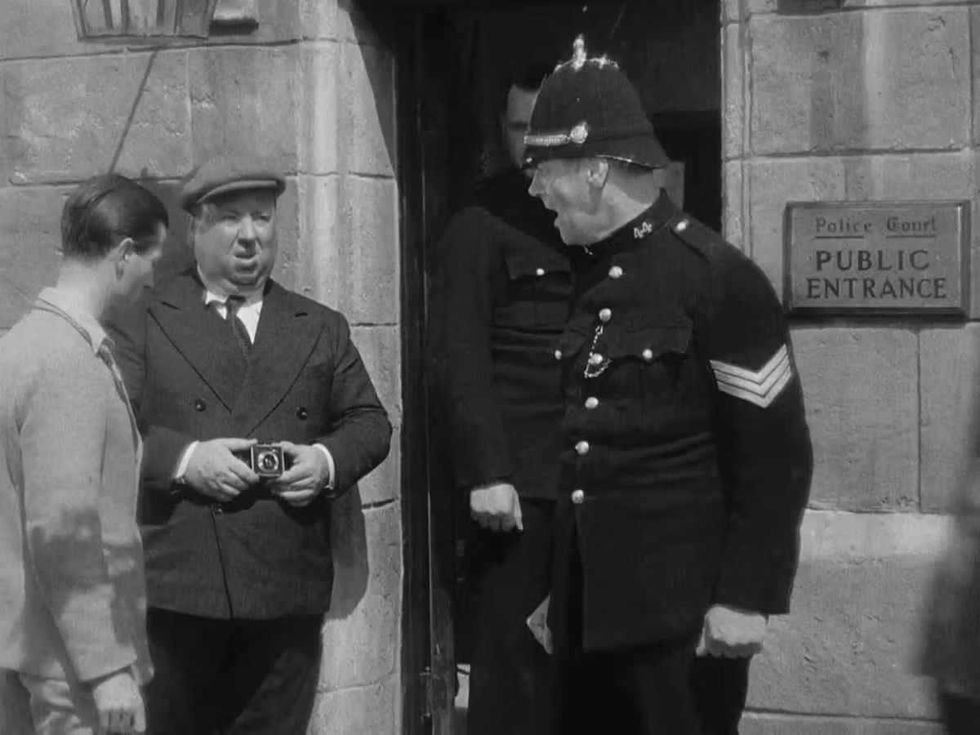 Young and Innocent, 1937Credit: General Film Distributors
He is seen holding a camera while standing with a disgruntled man and a police officer outside a courthouse.
2. A “before” and “after” weight-loss ad (Lifeboat, 1944)
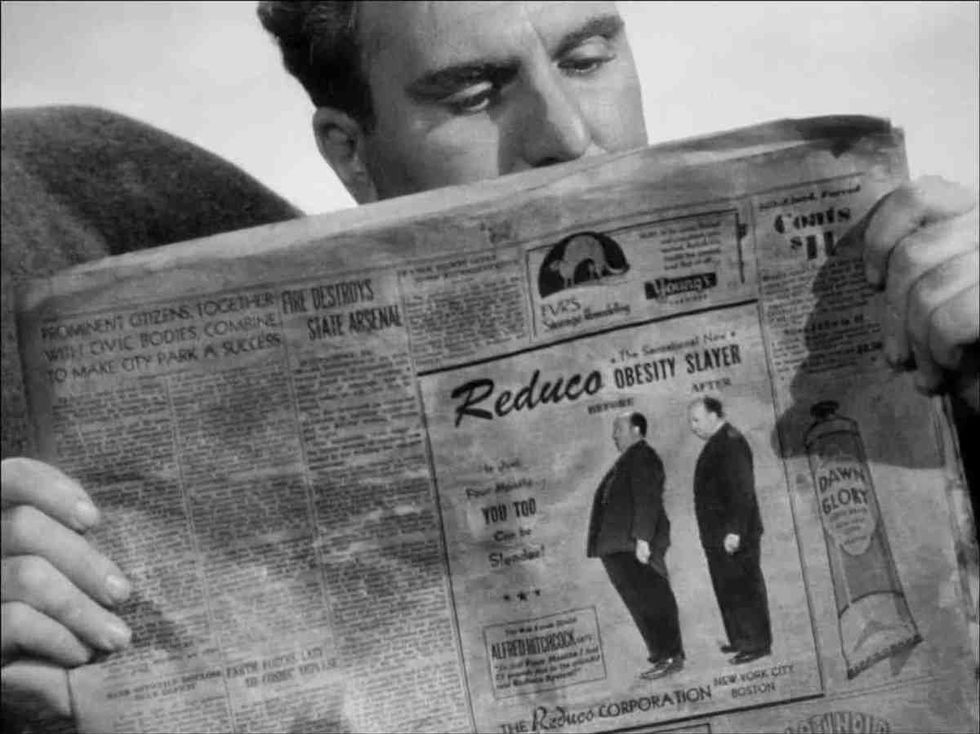 Lifeboat, 1944Credit: 20th Century Fox
In the film that entirely takes place on a boat, Hitchcock appears as a model in a newspaper advertisement for a fictional weight-loss drug.
3. Stepping out of an elevator with a violin case (Spellbound, 1945)
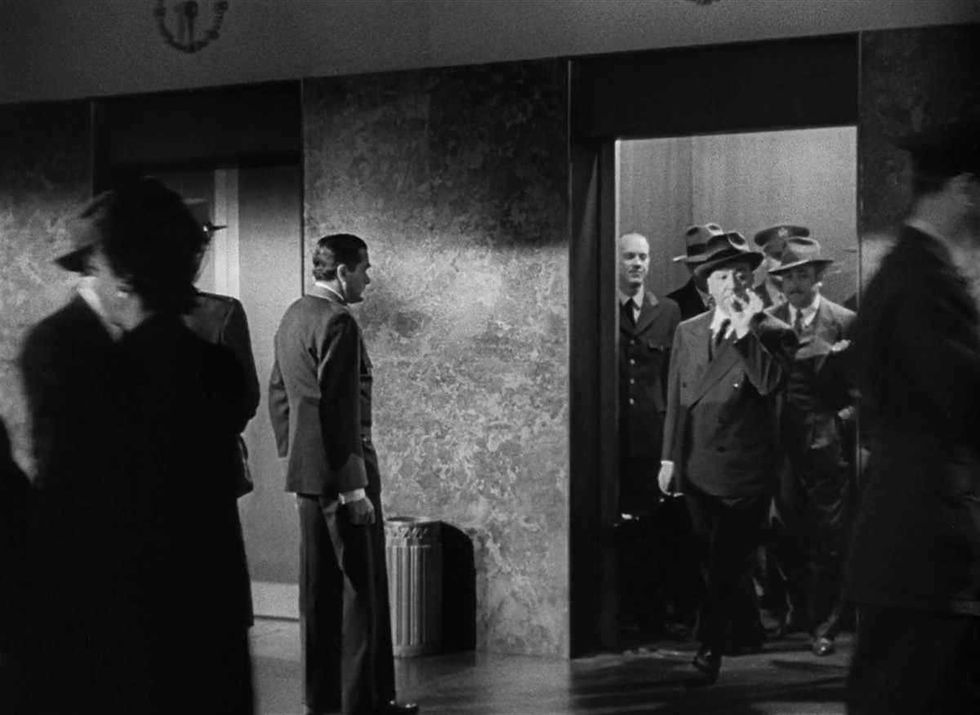 Spellbound, 1945Credit: United Artists
He steps out of a lift in a crowded hotel lobby while carrying a violin case.
4. A thirsty guest at a lavish, high-society party (Notorious, 1946)
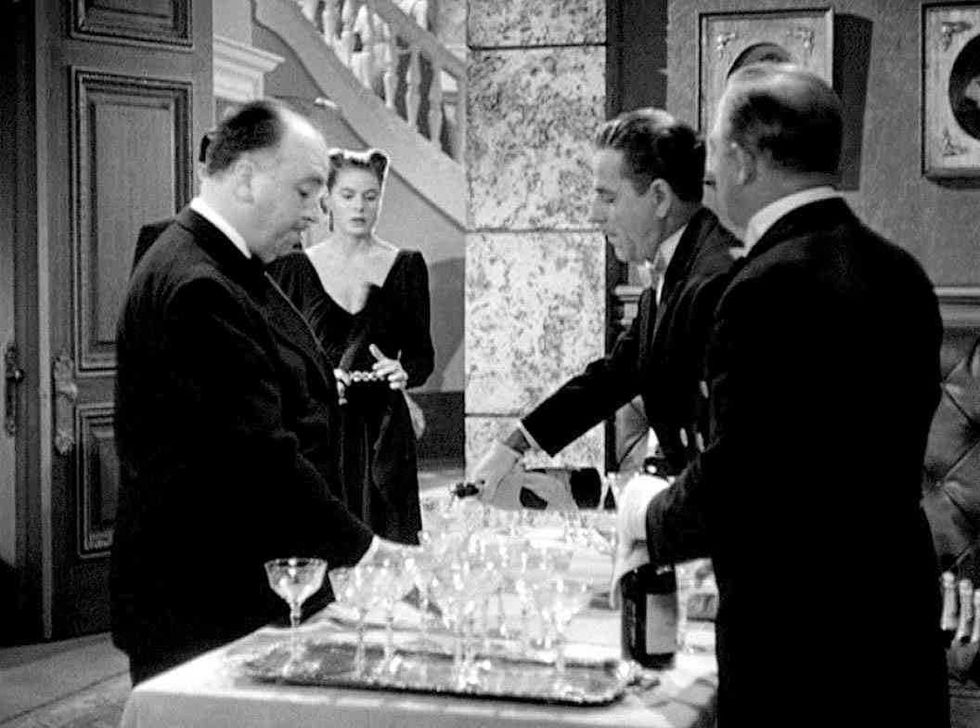 Notorious, 1946Credit: RKO Radio Pictures
He can be quickly spotted sipping a glass of champagne at a massive party before disappearing into the crowd.
5. A train passenger lugging around a cello (The Paradine Case, 1947)
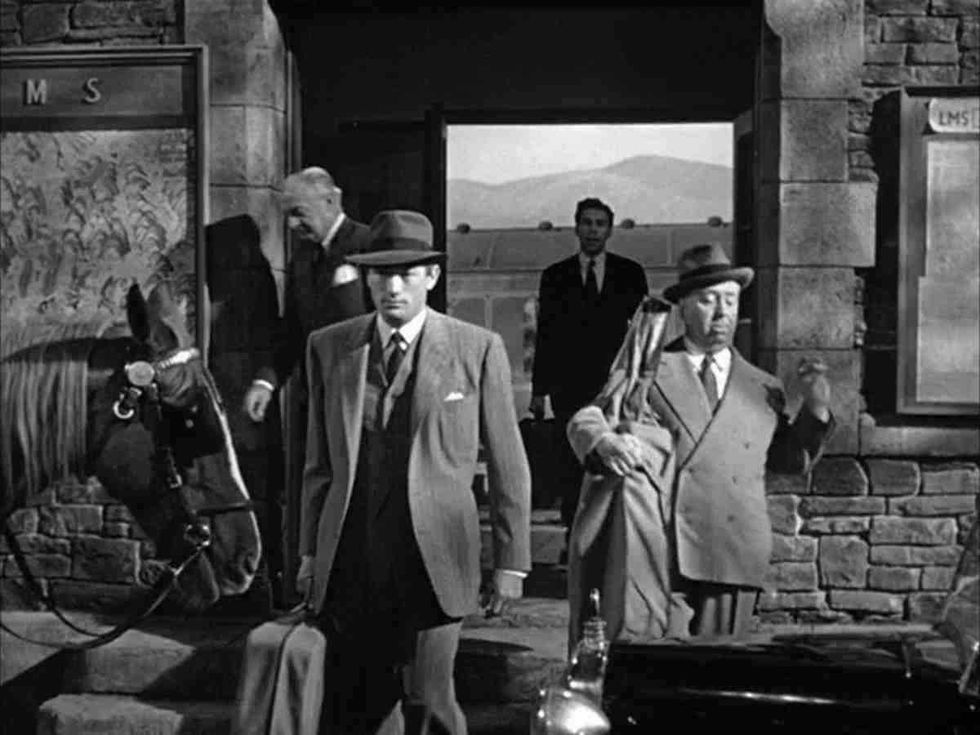 The Paradine Case, 1947Credit: Selznick Releasing Organization
He is seen leaving a train station while puffing on a cigarette and lugging a large cello case.
6. A passerby casting a backward glance (Stage Fright, 1950)
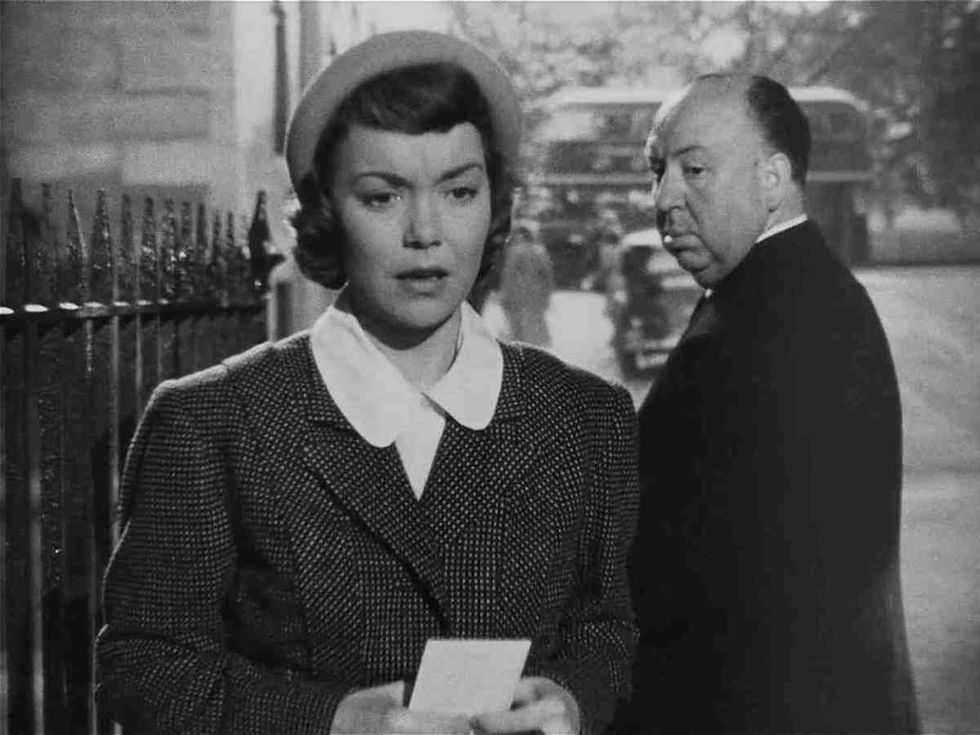 Stage Fright, 1950Credit: Warner Bros.
He stops in his tracks to turn around and get a better look at the female lead as she passes by.
7. Carrying a large bass onto a train (Strangers on a Train, 1951)
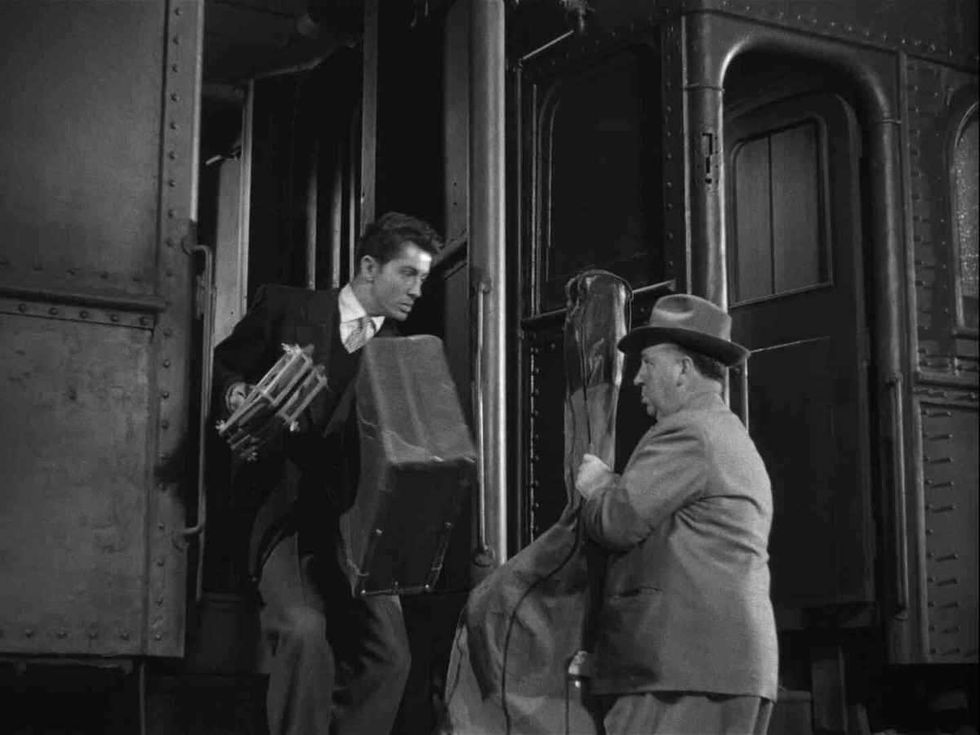 Strangers on a Train, 1951Credit: Warner Bros.
He attempts to climb onto a train car while hoisting a massive double bass.
8. A man in a vintage photograph (Dial M for Murder, 1954)
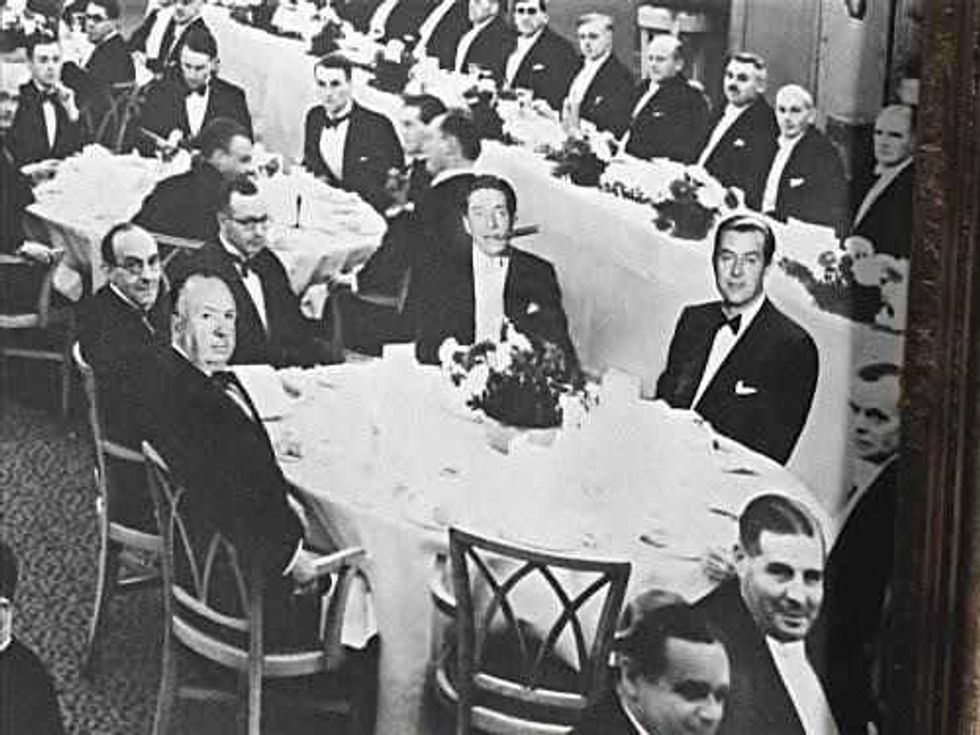 Dial M for Murder, 1954Credit: Warner Bros.
Reminiscent of the eerie photo from The Shining (1980), Hitchcock appears in this vintage photo on a wall, in which he is sitting at a banquet table among former students.
9. Tending to a clock inside an apartment (Rear Window, 1954)
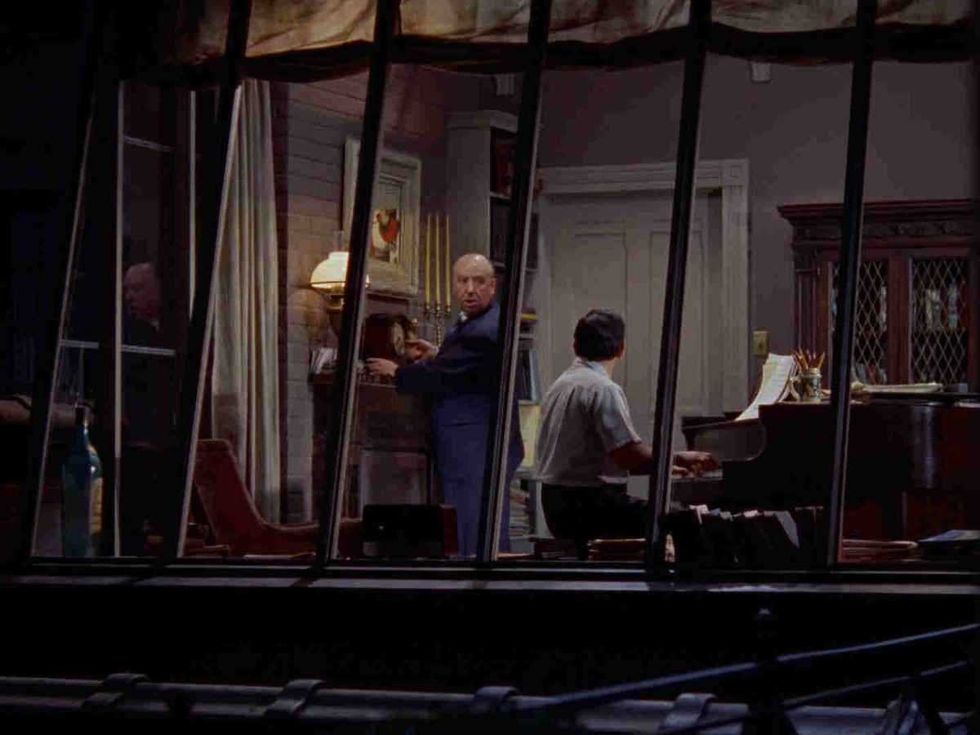 Rear Window, 1954Credit: Paramount Pictures
He is visible through a window across the courtyard, carefully adjusting the time on a large mantle clock.
10. Sharing a bus seat (To Catch a Thief, 1955)
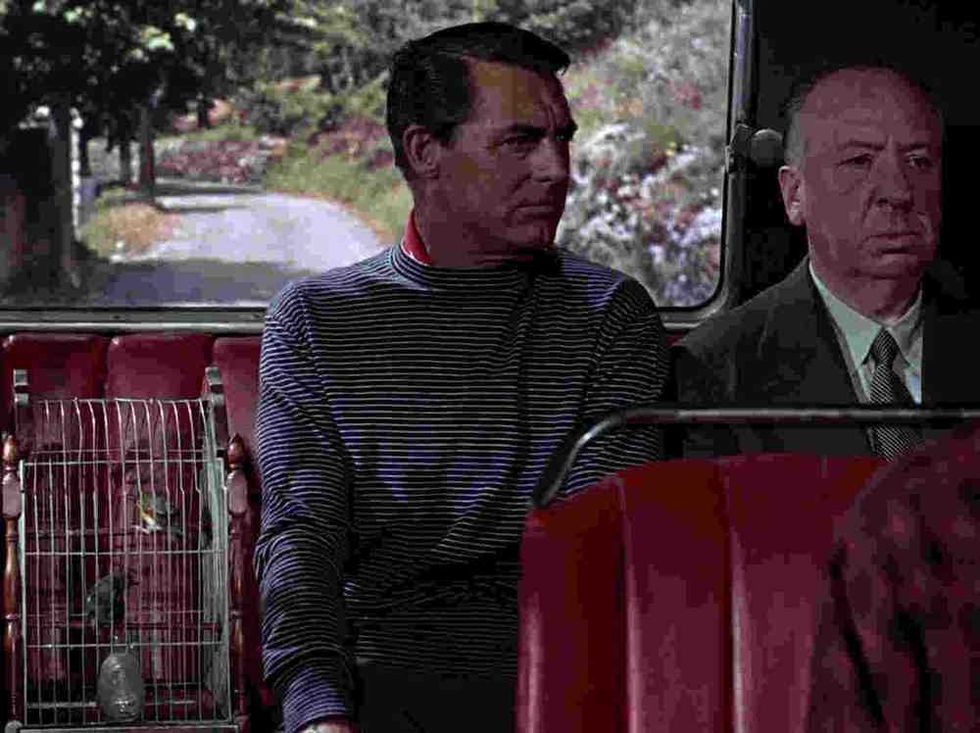 To Catch a Thief, 1955Credit: Paramount Pictures
He sits perfectly still and grumpy-faced on a public bus, positioned right next to a very confused Cary Grant.
11. A pedestrian in a gray suit crossing the street (Vertigo, 1958)
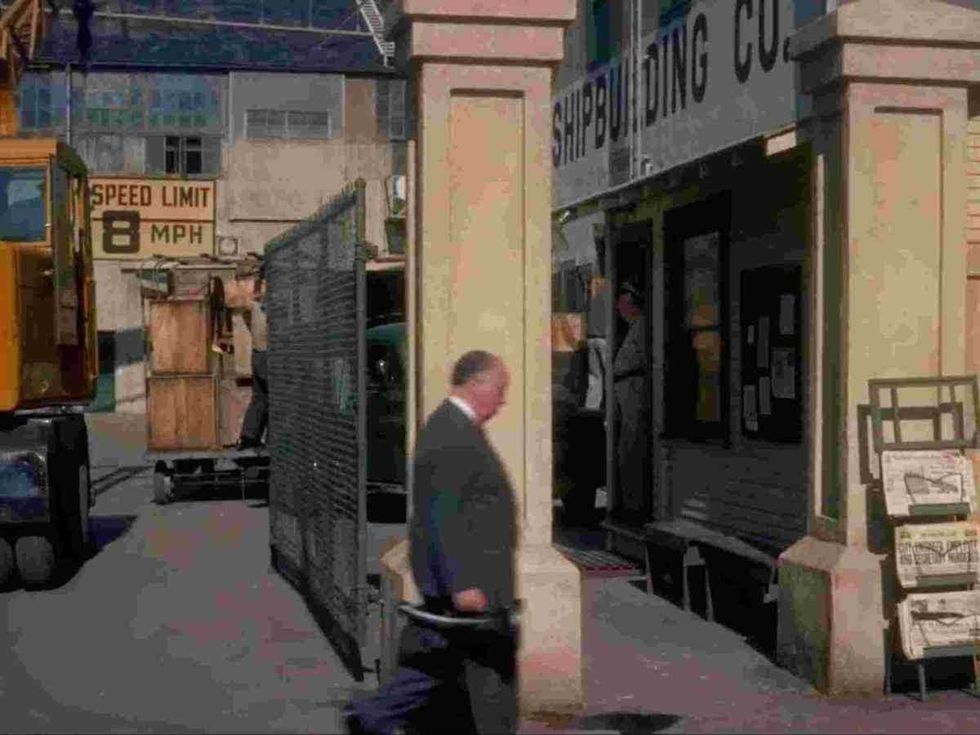 Vertigo, 1958Credit: Universal Pictures
He walks briskly across a shipyard street while carrying a case for a musical instrument.
12. A frustrated commuter missing a bus (North by Northwest, 1959)
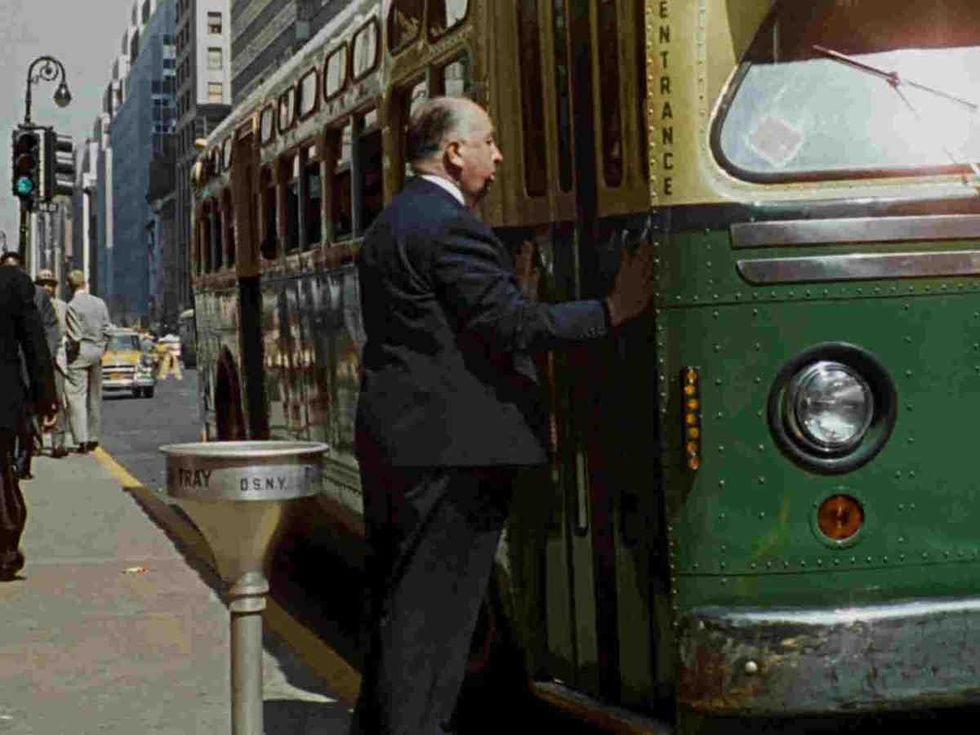 North by Northwest, 1959Credit: Metro-Goldwyn-Mayer
He narrowly misses catching a city bus as the doors slam shut right in his face.
13. A man in a cowboy hat visible through an office window (Psycho, 1960)
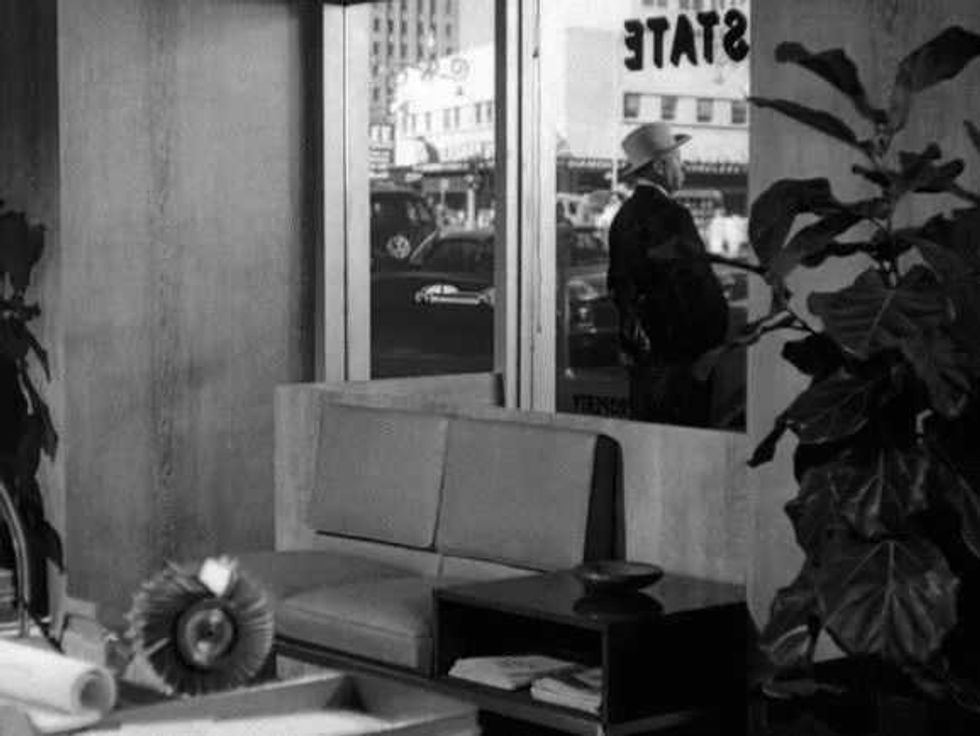 Psycho, 1960Credit: Paramount Pictures
He is standing on a sidewalk and is visible through the window of a real estate office where Marion Crane (Janet Leigh) works.
14. A man walking his dogs out of a pet shop (The Birds, 1963)
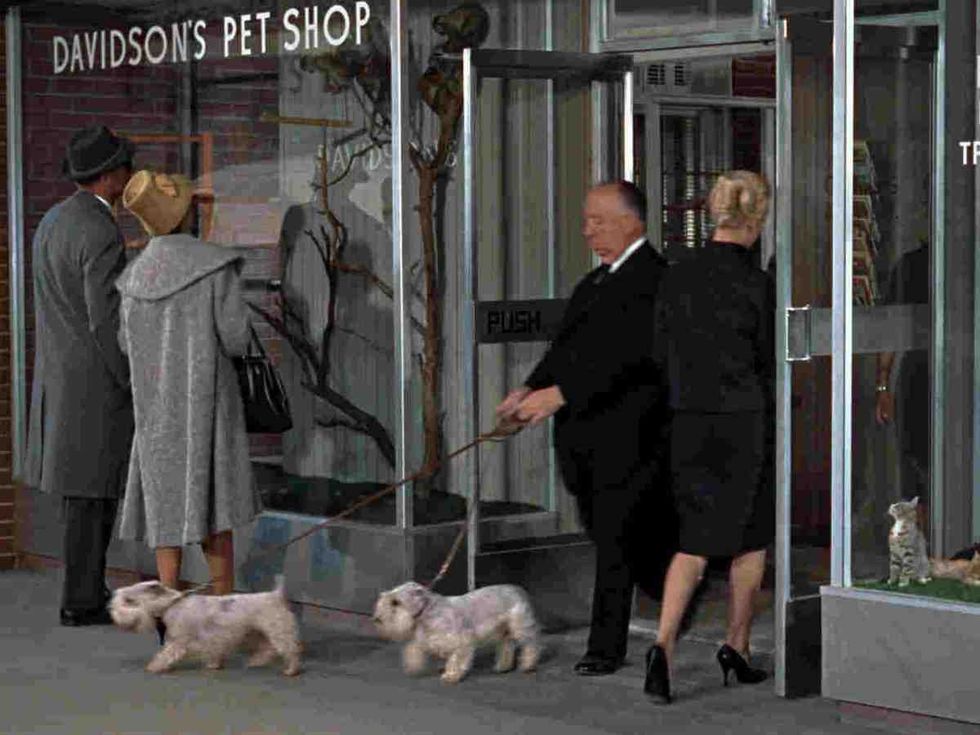 The Birds, 1963Credit: Universal Pictures
He exits a pet shop accompanied by his two white West Highland Terriers, just as the lead actress enters.
15. A hotel patron stepping into a corridor (Marnie, 1964)
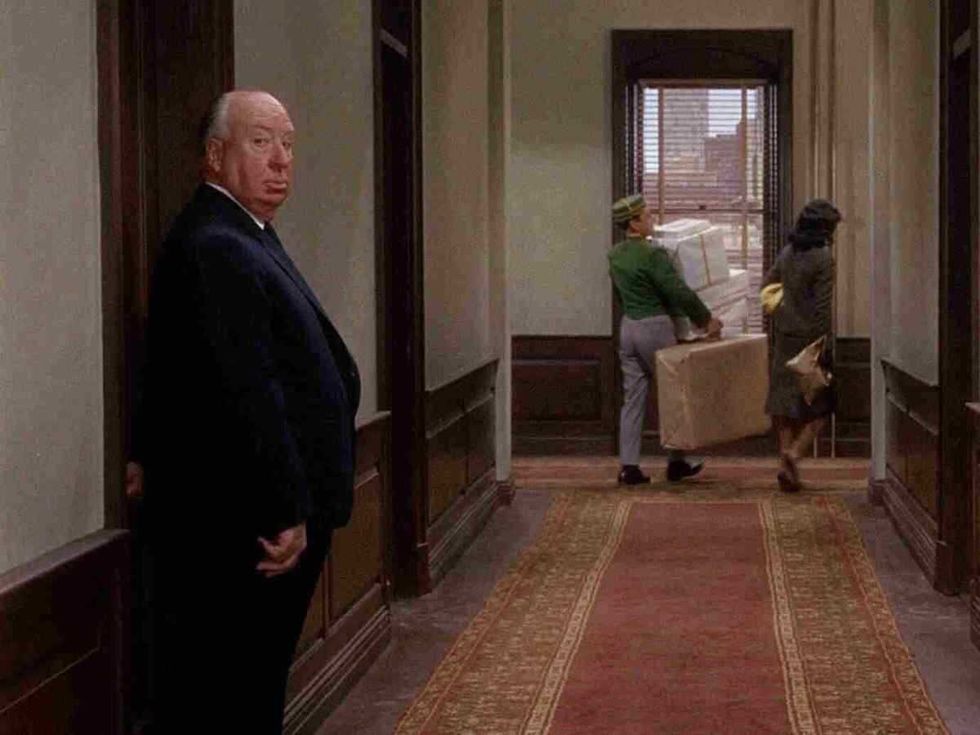 Marnie, 1964Credit: Universal Pictures
He emerges from a room into a hallway and looks directly toward the camera for a brief moment.
16. Cradling an infant (Torn Curtain, 1966)
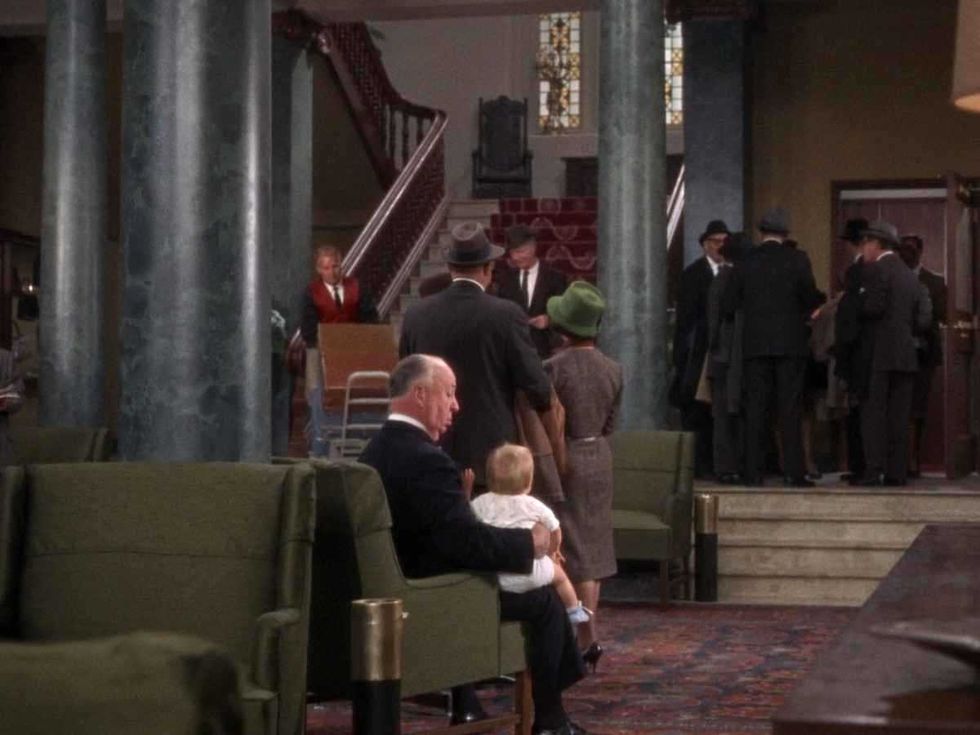 Torn Curtain, 1966Credit: Universal Pictures
He sits in a chair with a baby on his knee, eventually shifting the baby to his other side.
17. A man in a wheelchair at an airport (Topaz, 1969)
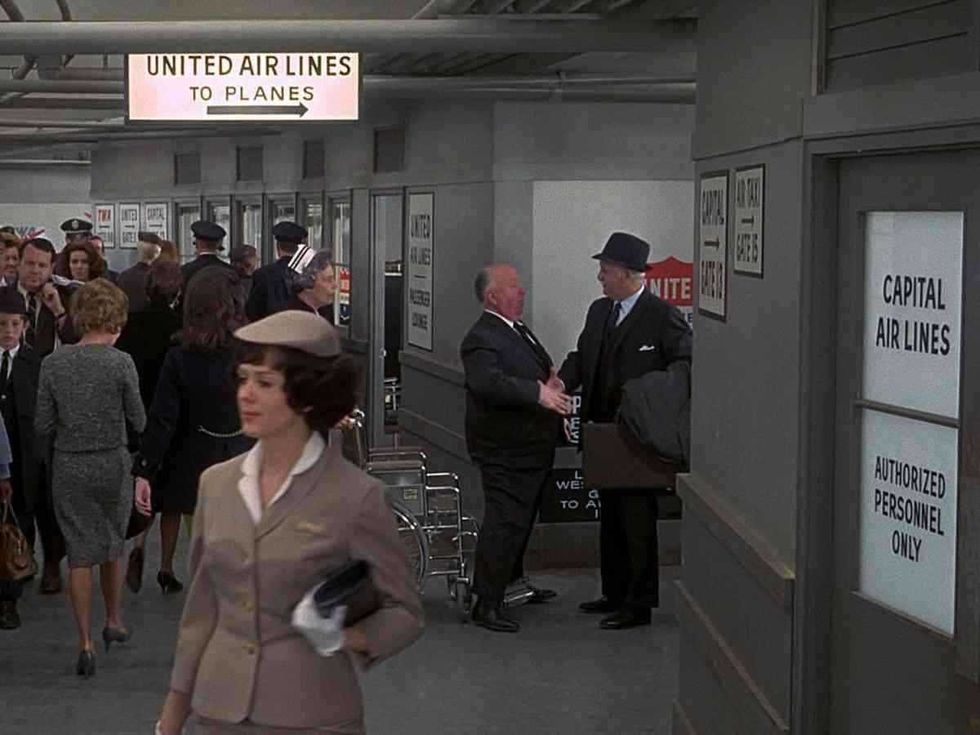 Topaz, 1969Credit: Universal Pictures
He is pushed along in a wheelchair before he suddenly stands up, greets a man, and walks away unassisted.
18. A man in a crowd refusing to applaud (Frenzy, 1972)
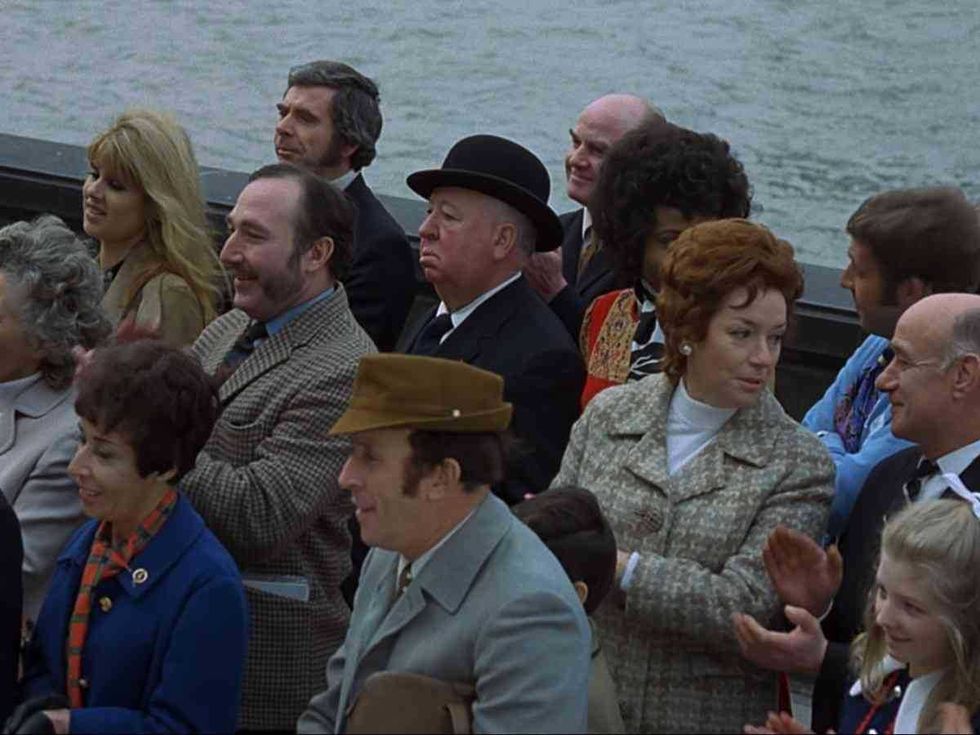 Frenzy, 1972Credit: Universal Pictures
He stands among a group of people listening to a speech, but when everybody applauds, he refuses to do so and continues to look nonchalant or bored.
19. A man’s silhouette behind frosted glass (Family Plot, 1976)
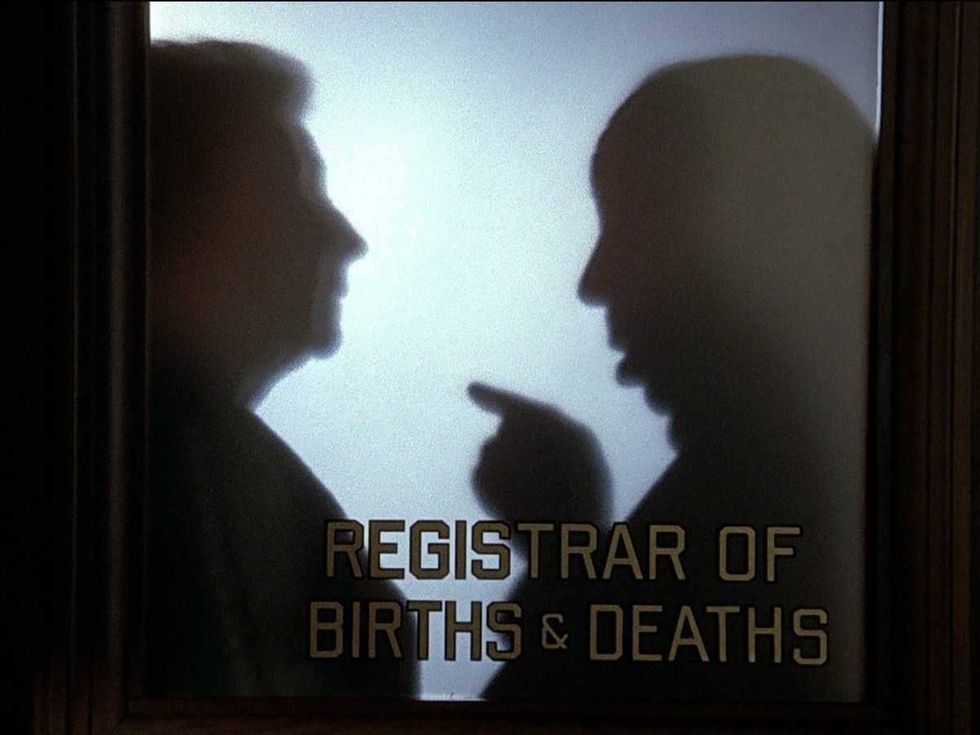 Family Plot, 1976Credit: Universal Pictures
His unmistakable outline is seen through the frosted glass of a Registrar of Births and Deaths office.