
It is a little secret of mine that I love strategy games. I’m not ashamed of that fact, as I’m rather proud of the many wars I’ve waged across my thousands of hours in Total War’s historical recreations and the numerous empires I’ve built in Crusader Kings 2. Rather, other than my brother, I don’t personally know anyone as enthusiastic about the genre as me, and so I’ve become accustomed to keeping my passionate love of strategy games to myself. It is a lonely life, for sure, but one I relish all the same, endlessly trawling through Reddit for fans like myself to gleefully nerd out over Total War: Warhammer 40K.
Fortunately, one of my all-time favorite strategy games is celebrating its 15th birthday in March, giving me the perfect opportunity to finally unload my undying passion for it onto the page (or screen, I suppose). Of course, as much as I’d enjoy rambling on and on about Total War: Shogun 2 for hours on end, much to everyone else’s chagrin I imagine, there is another reason for discussing the game after all these years. Despite the series having long since moved on and numerous other games having attempted to ape its formula, Total War: Shogun 2 remains undefeated in what it set out to achieve, allowing it to retain its title as one of the best strategy games ever made.
Total War: Shogun 2 Was The Last Great Game In The Series
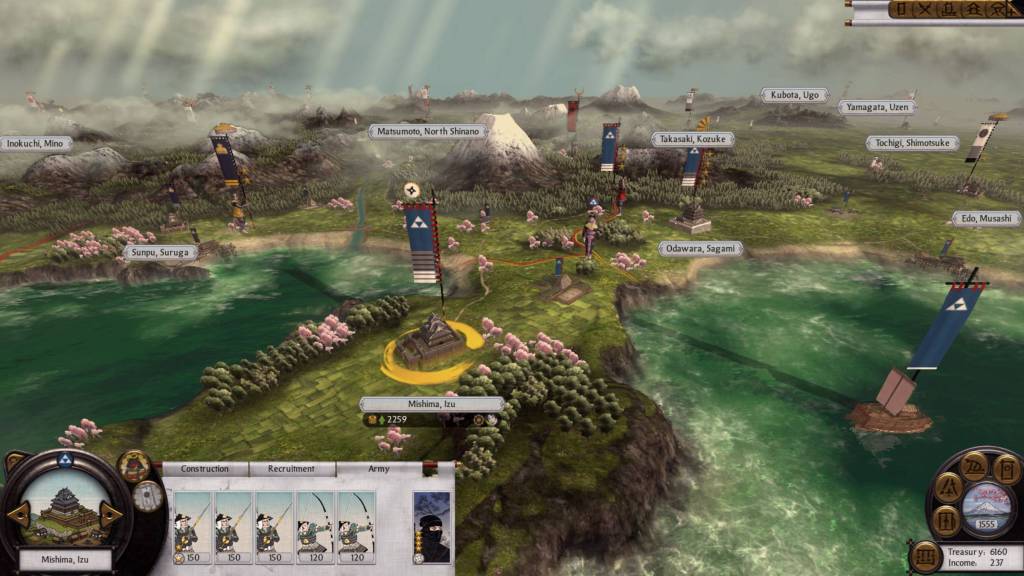
Total War has evolved a lot over the past 15 years, with Shogun 2 really serving as the final representation of the series’ original formula and structure. Rome 2, the game that succeeded Shogun 2, put a much greater focus on commanders, which, in turn, saw a serious reduction in minor skirmishes and an increase in the large-scale battles that the series has since become synonymous with. This only worsened with the likes of Total War: Warhammer and Three Kingdoms, both of which delved deeper into the fantastical elements that have since divided the fan base.
While I’ve certainly enjoyed many of these aforementioned games, Shogun 2 was really the perfect distillation of everything Creative Assembly had been building up until that point. Its approach to diplomacy was its most nuanced, elevated by the interweaving of the character-focused mechanics that later entries have failed to make truly compelling. The faction disputes, family trees, legacy mechanics, and branching skill paths helped make progression all the more compelling, as did its more granular approach to construction, which games like Total War: Warhammer and Three Kingdoms simplified to a fault.
Shogun 2 simultaneously feels like the least streamlined and the most accessible, its lack of complex asymmetrical faction design locked behind paid DLC and connection to prior IP enabling anyone to jump in and learn the ropes with relative ease. That being said, it can be a relentlessly challenging game, with both small skirmishes and epic battles offering intense bouts that you’ll likely remember long after your campaign is over. Its greatest weakness is its siege battles, an extremely one-sided affair that almost always benefits the defender, but even they offer a rewarding sense of satisfaction once overcome, and certainly lack the unpolished jank of its predecessors’ similar attempts.
Of course, I accept that much of my love for Shogun 2 stems from the very heavy rose-tinted glasses I wear. It played a key role during my formative years, entertaining me night after night as I returned from school solemn and broken after yet another round of being relentlessly bullied. Shogun 2, much like Medieval 2 and Napoleon before it, gave me a sense of control that I seriously needed, and for that, I will always love it. However, especially within the grand campaign style of strategy games, I do genuinely believe it hasn’t been outclassed yet. Fortunately, there is still time for Creative Assembly to turn it all around and deliver something just as remarkable, if not better.
Total War Needs To Head In A New Direction
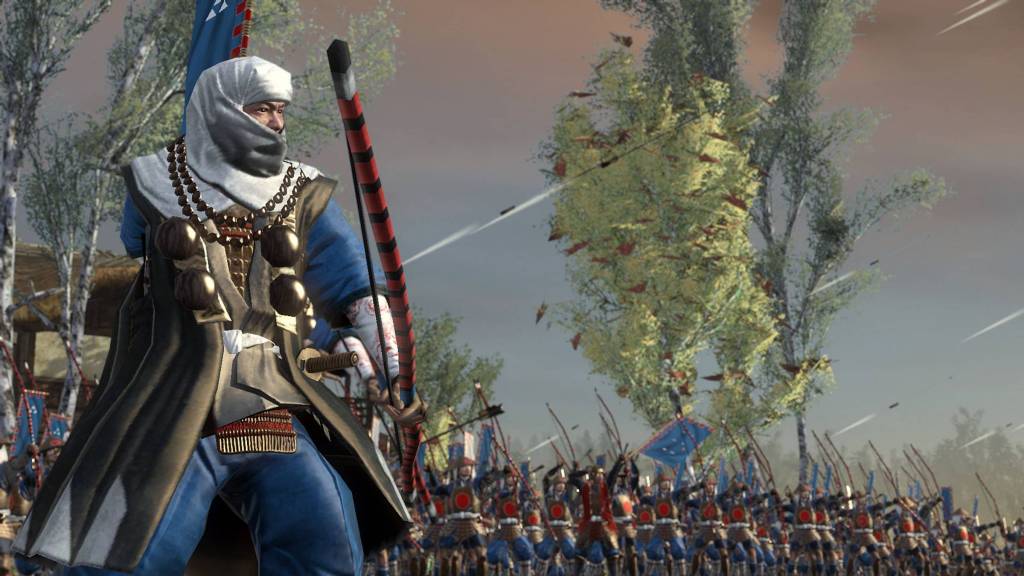
Total War has felt a tad lost for quite some time, and it really feels as if it is in dire need of a serious overhaul. I’m not referring to the series penchant for IP collaborations, specifically with Warhammer, nor do I believe the fantasy elements are really harming it. While I certainly feel the lack of historical settings is a shame, especially as few other strategy games offer this level of scale within a historical context, I am partial to the Warhammer universe and relish the opportunity to explore its many factions in such depth.
Rather, the problem with Total War, at least in my opinion, is that it doesn’t really know what it wants to be. Much of what made it great has been simplified or stripped out altogether in favor of character abilities, commanders, asymmetrical factions, and more paid DLC that you will ever have the money for. I’m not even really convinced that diplomacy, faction management, city construction, or even micro-mechanics like attrition or weather conditions really matter anymore. Of course, they’re all present, but they feel secondary to the big epic battles, giant monsters, legendary commanders, and all the other fluff that comes with it. Don’t get me wrong, those aspects are great, but they don’t really feel like Total War, at least how I remember it.
Sure, this may be those aforementioned rose-tinted glasses clouding my judgment, but I do miss the days in which diplomats had to travel across territories to deliver your demands, when small battles felt just as impactful as the large ones, and when a measly captain of a single unit could be promoted and adopted into your family thanks to their successful heroic last stand defending a tiny village. Shogun 2 offered much of that and more while focusing on delivering an enthralling malluable historical setting that, by that point, hadn’t been covered much in gaming. Fortunately, we may be returning to the golden age of Total War games, as Creative Assembly announced Medieval 3 recently, something it promises will be a return to form.
I have good reason to believe that Medieval 3 will turn out to be the game that I and I’m sure many others want it to be, not least of which is that my dad is consulting on the historical side of things. More importantly, Creative Assembly is developing Medieval 3 alongside Warhammer 40K, meaning that it could, in theory, offer two different types of experiences that cater to its now extremely divided fan base. It remains to be seen whether or not Total War manages to return to its once glorious status as the defacto strategy series, or even just the glory days of Shogun 2. I just hope that we aren’t disappointed by these great upcoming strategy games, and that CA is capable of delivering an experience better than a now 15-year-old game.
What is your favorite Total War game? Leave a comment below and join the conversation now in the ComicBook Forum!