
Designation means UND boasts only accredited Forensic Science program in entire northwestern United States
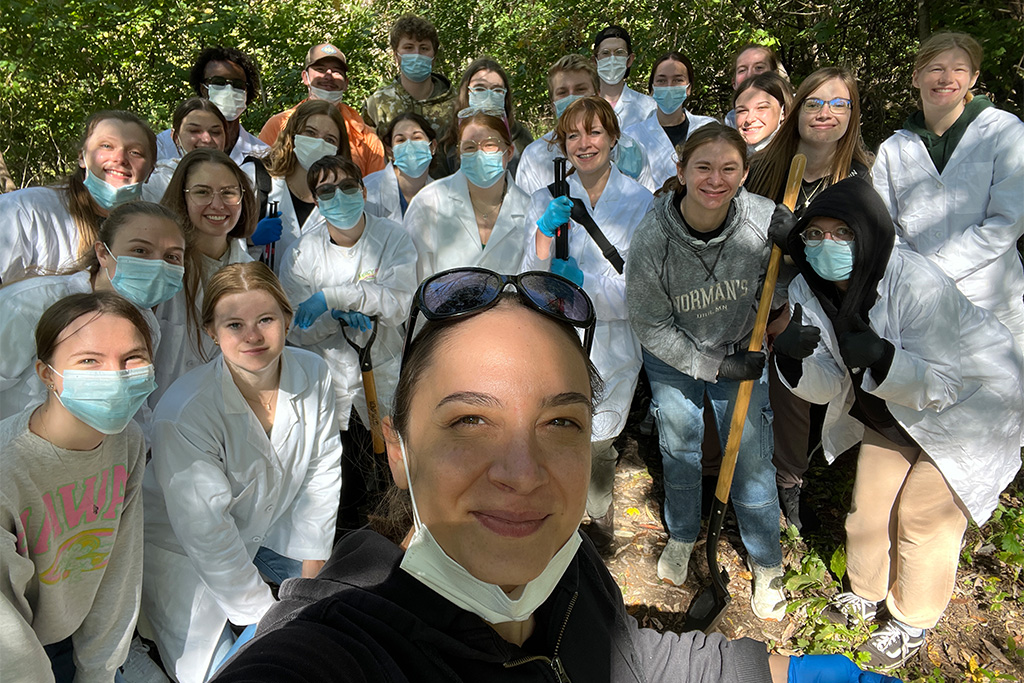
The Forensic Science bachelor’s program in UND’s College of Arts & Sciences has been accredited by the Forensic Science Education Programs Accreditation Commission (FEPAC), a major milestone years in the making.
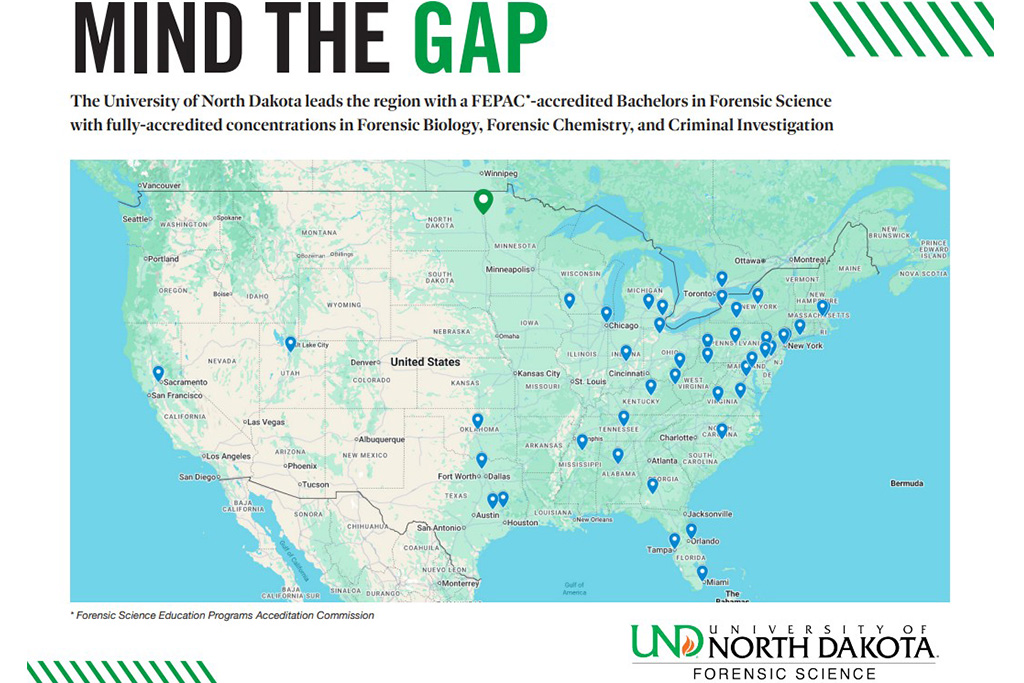
The designation makes UND home to the first FEPAC-accredited Forensic Science Program in North Dakota, with the nearest accredited program more than 500 miles away in Platteville, Wis.
This is the result of a years-long effort to elevate the program to meet national standards, said Lavinia Iancu, associate professor and director of the Forensic Science program. When she arrived at UND in 2021, Iancu set a goal of restructuring the program within five years to meet FEPAC standards, a benchmark widely considered the gold standard in Forensic Science education.
After a year-long accreditation process, the goal has been achieved, and Iancu says that the program’s student-centered approach is the reason for this milestone.
“My primary aim was to benefit our students,” Iancu said. “We wanted to make sure they are getting the best education possible and have the strongest chance at positive career outcomes.”
FEPAC accreditation sets a national standard
FEPAC accreditation certifies that a program meets rigorous national standards in Forensic Science education, including curriculum, faculty qualifications, laboratory resources, student outcomes and professional partnerships. These standards ensure graduates are prepared for employment in modern forensic laboratories, including those belonging to federal agencies such as the FBI.
“The biggest part of FEPAC accreditation is that this confirms for employers that our program is meeting the highest national standards in Forensic Science,” Iancu said.
Students will have stronger credentials as they apply for jobs in a highly competitive field. It also improves their access to internships and scholarships, many of which prioritize students from accredited programs.
Those advantages are already showing up in student outcomes. Recent data shows that a majority of UND Forensic Science graduates are employed, continuing their education or actively seeking employment shortly after graduation. In addition, 100% of surveyed graduates report feeling prepared for careers in the field.
Preparing students for working in Forensic Science
That focus on outcomes has helped shape the program from the ground up, Iancu said. And preparing students for professional practice has been central to its mission.
Students complete a science-intensive core before choosing concentrations in Crime Scene Investigation, Forensic Biology or Forensic Chemistry. In recent years, the curriculum has expanded to include new courses and a stronger emphasis on immersive, hands-on learning.
Undergraduate students spend a significant portion of their time in labs or completing fieldwork, where they get hands-on experience using the same tools and techniques found in professional crime labs.
“Everything we use — the equipment, the kits, everything — is used in research labs, crime labs and CSI work,” Iancu said.
Much of the work that students do in and out of the classroom is designed to mirror the realities working in Forensic Science, and this approach shines when students move beyond traditional coursework. For example, the program creates immersive environments such as the “Bride in the Woods” bootcamp and large-scale mock crime scenes staged in Gustafson Hall that give students the chance to apply the skills they’ve acquired in class to simulated cases.
A newer required course developed with the UND School of Law gives students experience presenting forensic evidence in courtroom settings, where they practice testifying and responding to cross-examination. This is something that forensic science professionals routinely do, Iancu said, and by introducing students to high-stakes courtroom scenarios, she hopes they’ll be better prepared when the moment comes to take the stand.
The goal of designing these experiences has been to prepare students for every facet of a career in forensic science, Iancu said. The bonus is that this is a key factor during the FEPAC review, which closely evaluates how effectively programs translate classroom learning into professional readiness.
Partnerships strengthen UND’s forensic science program
That real-world focus shows up through partnerships beyond campus, too. UND’s partnership with the North Dakota State Crime Laboratory, for example, played an important role in the accreditation process.
Students regularly visit the Bismarck lab to learn about specialties including DNA analysis, toxicology, firearms and fingerprinting. Crime lab professionals also serve as advisors and guest speakers, helping connect classroom learning with real-world practice.
Together, those experiences help students build technical skills and professional networks. Throughout their time in the program, students get a clear understanding of the field and help prepare them for careers after graduation, Iancu said.
That all matter because FEPAC evaluators also visited campus to observe classes and interview faculty, students and administrators, ensuring the program is delivering what it promises. Iancu said that all of these pieces played a role in getting the FEPAC stamp of approval.
What’s ahead for the UND Forensic Science program
But their work isn’t done yet. FEPAC accreditation is awarded for five years and requires ongoing reporting to prove that programs meet their standards. Still, Brad Rundquist, dean of the College of Arts & Sciences says the accreditation reflects the high caliber of education the program offers.
“I could not be prouder of this accomplishment by Dr. Iancu and her team,” Runquist said. “FEPAC accreditation affirms the exceptional quality of our Forensic Science program and reflects the dedication of our faculty, staff and students.”
Meanwhile, Iancu is already looking ahead. She said the department plans to pursue accreditation for UND’s new master’s program in forensic science once enough student outcome data is available.
For now, though, she sees the program’s accreditation as both a recognition of the progress they’ve made and a sign for where they can go in the future.
“I’m happy that we finally received this recognition,” Iancu said.