
The state of Mac gaming does Apple’s incredible chips and stunning displays a disservice. As it has always been, there’s little to suggest Apple knows how, or even wants, to fix it.
The new M5 Max MacBook Pro might be Apple’s fastest-ever Mac. It’s still a terrible buy for anyone serious about gaming.
In truth, the 16-inch MacBook Pro should be a beast of a gaming laptop. It has a glorious, huge, bright, and colorful display and a massive battery.
It’s also powered by the latest silicon that Apple has to offer. The M5 Max can be configured with an 18-core CPU and a 40-core GPU for maximum pixel-moving prowess.
Unsurprisingly, that means the M5 Max is no slouch. It benchmarks faster than the M3 Ultra in CPU tests, albeit a little slower in GPU benchmarks. It’s still around 20% faster than GPU found in the M4 Max, though.
This should make the MacBook Pro a great machine to game on. But it doesn’t, and not necessarily because it isn’t capable.
The M5 Max MacBook Pro just never really gets the chance to compete with its Windows-powered counterparts.
The truth is that Mac gaming has never been better than it is today. Unfortunately, in this regard, it’s still light-years behind the most middling of Windows laptops.
And I’m not sure Apple understands why, nor has the desire to correct it.
The current state of play
Mac owners have plenty of options when it comes to playing games in 2026. There’s Apple’s own App Store, and of course, there’s the Apple Arcade subscription.
There are also third-party stores, like Valve’s Steam, and you can always install games that you download from the internet. That’s the beauty of the Mac when compared with something like the iPhone or iPad.
Apple has even managed to get some big-name games into the Mac App Store, too. But they’re often laughably late to the party.

Cyberpunk 2077 is in the Mac App Store, but it took too long to get there
Apple made a big deal out of the arrival of a Mac version of Cyberpunk 2077 in July 2025, for example. It’s a top-tier game, and one that by all accounts looks great on a high-end Mac.
But most people had already played the game elsewhere. It debuted on PC a whole five years earlier, but admittedly, it did take about two years to get good. It’s also been available on consoles for just as long.
The same can be said for a few other games that have been ported to the Mac, often with similar fanfare. They simply arrive too late for anyone to take the Mac seriously as a place to play so-called AAA titles.
That’s a key issue that drives to the heart of what makes the Mac a non-starter for gamers. The kinds of games PC and console gamers play don’t come to the Mac.
And if they do, they generally still arrive after everyone’s already played them.
Steam support isn’t enough
Steam is the place most PC gamers go to get their games, and it’s also a great place to buy Mac games. Assuming you can find a Mac game to buy, that is.
Steam has long offered game companies the ability to sell both Windows and Mac versions of their games. An Apple logo can be found beside those games that are Mac-compatible, but they’re few and far between.
Looking at the top 10 best-selling games in the Steam store today, just three of them are available for the Mac. Slay the Spire 2 is an indie game, albeit a hugely popular one, while Crimson Desert is a brand-new title. The third game is Counter-Strike 2.
There’s no Arc Raiders, arguably the biggest extraction shooter available at the time of writing. No Resident Evil Requiem, the latest game in the hugely popular series. They are just two of the hugely popular games Mac owners will have to go elsewhere to play.
That alone is a clear indicator of the problem Mac gamers face. The biggest and best games simply aren’t available on the Mac right now. They might come, eventually. But by then it’ll be too late.
Playing Windows games on Mac, hacker edition
With games skipping the Mac, some people might be tempted to get creative. After all, there are ways to run Windows games on a Mac. But they’re little more than workarounds.
We’re not going to delve too deeply here, that’s for another day. But two approaches do bear mentioning.
Parallels Desktop allows Mac owners to run a virtualized version of Windows, for example. You can then install Steam or your marketplace of choice and play games that way.
CodeWeavers’ Crossover takes a slightly different approach. Crossover installs Windows apps in a sort of Windows wrapper. It’s quick and easy to use, too.
But both of these approaches have their problems. They both include their own technological overheads.
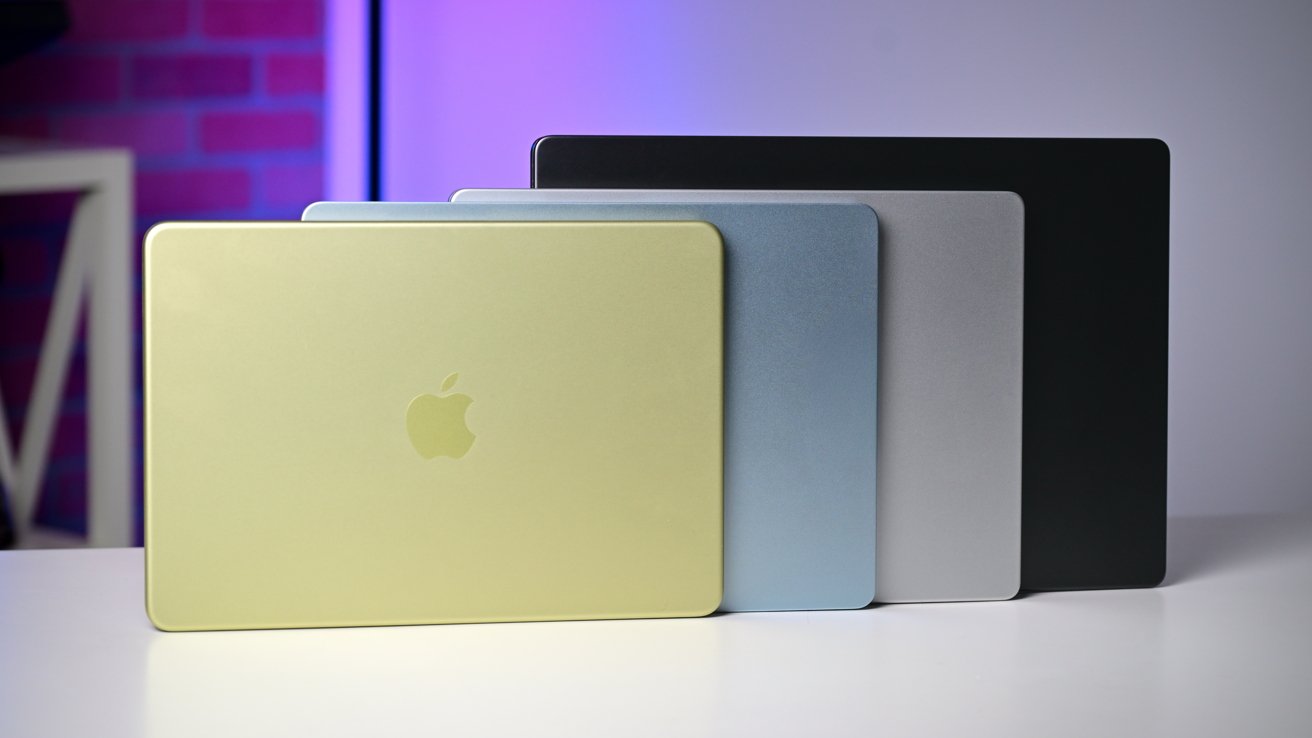
Macs have never been more capable, but the games just aren’t there yet
Even the most capable of Macs can be brought to its knees by a poorly configured, virtualized Windows. Resources like storage, RAM, CPU, and GPU are all shared between the virtualized system and the Mac that it powers it.
Like a parasite, virtualization takes what it needs from its host. But there’s only so much to go around — so much RAM, so many GPU and CPU clock cycles to spare. The whole situation just isn’t suited to playing games, especially the big hitters that the Mac is missing.
There are more problems, too. Any kind of emulation can render online multiplayer games unplayable. Their anti-cheat technology will simply refuse to let them launch. The aforementioned Arc Raiders is one such example.
Solutions like Crossover also don’t work with some marketplaces, like Microsoft’s Xbox Store. That’s a problem if you want to play games via Microsoft’s Game Pass subscription, for example.
Apple Arcade can’t fix the problem
There have been times in recent years when Apple appeared to be aware that Mac gaming isn’t where it needs to be. It’s even tried to encourage games — and gamers — to migrate to its platforms via a couple of notable initiatives.
Apple regularly points to Apple Arcade as a sign that it’s serious about gaming. But even Apple Arcade can’t avoid familiar problems.
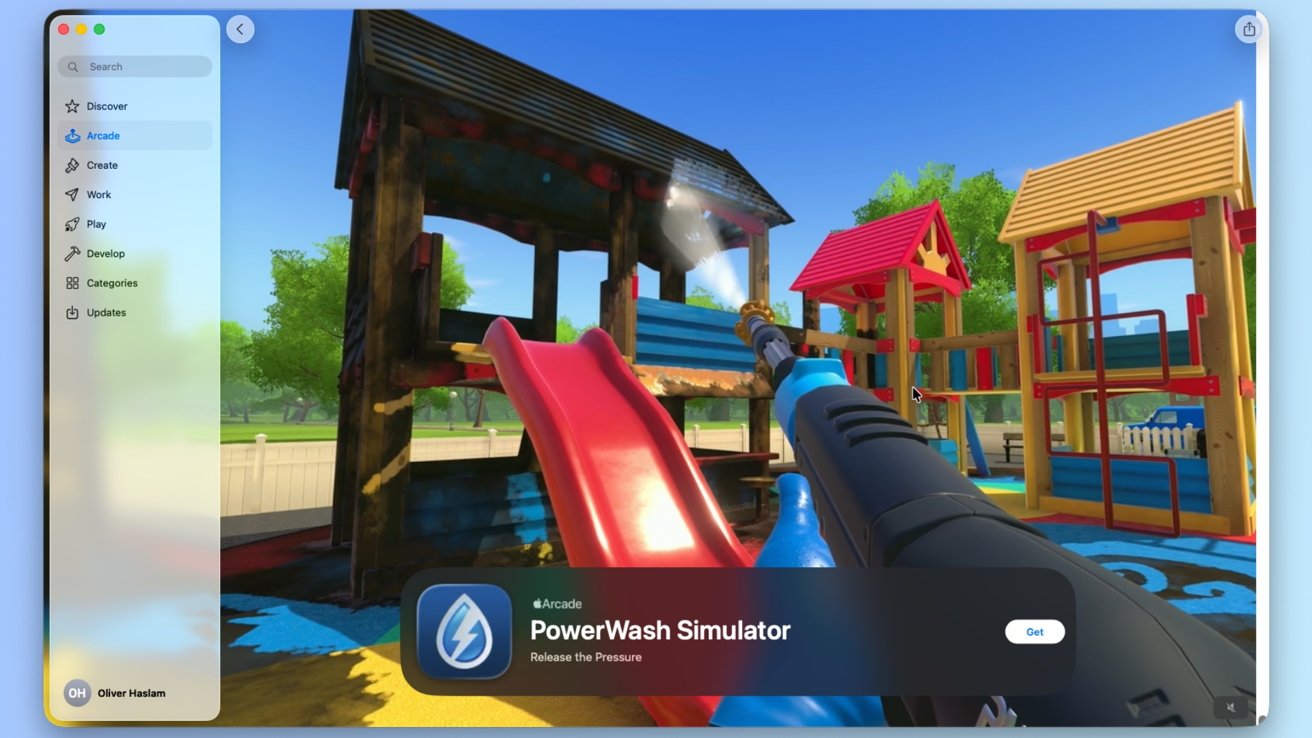
PowerWash Simulator came to Apple Arcade years after everyone already played it
Flicking through the top Apple Arcade games in the Mac App Store reveals a who’s who of old titles and iPhone ports of others. Too many Apple Arcade games are rehashed versions of games that people were playing on their iPhone half a decade ago. Or more, in some cases.
The top Apple Arcade game as of March 2026 is PowerWash Simulator, a game that’s been available everywhere else for years. PowerWash Simulator 2 was released on PC and consoles a few weeks ago. That’s how old this game is.
Second spot in the charts goes to Football Manager Touch. A mobile-oriented version of the real Football Manager game that PC players have access to. In fact, you can buy the desktop version in the Steam store right now.
Sure, you can argue that Apple Arcade offers all of these games under a single, value-packed monthly subscription. You could argue that it’s a steal.
But Apple is asking Mac gamers to play mobile games. And so many are just “+” versions of games that they probably already bought on their iPhone the first time around.
It’s clear that Apple Arcade is aimed at the casual gamer. Gamers who just want something they can play on their iPhone while waiting in line at the grocery store. And that’s fine.
But Mac gamers are a different story, and Apple Arcade misses the mark entirely.
Apple unveiled the Game Porting Toolkit as part of its Apple Silicon transition in June 2023. It was hoped that it would give game developers a push towards bringing their wares to the Mac.
Apple continues to keep the toolkit updated, too. Game Porting Toolkit 3 debuted at WWDC in June 2025, adding support for sparse buffers, sparse textures, performance insights for Windows games, and more
The Game Porting Toolkit allows developers to test their Windows-based games directly on Mac hardware. The games don’t require any modification, removing a key hurdle.
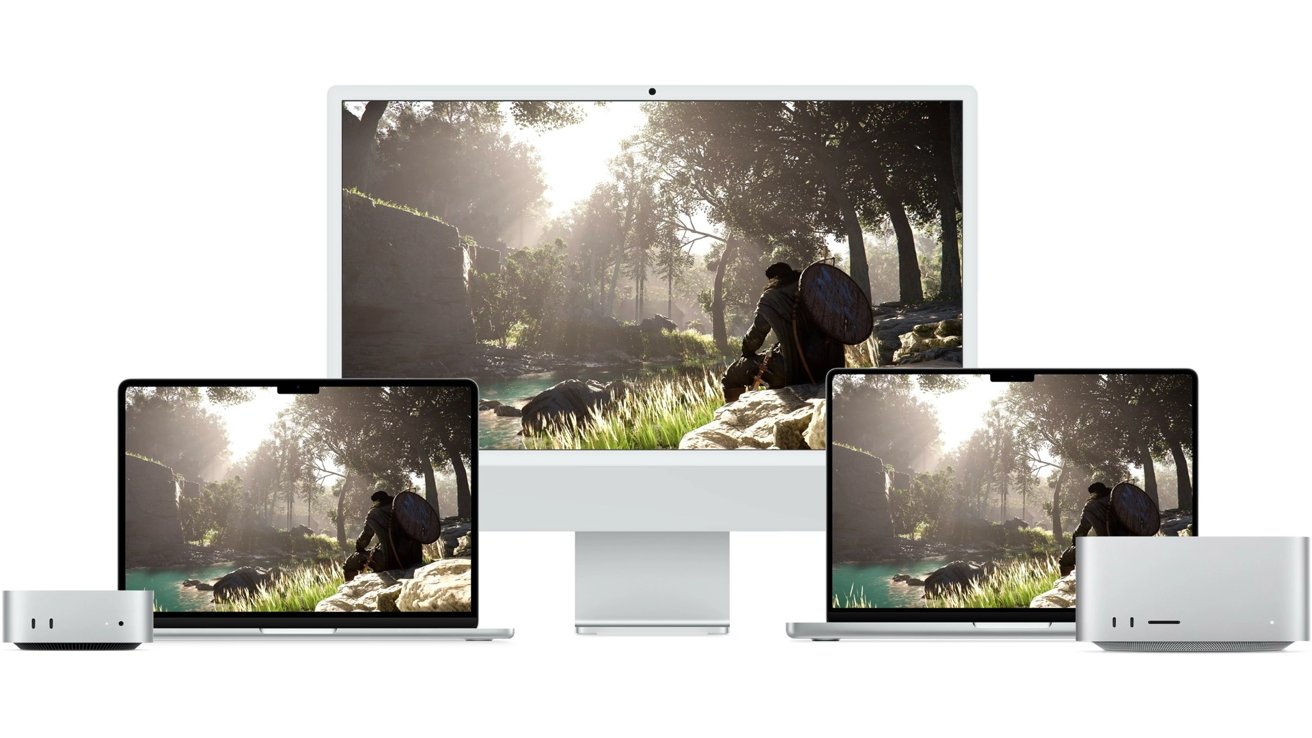
Apple tried to make it easier for game makers to port their games to the Mac
The idea behind the tool is simple. Apple wanted to give developers an easy way to test if their games would work on a Mac, hoping they’d then do the work to port them across properly.
But the Game Porting Toolkit is based on Wine, the underlying technology from CodeWeavers. Just like CodeWeavers’ Crossover, Apple’s toolkit has to translate Windows API calls into the Metal API calls that a Mac can understand.
Whether that allows modern Macs to put their best foot forward is a matter for debate. Performance will never be as good as a game built to run on a Mac from the ground up.
There’s no doubt that some developers tested their games using the Game Porting Toolkit and then brought those games to the Mac. But it’s unclear how many ran the tests before deciding that the juice wasn’t worth the squeeze. That it would take too much work to port their game to the Mac, no matter what the toolkit shows them.
Fixing Mac gaming
The problem of turning the Mac into a real, viable gaming platform is a tough one. And it’s one that I don’t have a silver bullet answer for.
It’s also something of a “chicken and the egg” problem. Gamers don’t buy Macs because there are no games, but games don’t come to the Mac because the market is too small.
Something has to give.
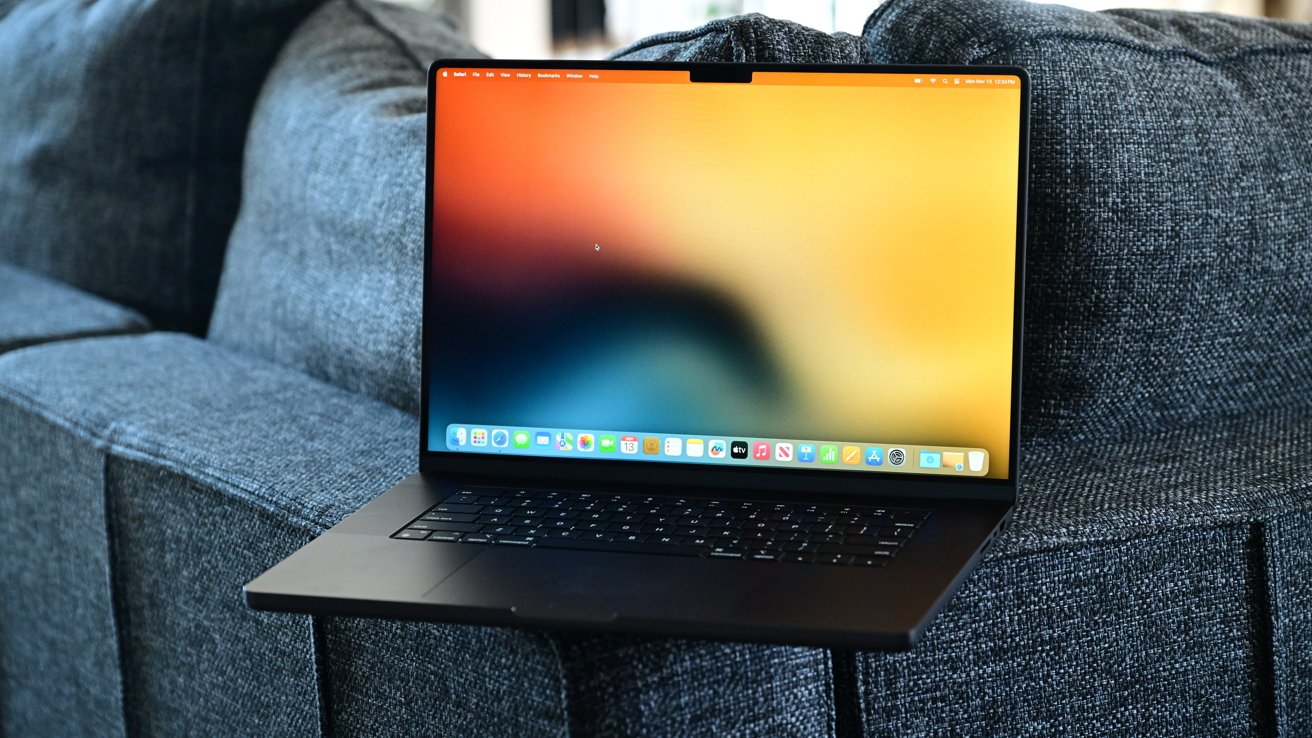
The 16-inch MacBook Pro’s stunning display is perfect for HDR gaming
Making that happen is going to be difficult. And it might require Apple to splash the cash to get some big-name titles onto the Mac with release date parity. Not two years later, but the same day that they debut on other platforms.
Another possible solution is to overhaul Apple Arcade. Ensuring the games better match the platform they run on would be a good place to start.
That might mean cutting a check to get the full Windows version of Football Manager instead of the neutered iPhone version, for example. It could mean giving Capcom whatever it takes to bring the latest Resident Evil to Apple Arcade.
But whatever Apple does, it won’t be easy. And whether Apple has the stomach for it is another matter altogether.
Apple’s focus is elsewhere right now. It’s all-in on a multi-year deal to stream Formula 1 races in the United States. It has a taste for glitzy Hollywood awards ceremonies, so Apple TV is a focus, too.
Fixing the Mac’s gaming problems won’t give many Apple executives a reason to shake the dust off their tuxedos. But it sure will make the Mac a more viable platform for a huge group of people.