
Molecular technology may seem complex, but it’s actually a simple, accessible and low-cost tool. Techniques like PCR — widely known since the Covid-19 pandemic — allow for the amplification of DNA fragments, in order to detect pathogens or genetic diseases. And, in the field of conservation, these tools are especially useful when morphological identification of species isn’t possible. In such cases, a small tissue fragment is enough to determine which animal or plant is behind a sample.
Ten years ago, a study conducted in Ecuadorian food markets revealed that some of the species of fish being sold were mislabeled: 26.67% of the samples analyzed were actually shark meat. Suspecting that this practice persisted and may even have increased, the researchers decided to revisit the matter in 2023.
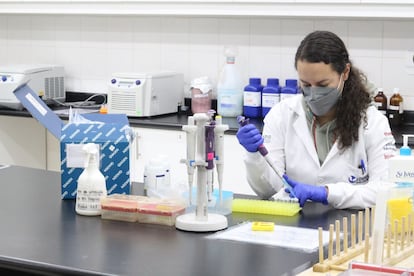
Their results, published in the scientific journal Frontiers in Marine Science, reaffirm the suspicion: almost 47.42% of the corvina samples collected in Ecuadorian markets turned out to be shark meat.
Although sampling was conducted in the cities of Quito, Cuenca, Ibarra, Ambato, Manta and Guayaquil, the positive results were found in the first four Andean cities. This is because fish consumption is less frequent there, making it more difficult for locals to identify the species.
“We went to several markets, where we bought fish fillets being sold as corvina. Then, we stored them in a cooler and transported them to the Biotechnology Laboratory at the San Francisco de Quito University (USFQ),” says Gabriela Pozo, an author of the study.
The researchers applied two PCR tests to each sample. The first determined whether it was indeed shark meat. If positive, a second test identified the specific species. According to the study, the method has an effectiveness rate of 97.8% during this second step.
Among the species detected were the silky shark (Carcharhinus falciformis) and the smooth hammerhead shark (Sphyrna zygaena), both classified as vulnerable on the International Union for Conservation of Nature (IUCN) Red List of Threatened Species. The pelagic thresher shark (Alopias pelagicus) and the blue shark (Prionace glauca) were also identified.
Selling sharks
In Ecuador, regulations allow for the sale of sharks that are caught “incidentally.” This refers to the animal being caught unintentionally, while fishing for other fish. According to the authors of the study, this provision could facilitate the sale of more than two million sharks per year, while also carrying the risk of protected species being caught.
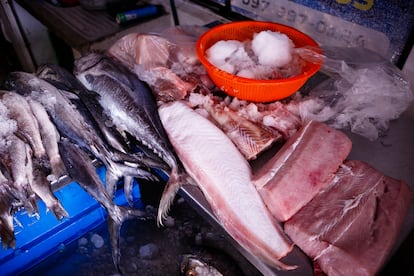
The smooth hammerhead shark, for example, was found in samples collected in two different cities. This species is fully protected in Ecuador, meaning that fishing for it is prohibited — even in an incidental manner — as is its sale.
“Although regulations exist, the capture of fully protected species is evident,” Pozo notes. “Starting a conversation about this issue is fundamental to demanding greater regulation of the sale of sharks that are caught [unintentionally].”
Scientists also emphasize the importance of consumers knowing what they’re actually buying and eating. “In the reality of the Global South, traceability is fundamental,” Juan José Guadalupe explains. He’s a researcher who participated in the study. “Simple tools like PCR allow us to perform this type of analysis… and this is key to regulating the market and contributing to the conservation of vulnerable species.”
For María de Lourdes Torres, a researcher and director of the Plant Biotechnology Laboratory at USFQ, the application of this technology should extend beyond academia. “It’s important for the public sector to also incorporate these methods. They’re accessible and reproducible, allowing consumers to know what they’re buying. And, at the same time, [such tools can strengthen] the conservation of marine species,” she notes.
The study, they caution, represents only a snapshot from the time that the sampling was conducted. Therefore, they propose expanding the analysis to the cities with the highest incidence of mislabeling and repeating it at different times, in order to assess whether the trend remains the same or has changed. But this is no small task. In Ecuador, at least 40 shark species are listed on the IUCN Red List, which demonstrates the pressure that these vulnerable populations face, as well as the need to strengthen control, traceability, and conservation mechanisms.
Sign up for our weekly newsletter to get more English-language news coverage from EL PAÍS USA Edition