
By Amy Burtch
On the final cusp of the pandemic, Makayla High interviewed for a spot in NC State University’s Thomas Jefferson Scholars program on Zoom.
Unfortunately, her reception was poor, causing her computer to glitch, and she ended the interview worried her chances for acceptance were lost. But that was not the case.
“During the interview process, I saw Makayla’s spark and initiative,” says Chad Jordan, CALS faculty mentor for the Jefferson Scholars program. “Her drive to reach for two majors — even with the touch-and-go communication — was so apparent, it was enough.”
Jordan refers to the dual degrees that are obtained in this joint program of the College of Agricultural and Life Sciences (CALS) and the College of Humanities and Social Sciences (CHSS), which offers intentional faculty mentoring and peer networking in a cohort of other high-performing students.
Although initially surprised by her acceptance, High has thoroughly embraced her Jefferson Scholars’ experience, a program she credits with supporting her growth as a leader among her peers.
“I am normally a more reserved person, but the program helped me become a true leader,” she says.
Two Academic Passions, One Path
From Wadesboro, North Carolina, High has always been interested in animal science and appreciated NC State’s College of Veterinary Medicine’s reputation when deciding to attend NC State.
In high school, she worked as a kennel assistant, in animal husbandry and as a vet assistant, on an intentional path to becoming a small-animal veterinarian. But when presented with the opportunity to pursue two degrees through the Jefferson Scholars program, her curiosity was piqued.
High calls her interest in learning languages “a constant,” and with two years of Spanish and four levels of Latin under her belt, that felt like a natural fit for a second focus. She saw the program as the “perfect way” to pursue animal science and language.
“Animal science was an opportunity to try new things, like gaining more experience with the large animal species,” High says. “I was interested in Spanish to improve my communication while working with the public, but also as a way to connect with other people on a cultural level.”
Upon graduation, she will earn a bachelor’s in animal science and a bachelor’s in world languages and cultures, with a concentration in Spanish language and literature.
Learning Through Mentorship and Community
High is quick to reflect on the “constant and unwavering” mentoring she has received as a Jefferson Scholar. Jordan and William Kimler, the CHASS faculty advisor for the program, help scholars with an eight-semester academic plan to earn two degrees during the program’s first-year seminar class.
“Dr. Kimler and I help the scholars with their academic paths and then have the joy of watching them achieve their academic and professional goals,” Jordan says.
Beyond faculty and peer mentoring, scholars participate in biweekly meetings that include guest speakers from various humanities and science-related disciplines.
“I knew I had support from faculty if I needed it, and the various guest speakers helped me get out of my own academic world and learn about others,” High says.
In addition, High has appreciated the community aspect of being a Jefferson Scholar, noting that the scholars are a close-knit group with different disciplines and interests who encourage one another.
“The support of the advisors and other scholars has been crucial,” she says.


Embracing Leadership
High has really blossomed as a leader during TJS interview days, when potential candidates interview for the upcoming year’s program.
For three years, she served on the admissions committee and as a floater, responsible for answering questions about the TJS program and NC State University.
“While I am normally introverted, I found that sharing with others about this program brought out my passions,” High says. “I loved to talk to the potentially new students each year.”
As a senior, she will take part in the interview process with the faculty advisors and is particularly excited to meet this year’s prospects.
Leaders are not afraid to try new things, and High credits being part of the Jefferson Scholars program for this newfound aspect of her personality.
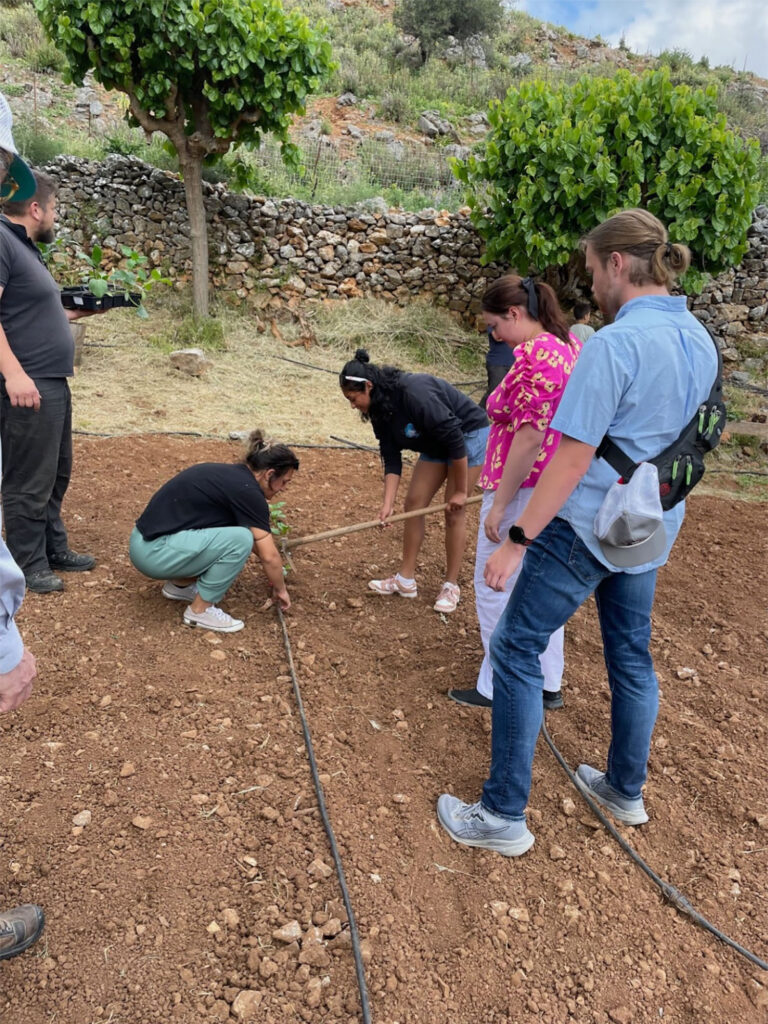
And traveling last summer with her advisors and TJS cohort to Greece was just another one of these “new things.”
“Greece was a good bonding experience with Grant Johnson, Pooja Narasimhan and my advisors and a celebration of all we’ve accomplished,” she says. “It helped me realize I am leaving this program more well-rounded and more realistic about my place in the world.”
Academic Growth With Lasting Impact
Growth appears to be the theme of High’s experience as a Thomas Jefferson Scholar at NC State — growth in two fields of study, in branching out and in becoming a peer leader — all of which will serve her well as she looks toward her future career.
She will leave NC State this spring with the goal of attending veterinary school and pursuing a specialty within veterinary medicine, such as emergency care.
“I am no longer afraid to break out of my comfort zone,” she says. “Being in this program taught me to look at both the scientific and humanistic side of things — a skill I will carry with me for the long-term.”