
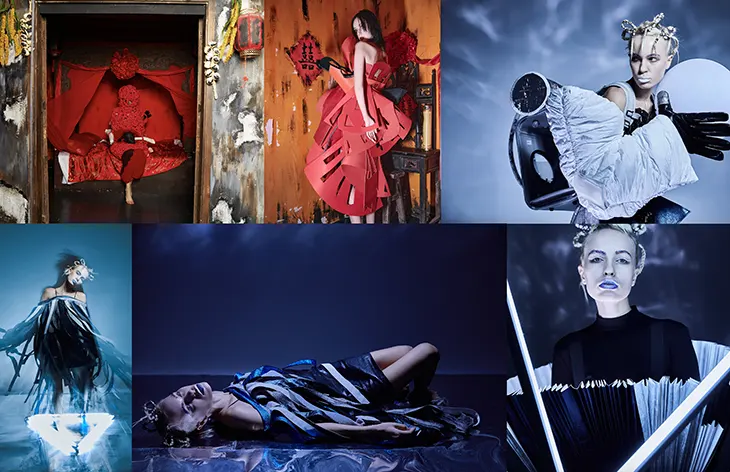
New York–based emerging fashion designer Haoyue Zhao explores the intersection of conceptual design, denim craftsmanship, digital experimentation, and contemporary streetwear culture. Her work has received international recognition, including a Gold Award in the Professional category at the MUSE Design Awards and a Platinum Award in the Professional Ready-to-Wear category at the French Fashion Awards. Her collection Escape from the Panopticon was presented during the New York Fashion Week season in 2025.
Haoyue Zhao works with a New York–based fashion company specializing in denim design and development. As a designer, she collaborates with major U.S. retailers including Nordstrom, Dillard’s, Altar’d State, and TJ Maxx, developing original denim concepts that respond to both market demand and brand identity. Her work involves direct communication with buyers and coordination with manufacturing teams to translate design ideas into production-ready garments. Several of her designs have been selected for large-scale retail production and distribution across the United States. This experience has allowed her to gain a deeper understanding of how the fashion industry operates, enabling her to better develop her own design language.
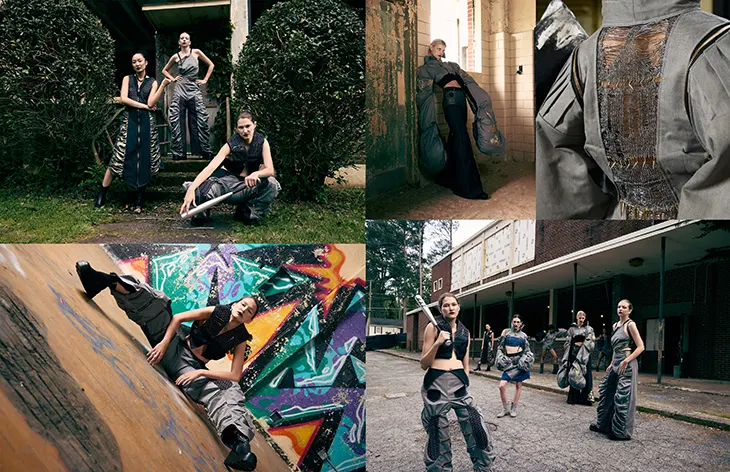
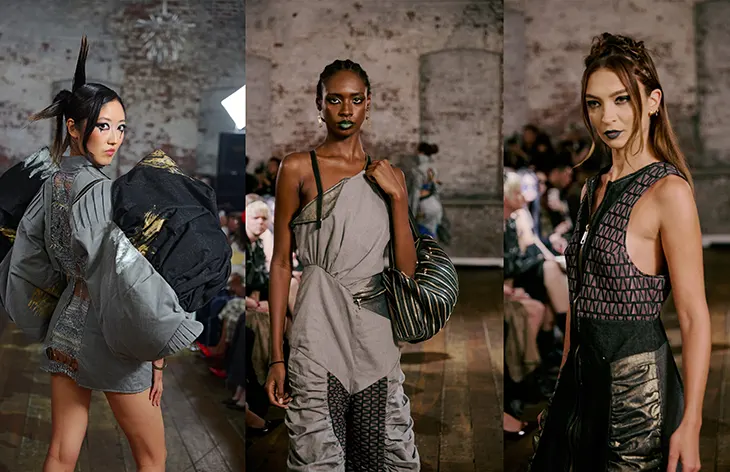
In 2025, Zhao’s project Escape from the Panopticon was presented at The Birds SS26 showcase, an independent runway presentation held in New York during the New York Fashion Week season and listed on the Fashion Week Online schedule. The presentation later received coverage from Harper’s Bazaar China, which explored the conceptual origins and creative evolution of the collection.
Editorial images from the series have also been published by international fashion magazines including Rebel Magazine, Artells Magazine, Ellas Magazine, and Artego Magazine, further introducing Zhao’s work to a global audience of fashion readers and creatives.
In developing the collection, Zhao combined conceptual research with digital experimentation. She used software including Blender, Daz 3D, C4D, and Rhino to assist with form exploration and pattern testing, allowing the garments to evolve through both physical and digital processes. This hybrid workflow reflects her broader interest in expanding the language of contemporary fashion through digital tools.
Themes in Zhao’s Work
Haoyue Zhao’s work often reflects on the relationship between individuals and the social systems that shape their lives. Her earlier projects explored how cultural norms, collective expectations, and inherited traditions can subtly influence personal freedom and identity.
Through a series of conceptual fashion works, Zhao has gradually developed a design approach that uses clothing as a visual language to question these structures. Rather than presenting fashion purely as aesthetic expression, she treats garments as a medium through which broader cultural and psychological tensions can be explored.
This evolving perspective eventually led to the development of Escape from the Panopticon, a project through which Zhao sought to move beyond themes of confinement and instead explore the possibility of resistance and transformation.
Design Journey of Escape from the Panopticon
The concept of the Panopticon, originally proposed by Jeremy Bentham and later expanded by Michel Foucault, serves as a key starting point for Zhao’s design exploration. Interpreting it as a metaphor for systems of surveillance and control in modern society, she experiments with disrupting the rigid geometries associated with prison architecture.
Drawing from the ethos of the punk movement, Zhao focuses not on its surface aesthetics but on its spirit of resistance. Rather than repeating familiar visual codes, she translates ideas of rebellion and autonomy into a contemporary design language. The anarchist “A” symbol is used as a structural motif, fragmented and reconstructed to generate silhouettes, while elements of musical notation referencing Anarchy in the U.K. are incorporated into the visual system of the collection.
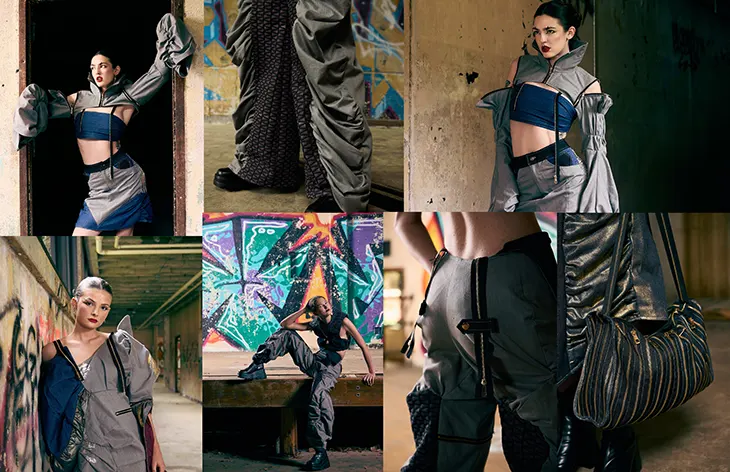
Material experimentation plays a central role in the project. Using Rhino, Zhao develops three-dimensional textures inspired by the layered structure of armadillo armor, and combines them with irregular copper-wire knitting and exposed zippers, introducing controlled disruption into otherwise stable forms.
The editorial was photographed in an abandoned school in Atlanta, a site once associated with discipline and social order, now transformed by layers of graffiti accumulated over decades. Zhao uses this setting to reinforce the tension between structure and resistance that runs throughout the project.
Through Escape from the Panopticon, Zhao explores how fashion can express both vulnerability and defiance, using design to question the systems that shape contemporary life. The collection has received international recognition, including a Gold Award in the Professional category at the MUSE Design Awards and a Platinum Award in the Professional Ready-to-Wear category at the French Fashion Awards.
Digital Fashion and Future Directions
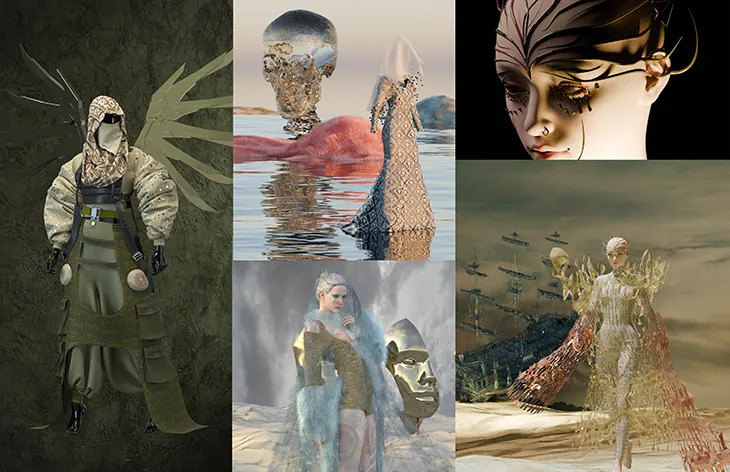
Digital tools play an increasingly important role in Zhao’s creative process. She frequently works with CLO 3D to simulate garments, refine silhouettes, and test construction methods before producing physical samples. While Zhao does not view digital fashion as a replacement for the physical fashion industry, she sees it as a powerful medium that allows garments to develop a second form of existence. Within virtual environments, designs can interact with imagined spaces and narratives that extend beyond the limitations of physical presentation.
In addition to her physical collections, Zhao has created a number of digital fashion works and has received recognition from international design competitions such as the FIDA Awards and The Rookies Awards. She is currently experimenting with digitally re-presenting Escape from the Panopticon, allowing the project to evolve through new visual contexts and further expanding the possibilities of her design practice.
She seeks to develop more efficient creative workflows that allow designers to test ideas, materials, and silhouettes before physical production. Through this approach, Zhao aims to bridge experimental digital practices with the established fashion industry, contributing to new possibilities for how contemporary fashion can be designed, visualized, and produced.
Words by Editor Maya Lane.