
Director: Sylvain Chomet
Writer: Sylvain Chomet
Stars: Laurent Lafitte, Géraldine Pailhas, Thierry Garcia
Synopsis: It follows the life of Pagnol, a playwright, novelist, and filmmaker who grew up in a middle-class household in Marseille and became one of the world’s most inventive and prolific artists from the 1930s to the 1950s.
If you’ve never heard of the incredible work of Marcel Pagnol before, chances are you won’t learn much by the time the credits roll in front of Sylvain Chomet’s A Magnificent Life (Marcel et Monsieur Pagnol). After a world premiere at Cannes and a successful release in France last year, Sony Pictures Classics invites audiences to see Chomet’s latest animated film in a baffling English-language dub. If this is not the biggest insult you can give to one of the most staunch defenders of the French language, in theater, literature, and film, what is?
Of course, the dub isn’t limited to dialogue within the film’s diegesis; it also transforms the footage we see of Pagnol’s features, most notably starring his collaborators Fernandel and Raimu. America has ingrained a culture of moviegoers who are afraid to watch a movie in a language other than their native tongue, or even to read subtitles, to preserve the nuances of the movie’s original language. Bong Joon Ho’s quote is evergreen, but he’s right. Most are afraid to overcome the one-inch-tall barrier of subtitles, which means the French language is not even made available to North American audiences. It’s just as bad as when NEON, a staunch champion of international cinema, decided to release Ugo Bienvenu’s Arco in cinemas across North America without the option of its original French-language version, thus perpetuating the notion that international films aren’t important, when they are far more aesthetically and thematically resonant than a decade’s worth of Hollywood pictures.
Watching clips of Pagnol’s Le Schpountz, Harvest, and The Baker’s Wife, dubbed in English, gave me negative full-body chills I never want to experience ever again. Chomet’s work is too important for American studios to think audiences won’t be interested in hearing Laurent Lafitte’s vocal performance as the legendary Marcel Pagnol. However, even if you ignore the poor dubbing work at the heart of the picture, what’s on screen is of very little interest. It lacks any form of insight that most biographical movies will tend to answer: who is the figure beyond the façade, and what did he truly accomplish?
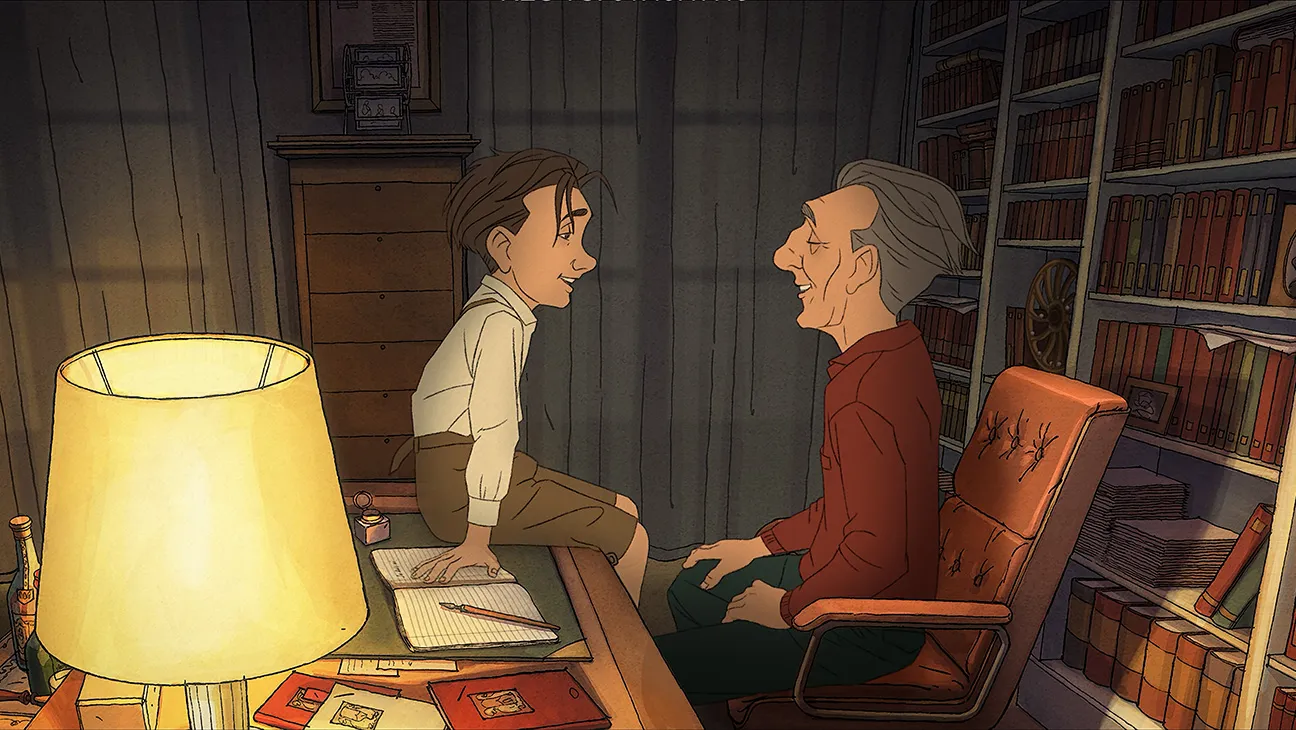
Chomet spends time making the audience realize the extent of Pagnol’s work and the breadth of the modes of expression he wrote in, but fails to draw a portrait of who the individual truly is. There are scenes in which he tries to give texture to Pagnol the man by having him communicate with his younger self, essentially recounting his life story to himself. After all, when we first meet him, he is about to write an article that will see him lay it all out, before his existence reaches its point of finitude. The framing device doesn’t last long, nor does it have any tangible effect on the viewer. It’s there to say that Pagnol will flesh out the story on his own terms and take us on the tumultuous life he lived. Unfortunately, Chomet essentially cops out from the moment this narrative structure is introduced, heading into more linear, conventional territory.
It’s a real shame that Chomet’s script is so paper-thin, because Pagnol’s body of work still stands the test of time and almost didn’t. The bulk of his work was released during World War II, and the Nazis made significant moves to take over his assets and seize the reels of the films he made. Pagnol deliberately showed worn-out copies to dissuade them from selling, and he pretended his moviemaking business was failing, which prompted him to sell to Gaumont. His actions prevented any of his reels from falling into the wrong hands, and they are the only reason his films can still be seen to this day. Yet, this section is treated with little to no significance, just as his successes and failures in the theatrical productions he conceived. There’s so much to talk about, but very little to actively explore in 90 minutes of what is essentially a drawn-out Wikipedia summary, but without the bullet points that make audiences aware of his impact.
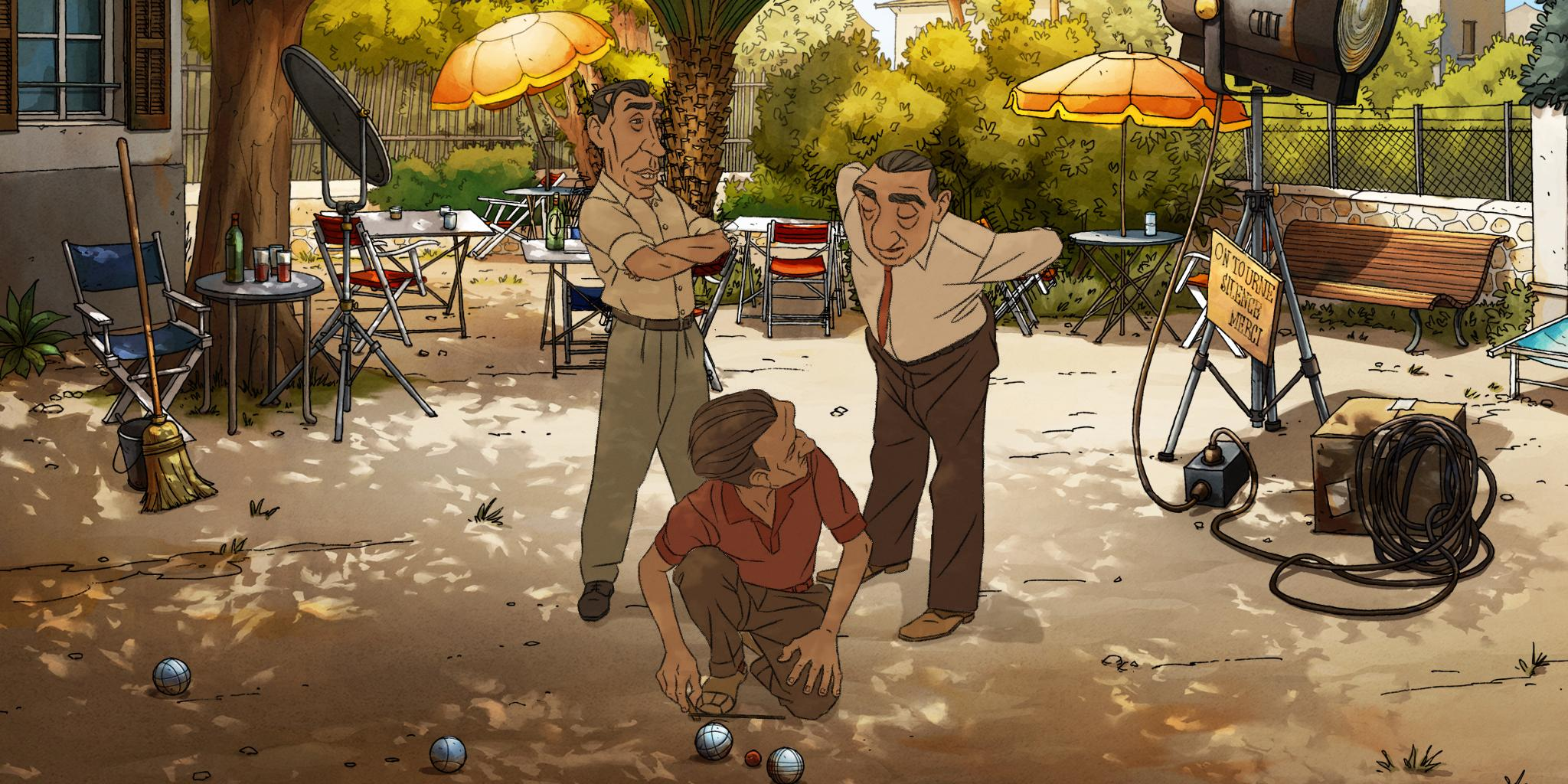
Thank the good lord Chomet is such a skillful animator and can still craft sequences of real expressivity, even though we are many years far removed from his masterpiece, 2003’s The Triplets of Belleville. Still, his style is unmistakable, and he makes every frame of A Magnificent Life feel vivid and urgent. The hand-drawn animation is frequently jaw-dropping, and the multiple stylistic permutations it takes on throughout its runtime are consistently surprising. If only the screenplay had responded so well to the images, or deepened its central character study at the heart of the picture, because what ultimately remains is a painfully hollow and vapid animated affair that will sadly be released by committing the worst possible offense against what Marcel Pagnol stands for. Maybe all of us should wait for the VOD release, when the French version will be available, and Chomet’s words won’t sound this terrible…