
Highlights
-
Qu’s research makes power systems more efficient, reliable and secure. His most recent work improves resiliency against cybersecurity attacks and extreme weather events, as well emerging studies examining energy use across AI data centers.
-
Qu was selected by an external committee of members of the National Academies of Sciences, Engineering and Medicine to receive UCF’s Medal of Societal Impact at Founders’ Day on April 1. The award also includes a $50,000 grant.
-
Qu says using his expertise to solve societal problems is a duty — one that all research faculty should fulfill.
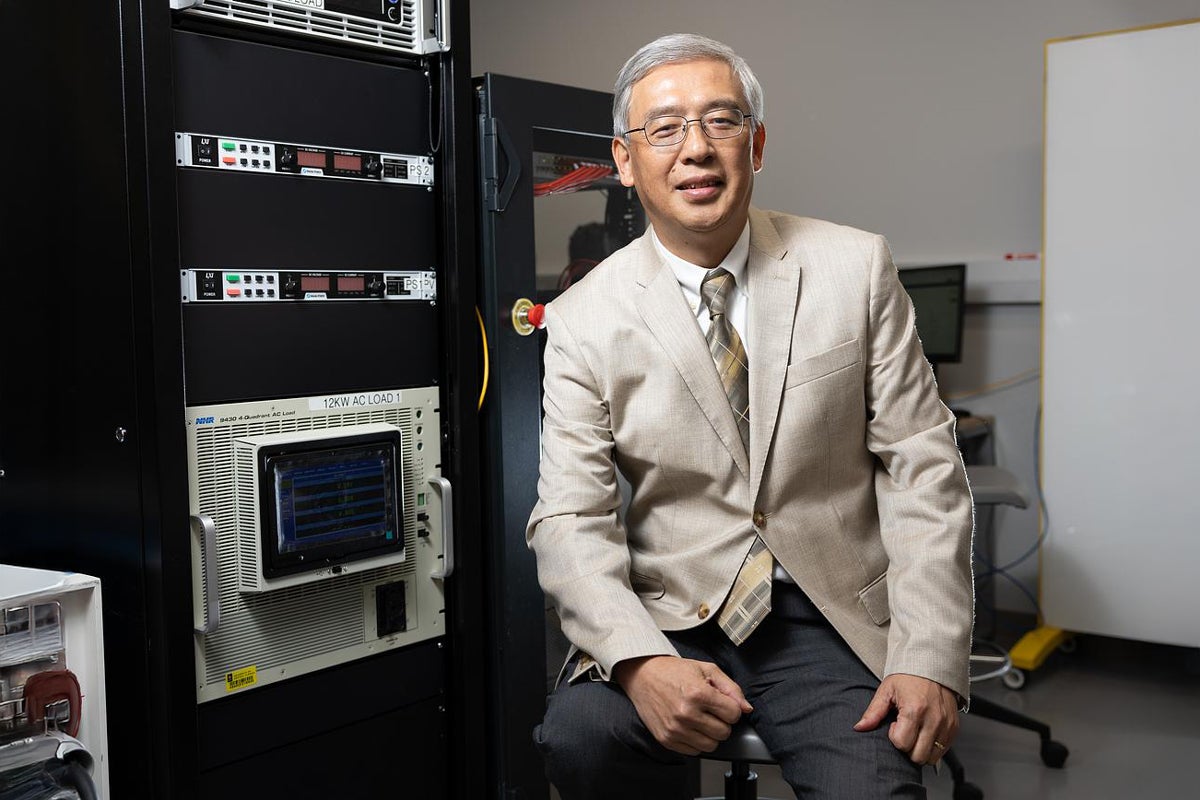
Few researchers have recharged and revitalized the electric power industry as Pegasus Professor Zhihua Qu has. Through his efforts, the energy systems that power our everyday lives are smarter, cleaner and more resilient.
In recognition of his influence, UCF will award Qu with the Medal of Societal Impact. This honor is bestowed upon faculty whose research in science, engineering or medicine has significantly impacted humankind. Recipients are selected by an external committee of members of the National Academies of Sciences, Engineering and Medicine. Qu will receive the award during the Founders’ Day event on April 1.
“ This award represents what we should be doing as researchers — contributing to society, teaching younger engineers and making an impact through research.”
“I feel very honored,” Qu says. “I appreciate the recognition. This award represents what we should be doing as researchers — contributing to society, teaching younger engineers and making an impact through research.”
Qu’s research spans the areas of power system stability, self-organizing microgrids and advanced control of distributed energy resources. His goal is to make power systems more efficient, reliable and secure. In 2017, he partnered with the U.S. Department of Energy (DoE) to create a plug-and-play grid platform that controls large distributed energy networks and enables utilities to add new components like EV stations and solar farms without the need for a power grid redesign. He also led a DoE team that developed smart inverters to stabilize power grids that run on renewable energy.
His most recent research has focused on making power infrastructure resilient against cybersecurity attacks and extreme weather events. Looking ahead, Qu plans to address the challenges posed by artificial intelligence (AI) data centers and the large amounts of energy they consume. He says that using his expertise to solve societal problems is a duty, and one that all research faculty should fulfill.
“As engineers, as research faculty, as instructors of students, we have the obligation to solve real-world problems,” Qu says. “Through our research, we can improve people’s lives and enhance economic competitiveness.”
Decades of Industry Impact
“External researchers and engineers come to UCF to conduct their experiments here. Without this kind of infrastructure, we can’t do the state-of-the-art research that we’re required to do.”
During the decades that Qu has spent working with industry partners such as Siemens, Florida Power & Light (FPL), and General Electric (GE), he’s found that they want power engineers capable of developing viable solutions to their challenges, not just academic papers or presentations. By bringing those industry partners to UCF, he’s strengthened their ties to researchers and students who can develop the technologies they need.
In 2016, UCF opened the Siemens Digital Grid Lab to train students on the software and hardware used to manage smart grids and assets such as solar power and autonomous vehicles. The software donated was worth $68 million and was the largest grant awarded in university history.
Just five years later, GE Digital and FPL launched the Microgrid Control Lab, which is used to conduct workforce training and research on advanced distribution management systems and grid resilience.
“I’m proud of the fact that we’ve built modern facilities for students,” Qu says. “External researchers and engineers come to UCF to conduct their experiments here. Without this kind of infrastructure, we can’t do the state-of-the-art research that we’re required to do.”
Impacting the Next Generation
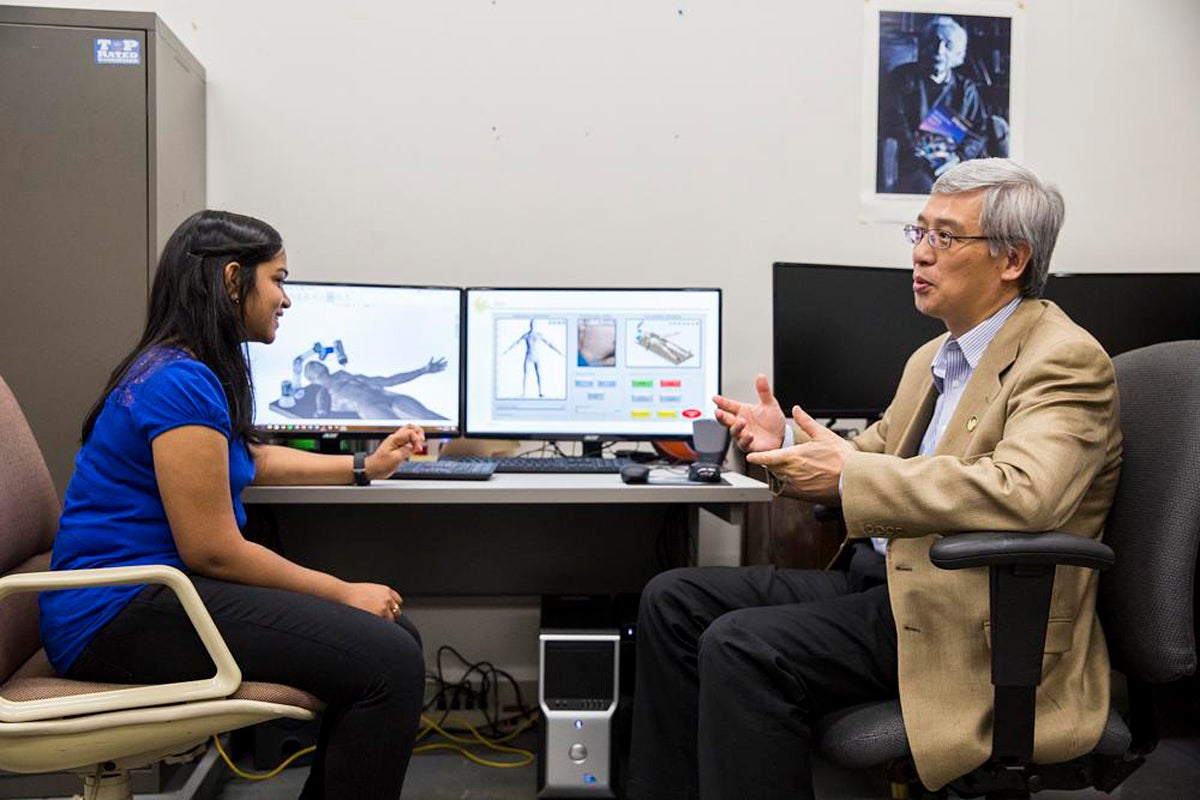
Qu’s impact doesn’t just extend to the industry — he’s also built a legacy through the next generation of engineers. The labs that Qu has developed at UCF have become a training ground for students, a place to prepare for their careers.
Graduate students can work on federally funded projects alongside faculty mentors and develop novel solutions to real-world problems. Qu says he enjoys the excited responses from students who see the resulting benefits of their work.
“ When [students] see the impact of their work, the more they study and the more effort they put into their work.”
“It helps students feel more attached, more inspired,” Qu says. “It creates a positive feedback loop. When they see the impact of their work, the more they study and the more effort they put into their work.”
Qu also has the opportunity to mentor and guide junior faculty through the Resilient, Intelligent and Sustainable Energy Systems (RISES) center, composed of an interdisciplinary group of researchers from across the university who work together to address challenges within the energy sector.
Under Qu’s leadership, RISES has grown from a faculty cluster to a center that boasts a $14 million research portfolio.
“I want to thank the College of Engineering and Computer Science, the university and the Office of Research for supporting RISES,” Qu says. “I think the center sets the stage for the continued success of our faculty and students.”