
Elsa Schiaparelli was an artist’s dream designer: a collaborative, voraciously eclectic force who pursued her craft with wild originality. A new exhibition devoted to her work opens at the Victoria and Albert Museum in London on March 28, the latest in a string of knockout fashion-themed shows that included the recently closed “Marie Antoinette Style.” The retrospective is the U.K.’s first to be dedicated to the revolutionary Schiaparelli.
Born in Rome in 1890, Elsa Schiaparelli opened her first Paris shop in 1927. She leapt from success to success, culminating in a move to 21 Place Vendôme in 1935. She collaborated with some of the great names in of the era: Salvador Dali, Jean Cocteau, Alberto Giacometti, Elsa Triolet, Jean Schlumberger, Man Ray, Leonor Fini and Meret Oppenheim. Drawn to surrealism, she was a pioneer in trompe l’oeil, represented by a 1927 bow sweater that she personally donated to the museum.
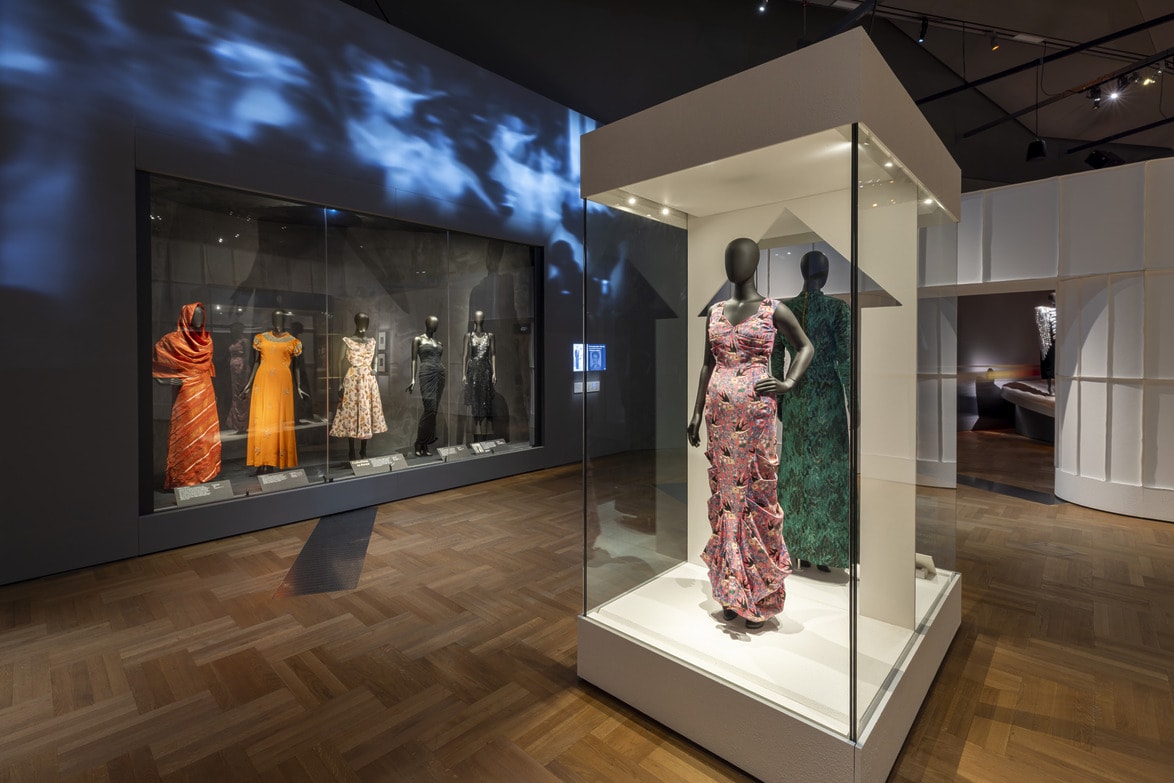
Photo: Courtesy Victoria and Albert Museum
Coco Chanel was a noted competitor to Schiaperelli. Where Chanel was strict, Schiaperelli was playful. Where Chanel stripped back, Schiaparelli acted out. Where Chanel went for universality, Schiaparelli’s singular works gloried in making a specific sort of confident client the center of attention.
Some of the highlights on view at the Victoria & Albert include: the “lobster dress” that she made with Dali, glimmering formal gowns, ahead-of-their-time tailored suits, the “Skeleton” and “Tears” dresses from 1938, and the famous shoe hat that has been referenced by everyone from Lady Gaga to Terry Gilliam in his classic film, Brazil. Also on parade among the over 400 items chosen for “Schiaparelli: Fashion Becomes Art” are her flair-laden perfume bottles, accessories, and jewelry.
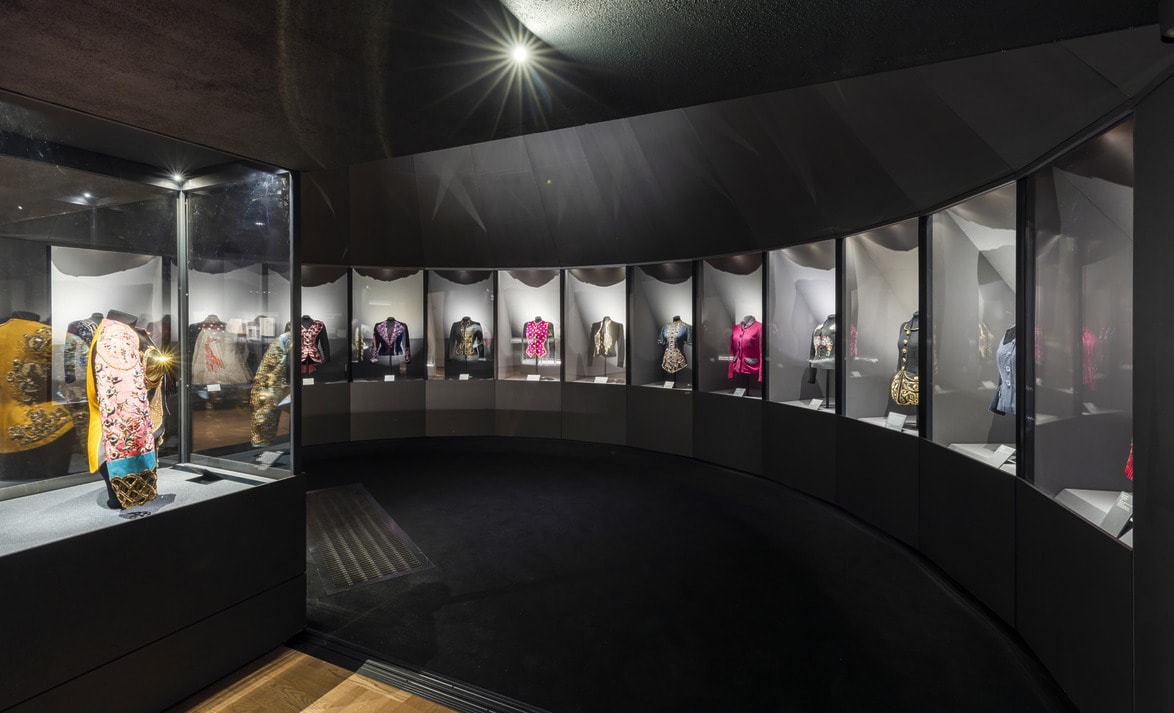
Photo: Courtesy Victoria and Albert Museum
V&A Director Tristram Hunt described the significance of the show: “‘Schiaparelli: Fashion Becomes Art’ celebrates one of the most ingenious and daring designers in fashion history. The V&A holds one of the largest and most important fashion collections in the world, and the foremost collection of Schiaparelli garments in Britain. Schiaparelli’s collaboration with artists and with the world of performance make the Maison and its founder an ideal subject for a spectacular exhibition at the V&A.”
Schiaparelli has consistently remained in the mind’s eye of the art world: she had a delightful, comprehensive major solo retrospective at the Philadelphia Museum of Art in 2003, plus intervening shows at the Metropolitan Museum of Art in New York in 2012 and at the Musée des Arts Decoratifs in Paris four years ago. But the Victoria & Albert show gives her a treatment as bright and punchy as the couturier herself.
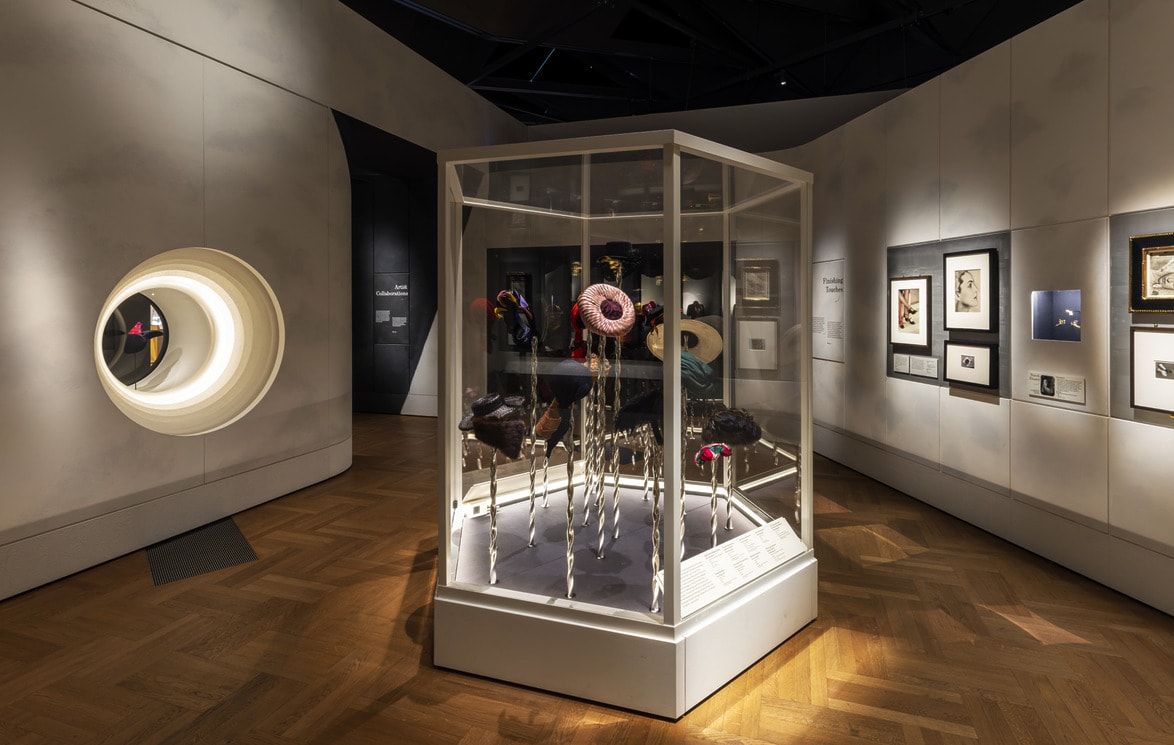
Photo: Courtesy Victoria and Albert Museum
It’s interesting to compare Schiaperalli and Chanel’s more personal legacies, too. It is now firmly established in the historic record that Chanel was a Nazi collaborator. Schiaparelli put herself on the right side of history by fleeing France at the start of the WWII. Chanel’s label produced instantly recognizable designs that consumers have passionately pursued nonstop since she revived her house in the ‘50s. Schiaparelli’s maison was but a memory for nearly 70 years until the name re-launched in 2012. Her presence stayed in the world on a more human level during in the intervening time in the form of her granddaughters: Barry Lyndon star Marissa Berenson, and ‘70s it girl Berry Berenson, who sadly died on American Airlines Flight 11 on September 11, 2001. To praise one woman’s designs is not to denigrate the other’s. Chanel and Schiaperelli are an apple and an orange. But congratulations to the V&A for giving Schiaparelli the admiration she deserves.
“Schiaparelli: Fashion Becomes Art” is running March 28–November 8, 2026 at the South Kensington branch of the Victoria and Albert Museum, London.